VaticanRomeItalyVaticanEuropePlaces to GoThings to DoFood & DrinkTravel TipsVacations
Mostrar todo

Rome Travel Guide: Colosseum, Vatican and Trastevere

cover

Rome is the capital and largest city of Italy, and the useful thing to know before you plan is that three separate cities share one set of streets. The amphitheater and the fora around it are imperial. Vatican City is an independent state inside the city limits. Trastevere, on the far bank of the Tiber, grew a culture of its own because the river kept it apart.


That split is why a Rome travel guide built as one long list of monuments sends people across the river three times a day. The historic center is not large. Wikivoyage's Rome page, puts the protected centro storico at roughly 4 percent of the city's area, most of it inside the Aurelian Walls, which means the walking is easy and the crossings are the work.


This Rome Italy travel guide is arranged around that geometry. It covers what to reserve before you fly, how to pace three days on foot across the river and back, and where a longer package earns its price if you want Florence, Venice or the south in the same trip. Anyone planning to travel to Rome Italy for the first time faces the same three decisions, and all of them are about order rather than distance.


Expect crowds. Annual visitors run to as many as 10 million, and the ancient Rome attractions fill early. The museums fill next. Plan around that and the city stays walkable. Ignore it and you spend a day in queues.


Divide Rome into Three Zones

Treat the city as three zones and the days arrange themselves. Each has its own history, its own crowd curve and its own reason to be visited at a particular hour.


Ancient Rome, East of the Forum


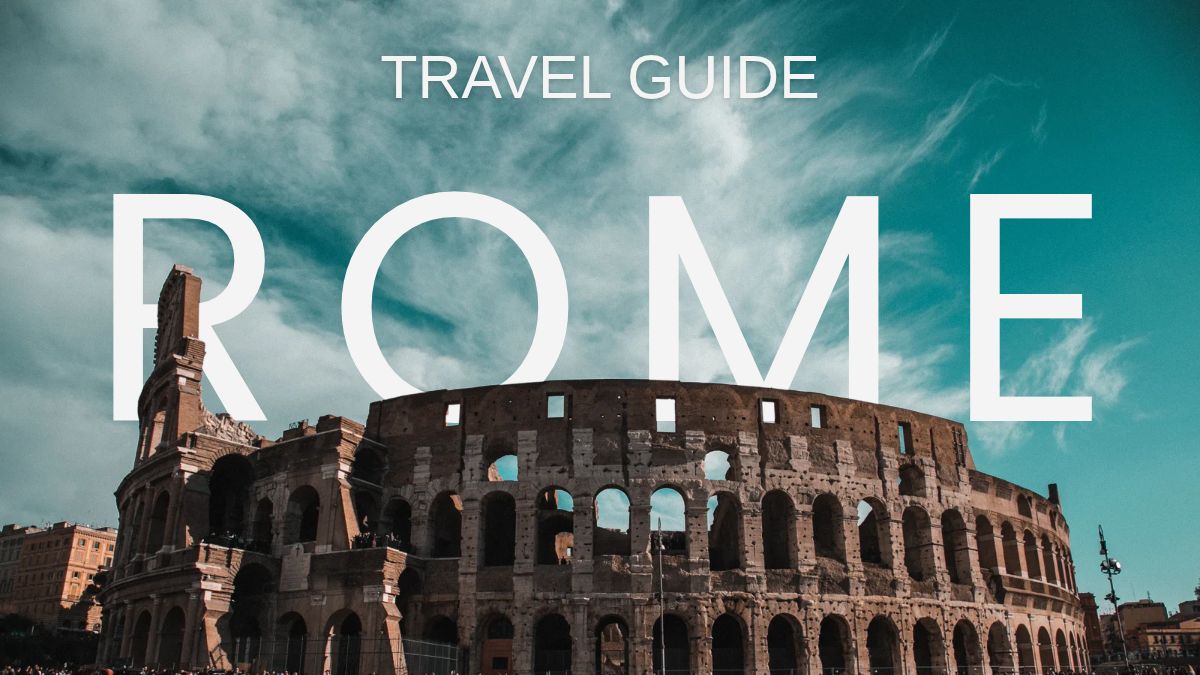
The Colosseum is an elliptical amphitheater begun by Vespasian and finished in AD 80 under Titus. Wikipedia's Colosseum entry, read in November 2026, describes it as the largest ancient amphitheater ever built and puts capacity at 50,000 to 80,000 spectators at different points in its history. That figure explains the building better than any photograph: it was engineered for a crowd, with travertine, Roman concrete and volcanic tuff holding up corridors that moved tens of thousands of people in and out.


The zone is compact. The Imperial Forums, the Arch of Constantine and the Circus Maximus, the track where chariot races once ran, all sit within a short walk of the amphitheater, so one morning covers the whole cluster. Give it the earliest slot you can hold and walk the fora afterwards, when the light is higher and the coach parties have thinned.


The Vatican, a State Inside the City


Vatican City is an independent state within Rome and the center of the Catholic Church, and it is entered through a wall rather than a street. The museums hold the masterpieces collected by popes over the centuries, the Sistine Chapel carries Michelangelo's frescoed ceiling, and St. Peter's Basilica holds his Pietà. Our Vatican hub is the place to look if you want the museums on their own rather than as part of a longer route.


Trastevere, Beyond the Tiber


Trastevere is the thirteenth rione of Rome, and the name comes from the Latin trans Tiberim, beyond the Tiber. Wikipedia's Trastevere entry, read in November 2026, records that for centuries the district's link to the rest of the city was a single wooden bridge, and that its streets stayed a maze of narrow lanes. That isolation produced the Trasteverini, a population with a culture of its own, and it still shows: cobbles underfoot, the basilica of Santa Maria in Trastevere holding the main piazza, and the Gianicolo hill rising behind.


Put the three zones on a map and the logic is plain. The Vatican and Trastevere both sit west of the river, ancient Rome sits east of it, so the Tiber is a seam you cross twice at most in a well-planned day.

Three-Day Itinerary in Rome

Three days is the shortest stay that still feels like a visit rather than a transfer. The sequence below keeps each day on one side of the river, which keeps the walking down.


Day 1: The East Bank, Early


Start at the amphitheater and let the morning fall out from there: the fora, the Arch of Constantine, the Circus Maximus. Keep the afternoon light. The Spanish Steps and the Trevi Fountain sit close together, and 38 other fountains stand across the city in assorted styles, so the Trevi earns a passing look rather than an expedition. If your legs still work, the Baths of Caracalla and the Pyramid of Cestius sit south of the Circus Maximus and are usually quiet.


Day 2: The Vatican, Then Nothing Scheduled


The Vatican is the one zone where the clock belongs to the collection, so keep the morning for it and expect to come out nearer lunch than you planned. Put the basilica in the same block: on some departures a papal audience restricts access, and the square outside is the substitute. Leave the afternoon empty on purpose. A coffee in one of the piazzas, or a second museum if the first one left you wanting, beats a schedule you cannot keep.

vatican


Day 3: The River Bank and the Far Side


Give the last day to whatever the first two push aside. Castel Sant'Angelo, the Basilica of Saint Mary Major and the Pyramid of Cestius are all stops on the panoramic route's three-hour city drive, which is a fair signal of scale: each deserves a look rather than a morning. Then cross the river and stay. That route runs a coach transfer to Trastevere at 6:00 p.m. and returns around 8:30 p.m., and the shape holds on foot too: arrive before the tables fill, walk the lanes in daylight, eat late.

Choosing a Longer Tour

Three routes start and finish in Rome, and the choice between them is really one question: how far south do you go before turning north? The table compares what each one covers and what it asks per person.


Route Days From, per person Shape
Italian Holiday from Rome: Venice, Verona and Florence 7 $1,797.77 North through Umbria and Tuscany, back through Florence
Italy Premium from Rome: Capri, Venice, Florence and Tuscany 11 $3,063.06 South to Pompeii and two nights on Capri, then north to Assisi and Venice
Panoramic Italy and Campania from Rome 11 $1,794.59 Florence, Venice, Padua, San Marino, Umbria and Naples, admissions included


The price gap is easier to read than it looks. The panoramic route lands at $1,794.59 for eleven days, within four dollars of the seven-day rate, while the premium route at $3,063.06 asks about $1,265 more per person and puts that difference into two nights on Capri and the Pompeii stop. All three move with departure date and room type, so treat the figures as a starting line rather than a final bill.


The extra days do not buy more Rome. Each route gives the city one to three days at the start and then leaves, which is why the three-day plan above still holds even when the trip runs longer. Choose by what you want after Rome: Capri and the south on the premium route, the Umbrian hill towns and San Marino on the panoramic one, a shorter northern loop on the seven-day.


Our Rome vacation packages page sorts the same options by length, which makes departure dates easier to compare than three separate operator listings.

Ancient and Modern in the Same Afternoon

The two halves of the title meet in small places rather than at monuments. After the games ended, the Colosseum served as housing, a workshop, a fortress and a stone quarry before it settled into being a symbol, and it now turns up on the Italian five-cent coin. Walk west and the same streets carry the newer city: the historic center and the Holy See's buildings are listed together as a UNESCO World Heritage Site, and Cinecittà Studios still produces film and television on the edge of town. Rome reads as a working city that happens to own a very old skyline.

rome


The pavement tells the same story. Trastevere's lanes went unpaved until the end of the fifteenth century, when bricks went down and were then swapped for sampietrini, the small cobbles picked because carriages rolled better on them. You will spend your three days walking on that decision, which is a fair reminder that the surface everyone photographs was infrastructure before it was scenery.


So what should the last afternoon hold? Something without a queue. Cross the river, take a lane up the lower slopes of the Gianicolo, look back at the domes, then come down as the shops close and the tables appear. That is the part of Rome that survives the postcard: not the amphitheater at noon but a cobbled street at seven, with the old bones still in daily use.

FAQ

Do the Colosseum and the Vatican Museums need booking ahead?

Yes. Both are ticketed, and the routes covered here include admission rather than leaving you to chase a morning slot from a hotel lobby.

Which of the three routes suits a new visitor?

The seven-day loop if the northern cities are the draw. Either eleven-day option if you also want the south or Umbria.

Is Rome a walking city?

Inside each zone, yes. The river crossings are the long stretches, so plan the day around one side of the Tiber at a time.

Are meals included on the tours?

On the seven-day route, six breakfasts and four dinners. On the eleven-day premium route, ten breakfasts and five dinners.