MarrakechFesCasablancaMoroccoAfricaPlaces to GoThings to DoTravel TipsExcursionsVacations
Mostrar todo

Morocco Imperial Cities and Sahara: Marrakech, Fes & Desert

cover

Marrakech, Fes, Meknes and Rabat were all royal capitals at some point, which is why the Morocco Imperial Cities remain the spine of most itineraries here. Each holds a walled medina, a different century of craftwork and a different pace. Put a Sahara camp between them and the country's geography starts to make sense.


The usual line runs from Fes south over the Middle Atlas to Merzouga, then west through the Dades Valley and Ait Benhaddou to Marrakech. Three days covers that corridor. A week adds Rabat, Meknes, the Roman site at Volubilis and the Ouzoud Falls. Two weeks brings in Chefchaouen, Essaouira and a night in a mountain village.


What follows is a practical Morocco travel guide to that corridor: what each city rewards, how a desert night is organized, which months work, and the questions people ask before paying a deposit. Traveling to Morocco gets simpler once the order of the stops is settled, because the order decides how much of the trip you spend in a vehicle.


Why the Imperial Cities Still Set the Route

Four cities carry that title: Fes, Marrakech, Meknes and Rabat. Fes was founded under Idrisid rule in the eighth century and served as capital again until 1912. Marrakech was laid out from 1070 as the Almoravid seat. Rabat governs the country today, and Meknes, between the others, holds the Mausoleum of Moulay Ismail.


Distance decides the order more than history does. Fes sits in the north below the Middle Atlas, Marrakech under the High Atlas, Rabat and Casablanca on the Atlantic. A route that starts in Fes and ends in Marrakech moves in one direction instead of driving back over the same pass. That logic shapes any workable Morocco tour, and it holds whether you run north to south or the reverse.


There is a practical edge to the arrangement. Volubilis sits close to Meknes, so the Roman site and the mausoleum share a day, and Rabat falls on the road to Casablanca and the airport. Bolt those four stops together and the desert fits between them without a long detour.

Marrakech and Fes: Two Medinas, Two Tempos

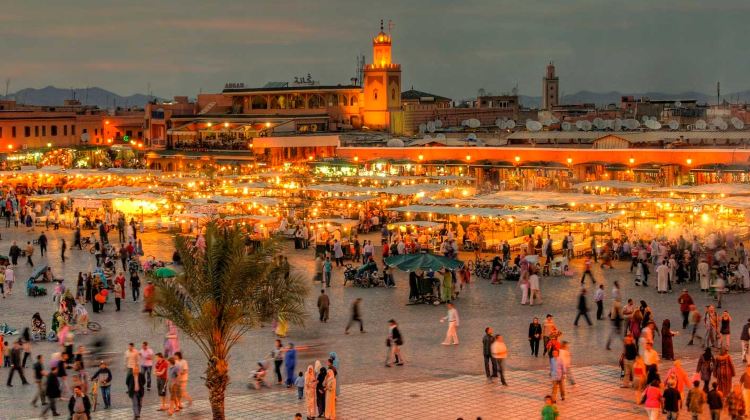
Of the two, the Marrakech medina is the easier to like. The city was founded around 1070, and the red sandstone walls raised in 1122 and 1123 gave it the nickname Red City. UNESCO added the medina in 1985, and inside the walls sit the Koutoubia Mosque, the Bahia Palace with its tilework and carved cedar, and the Majorelle Garden. Jemaa el-Fnaa changes character after dark, when the food stalls and performers take the square.


Budget one full day for the palace, the garden and the square, and keep the morning for the sights. Leave the rest loose rather than scheduled, because the medina rewards wandering more than ticking off.


Fes: Nine Thousand Alleys and a Car-Free Old City


Fes asks for more patience and gives back more. Founded in 789, it grew into Fes el-Bali, a car-free old city of more than 9,000 alleys, with Fes Jdid added in 1276 around the Royal Palace. The University of al-Qarawiyyin dates from 857 and is the oldest continuously operating institute of higher education in the world. The Chouara Tannery has worked since the 11th century, and UNESCO added the medina in 1981.

fes


The alley count is not a sightseeing figure, it is a warning about time. Half a day with a local guide keeps you from spending the morning finding your way back to Bab Bou Jeloud, and the tanneries are worth seeing with someone who knows which terraces take visitors. The rest of the day belongs to the souks and the artisans' quarter, where the workshops are the attraction rather than the souvenirs.


Comparing the two comes down to what you want from a medina. Marrakech is open, social and easy to dip into. The Fes medina is dense and inward, and it pays off in proportion to the time you give it.

What a Night in the Sahara Actually Involves

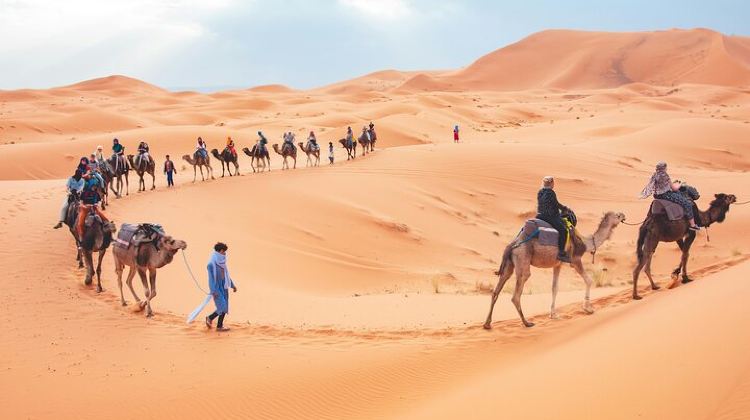
Merzouga and M'Hamid are the two settlements at the edge of the Sahara where desert nights begin, and from either one you head into the dunes by camel or by 4x4. The camps sit out among the sand, so the transfer is part of the evening rather than a shuttle between hotels.


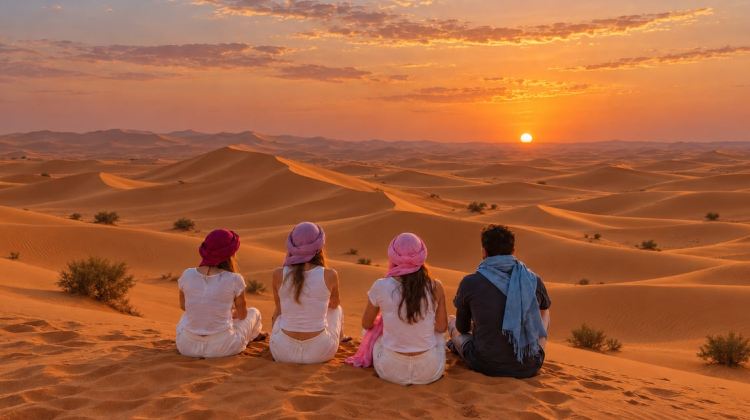
A night follows a fixed order. You ride out in the late afternoon, watch the sun drop from a dune, eat dinner at camp and sleep in a tent, then ride back at sunrise. Sandboarding comes with the trip for anyone who wants it, and on some departures a 4x4 transfer can replace the camel in both directions.


Camp standard is the choice worth making on purpose. Standard camps use shared bathrooms. The luxury and private options come with ensuite tents, and the private version adds a vehicle to yourself plus an inside visit to the Atlas Studios in Ouarzazate rather than a photo stop outside.


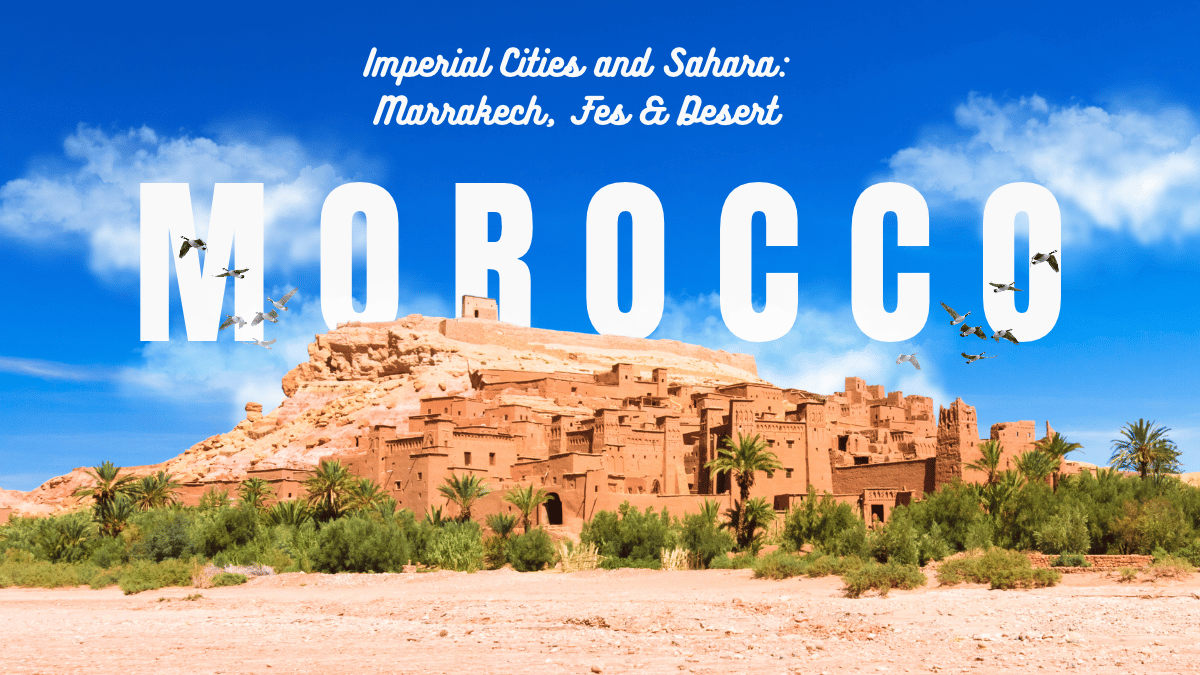
The middle day is the scenic one. The drive leaves Merzouga for the Todra Gorge, a limestone canyon with climbing routes on its walls, then continues to the Dades Valley for the night. The last day crosses the High Atlas past Ait Benhaddou, the kasbah used as a filming location for Game of Thrones.

Putting the Route Together

Three lengths cover most of what people book, and they differ less in style than in how much of the country they hand you. The range of Morocco vacation packages runs from a short desert crossing to a two-week circuit, so the length you pick decides the cities you see.


Three Days: Fes to Marrakech Across the Atlas


The short version leaves Fes around 7:00 AM and reaches Marrakech around 6:00 PM three days later, with two breakfasts, two dinners, one desert camp night and one night in a Dades Valley hotel. Groups cap at 15 travelers and the age range runs 18 to 64. Prices start at $106 per person on a double room, which covers the vehicle, the camp, the camel rides, sandboarding and a guide working in English, Arabic, French, Spanish, Italian or Mandarin.


Two costs sit outside that: lunches and drinks, and an optional local guide at Ait Benhaddou for about 2 euros. Treat $106 as the entry price for a desert night rather than a total.


Seven Days: Marrakech, Fes and the Imperial Capitals


The week-long loop opens in Marrakech and closes in Casablanca, with city tours in Marrakech, Fes, Meknes, Rabat and Casablanca, a carriage ride through Marrakech, a boat through the Ouzoud gorges and admissions to the Bahia Palace, Volubilis, the Mausoleum of Moulay Ismail and the Hassan II Mosque. Three lunches, four dinners, a breakfast buffet each morning and the airport arrival transfer come with it. Groups can reach 55 travelers and the minimum age is 16, so this one takes families with teenagers.


Fifteen Days: The Full Circuit


The long version runs from Casablanca to Marrakesh with 13 hotel nights and one in a mountain gîte, 14 breakfasts, a High Atlas hike, a sunset camel ride, Chefchaouen, Essaouira, Tangier and a traditional meal in the village of Aroumd. Groups average 10 people and never exceed 14. Travel insurance is compulsory, with at least $200,000 of medical and evacuation cover, and prices sit near $746 per person after a 20% saving.


Set beside each other, the difference is where the hours go. The short crossing puts most of them in the vehicle and trades city time for dunes. The week-long loop swaps long drives for guided mornings in five cities. The two-week circuit moves most nights, so it trades depth in one place for range across the country.

Best Time to Visit Morocco

Two windows work better than the rest: spring, March to May, and autumn, September to October. Each season has its own trade-off between heat, rain and crowds.


Spring


Coastal cities such as Casablanca and Rabat run highs near 18 to 22°C with lows of 8 to 12°C, and the Atlas stays cool at dawn. Rain tapers off, almond trees bloom around the Dades Gorge, and the desert edge is at its most workable. Spring itself splits the difference between cold desert nights and summer heat.


Summer


Inland heat sets the schedule. Marrakech and the southern desert push past 35°C and can touch 40°C, so dune time belongs at either end of the day. Essaouira holds in the mid-20s on sea breeze, the Atlas stays cooler, and the coast becomes the sensible base.


Autumn


September still behaves like summer at 27 to 30°C, then October and November settle near 20 to 22°C with cooler nights and rain returning to the north. Camp light is softer, the summer rush has gone, and the Atlas picks up autumn color.


Winter


Coastal days sit between 10 and 17°C, inland nights fall into single digits, and the Atlas carries snow. Rain is likeliest from November to February north of the mountains, while the southern desert stays dry with warm days and cold nights. Crowds thin out, which suits medina time.


For a trip that includes a desert camp, spring and autumn remove the two extremes. Summer asks for early starts; winter asks for a proper jacket and a flexible plan around mountain passes.

Is It Safe to Travel to Morocco?

Yes, traveling to Morocco is generally very safe. Most of a trip here happens inside a vehicle, so transport is where the real risk sits. The routes described above use air-conditioned vehicles with professional drivers and support you can reach while traveling. Where you arrange a ride yourself, take a licensed taxi or a pre-booked shuttle rather than a car offered at the roadside.


In the medinas the defenses are unglamorous. Split your cash between two pockets, agree a price before a service starts, and walk away from anyone who appoints himself your guide for free. No shopping stop on these routes is mandatory, which removes the pressure that gives souvenir sales a poor reputation.


Insurance is the step people skip, so buy it before anything else, since a medical evacuation is the one cost no itinerary absorbs. Then check your passport, since US, Canadian, British, Australian and most EU passports enter visa-free for up to 90 days with six months of validity remaining.

Morocco Travel Tips Worth Knowing

Five Morocco travel tips cover most of what goes wrong on this corridor, and none of them takes much planning.


  • Carry cash and small notes. Lunches, drinks, tips and local guide fees are settled on the spot, and a restaurant meal generally runs $10 to $15. Tipping tops up wages across the service industry, so keep a stack of coins and small bills.
  • Send your riad address early. Pickup details are confirmed the day before departure by WhatsApp, and where a vehicle cannot reach the door you get a meeting point within a five-minute walk.
  • Pack for two climates. Warm layers, sun protection, comfortable shoes and a power bank all earn their space, and luggage travels in the vehicle with you.
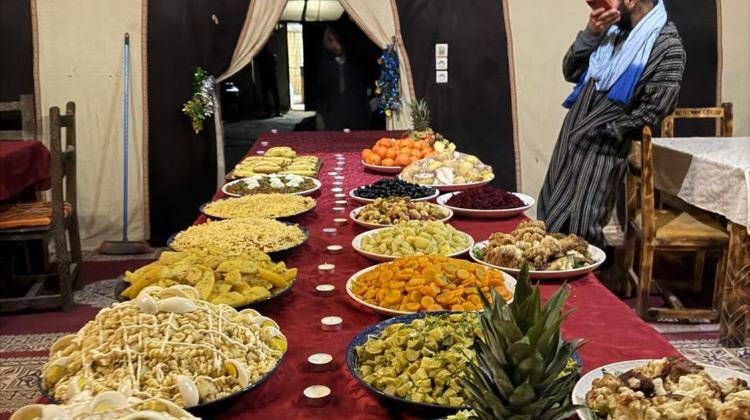
  • Declare your diet in advance. Vegetarian, vegan and gluten-free meals can be arranged when the request arrives before the trip rather than at the table.
  • Watch the confirmation clock. Small-group desert departures can need 30 days to confirm, so book before you lock in flights.

Matching the Route to the Traveler

The three routes sort by traveler more cleanly than by budget, and between them they cover the Morocco travel destinations most trips are built around. If the desert is the point and your time is short, the three-day crossing delivers it, though it is sold to adults rather than families.


A week suits anyone who wants the four imperial cities without arranging transport or admissions, and it takes teenagers. The two-week circuit rewards slower travelers and children from 12 up, and solo travelers share a twin room rather than paying a supplement.


Pick the month, then the direction, then the length, rather than the other way round. The month decides your packing, the direction decides which airport you fly into, and the length decides whether the Sahara is one night or a chapter of the trip.

FAQ

How many days do I need for the imperial cities and the Sahara?

Ten days covers the four imperial cities plus a night in a Sahara camp, which is the shortest version that fits both without rushing. Three days covers Marrakech, Fes and one desert night if you start in Fes.

Which months are most comfortable?

March to May and September to October. Spring and autumn keep the cities mild and the desert edge workable, while midsummer heat pushes dune time to early morning and late evening.

Do US and UK passport holders need a visa?

No visa for stays of up to 90 days, and the same applies to Canadian, Australian and most EU passports. Your passport needs six months of validity left when you arrive.

What is not included in the desert tour price?

Lunches and drinks, the optional local guide at Ait Benhaddou, and anything you buy in the souks. Breakfasts and dinners at the camp and at the Dades hotel are part of the price.

Which version works for a solo traveler?

The two-week circuit pairs solo travelers in a shared twin room at no supplement. On the shorter trips, ask how a single booking is priced before you pay.

Resumen

Why the Imperial Cities Still Set the Route

Marrakech and Fes: Two Medinas, Two Tempos

What a Night in the Sahara Actually Involves

Putting the Route Together

Best Time to Visit Morocco

Is It Safe to Travel to Morocco?

Morocco Travel Tips Worth Knowing

Matching the Route to the Traveler

FAQ

America's 250th Anniversary Mega Sale

image