Almost every 2-day itinerary in Luxor looks the same at the top: temples on day one, tombs on day two. That order follows heat rather than history. The west bank is fully exposed, so the balloons and the first tombs want your earliest hours. The east bank has a town around it and a temple that looks better after dark.
Day 1: Karnak, Luxor Temple and the Nile at Sunset
Karnak in the Morning
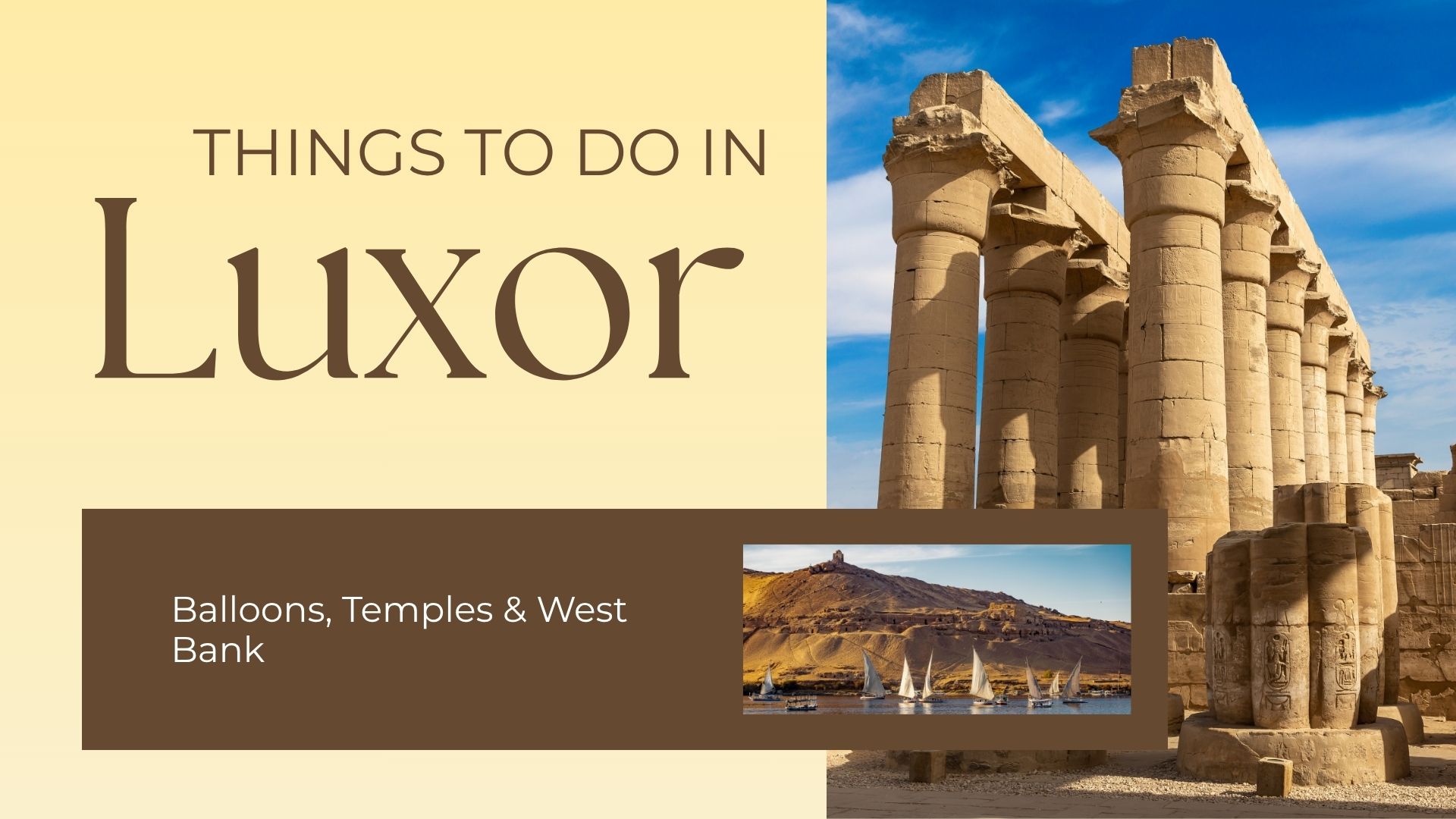
Karnak is a complex rather than a single temple, and that is exactly why it eats a morning. Courts, halls and walls stack up across the site, and day trips that include Karnak usually allow about an hour and a half there. Go at opening. By late morning the stone holds heat and the groups arrive in waves.
Walk it with a route in mind and accept that you will not see all of it. On a guided day, the order is settled for you, which is the main argument for paying someone to organize the morning.

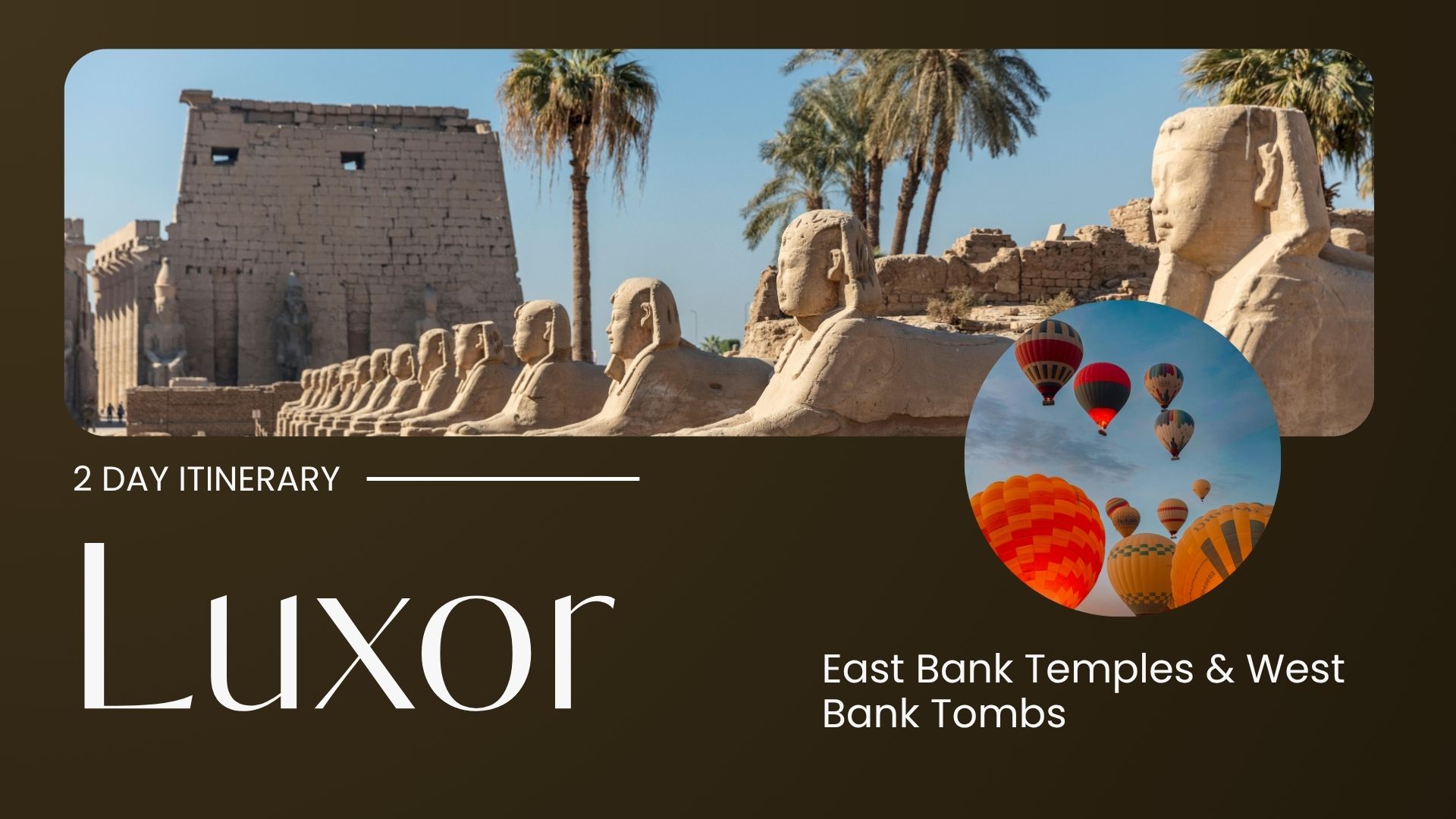
Luxor Temple and the Avenue of Sphinxes
Luxor Temple sits inside the town, at the end of the ancient Avenue of Sphinxes that once linked it to Karnak. It is smaller than Karnak and easier to read, which makes it the right thing to hold back for late afternoon rather than squeezing it into the same morning.
Go in the last couple of hours of daylight and stay for the light show, which runs after dark and puts the columns in a very different frame. Between the two, walk the Nile Corniche. The riverfront is where the town takes its evening, and it costs nothing.
A Felucca Before Dinner
A felucca sail is the standard end to day one, and the timing matters more than the boat. Late afternoon puts the west bank cliffs in low light and takes the edge off the heat, and a sunset sail gets you back to the east bank in time to eat.
Book it for the hour before sunset. A felucca moves at the speed of the wind, so a late start means finishing in the dark.
Day 2: Balloon at Dawn, Then the Tombs
The Balloon Flight
Sunrise balloon flights are the reason day two starts before breakfast. You launch in the dark, climb over the west bank as the light comes up, and land in time to be at the tombs while the air is still cool. The view takes in the Valley of the Kings and the green strip along the river, which shows how narrow the cultivated land really is.
Weather can keep a flight on the ground. The morning still works without it: you drive straight to the tombs at the same early hour and gain time rather than losing it. Build the day around the dawn either way, and the plan holds.
The Valley of the Kings
The Valley of the Kings is the burial ground of the Theban necropolis, and Tutankhamun's tomb is the name most visitors know. Day trips here usually allow about two hours inside the Valley, and that is honest: the tombs are small, the walk between them is short, and the heat inside does the pacing for you.
Start with the tombs you care about most, because heat builds inside the painted rooms faster than it does outside. Carry water in, wear a hat, keep shoulders and knees covered, and plan on a slow walk rather than a full circuit.

Hatshepsut and the Colossi of Memnon
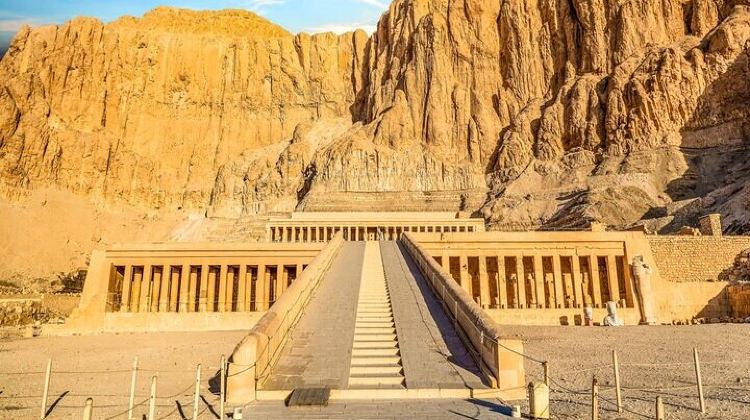
The Temple of Hatshepsut at Deir el-Bahari sits on the same side of the river, cut into the cliff face, and it is the natural second stop after the tombs. It reads as architecture rather than decoration, with terraces stacked against the rock.
The Colossi of Memnon come last, on the way back toward the river. They are two seated figures standing in open ground; the stop takes about fifteen minutes, and there is no shade to hide in. Take the photos and get back in the car.
You can be across the river by early afternoon, which leaves the rest of day two open. Use it for the town, a long lunch or the market at Al-Markaz al-Souq, and treat it as part of the trip rather than dead time between sites.