LuxorEgyptAfricaPlaces to GoTravel TipsExcursionsWeekend TripsVacations
Show All

Luxor 2 Day Itinerary: East Bank Temples & West Bank Tombs

cover

Two names bring most people to Luxor, and they sit on opposite sides of the Nile. Karnak and the Valley of the Kings are a river apart, which is why a Luxor 2-day itinerary comes down to the same question every time. Which bank gets which day? The answer is less obvious than it looks. The east bank is a town with two temple sites in it, and it runs on normal city hours. The west bank is a burial landscape that is fully exposed and heats up fast. Put them in the wrong order, and you spend the good hours in a car.


Two full days cover both banks without sprinting. One day forces a choice between tombs and temples, and the gap between one day and two is an entire bank of sights. This plan puts both banks in a workable order, with the crossings, the sleeping side of the river, and the heat built in.

2 Days in Luxor Itinerary

Almost every 2-day itinerary in Luxor looks the same at the top: temples on day one, tombs on day two. That order follows heat rather than history. The west bank is fully exposed, so the balloons and the first tombs want your earliest hours. The east bank has a town around it and a temple that looks better after dark.


Day 1: Karnak, Luxor Temple and the Nile at Sunset


Karnak in the Morning


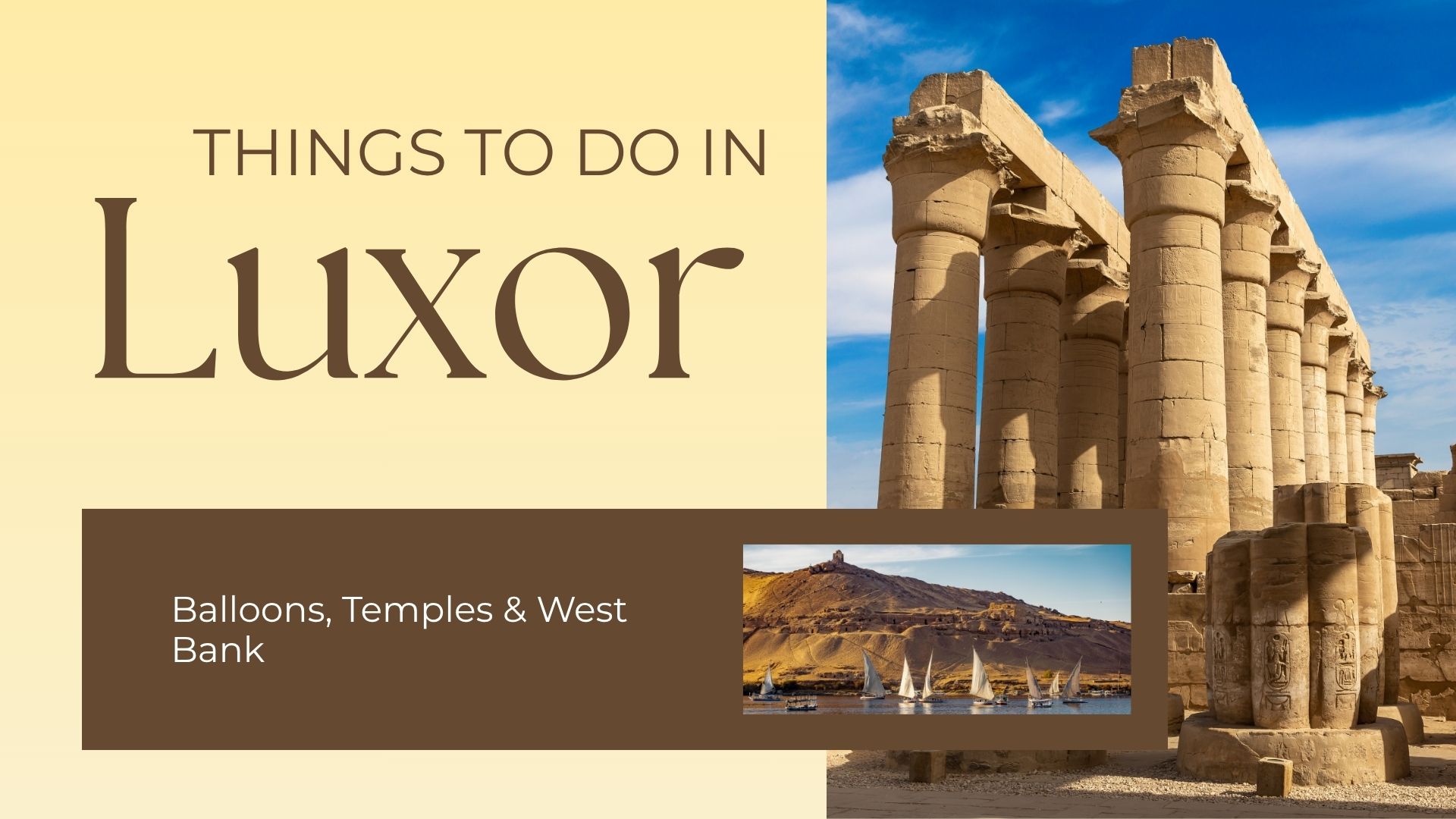
Karnak is a complex rather than a single temple, and that is exactly why it eats a morning. Courts, halls and walls stack up across the site, and day trips that include Karnak usually allow about an hour and a half there. Go at opening. By late morning the stone holds heat and the groups arrive in waves.


Walk it with a route in mind and accept that you will not see all of it. On a guided day, the order is settled for you, which is the main argument for paying someone to organize the morning.

karnak


Luxor Temple and the Avenue of Sphinxes


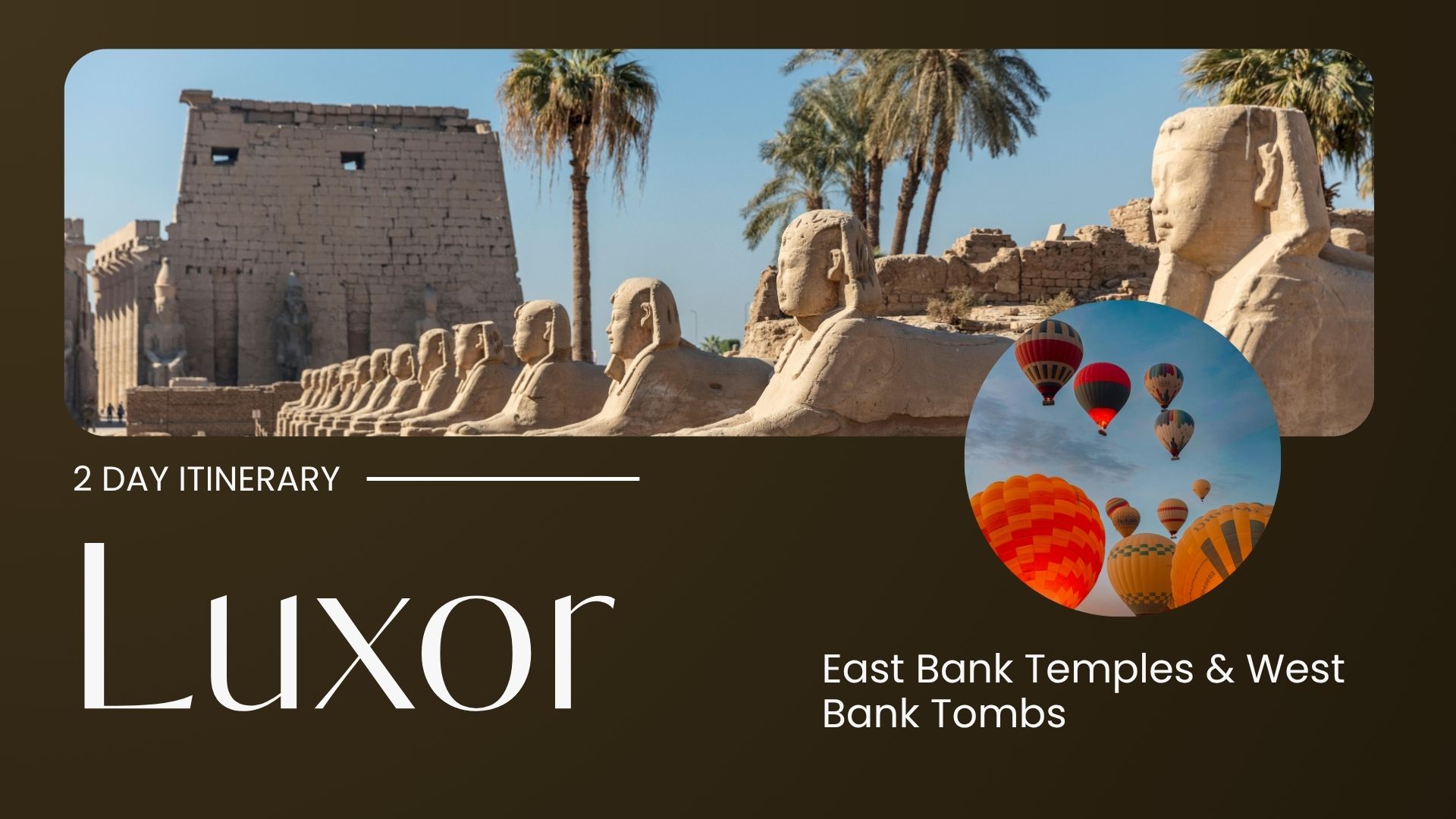
Luxor Temple sits inside the town, at the end of the ancient Avenue of Sphinxes that once linked it to Karnak. It is smaller than Karnak and easier to read, which makes it the right thing to hold back for late afternoon rather than squeezing it into the same morning.


Go in the last couple of hours of daylight and stay for the light show, which runs after dark and puts the columns in a very different frame. Between the two, walk the Nile Corniche. The riverfront is where the town takes its evening, and it costs nothing.


A Felucca Before Dinner


A felucca sail is the standard end to day one, and the timing matters more than the boat. Late afternoon puts the west bank cliffs in low light and takes the edge off the heat, and a sunset sail gets you back to the east bank in time to eat.


Book it for the hour before sunset. A felucca moves at the speed of the wind, so a late start means finishing in the dark.


Day 2: Balloon at Dawn, Then the Tombs


The Balloon Flight


Sunrise balloon flights are the reason day two starts before breakfast. You launch in the dark, climb over the west bank as the light comes up, and land in time to be at the tombs while the air is still cool. The view takes in the Valley of the Kings and the green strip along the river, which shows how narrow the cultivated land really is.


Weather can keep a flight on the ground. The morning still works without it: you drive straight to the tombs at the same early hour and gain time rather than losing it. Build the day around the dawn either way, and the plan holds.


The Valley of the Kings


The Valley of the Kings is the burial ground of the Theban necropolis, and Tutankhamun's tomb is the name most visitors know. Day trips here usually allow about two hours inside the Valley, and that is honest: the tombs are small, the walk between them is short, and the heat inside does the pacing for you.


Start with the tombs you care about most, because heat builds inside the painted rooms faster than it does outside. Carry water in, wear a hat, keep shoulders and knees covered, and plan on a slow walk rather than a full circuit.

vally of the kings


Hatshepsut and the Colossi of Memnon


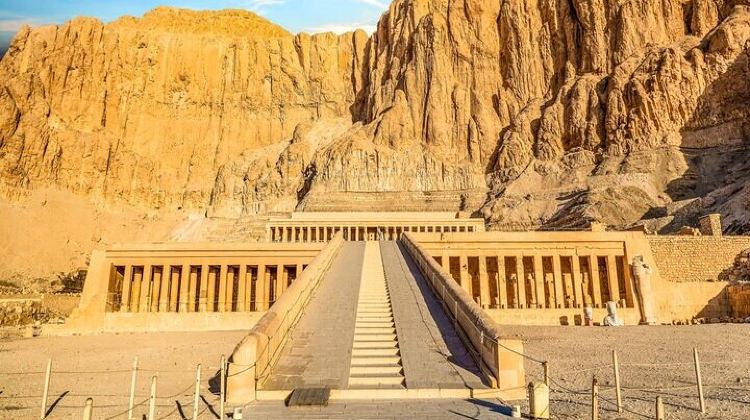
The Temple of Hatshepsut at Deir el-Bahari sits on the same side of the river, cut into the cliff face, and it is the natural second stop after the tombs. It reads as architecture rather than decoration, with terraces stacked against the rock.


The Colossi of Memnon come last, on the way back toward the river. They are two seated figures standing in open ground; the stop takes about fifteen minutes, and there is no shade to hide in. Take the photos and get back in the car.


You can be across the river by early afternoon, which leaves the rest of day two open. Use it for the town, a long lunch or the market at Al-Markaz al-Souq, and treat it as part of the trip rather than dead time between sites.


2-Day Hurghada Over Day Tour to Luxor Balloon Ride and Felucca

2-Day Hurghada Over Day Tour to Luxor Balloon Ride and Felucca
Daily Departure
4.9( 156 reviews )
Tour Code: 761418
Start / End City
Hurghada
Duration
2 Days
City & Attractions
Luxor, Edfu, Hurghada+7 more
Languages
English Live
From
$243.17


Getting There and Crossing the River

Luxor has its own airport, and the transfer into town is short enough that arrival day still counts as a usable half-day. A licensed taxi to an East Bank hotel takes 15 to 20 minutes and costs roughly 100 to 150 EGP, and Uber works in the city as well. Agree the fare before you get in, and skip the drivers who approach you inside the terminal.


Many visitors arrive on a domestic flight from Cairo. If Luxor is one stop on a longer Egypt tour, book that internal flight early, because the morning departures are the ones that leave you an afternoon on the ground. Coming in overland from the Red Sea coast adds road time at both ends of the trip, but the two-day format is built for it, since the driving brackets a night in Luxor instead of eating into the sightseeing day.


Entry paperwork is worth sorting before you fly. Citizens of the U.S., Canada, the UK, Australia, and EU countries can apply for an e-visa online or buy a visa on arrival at Cairo International Airport, and the standard tourist visa covers a stay of up to 30 days. Your passport needs at least six months of validity beyond your arrival date.


Once you are in Luxor, the river is the geography that matters. Everything on the east bank sits within a short drive of everything else, and the west bank is a crossing away. On an organized day, the driver stays with the car, so a West Bank morning runs as one loop: tombs, temple, Colossi, back to the water.
 

Where to Stay: East Bank or West Bank

The East Bank is the easier base, and for a two-day trip it is usually the right one. You are in a working town with restaurants, the corniche and Luxor Temple lit up after dark, and every West Bank morning starts with a short crossing.


The West Bank trades convenience for quiet. You wake up close to the tombs, which matters when the balloon launch and the first site both want you out before the heat, and the evenings are still and dark. What you give up is dinner choice: eating on the west bank means eating where you sleep, and the town is a crossing away.


Every Luxor itinerary 2 days long runs into the same evening question, which is where you want to be when the sightseeing stops. If you plan to eat out and walk in the evening, sleep east. If you plan to be up before dawn for the balloon and back in bed by nine, sleep west.


You can also leave the logistics to someone else. A guided Luxor tour that includes hotel pickup takes the crossings off your list, and Luxor vacation packages put the room and the days in one booking so you are not choosing a hotel and an itinerary separately.

luxor temple

Timing: Heat, Dawn and the Hours That Work

Luxor is a desert city, and the thermometer decides your schedule more than any opening time does. September averages about 86°F and slides to around 75°F by November; winter days sit near 72°F with nights dropping to about 46°F; spring runs around 82°F, and June through August pushes past 104°F with highs near 106°F. The published guidance for Luxor puts the comfortable window between November and February, with days between 68°F and 77°F.


What that means in practice is a split day. Sites between about ten in the morning and three in the afternoon are a test of endurance rather than interest, and the west bank is worse than the east because the tombs have no shade and no airflow. Put the tombs at dawn, put Karnak at opening or in the last two hours of light, and leave the middle of the day for eating, sleeping, or the pool.


Winter changes the packing, not the plan. Winter nights feel colder than the daytime average suggests after a hot afternoon, and a jacket is worth the space in December and January. Summer is the reverse: the early start is not optional, and a balloon flight at sunrise is the one part of the day that is genuinely comfortable.


Two money details catch people by surprise. Entrance fees sit outside the price of a day tour, so budget for site tickets on top of whatever you have already paid. Tips are separate again, and small notes are the useful thing to carry, since change is hard to find once you are past the gates. Ramadan shifts each year and can change restaurant hours, so check dates if your trip lands in that window.

If You Have a Single Day

A two-day Luxor itinerary gives each bank its own morning. Cut it to one day and you are choosing a side of the river rather than a set of sights, because the crossing plus the heat will eat whatever you try to add. So which side is worth your one day?


Pick the west bank if the tombs are the reason you came. The Valley of the Kings and Hatshepsut sit close to each other; the balloon gets you over them at sunrise, and the major sight of the trip is done before the day heats up. Pick the east bank if you want temples, town, and an easy evening, in which case Karnak in the morning and Luxor Temple after dark is a complete day on its own.


Two things get dropped in a one-day version. The balloon goes first, since a dawn flight plus the tombs plus a crossing leaves no room for anything else. Hatshepsut goes second if you are short of hours, because the Valley carries more weight for most visitors and the Colossi are the easy add-on on the way out.


Here is how the trade works, depending on how many days you have.


Days What you cover What you give up
One day, West Bank Balloon at dawn, Valley of the Kings, Hatshepsut, Colossi Karnak and Luxor Temple
One day, East Bank Karnak in the morning, Luxor Temple and the corniche in the evening The tombs and the balloon
Two days Both banks, one dawn and one sunset, no rushing Nothing except a slower pace


Do not attempt both banks in a single day. It works on paper and collapses in the afternoon, when you cross the river in the heat to see a temple you will not remember.

What Two Days in Luxor Actually Buys You

The point of any 2 days in Luxor itinerary is not the number of sites it fits. It is the hours. Two days lets you stand in the Valley of the Kings before the air turns, and sit outside Luxor Temple in the last hour of light, after the day trippers have gone back to their hotels. A single day gives you one of those hours and a lot of driving between them.


It also gives you a buffer. Flights slip, a balloon gets grounded, someone sleeps through an alarm, and a spare afternoon absorbs all three. A plan with every hour accounted for turns one delay into a lost day.


If a third day ever appears, spend it on the west bank rather than on a new town. A second quiet morning among the tombs beats a rushed run to another temple, and you will see things you walked past the first time. If a day has to go, take it off the front of the trip and keep the dawn.


Keep the dawn for the west bank, keep the late afternoon for Luxor Temple and the river, and drop a temple rather than an hour of sleep. That is the whole trade, and it is the one most people get wrong on a short trip.

FAQ

Is two days enough time in Luxor?

For both banks, yes, as long as you give each one its own day. You will not see every tomb or every chapel, and that is normal. A third day buys breathing room rather than a new headline sight.

Which bank should you visit first?

The east bank. Its temples work at any hour, while the tombs need the cool part of the morning. Starting in town also means your first evening is a short walk rather than a crossing.

What costs sit outside a tour price?

Site tickets and tips, both handled on the spot. Carry Egyptian pounds in small notes so you are not hunting for change at a gate or in a car park.

Do you need a guide in Luxor?

Not strictly, but the crossings, the site order and the heat are where self-organized days tend to fall apart. A guide earns the fee on the west bank, where the stops come close together.

Summary

2 Days in Luxor Itinerary

Getting There and Crossing the River

Where to Stay: East Bank or West Bank

Timing: Heat, Dawn and the Hours That Work

If You Have a Single Day

What Two Days in Luxor Actually Buys You

FAQ

America's 250th Anniversary Mega Sale

image