LuxorEgyptAfricaPlaces to GoTravel TipsExcursionsWeekend TripsVacations
Show All

8 Things to Do in Luxor: Balloons, Temples & West Bank

cover

Luxor rewards one planning decision more than any other: you cannot see it in a single loop. The things to do in Luxor sit on both sides of the Nile, and the river between them costs you time rather than scenery. Get the order right and two days feel generous. Get it wrong, and you spend the trip in a car, watching the temples go past.


Most travelers give the city two nights, which covers the tombs, one temple morning, one temple evening, and a balloon flight if you keep crossings to a minimum. Three nights adds the market and a slow afternoon on the water. Four is for people who want a second morning in the Valley of the Kings and a lazy one after it.


Eight stops can fill two days, but it helps to settle the practical layer first: how to move between the banks, where to sleep, and which months let you stay outdoors past ten in the morning.

Top 8 Things to Do in Luxor

Sorting the things to do in Luxor, Egypt into two banks is the whole planning job, so the order below follows the light rather than a map. Each stop takes a half day at most, and this sequence never asks you to cross the river twice in one day.


1. A Dawn Balloon Flight Over the West Bank


Flights lift off at first light, so the pickup comes while it is still dark and you are back on the ground before the heat builds. From the basket, the Theban mountains, the green strip along the river, and the Valley of the Kings all sit below you at once, and Karnak shows up across the water while you are still low over the fields. That is the one time the whole layout reads in a single look. Book it for your first morning rather than your last, so you still have another dawn to fall back on. Winter mornings are cold before sunrise, so bring the layer you packed for the evenings.


2. Karnak, a Complex Rather Than a Single Temple


Karnak is not one temple but a set of them, built and enlarged across centuries. Give it half a day and arrive at opening, when the courts are nearly empty, and the columns throw long shadows into the aisles. The Avenue of Sphinxes still runs from here toward Luxor Temple, the ceremonial road that once joined the two. This is also where the ticket arithmetic starts: the Luxor Pass costs 180 to 240 Egyptian pounds depending on tier, pays for itself at four or more of the five sites it covers, and does not extend to guided tours or cameras. Buy it at the first monument you enter, while the day is still ahead of you.

karnak


3. Luxor Temple After Dark


Luxor Temple sits inside the town rather than outside it, which is why it works as an evening stop instead of a morning one. The site is lit after sunset, the sound and light show runs there, and the stone reads differently under lamps than under the sun. Go on your first night, while the travel day still has you awake, and let it set the tone for the rest of the trip. The walk back through town afterward, past the corniche and the open-air tables, is part of the evening.


4. The Valley of the Kings, a Morning Rather Than a Stop


The pharaohs cut their tombs into the rock here instead of stacking them into pyramids, and Tutankhamun's tomb is the name most people arrive knowing. Which chambers you can enter is settled on site rather than by whatever list you read at home, so ask when you get there what is open that day and take the answer. The setting is a dry basin with almost nowhere to sit and almost no shade, which is why this belongs at the front of your day rather than the middle. Plan the whole morning around it.

The Valley of the Kings


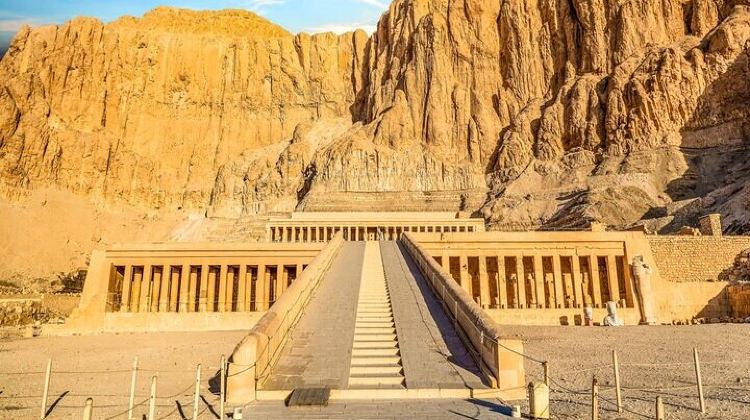
5. The Temple of Hatshepsut at Deir el-Bahari


The Hatshepsut temple stands on the west bank at Deir el-Bahari, and it is the natural second stop after the tombs rather than a separate trip. Keep shoulders and knees covered, stay behind the barriers, and never touch the carvings, because the paint still on the walls is the reason those rules exist. There is very little shade on the approach, so do it before the afternoon glare settles in.


6. The Colossi of Memnon, a Photo Stop That Earns Its Place


The Colossi of Memnon stand on the west bank, and they cost you a stop rather than a detour, which is the right way to treat them. Nobody builds a morning around two statues, but you pass them between the tombs and the water, on the way back. Arrive early and the light comes in from the side. Arrive at midday, and you get flat heat and a row of vans.

Colossi of Memnon


7. A Sail on the Nile, Felucca or Cruise


The river is the reason the city exists, and an afternoon on it is the easiest way to see both banks at once. A felucca out of Luxor puts you on the water with the Theban mountains behind you and the town ahead. If you are heading south, a Nile cruise between Luxor and Aswan does the same at a slower pace, with the temples and tombs built into the days and one cabin to unpack into. Take the sail late in the afternoon, when the heat drops and the light softens.


8. The Market at Al-Markaz al-Souq


After the tombs close and the temples light up, the town does its own thing, and the market around Al-Markaz al-Souq is where that happens. Stalls run late, the open-air tables fill up, and the pace is the opposite of a site visit: no ticket, no fixed route, no reason to be anywhere at a set time. It is the one item here you can move to any evening without breaking the plan, which makes it the thing to keep when a late arrival eats your first afternoon. Order whatever the next table is eating and stay outside; nobody is in a hurry at that hour.

Getting Around, and the Morning Crossing

Cairo to Luxor is quickest by air, and the same goes for the Luxor to Aswan leg if you are continuing south. Trains, including overnight sleepers, connect Cairo to Upper Egypt, which trades a hotel night for a rough night's sleep. If you take the sleeper, book a cabin rather than a seat and keep your first morning light.


Getting around town is simple. Uber runs in Luxor, so a car is easy to sort on arrival, and that matters most on the west bank, where the stops are drives apart rather than a walk, and there is no shade between them. For that one morning, the vehicle matters more than the commentary. The town side is compact, so the corniche and both temples work without a car. Many travelers still hand the logistics to a guide for exactly this reason: the hours go on the crossing, not on the driving.


Booking a Luxor tour that keeps a car and driver with you is the practical answer if you have a single morning for the tombs and no appetite for negotiating a fare at every stop. If you would rather hand over the driving and the dawn pickup as well, Tours4fun runs guided days out of the city with the crossing already built into the schedule.

luxor

Where to Stay

Base yourself on the east bank. That is where the town is, where the restaurants and the corniche are, and where both temple sites sit within a short ride of the room. It also means your evenings need no logistics: Luxor Temple after dark, dinner, a walk along the water, and nothing to arrange at the end of it. The corniche is at its best for that walk in autumn, when the evening air finally turns cool.


The cost side helps too. Mid-range hotels across Egypt average around $50 to $80 a night, and a street meal costs a fraction of that, so a room on the east bank with a river view is cheaper than the same view in Europe.


The trade off is the morning crossing. Sleeping east puts the Valley of the Kings on the far side, so an early start costs you a crossing before coffee. Most people still take that deal, because the west bank has almost nothing open once the sites close, and the things to do in the Luxor area at night are all on the east side.


Book the room before you book anything else if your dates land in December or January. Those are the peak weeks in Luxor as well as in Cairo, with the highest rates around Christmas and New Year, and the good rooms near the corniche go first. If you want the hotel and the river leg settled in one booking, Luxor vacation packages put the two together.

When to Go, Season by Season

Luxor is a desert city, and the gap between January and July is not a matter of taste. Treat the weather as the first decision of the trip, because it sets how many hours you get outdoors before the day turns against you.


October through April is the comfortable stretch. Winter days average 22°C, nights drop to around 8°C, and the low sun keeps the carvings on the west bank readable instead of blown out. Demand for Nile cruises climbs steeply from mid-October, which makes the weeks after it a busy stretch rather than a quiet window.


Spring averages about 28°C, which is pleasant until the Khamsin arrives, the hot, dusty wind off the Sahara that usually blows for a few days and hits hardest in April. May is the last month that stays workable inland. The season also brings smaller crowds than winter, which makes the sites easier to walk at your own pace. June through August brings highs near 41°C, so sightseeing moves to the first hours of the day and the afternoon belongs to the river, and those same weeks are the cheapest of the year for Nile cruises.


Ramadan shifts each year and can shorten opening hours at sites and restaurants, so line the dates up against yours. Travelers building an Egypt tour around Cairo, Luxor, and Aswan tend to aim for October through April, when there is a real chance of walking a site in the middle of the day.

What to Keep, and What to Drop

The honest version of this list is that eight items do not fit into two days without something giving way. So here is what gives, in the order most people hit the problem.


With two mornings on the west bank, keep the Valley of the Kings and the Hatshepsut temple, and treat the Colossi as a stop on the way past rather than a destination of their own. With a single morning, keep the valley and drop Hatshepsut rather than rushing both badly. If your flight out is early, drop the balloon rather than the tombs, because a dawn flight and a morning departure do not sit well together.


If you have two full days, the best things to do in Luxor are the ones that need first light: the balloon, the tombs, and Karnak before the coaches arrive. Everything else moves into an afternoon without much loss, the felucca included.


Pick your mornings, protect them from late nights, and let the afternoons fill in around them. A short plan done properly beats a long one done at speed.

FAQ

How do you get from Luxor airport into town?

A licensed taxi runs about 100 to 150 Egyptian pounds to the east bank, and the ride takes 15 to 20 minutes. Ride hailing works here too, so you can price the trip before you get in. Agree the fare first if you take a street cab.

Is Luxor safe to visit right now?

As of October 2026, the U.S. Department of State asks travelers to exercise increased caution in Egypt, and tourist areas such as Luxor, Cairo and Aswan see a visible security presence. Border regions and the Sinai outside Sharm El Sheikh are the parts to leave out. Check the advisory again before you book.

Can you cover both banks in a single day?

Yes, with a trim. Take one west bank morning and give the east bank the evening, and accept that you will give up the balloon or the felucca. The middle of the day gets spent crossing in the heat.

What should you carry to the sites?

Cash in Egyptian pounds for tickets and small tips, known locally as baksheesh, plus water, a hat and a scarf. Shoulders and knees covered still applies at every stop on this list.