The Two Banks, and Why the River Decides Your Day
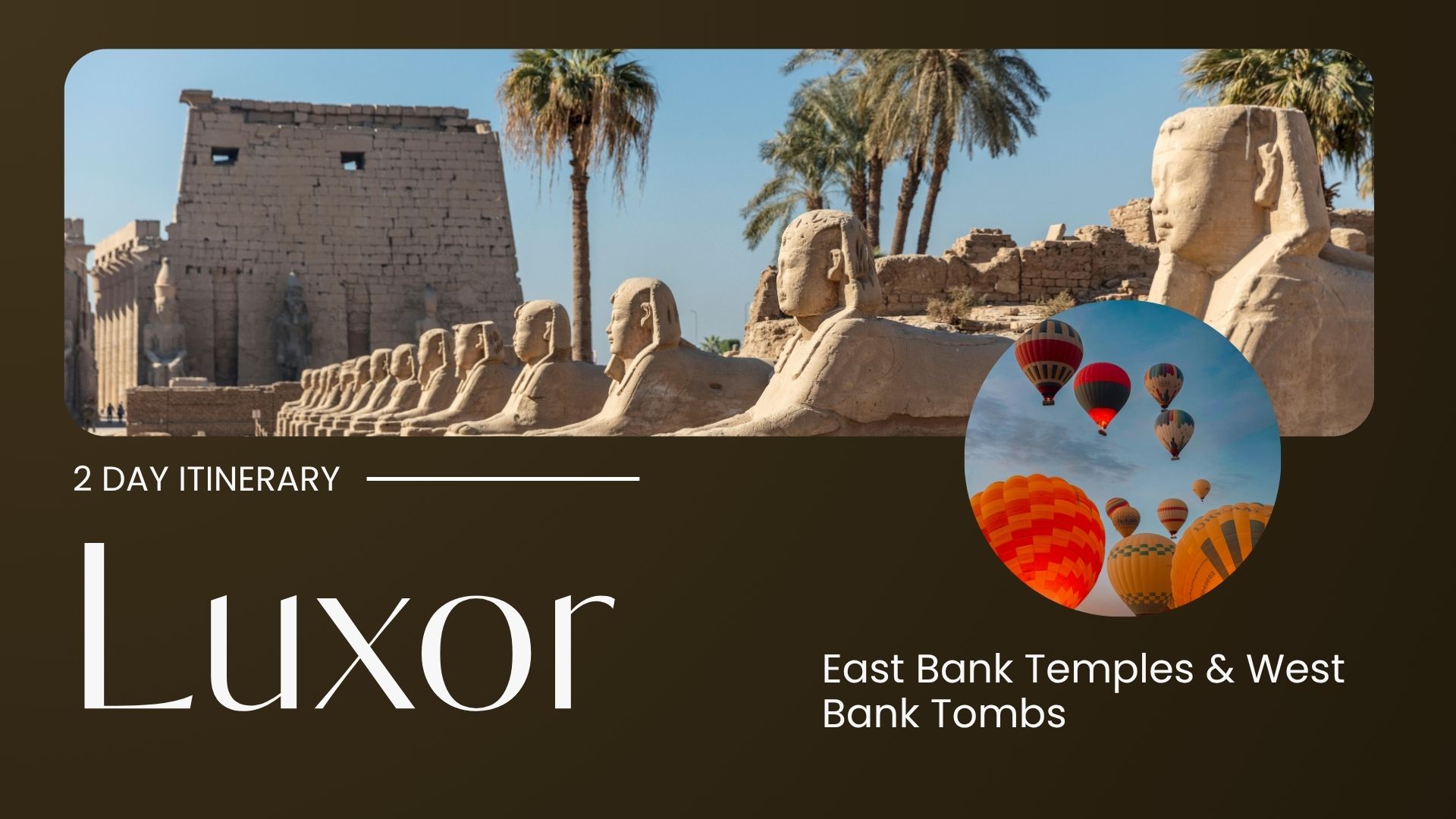
Luxor was Thebes, the pharaonic capital, and the modern city still carries the old layout: the living town on the east side, the dead on the west. On the east bank you get the Karnak Temple complex and Luxor Temple, with the Avenue of Sphinxes running between them. On the west bank you get the Theban Necropolis, which means the Valley of the Kings, the Temple of Hatshepsut at Deir el-Bahari, and the Colossi of Memnon on the way past.
The useful consequence is that Luxor is not a list of sights to tick off in one loop. It is two half days that do not touch, and the crossing between them costs you time you could spend inside a tomb. Group your stops by bank and you stop paying that tax twice.
The two banks also feel different, and that decides how you pace them. The east bank is a working town: hotels, restaurants, traffic, an evening corniche. The west bank is fields and desert edge with almost no shade, so it rewards an early start and punishes an eleven o'clock arrival. Put the tombs first, come back to town for lunch, and take the temples late in the day when the stone has cooled.

Karnak and Luxor Temple, One Morning and One Evening
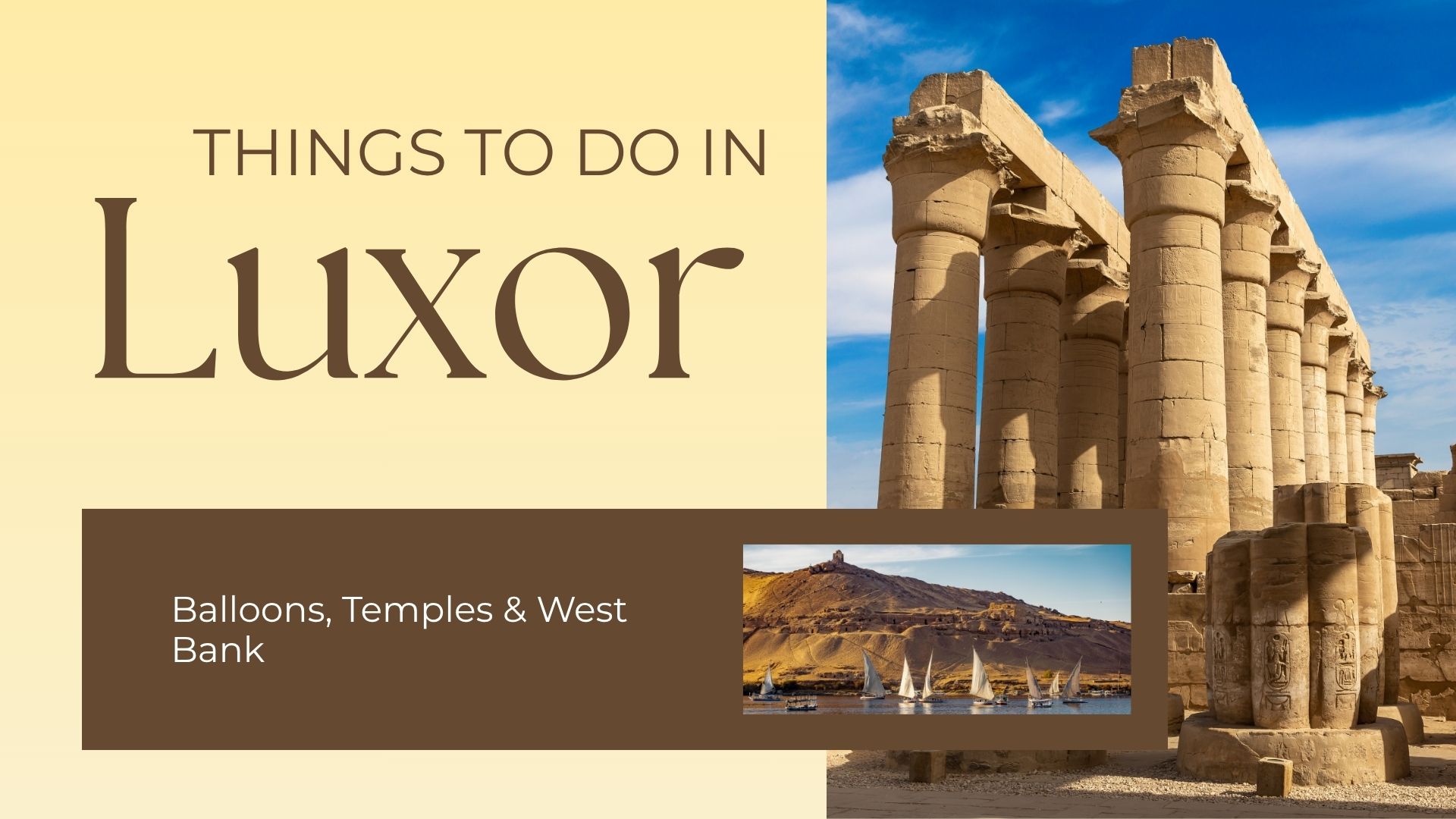
Karnak is not a temple but a complex of them, built and added to across centuries, and it is the bigger of the two sites by a wide margin. Give it half a day. The scale is the point: you walk from court to court, and the doorways keep getting larger.
Luxor Temple is the smaller, more intimate counterpart at the other end of the Avenue of Sphinxes, the paved ceremonial road that once joined the two. It works in the evening, when the site is lit and the sound and light show runs. Doing Karnak at opening and Luxor Temple after dark puts one day under two very different kinds of light, and each site suits the one it gets.

The Luxor Pass decides the ticket math. The pass sold at the monuments covers Karnak, Luxor Temple, the Valley of the Kings, the Temple of Hatshepsut, and the Colossi of Memnon, with tiers priced around 180 to 240 Egyptian pounds, and it is not valid for guided tours or cameras. Four or more of those sites and the pass is the cheaper way in. Two sites, and you are better off buying as you go.
The Valley of the Kings, and How a Visit Actually Works
The Valley of the Kings is where the pharaohs of the New Kingdom were buried, cut into the rock on the west bank instead of stacked into pyramids. Tutankhamun's tomb lies there, which is the name most people arrive knowing. What surprises them is the setting: a dry basin with almost nowhere to sit and almost no shade.
Treat the visit as a morning, not a stop. Which tombs you can enter is settled on site rather than by whatever list you read at home, so ask your guide what is open that day and take the recommendation. You are walking into excavated chambers cut from rock, and the air inside is still and warm even in December.
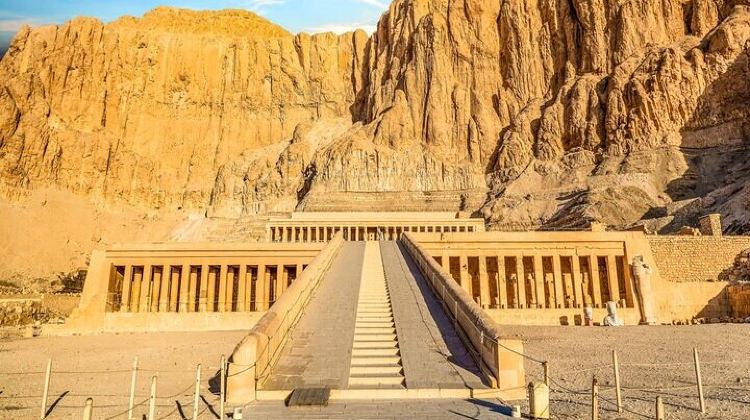
Build the west bank morning in one direction and it works. Valley of the Kings at opening, while the rock still holds the night. Then the Temple of Hatshepsut at Deir el-Bahari, which sits under the cliffs and takes the sun earlier than you would like. The Colossi of Memnon are on the road back, so they cost you a photo stop rather than a detour.
Dress modestly even though these are ruins: shoulders and knees covered, and a scarf helps with the sun as much as with the setting. Ask before you photograph people, keep your hands off the carvings, and stay behind the barriers. Guards do enforce both, and the paint still on the walls is the reason.
Getting to Luxor, and Getting Across the River
Flying is the quickest way to cover the distance between Cairo and Luxor, and the same goes for the Luxor to Aswan leg. Trains, including overnight sleepers, connect Cairo to Upper Egypt, which trades a hotel night for a poor night's sleep. If you take the sleeper, book a cabin rather than a seat and plan a slow first morning.
The airport sits a short ride from the east bank, 15 to 20 minutes to most east bank hotels. Ride-hailing apps work in Cairo, Alexandria and Luxor, and Uber runs reliably here, so a car is easy to sort on arrival. Agree the fare before the car moves, or have the transfer waiting.
Across the river, the west bank stops are drives apart rather than a walk, and with no shade between them the vehicle matters more than the guide for most of the morning. A Luxor tour that keeps a car and a driver with you is the practical answer if you have one morning for the tombs and no time to haggle at each stop.

For the longer trip, travelers building an Egypt tour around Cairo, Luxor and Aswan usually pair the short internal flights with a river leg, and that pairing is what lets a multi-stop itinerary fit into a week without a night bus in it.
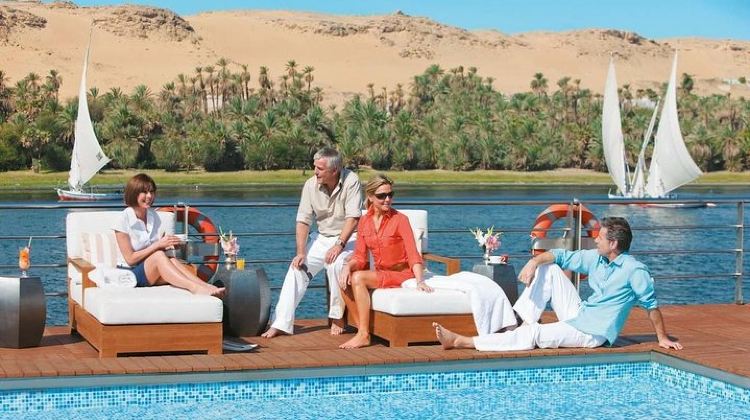
The riverboats that work the Luxor to Aswan stretch are the slow option, and slow is the appeal: you unpack once and wake up somewhere new. They also set the pace, so if the tombs are the reason for the trip, add a night in Luxor on either side of the sailing.
Where to Stay, and Which Bank to Sleep On
Base yourself on the east bank. That is where the town is, where the restaurants and the corniche are, and where both temple sites sit within a short ride of the room. Basing east also means your evenings are easy: Luxor Temple after dark, dinner, and a walk along the river without arranging transport back across the water.
The trade-off is the morning crossing. Staying east puts the Valley of the Kings on the far side, so an early start costs you a boat or a car before you have had coffee. It is still the better deal for most people, because the west bank has almost nothing to do after the sites close and the east bank has everything.
Book the room before you book anything else if your dates fall in December or January. Those are the peak weeks in Luxor as well as in Cairo, with the highest rates around Christmas and New Year, and the good rooms near the corniche go first. If you want the hotel and the river leg settled in one place, Luxor vacation packages pair the two.
When to Go: Luxor's Four Seasons
Luxor is a desert city, and the difference between January and July is not a matter of taste. The numbers below are averages rather than forecasts, and this Luxor travel guide treats them as the first decision you make: they tell you how many hours of walking you get before the day turns against you.
Autumn: September to November
Autumn is the soft landing, and the easiest window to travel to Luxor Egypt if you want warm days without the holiday crowds. Average temperatures run around 30°C (86°F) in September and slide to 24°C (75°F) by November, with evenings that finally feel cool. The corniche becomes the place to be after dark, and the light on the west bank at dawn is the reason photographers book these weeks.
Winter: December to February
Winter is the season the sites were designed for: average daytime temperatures near 22°C (72°F), with mornings that keep the stone carvings readable in low sun. The catch is the nights, which drop to around 8°C (46°F), so pack a jacket for the evening. It is also peak season, with the crowds and rates to match.
Spring: March to May
Spring averages around 28°C (82°F), with mild mornings and evenings that make both banks comfortable in the same day. April is the month to watch: the Khamsin, a hot, dusty wind off the Sahara, can blow for a few days and turn the sky pale, so keep a flexible morning in the plan and check the forecast before committing to a balloon ride.

Summer: June to August
Summer highs sit near 41°C (106°F), so the plan has to bend around the heat rather than push through it. Sites open early, so do the Valley of the Kings at opening and a museum or the hotel pool in the afternoon, then come out again after the sun drops. Crowds thin out, prices soften, and the heat is the price of both. Ramadan moves each year and can shift the opening hours of some attractions and restaurants, so check before you build a day around a late lunch.
Final Thoughts
With two days, keep the Valley of the Kings and Karnak, and drop the idea of seeing everything else on the west bank. One early morning among the tombs and one long morning at Karnak, with Luxor Temple lit up after dinner, is a complete trip. Three days lets you add the Temple of Hatshepsut and a slow afternoon on the corniche instead of a third site.
What to drop is easier to name than what to add. Skip any plan that puts both banks in the same half day, skip a second west bank run in the afternoon heat, and skip the notion that a cruise port call gives you Luxor. If your dates are fixed by a sailing, book one extra night on land rather than a second excursion.
If you can travel to Luxor Egypt outside December and January, do it. Late October and November give you the same open sites with cooler evenings, and February does the same from the other side of the peak. The rule that holds the whole trip together stays the same: two sites a morning, one bank a day, and the rest of the time left for the river rather than the next ticket window.
FAQ
Is one day enough for Luxor?
It is enough for one side of the river. A single day buys either Karnak and the east bank or a west bank morning with the tombs, and trying to fit both means spending the middle of the day in a car.Which bank should you sleep on?
The town side, unless being first at the tomb gates matters more than dinner. Both temples, the restaurants and the corniche are there, and the crossing is short enough to make an early start manageable.Do you need a guide at the Valley of the Kings?
You can walk in without one, but the site decides tomb access daily and a guide knows which chambers are worth your hour. It also saves the waiting in line and the haggling at each stop.How bad is the heat in summer?
Fine at seven in the morning and punishing by noon. If your dates are locked, do the west bank first and stay indoors after lunch.What should you pack for the temples?
Covered shoulders and knees, a hat, water and shoes that handle gravel. A light layer for the evening matters in winter, when the nights turn cold.