TokyoJapanAsiaTravel TipsVacations
Mostrar todo

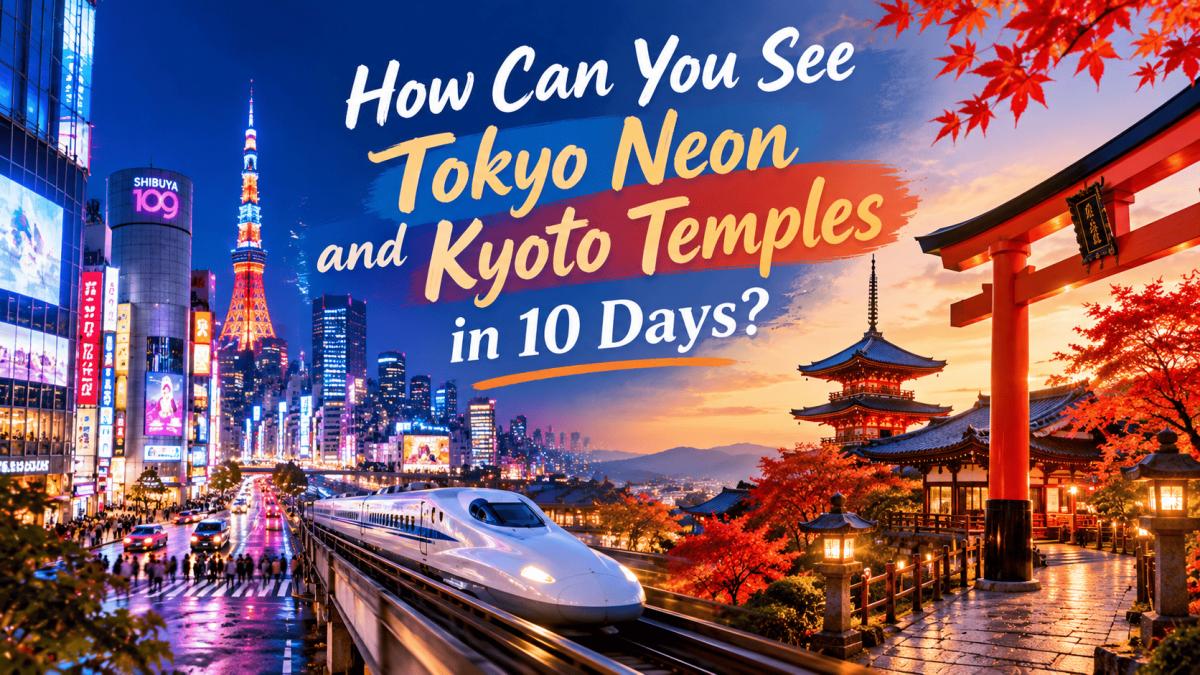
How Can You See Tokyo Neon and Kyoto Temples in 10 Days?

cover

You can experience both Tokyo's electric neon districts and Kyoto's serene temples in 10 days by spending 4-5 days in Tokyo exploring neighborhoods like Shinjuku, Shibuya, and Akihabara, then taking the 2.5-hour bullet train to Kyoto for 4-5 days visiting Fushimi Inari, Kinkaku-ji, and Arashiyama. This classic route gives you the perfect contrast between ultra-modern city energy and ancient cultural traditions, with enough time in each city to go beyond the tourist highlights.

The key is balancing your time: don't rush Tokyo's neighborhoods or skip Kyoto's smaller temples. You can explore Japan tours that follow this exact itinerary, or browse Japan vacation packages that bundle accommodations, bullet train passes, and guided experiences into one seamless trip.

Why This Itinerary Works

Geographic Logic

Tokyo and Kyoto are connected by the Tokaido Shinkansen (bullet train), which runs every 10-30 minutes and takes just 2 hours and 15 minutes between the two cities. This makes a two-city split practical without wasting time on long-distance travel.

kyoto

Experience Contrast

This combination delivers maximum variety:
  • Tokyo gives you neon-lit skyscrapers, cutting-edge technology, anime culture, world-class dining, and neighborhoods that feel like different countries
  • Kyoto offers over 2,000 temples and shrines, traditional geisha districts, zen gardens, tea ceremonies, and a pace of life that hasn't changed in centuries
You get the future and the past in one trip, and the contrast makes both experiences more meaningful.

Practical Timing

Ten days is the sweet spot for this itinerary. You avoid the "two cities in seven days" rush that leaves you exhausted, and you don't overextend into a third city (like Osaka or Hiroshima) that would dilute your experience. Four to five days per city gives you time to explore neighborhoods, not just check off attractions.

Day-by-Day Itinerary

Days 1-5: Tokyo


Day 1: Arrival and Shinjuku Neon
Land at Narita or Haneda Airport, take the train into Tokyo, and check into your hotel. Head straight to Shinjuku to experience Tokyo's neon intensity. Walk through the east exit area with its massive video screens, visit the Tokyo Metropolitan Government Building for free night views, then explore Golden Gai—a network of tiny bars squeezed into narrow alleys.

tokyo


Day 2: Shibuya and Harajuku
Start at the famous Shibuya Crossing (the world's busiest intersection), then explore Shibuya's shopping districts. Walk to Harajuku's Takeshita Street for youth culture and quirky fashion, then visit Meiji Shrine—a peaceful forest oasis in the middle of the city. End in Omotesando for upscale shopping and architecture.
Day 3: Traditional Tokyo
Visit Senso-ji temple in Asakusa (Tokyo's oldest temple), explore the Nakamise shopping street, then head to Ueno Park and the Tokyo National Museum. In the afternoon, visit Akihabara for electronics, anime, and gaming culture. The contrast between ancient Asakusa and futuristic Akihabara shows Tokyo's range.
Day 4: Modern Culture and Food
Spend the morning in Tsukiji Outer Market for a fresh sushi breakfast, then explore Ginza's luxury shopping district. Visit teamLab Planets or teamLab Borderless for immersive digital art. In the evening, experience an izakaya (Japanese pub) in Yurakucho under the train tracks, or explore Roppongi's nightlife.
Day 5: Day Trip or Deep Dive
Take a day trip to Nikko (2 hours by train) for ornate shrines and waterfalls in the mountains, or Kamakura (1 hour) for the Great Buddha and coastal temples. Alternatively, use this day to revisit favorite Tokyo neighborhoods, shop in Shimokitazawa's vintage district, or explore Odaiba's futuristic waterfront.

Day 6: Travel Day to Kyoto

Take the morning Shinkansen from Tokyo Station to Kyoto (2 hours 15 minutes). Buy a bento box at the station for the ride. Arrive by noon, check into your ryokan (traditional inn) or hotel, and spend the afternoon exploring Gion, Kyoto's geisha district. Walk through Hanami-koji street and if you're lucky, spot a geiko or maiko heading to an evening engagement.

kyoto


Days 7-10: Kyoto


Day 7: Eastern Kyoto Temples
Start early at Fushimi Inari Shrine to hike through thousands of vermillion torii gates before crowds arrive. Continue to Kiyomizu-dera temple with its wooden stage overlooking the city, then walk through the preserved streets of the Higashiyama district. Visit Kodai-ji temple and end at Yasaka Shrine.
Day 8: Western Kyoto
Take the train to Arashiyama for the iconic bamboo grove (arrive by 8 AM to avoid crowds). Visit Tenryu-ji temple's zen garden, cross the Togetsukyo Bridge, then explore the monkey park on the mountain. In the afternoon, visit Kinkaku-ji (Golden Pavilion), the famous gold-leaf-covered temple reflected in its pond.

kyoto


Day 9: Northern Kyoto and Cultural Experiences
Visit Ryoan-ji temple for its famous rock garden (the essence of Zen design), then Daitoku-ji temple complex with multiple sub-temples and gardens. In the afternoon, book a tea ceremony experience in a traditional machiya townhouse. In the evening, enjoy a kaiseki (multi-course) dinner featuring seasonal Kyoto cuisine.
Day 10: Final Morning and Departure
Visit Nijo Castle with its "nightingale floors" that squeak to warn of intruders, or return to a favorite temple. Pick up souvenirs at Nishiki Market (Kyoto's kitchen), then take the Shinkansen back to Tokyo for your flight home, or depart directly from Kansai International Airport if your flight allows.

Transportation

Tokyo to Kyoto: The Bullet Train

The Tokaido Shinkansen is one of the world's most efficient rail systems:
  • Nozomi (fastest): 2 hours 15 minutes, departs every 10-30 minutes
  • Hikari: 2 hours 40 minutes, slightly cheaper
  • Kodama: 3 hours 45 minutes, stops at every station
Cost: Around $120-140 USD one-way for reserved seats
Japan Rail Pass: If you're only doing Tokyo-Kyoto round trip, the JR Pass (7-day pass around $280) doesn't save money. But if you're adding day trips to Nikko, Kamakura, or Nara, the pass becomes worthwhile.

Within Tokyo

Tokyo's metro and JR train system is comprehensive and efficient:
  • Tokyo Metro + Toei Subway: Covers most central areas
  • JR Yamanote Line: Circular line connecting major stations (Shinjuku, Shibuya, Tokyo, Ueno)
  • Suica/Pasmo cards: Rechargeable IC cards for all public transport
Daily budget: $5-10 USD for unlimited metro/subway travel

Within Kyoto

Kyoto's bus system is the main way to get around:
  • Kyoto City Bus: Covers all major temples and attractions
  • One-day bus pass: $5 USD, unlimited rides
  • Subway: Only two lines, limited coverage
Many temples are walkable from each other in clusters (Eastern Kyoto, Western Kyoto), so you'll do a lot of walking.

Budget Breakdown

Here's what to expect for a 10-day Tokyo-Kyoto trip:
 
Category Budget Mid-Range Comfort
Accommodations (9 nights) $900 (hostels/capsule hotels) $1,800 (business hotels) $3,600 (4-star hotels/ryokans)
Transportation (bullet train + local) $250 $350 $500
Food $450 ($50/day) $900 ($100/day) $1,350 ($150/day)
Activities and temples $200 $400 $600
Total per person $1,800 $3,450 $6,050

Money-saving tips:
  • Stay in business hotels (Toyoko Inn, APA Hotel) for clean, efficient rooms at $80-120/night
  • Eat at conveyor belt sushi, ramen shops, and convenience stores for quality meals under $10
  • Buy a Kyoto bus one-day pass instead of individual tickets
  • Visit free attractions: shrines, parks, neighborhoods, temple gardens (many temples charge $3-5 entry)
  • Travel in shoulder season (March-May or October-November) for lower accommodation prices

Best Time to Visit

Cherry Blossom Season (Late March - Early April)

Pros: Iconic Japan cherry blossoms in full bloom, perfect weather (60-70°F), festive atmosphere
Cons: Peak tourist season, highest prices, crowded attractions, hotels book months ahead

Best for: First-time visitors who want the classic Japan experience and don't mind crowds

Autumn Foliage (November)

Pros: Stunning red and gold maple leaves, comfortable temperatures (55-65°F), less crowded than spring
Cons: Popular season, prices still elevated, some variability in peak timing

Best for: Photographers and travelers who prefer fall colors in Japan over cherry blossoms

Winter (December - February)

Pros: Lowest prices, fewer tourists, clear skies for Mount Fuji views, snow in Kyoto creates magical temple scenes
Cons: Cold (35-50°F), short daylight hours, some gardens less impressive

Best for: Budget travelers and those who don't mind cold weather

Summer (June - August)

Pros: Festivals and fireworks, lush green landscapes, lower accommodation prices (except Obon week)
Cons: Extremely hot and humid (85-95°F with high humidity), rainy season in June, typhoon risk in September

Best for: Festival enthusiasts who can handle heat and humidity
Overall recommendation: Late October to early November gives you comfortable weather, beautiful autumn colors, and lower prices than cherry blossom season.

Common Mistakes to Avoid

Trying to add Osaka or Hiroshima: Ten days for Tokyo and Kyoto is already full. Adding a third city means rushing both Tokyo and Kyoto. If you want to include Osaka, extend your trip to 12-14 days.

Not Reserving Bullet Train Seats in Advance: The Nozomi Shinkansen sells out, especially during peak season. Reserve seats at least a few days ahead, or buy tickets the morning of travel for less popular times.

Visiting Fushimi Inari at Midday: The famous torii gate path gets packed with tour groups from 10 AM to 3 PM. Go before 8 AM or after 4 PM for a peaceful experience and better photos.

Skipping Neighborhood Exploration: Don't just temple-hop in Kyoto or tourist-spot-hop in Tokyo. Spend time wandering neighborhoods like Shimokitazawa (Tokyo) or Philosopher's Path (Kyoto) to experience daily Japanese life.

Not Buying a Suica/Pasmo Card: These rechargeable IC cards work on all Tokyo trains, buses, and even convenience stores. Without one, you're buying individual tickets for every ride.

Ignoring Restaurant Reservations: Popular restaurants in Tokyo (especially sushi and kaiseki) require reservations weeks or months ahead. Book before your trip or use hotel concierge services.

Should You Book a Guided Tour or Plan Independently?

Guided Tours


Best for: First-time visitors to Japan, travelers who want logistics handled, those who value expert cultural commentary
What you get:
  • Bullet train tickets and local transportation arranged
  • Accommodations pre-booked (often in traditional ryokans)
  • Expert guide explains temple significance and cultural context
  • Skip-the-line access at popular attractions
  • Restaurant recommendations and reservations
  • Help navigating language barriers
Typical cost: $300-450 per person per day for quality small group tours

Independent Travel


Best for: Experienced travelers, those who prefer complete flexibility, budget travelers, visitors who enjoy planning
What you get:
  • Complete control over itinerary and pace
  • Ability to change plans spontaneously
  • Potential cost savings
  • Privacy and independence
Typical cost: $150-350 per person per day depending on choices

The Hybrid Approach


Many travelers book Japan vacation packages that include bullet train passes and hotel bookings but leave daily activities flexible. This gives you the convenience of pre-arranged logistics with the freedom to explore independently once you're there.


Final Thoughts

A 10-day Tokyo-Kyoto itinerary gives you the perfect introduction to Japan's contrasts: the neon-soaked hypermodernity of Tokyo and the serene temple gardens of Kyoto. You'll experience bullet trains, ancient shrines, cutting-edge technology, traditional tea ceremonies, world-class food, and neighborhoods that feel like stepping into different worlds.

The key is giving each city enough time. Don't rush Tokyo's neighborhoods or skip Kyoto's smaller temples. Wander through Shimokitazawa's vintage shops, sit in a Ryoan-ji zen garden, eat sushi at Tsukiji, and watch geiko glide through Gion's lantern-lit streets.

Whether you plan independently or book a guided tour, this combination delivers an unforgettable Japanese experience that balances the future and the past in ways no other destination can match.


FAQ

Is 10 days enough for Tokyo and Kyoto?

Yes, 10 days is ideal for this combination. You get 4-5 days in Tokyo to explore multiple neighborhoods and 4-5 days in Kyoto to visit major temples without rushing. Anything less than 8 days feels rushed, and anything more than 12 days for just two cities might leave you with too much unstructured time.

How much does a 10-day Tokyo-Kyoto trip cost?

Budget travelers can do it for $1,800-2,500 per person. Mid-range travelers spend $3,000-4,500. Comfort travelers budget $5,500-7,000. International flights from the US add $800-1,500, depending on season and booking time.

What's the best way to get from Tokyo to Kyoto?

The bullet train (Shinkansen) is the only practical option. It takes 2 hours 15 minutes, runs every 10-30 minutes, and is punctual to the second. Flying is possible but not faster when you factor in airport time.

Do I need a visa for Japan?

US citizens don't need a visa for tourist stays up to 90 days. You'll receive a temporary visitor stamp on arrival. Just show your passport and return flight ticket. Other nationalities have different requirements—check the Japanese Ministry of Foreign Affairs website.

What's the weather like in Tokyo and Kyoto?

Spring (March-May): 55-75°F, cherry blossoms in late March/early April Summer (June-August): 75-95°F, very humid, rainy season in June Autumn (September-November): 55-75°F, fall colors in November Winter (December-February): 35-50°F, cold but dry, occasional snow in Kyoto

Resumen

Why This Itinerary Works

Day-by-Day Itinerary

Transportation

Budget Breakdown

Best Time to Visit

Common Mistakes to Avoid

Should You Book a Guided Tour or Plan Independently?

Final Thoughts

FAQ

America's 250th Anniversary Mega Sale

image