JapanAsiaAutumnPlaces to Go
Show All

10 Best Places for Autumn Leaves in Japan 2026 Guide

cover

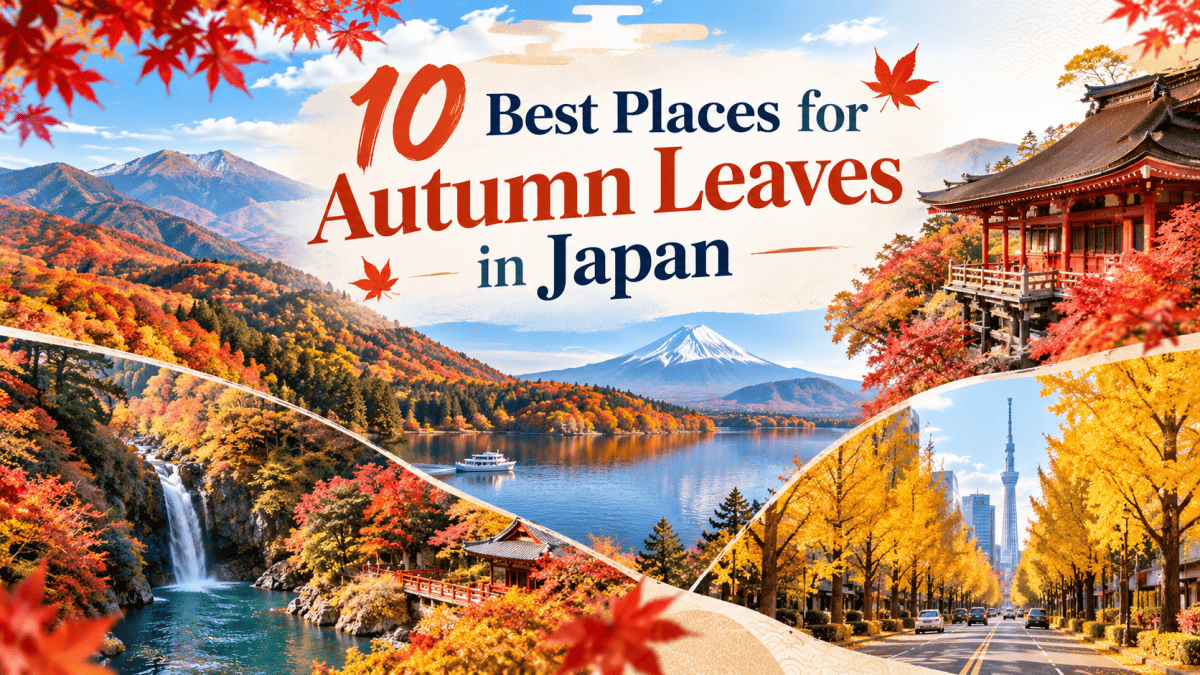
Japan in the fall transforms into a canvas of red, orange, and gold as maple trees and ginkgo leaves change color across the country. The autumn colours Japan displays from September through December create one of the world's finest seasonal shows, drawing millions of visitors to temples, parks, and mountain regions. Unlike the brief cherry blossom season, Japan's fall colors persist for nearly three months, moving gradually from north to south and giving travelers ample time to experience the transformation.

This guide covers the best places to see autumn leaves Japan offers, from the early color changes in Hokkaido to the late-season displays in Kyoto. Whether you're planning a temple-hopping adventure or a mountain hiking trip, you'll find the perfect spot to witness Japan's fall foliage at its peak.


Why Autumn in Japan Is Special

The Momiji Season


The Japanese call autumn leaf viewing 'momijigari,' and it ranks alongside cherry blossom viewing as a national pastime. Maple trees (momiji) turn brilliant red, while ginkgo trees create golden canopies in cities. The tradition dates back centuries, with aristocrats composing poetry about autumn colors during the Heian period. Today, Japan in the fall offers both traditional temple gardens and wild mountain landscapes draped in color.

Peak Timing by Region


Autumn in Japan follows a predictable pattern, starting in Hokkaido in mid-September and moving southward through October and November. Kyoto and Tokyo typically peak in late November, while southern regions like Kyushu peak in early December. This gradual progression means you can plan a multi-week itinerary to catch different regions at their best.

tokyo

Weather and Comfort


Fall weather in Japan offers comfortable temperatures (10-20°C or 50-68°F) and low humidity, making it ideal for outdoor exploration. Unlike the hot, humid summer or crowded spring season, autumn provides pleasant conditions for hiking, temple visits, and photography. Clear skies are common, especially in October and early November.

1. Kyoto: Temple Gardens and Traditional Beauty

Best Time to Visit


Mid-November to early December brings peak autumn colors to Kyoto's temples. The city's 2,000 temples and shrines offer perfect settings for momijigari, with many featuring special evening illuminations that highlight the colored leaves against traditional architecture.

Top Spots


Tofuku-ji Temple's Tsutenkyo Bridge offers the most famous autumn view in Kyoto, with a valley of maple trees creating a sea of red below. Kiyomizu-dera's wooden stage overlooks the city, surrounded by colored hills. Eikando Temple specializes in maple trees, with over 3,000 specimens creating intense displays. Arashiyama's bamboo grove and mountain temples provide both natural beauty and photographic opportunities. Many Kyoto tours include these temples on their autumn itineraries with timed entries for peak colors.

Kyoto

How to Get There


Kyoto connects to Tokyo via Shinkansen bullet train (2 hours 15 minutes). Within Kyoto, buses and trains reach major temples. Many visitors combine Kyoto with nearby Nara or Osaka for a comprehensive Kansai region experience. Consider Japan vacation packages that include Kyoto during November for guaranteed autumn color viewing.

2. Tokyo: Urban Autumn in the Capital

Best Time to Visit


Late November to early December brings peak colors to Tokyo's parks and gardens. The city's ginkgo trees turn golden yellow, creating striking contrasts against modern architecture.

Top Spots


Meiji Jingu Gaien's ginkgo avenue features 150 trees, creating a golden tunnel along Icho Namiki Street. Rikugien Garden, one of Tokyo's finest landscape gardens, transforms with maples reflected in ponds. Shinjuku Gyoen offers diverse tree species across its large grounds. Mount Takao, just outside central Tokyo, provides hiking trails through colored forests with views of Mount Fuji on clear days.

tokyo


How to Get There


Tokyo's extensive train system makes all these locations easily accessible. Most spots are within central Tokyo or reachable via JR lines. The city serves as an excellent base for day trips to nearby autumn destinations.

3. Nikko: Mountain Temples and Dramatic Scenery

Best Time to Visit


Mid-October to early November brings peak colors to Nikko's mountainous terrain. The elevation creates earlier color changes than Tokyo, with dramatic displays along winding mountain roads.

Top Spots


Kegon Falls, one of Japan's top three waterfalls, frames perfectly with red and gold foliage. Lake Chuzenji's shoreline blazes with colors reflected in calm waters. The road to Yunish Onsen offers some of the most scenic autumn drives in Japan. Toshogu Shrine's ornate architecture contrasts beautifully with surrounding forest colors.

Nikko

How to Get There


Nikko is accessible via Tobu Railway from Asakusa (2 hours) or JR lines from Ueno (1 hour 45 minutes to Nikko, then bus to mountain areas). The town serves as a base for exploring the national park's autumn displays.

4. Hokkaido: Early Autumn in the North

Best Time to Visit


Mid-September to mid-October brings the earliest autumn colors in Japan to Hokkaido. The northern island's cooler climate triggers color changes weeks before Honshu.

Top Spots


Daisetsuzan National Park offers wilderness hiking through colored forests with potential early snow on peaks. Shiretoko Peninsula's remote landscapes provide uncrowded autumn viewing. Sapporo's Maruyama Park and Hokkaido Shrine create urban autumn experiences. Biei's rolling hills display agricultural fields alongside colored tree lines.

Hokkaido

How to Get There


Fly to Sapporo from Tokyo (1 hour 45 minutes) or take the overnight ferry. Renting a car provides the best access to Hokkaido's dispersed autumn spots. Many Japan tours focus on Hokkaido during September for early autumn colors without crowds.

5. Hakone: Hot Springs and Lake Views

Best Time to Visit


Late October to late November brings peak colors to Hakone's mountain landscape. The combination of autumn foliage, hot springs, and views of Mount Fuji creates a classic Japanese autumn experience.

Top Spots


Lake Ashi's shoreline displays colors reflected in calm waters with Mount Fuji as a backdrop. Hakone Open-Air Museum combines modern art with autumn forest settings. The Hakone Tozan Railway's 'Hydrangea Train' becomes the 'Autumn Leaves Train' in fall, winding through colored mountains. Owakudani's volcanic landscape contrasts with surrounding forest colors.

Hakone

How to Get There


Hakone is accessible via Odakyu Railway from Shinjuku (85 minutes) or by highway bus. The Hakone Freepass covers local transportation, including the scenic railway, cable car, and lake cruises.

6. Nara: Deer Park and Ancient Temples

Best Time to Visit


Mid-November to early December brings peak colors to Nara's temples and parks. The city's free-roaming deer add charm to autumn landscape viewing.

Top Spots


Nara Park's wide lawns and forests host hundreds of deer among colored trees. Todai-ji Temple's massive bronze Buddha hall is beautiful with autumn maples. Kasuga Taisha's lantern-lined paths create atmospheric walks through colored forests. Yoshiki-en Garden offers traditional landscape design with peak autumn displays.

nara

How to Get There


Nara connects to Kyoto (45 minutes) and Osaka (40 minutes) via Kintetsu or JR trains. Most attractions are walkable from Kintetsu Nara Station. Many visitors combine Nara with Kyoto for a comprehensive Kansai autumn experience.

7. Kanazawa: Samurai Districts and Traditional Gardens

Best Time to Visit


Late November to early December brings peak colors to Kanazawa's gardens and historic districts. The city's preservation of Edo-period architecture creates authentic autumn settings.

Top Spots


Kenroku-en, one of Japan's three most beautiful gardens, features ponds, bridges, and maples designed for autumn viewing. The Nagamachi Samurai District's earthen walls frame perfectly with colored leaves. Higashi Chaya geisha district's wooden tea houses contrast with autumn colors. The 21st Century Museum of Contemporary Art's modern architecture provides unique photo opportunities with fall foliage.

Kanazawa

How to Get There


Kanazawa connects to Tokyo via Hokuriku Shinkansen (2 hours 30 minutes) or to Kyoto via Thunderbird limited express (2 hours 15 minutes). The city's compact center is walkable, with buses reaching outer attractions.

8. Miyajima: Island Shrine and Coastal Beauty

Best Time to Visit


Mid-November to late November brings peak colors to Miyajima Island. The combination of Itsukushima Shrine's floating torii gate, mountain forests, and coastal views creates unique autumn scenery.

Top Spots

Momijidani Park (Maple Valley) lives up to its name with dense maple forests. Daigan-ji Temple offers views of the floating torii gate framed by colored mountains. Mount Misen's hiking trails wind through forests with panoramic views from the summit. The island's deer, like Nara's, roam freely among autumn displays.

Miyajima

How to Get There


Take the JR Sanyo Line from Hiroshima to Miyajimaguchi (30 minutes), then take the ferry to the island (10 minutes). The Japan Rail Pass covers both the train and the ferry. Plan for 3-4 hours minimum to see the main attractions.

9. Tohoku Region: Rural Japan and Mountain Valleys

Best Time to Visit


Mid-October to early November brings peak colors to Tohoku's mountainous terrain. The region's rural character and lower tourist numbers provide uncrowded autumn viewing.

Top Spots


Oirase Stream's walking trail follows a mountain stream through colored forests in Aomori prefecture. Yamadera Temple's 1,000 stone steps climb through maple forests with valley views. Ginzan Onsen's hot spring town creates atmospheric autumn scenes with traditional ryokan architecture. Matsushima Bay's pine-covered islands display subtle fall colors against coastal scenery.

How to Get There


Tohoku spans six prefectures, best explored by rental car or JR Pass. The Tohoku Shinkansen connects Tokyo to Sendai (1 hour 30 minutes) and Aomori (3 hours). Rural areas require buses or local trains.
 

10. Japanese Alps: Alpine Autumn and Traditional Villages

Best Time to Visit


Early to mid-October brings peak colors to the Japanese Alps. The high elevation triggers earlier color changes than lowland areas, with dramatic mountain backdrops.

Top Spots


Kamikochi Valley's hiking trails follow the Azusa River through colored forests with Hotaka Mountain peaks. Shirakawa-go's thatched-roof villages create photogenic autumn scenes with harvest displays. Takayama's old town combines Edo-period architecture with fall colors. Norikura Skyline road offers scenic driving through mountain passes with panoramic views.

How to Get There


The Japanese Alps are accessible from Matsumoto (via Tokyo, 3 hours) or Takayama (via Nagoya, 2 hours 30 minutes). Kamikochi requires bus access from Matsumoto or Takayama, as private vehicles are restricted. Consider guided Japan tours that include the Alps during October for expert navigation of this mountainous region.

Planning Your Autumn Japan Trip

Best Overall Timing


For first-time visitors, late October to early November offers the best balance of peak colors in most regions, comfortable weather, and manageable crowds. This timing avoids the early September typhoon season and late December cold. The exact peak varies yearly based on summer temperatures and autumn weather patterns. Tours4fun's autumn itineraries typically target this window, balancing popular highlights like Kyoto's temples with less-crowded alternatives in Tohoku and the Japanese Alps.

Accommodation Booking


Autumn is peak season in popular destinations like Kyoto and Nikko. Book accommodation 3-6 months in advance, especially for traditional ryokan inns. Weekend nights fill fastest, so flexible weekday travel provides more options and better rates.

Transportation Options


The Japan Rail Pass offers excellent value for multi-city itineraries, covering Shinkansen and most JR trains. Regional passes work well for focused trips like Kansai or Hokkaido. Renting a car provides flexibility for rural areas but requires an International Driving Permit and comfort with mountain roads.

Photography Tips


Early morning light provides the best photography conditions with fewer crowds. Overcast days actually enhance color saturation compared to harsh sunlight. Many temples offer special evening illuminations during peak season, creating unique photo opportunities with colored leaves lit against night skies.

Final Thoughts

Japan in the fall offers one of the world's most remarkable seasonal displays, with autumn colors transforming temples, gardens, and mountains from September through December. The gradual progression from north to south gives travelers flexibility in timing and destination selection. Whether you prefer urban parks in Tokyo, traditional temples in Kyoto, or mountain wilderness in Hokkaido, the best places to see autumn leaves Japan offers provide memorable experiences.

Plan for accommodation in popular destinations, pack layers for comfortable exploration, and consider the weather patterns when choosing your itinerary. The combination of cultural sites, natural beauty, and comfortable temperatures makes autumn an ideal season for experiencing Japan's diverse landscapes.

For travelers who prefer having logistics handled, organized Japan vacation packages timed around peak foliage periods take the guesswork out of momijigari planning. These trips coordinate transportation, accommodation, and local guides so you can focus on enjoying the colors rather than navigating train schedules.


FAQ

When is the best time to see autumn leaves in Japan?

The best time depends on your destination. Hokkaido peaks from mid-September to mid-October, Tokyo and Kyoto peak in late November, and southern regions peak early December. Late October to early November offers the best overall timing for visiting multiple regions, with comfortable weather and peak colors in most areas.

How long does autumn foliage last in Japan?

The autumn color season spans nearly three months from mid-September to early December, moving from north to south. Individual locations typically maintain peak colors for 2-3 weeks before leaves drop. Weather conditions affect timing and duration, with warm autumns delaying color changes.

Is autumn a busy tourist season in Japan?

Autumn ranks as japan's second-busiest tourist season after spring cherry blossoms. Popular destinations like Kyoto, Nikko, and Hakone draw large crowds, especially on weekends and during peak color periods. However, the season's length and Japan's many autumn spots mean you can find less crowded options with planning.

What should I pack for autumn in Japan?

Pack layers for variable temperatures (10-20°C or 50-68°F). Bring a light jacket or sweater for cool mornings and evenings, with T-shirts for warmer afternoons. Comfortable walking shoes are essential for temple visits and hiking. A compact umbrella helps with occasional rain showers.

Can I see autumn leaves and Mount Fuji together?

Yes, several locations combine autumn colors with Mount Fuji views. Lake Kawaguchi's northern shore offers classic Fuji reflections with fall foliage. Hakone's Lake Ashi provides similar combinations. The Fuji Five Lakes region is particularly photogenic in late October to early November, when both elements peak simultaneously.

Summary

Why Autumn in Japan Is Special

1. Kyoto: Temple Gardens and Traditional Beauty

2. Tokyo: Urban Autumn in the Capital

3. Nikko: Mountain Temples and Dramatic Scenery

4. Hokkaido: Early Autumn in the North

5. Hakone: Hot Springs and Lake Views

6. Nara: Deer Park and Ancient Temples

7. Kanazawa: Samurai Districts and Traditional Gardens

8. Miyajima: Island Shrine and Coastal Beauty

9. Tohoku Region: Rural Japan and Mountain Valleys

10. Japanese Alps: Alpine Autumn and Traditional Villages

Planning Your Autumn Japan Trip

Final Thoughts

FAQ

America's 250th Anniversary Mega Sale

image