Day 1: Fira and the Caldera Rim
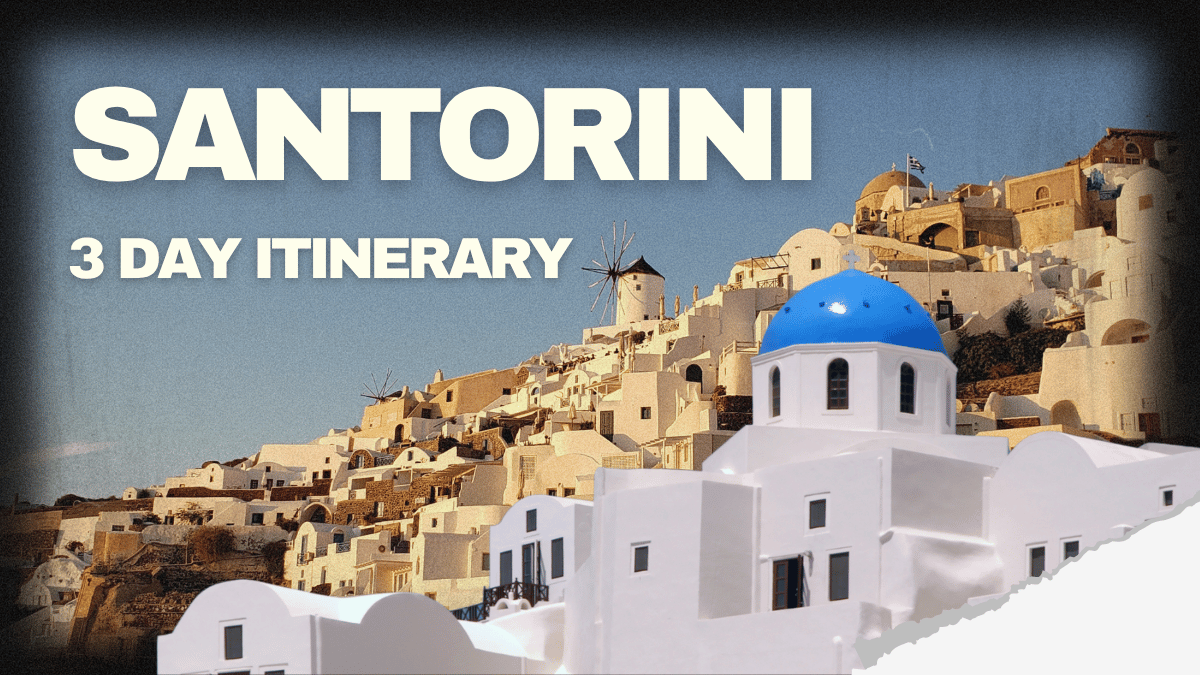
Fira is the capital, sitting along the cliff edge facing the volcano with its white houses stacked on the rim. The approach brings the town into view before you land, so you see the arrangement from the water first, which is a better introduction than any photograph.
Arrival and Fira
The transfer from the port is part of the arrival rather than a formality. Packaged routes include it. Drop the bags and walk in without a plan: Fira is a stack of lanes rather than a street grid, and it rewards walking without a destination. The terraces face the caldera, so a lane that looks like a dead end usually is not one.

The Caldera Rim
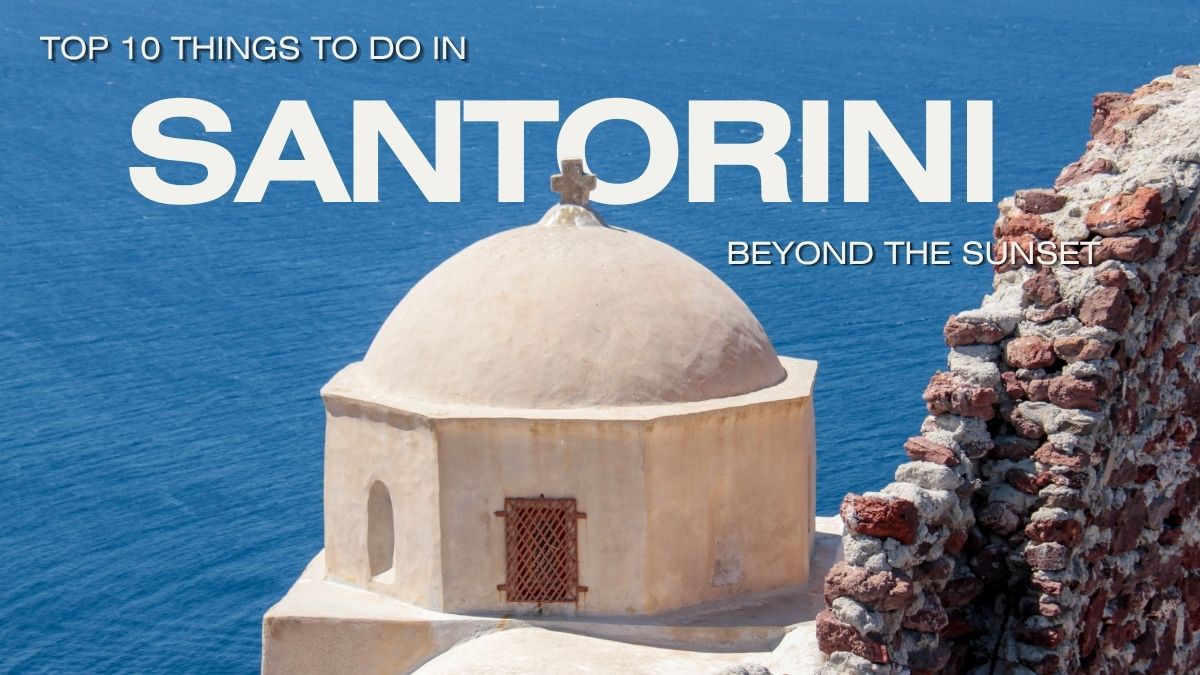
The rim is the reason the villages are where they are. Fira and Oia are the two cliffside villages, white houses perched high on multi-colored cliffs that rise out of an Aegean-flooded caldera, and the caldera is what the eruption 4,500 years ago left behind.
Below the villages, in the middle of the water, sit Nea Kameni and Palea Kameni, the two small volcanic islands. Whatever terrace you end up on, that is the view.
Once you have seen the shape of it from above, the rest of the three days makes sense: the archaeology is the life that was here before the eruption, the beaches are the volcanic rock that came after it, and the boat is the crater itself.
Dinner and the First Sunset
Book the rim table for your first night rather than your last. On the first evening you have no better plan to trade it against, and a table on the caldera side of Fira puts the volcano in front of you while the light goes.
The sun drops over the water and the islands in the middle of it, and the terraces fill up well before that happens. If you would rather not compete for a table, eat early and take a glass to the rim afterward. Keep the evening slow, because day two starts with the archaeology.
If you want the first day arranged with a guide and the transfers handled, a Santorini tour covers the same ground on foot.

Day 2: Akrotiri, Volcanic Beaches and Wine
Day two is the day that explains the island rather than showing it off. You start in the Bronze Age, swim off volcanic rock in the afternoon, and finish with a glass of Assyrtiko.
Akrotiri in the Morning
Akrotiri is the excavation of an ancient Minoan city, buried under layers of volcanic rock and preserved virtually intact. That last word is the reason to go. This is not a field of broken columns with a sign in front of it: it is a city that was buried in one event 4,500 years ago, and the streets and the rooms are still where that event left them.
Go early rather than late. It is the one stop on the island that rewards attention more than photographs, and the front of the day is when you have the patience for it. Give it the morning rather than the tail end of an afternoon, and the site reads as a working town rather than a ruin. On packaged routes the entrance fee and the transfers are already covered, so check what is included before you pay for either separately.
Red Beach and the Black Sand
Red Beach is the volcanic beach the island is known for, and it is one of the stops on the sunset catamaran route, along with White Beach. The colors are the point rather than the comfort, and the beach is one of the unmanned ones, so bring what you need with you.
The black sandy beaches are the easier swim and the better afternoon. Bring something to sit on and something for your feet.
The order that works is Red Beach late in the morning while the light is behind you, then black sand for the long flat middle of the afternoon. Neither needs a plan beyond a towel.

An Assyrtiko Tasting in the Late Afternoon
Assyrtiko is the local white grape, and tastings of local Assyrtiko varieties are one of the things this island is set up to do. Late afternoon is when to book one: the light softens, and you are not moving again afterward.
A tasting is a sit-down rather than something you tack onto the end of the afternoon. Eat something salty first and keep the evening free.
Day 3: The Volcano, the Hot Springs and Oia
The last day belongs to the water. Santorini's caldera is what is left of a volcano, and the two islands in the middle of it are the reason the boats go out.
Boat to Nea Kameni and the Hot Springs
Nea Kameni and Palea Kameni are the two volcanic islands, and the way to reach them is an optional half-day cruise. One of the two is the volcano itself. The other is where the boat stops at the hot springs, the ones with the orangey water, and you get free time there to swim.
Book the morning departure if you have the choice, because you want the rest of the day for Oia. Bring a towel you do not love and more water than you think you need.
Is the swim worth it? Yes. The water is the reason the boat stops there, and the free time in it is the part people remember.
Thirassia and Ammoudi Bay
Thirassia is a fishermen's island across the water, and the view back toward Manolas village is why the boats stop there. If your cruise includes it, take it, and keep the camera out for that view.
Ammoudi Bay is where the catamaran comes back in at the end of the day, which makes the last hour of the cruise a harbor arrival rather than a road one. The shuttle back to the hotel runs from there, so the evening ends with a short ride instead of a search for one.
Sunset in Oia
Oia is the other cliffside village, white houses along the cliff, and its sunset is the one most photographs of the island show. Go early and accept the crowd at the front, or walk further along and take the same view with fewer shoulders in it.
Stay put after the sun is gone. The light afterward is better than the moment itself.