The Shape of the Country
Egypt sits where Africa meets Asia, and almost everyone who lives there lives near the Nile. The river is the whole argument: a narrow green valley, the Sahara on one side, the Red Sea coast on the other.
History stacks in layers. Pharaonic Egypt built the tombs and temples, then came the Greco-Roman cities, Coptic churches, and the mosques of Islamic Cairo. One day in the capital can put a pyramid, a Coptic church and an old bazaar on the same afternoon.

Where the Three Stops Sit
Cairo and Giza are one continuous urban mass at the top of the valley. The plateau sits just west of the city, close enough that the pyramids show up between apartment blocks, and the old quarters are inside the city itself.
Luxor stands on the site of ancient Thebes, with the temples on the east bank and the tombs on the west. Aswan is further south and quieter, with Nubian villages along the bank, and the dam and the lake above it. Between those two cities, the river runs through a narrow corridor of temples, which is the stretch every cruise covers.
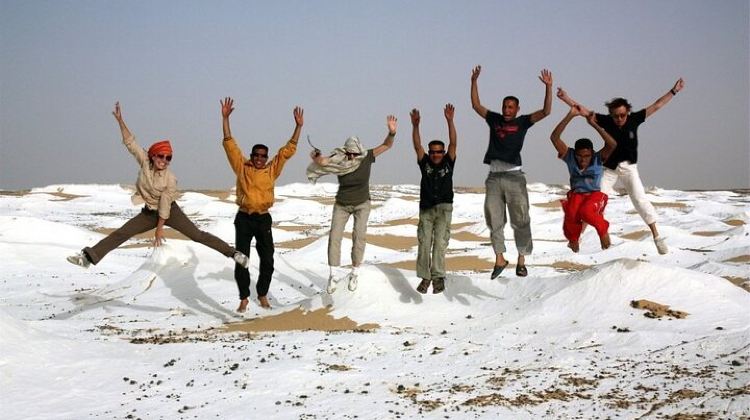
The rest is a set of detours: Alexandria on the Mediterranean, the reefs at Hurghada and Sharm El Sheikh, the White Desert's rock formations, Abu Simbel on the lake. None are on the classic first trip, and all are why people come back.
Cairo and Giza: The First Two Days
Almost every trip starts here, and the first morning belongs to the plateau. The Great Pyramid of Khufu is one of the Seven Wonders of the Ancient World and the only one still standing. Khafre's pyramid beside it is the second largest at Giza, with the remains of its funerary temple, and Menkaure's is the smallest, ringed by subsidiary pyramids.
Then the Sphinx: a lion's body with a pharaoh's head, believed to date to Khafre's reign. The Valley Temple beside it is where the king's purification and mummification rituals took place, and it is the part of the morning most people walk straight through. Stop for a minute and look at the joints between the blocks.
Does the plateau need a whole day? No. Four hours covers the three pyramids, the Sphinx, the temple, and the photo stop where all three line up over the sand. Going inside is a separate ticket: $27 for the burial chamber, $11 for the second or third pyramid.
The Two Museums
The Grand Egyptian Museum is one of the largest devoted to a single civilization, and the Tutankhamun galleries are why the buses line up at opening. The older Egyptian Museum in Tahrir Square is a different animal: crowded cases and a collection that runs up the walls. I would give the new building three hours and the old one ninety minutes, and not try both on the same afternoon.

Old Cairo and the Bazaar
Coptic Cairo holds the Hanging Church and the Ben Ezra Synagogue a few minutes apart, and the lane between them is quiet. Islamic Cairo is the opposite: the Citadel on its ridge, then Khan el Khalili, the old bazaar, where the alleys smell of spice, and the tea houses fill after dark.
Two days is right for Cairo; three is better if you want the museums without rushing. Traffic eats an hour here and there, so I plan two things a day.

Luxor: Two Banks, Two Different Worlds
Luxor splits along the river into halves that could be different countries. The east bank is the city: hotels, the corniche, the two temple complexes. The west bank is the graveyard, and it holds the good stuff.
Karnak and Luxor Temple
Karnak is one of the largest religious complexes ever built in ancient Egypt, and it grew for centuries as one pharaoh after another added to it. Columns the width of a small room, obelisks, a sacred lake, paint still holding in the sheltered spots. Give it two hours.
Luxor Temple sits in the middle of town, dedicated to the Theban Triad of Amun, Mut and Khonsu. Amenhotep III built most of it, and Tutankhamun, Horemheb, and Ramses II each added to it, which is why the reliefs change style as you walk. Come at night, when the columns throw shadows across the courtyard.

The West Bank
The Valley of the Kings is the royal cemetery for 62 pharaohs, cut into a dry valley behind the hills. You will not see all of them and should not try; three tombs at a decent pace beat six at a sprint.
The mortuary temple of Hatshepsut at Deir el-Bahari went up in the 15th century BC. The Colossi of Memnon are on the way back, and ten minutes is enough.
Which bank first? West in the morning, while the valley holds shade, and the east bank for the evening. The heat decides that for you, not the crowds.
Aswan, and the River Between the Temples
Aswan is the calm end of the trip. The Nile is wide here, the town moves more slowly than Cairo, and the Nubian villages on the far bank feel like a different country.
Philae is the reason to come. You cross by motorboat to Agilkia Island, where the complex dedicated to Isis was rebuilt stone by stone after the High Dam raised the water. It sits there as if it had always been, colonnades opening onto the river.
The High Dam is the other stop: the project that created Lake Nasser and controlled the Nile's annual flood. It is a quick stop, and then you are back on the boat.

What the Cruise Gives You
A Nile cruise is not a ferry with rooms. The boat moves while you eat and sleep, stops at the temples, and has you back on board for lunch. Afternoon tea arrives while the banks slide past, which sounds like a brochure line until you are sitting there with palms and sand on both sides.
Kom Ombo is the first stop, on a bend of the river, shared by two gods: Sobek the crocodile and Haroeris, or Horus the Elder. The Crocodile Museum next door displays mummified crocodiles found in the area.
Edfu is about 1.5 hours by road from Kom Ombo, and its Temple of Horus has come down in unusually good shape. Ptolemaic builders put it up, and the sandstone walls still carry hieroglyphics deep enough to read in raking light.
Ask at the desk about the extras: a felucca at sunset, a Nubian village visit, and the early run to Abu Simbel, which eats a morning and is the detour most people would repeat.
Choosing How Long to Go
So which length fits your trip? The three common shapes trade one thing against another: hours on the water against hours in a vehicle, and an extra city against an extra day of ruins.
Six Days, All Land
The short version flies you to Aswan, works north by road through Kom Ombo and Edfu to Luxor, and flies you back. You see the same temples a cruise sees, earlier in the morning, because there is no boat schedule to keep. What you lose is the water.
Seven Days, Three Nights Afloat
This is the one I would pick for a first trip. Three nights on the river break up the temple fatigue, your room and your meals travel with you, and the long transfers disappear. The trade-off is a fixed sailing rhythm, so the days belong to the boat.
Eight Days, With Alexandria
The extra day goes north to the Mediterranean instead of south to more ruins. Alexandria gives you the Library and the site of the Lighthouse. After that come the Roman amphitheater, the old city center on foot, and the Citadel of Qaitbay on the water. The Montaza Gardens feel like another country after the Nile Valley.

If the logistics are the part you would rather not solve, an Egypt tour covers flights, transfers, and guiding in one booking, and Tours4fun lists all three lengths with the day-by-day on each page.
Travel Tips for Egypt
Visas and Safety
Most travelers need a visa. Citizens of the U.S., Canada, the UK, Australia and EU countries can apply for an e-visa or buy one on arrival at Cairo International Airport. The tourist visa allows up to 30 days, and your passport needs six months of validity past your arrival date.
The U.S. Department of State advises increased caution in Egypt because of the risk of terrorism in certain regions. The tourist corridor from Cairo through Luxor and Aswan, plus Hurghada and Sharm El Sheikh, has visible security, and most visitors describe it as ordinary. Border regions and the Sinai outside Sharm are the areas to avoid.
Water, Dress and Money
Do not drink the tap water. Bottled water is cheap and sold everywhere, use it for brushing your teeth too, and skip the ice at street stalls. Dress light and keep it modest in rural areas and at mosques. Carry a scarf for the sun.
Costs stay low by American standards. Street food runs a few dollars a meal, mid-range hotels average $50 to $80 a night, and the big line items are the flight and the guiding.
Tipping and Getting Around
Baksheesh is a habit rather than an insult: small notes for small services. On cruise-based trips, tipping runs $7 per person per day for hotel staff, cruise staff, drivers and representatives, with the guide's tip left to you.
Domestic flights are the fast way between Cairo, Luxor and Aswan. Overnight sleepers connect Cairo with Upper Egypt, and Uber works in Cairo and Alexandria.
If Egypt is one stop on a longer run, Egypt vacation packages pair the Nile with Jordan, Petra and the Dead Sea, using the same long-haul flight twice.
What Stays With You
What I remember is not a monument. It is the ordinary life happening beside the monuments: a man selling bread from a cart in the shadow of a temple wall, kids playing soccer next to a tomb entrance, a farmer leading a water buffalo while a cruise boat slides past.
Egyptians are casual about their antiquities in a way that took me days to understand. They grew up with them. The pyramids are not a wonder to the man driving you there; they are the thing on the way to work, and his calm explains the country better than any lecture.
So leave an hour unscheduled. Sit with tea, watch the river, let somebody talk you into a boat ride you did not plan. The temples will still be there in the afternoon.
FAQ
How many days do you need for Egypt?
One week is enough for Cairo, Aswan and Luxor, with the river trip between the last two. Two weeks leaves room for Abu Simbel, Alexandria or the Red Sea.Is a Nile cruise worth it, or should you drive between Aswan and Luxor?
The boat buys you sleep and meals on the move and skips the long road days. Driving shows the same temples with earlier mornings and more control over the clock.Is Egypt safe for tourists?
The State Department advises increased caution countrywide. The main tourist cities have visible security, while border areas and the Sinai outside Sharm El Sheikh are places to avoid.When should you go?
Aim for late fall through early spring, when you can walk temples all day without the heat.