Quebec CityCanadaNorth AmericaPlaces to GoThings to DoFood & DrinkTravel TipsVacations
Mostrar todo

Quebec City Travel Guide: Old Town, Food & French Charm

cover

Quebec City does something few cities on this continent can: it lets you walk through a walled town inside fortifications that are still standing, then sit down and eat well at the end of it. The streets are cobblestone. People greet you in French and switch to English the moment you look lost.


Most visits here are short. The city is close enough to Montreal to get bolted onto an Eastern Canada loop as a single night. That plan gives you the postcard and none of the texture, because the good part of Old Quebec is the part you reach on foot, slowly, twice.


I have done this city in a January cold snap and in the middle of a July afternoon, and the two trips barely resemble each other. The difference is in how you spend the hours: the upper town before the crowds, the lower town for dinner, and one of the two trips outside the walls on the middle day.


A Walled City You Can Cross on Foot

Old Quebec is the historic core, and what sets it apart is the wall. The fortifications survive as a UNESCO World Heritage Site, and they do real work: they hold the old town in a shape you can learn in a morning. Inside that line, the city climbs a cliff from the river, which is why it reads as two towns rather than one.


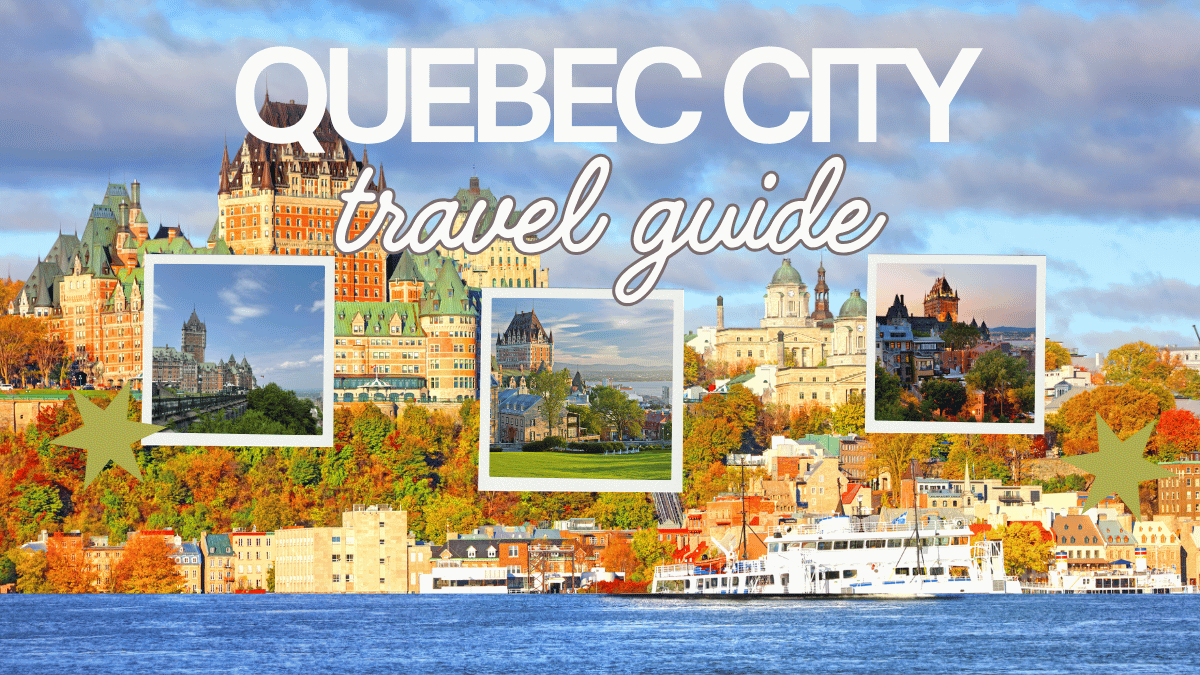
The upper town sits on the height, with the Fairmont Le Château Frontenac above the river and the Citadelle of Québec at the edge of the cliff. The hotel was built in the 19th century as a luxury stop for travelers on the Canadian Pacific Railway, and it still dominates the skyline. The lower town sits at the water, around Place Royale and the streets of Quartier Petit Champlain. Between them are stairs, a funicular and a cliff.

Quebec


That compression is the reason to travel here without a car. Most of what you came for sits within walking distance of the next thing, and the walk between them is the sight. You will pass Notre-Dame de Québec Basilica-Cathedral in the upper town and Notre-Dame-des-Victoires Church down by the square without planning to.


Where do you start? Upper Town, early, while the terraces are empty and the light comes up the river. Work downhill through the day and finish at the water with dinner.

Upper Town, Lower Town, and the Way Between Them

The two halves of Old Quebec reward different hours, and the mistake most visitors make is treating the lower town as a photo stop on the way to lunch. Give the climb its own morning and the descent its own afternoon.


Château Frontenac and Dufferin Terrace


The Château Frontenac is the building you have seen before you arrive, and up close it is a hotel with a boardwalk in front of it. That boardwalk is Dufferin Terrace, and it looks out over the St. Lawrence with the lower town roofs below and the river bending away. Walk it end to end; it frames the whole city for you.

Château Frontenac


The Citadelle of Québec sits at the far end of the same height, a fortress with a military history that anchors the old defenses. Above it, the Plains of Abraham opens into grass and paths.


Place Royale and Quartier Petit Champlain


Down at the river, Place Royale is the square at the heart of the lower town, with Notre-Dame-des-Victoires Church on one side and stone houses closing it in. Quartier Petit Champlain runs off it, a narrow commercial lane and the oldest commercial district in North America. The shops are small, the stone is old, and the street is short enough to walk twice.


Come down in the late afternoon, when the day-trippers have gone back up the hill.


The Funicular, the Breakneck Stairs and the Climb


Two ways connect the towns: the funicular, which does the vertical work for you, and the Breakneck Stairs, which do not. Take the stairs down and the funicular up, and you get the views both ways without wrecking your knees before dinner. If you would rather have the route explained while you walk it, a guided Quebec City tour covers the upper town, the terrace, and the lower town on foot with a local guide.

What Quebec City Tastes Like

French is the language of the kitchen here as much as the street. The food splits into two halves: the old Quebecois plates and the French-Canadian bistro cooking that grew out of them.


What should you order first? Poutine, and not apologetically. It is the local dish, and it is better eaten at a table than on the move. Tourtière is the other name to ask for. Then the maple treats, which the food tours sample alongside the first two.

Quebec


The Lower Town Table


Petit Champlain and Place Royale are where I would eat dinner, not because the food is finer but because the room comes with old stone around it. Book ahead for the weekend. A French-style lunch in the lower town, long and unhurried, is how I would spend a rainy afternoon here.


Saint-Roch, Limoilou and the Food Tours


Saint-Roch is the neighborhood locals point you toward for a food scene that is loud and current. Limoilou is the other name they mention. Both sit outside the walls and neither feels like a museum.


Food tours run in the old town and do the ordering for you, which is worth it on a first visit, when you do not yet know what tourtière should taste like. If you have the time, spend one evening eating your way through the lower town and one in Saint-Roch, and you will have the city's range.

Outside the Walls: A Waterfall and an Island

Two trips justify leaving the fortifications, and they are close enough to do on consecutive days without a car of your own. One is water, the other is farmland.


Montmorency Falls


Montmorency Falls drops 83 meters, which makes it 30 meters taller than Niagara Falls, and it is a short drive from the old town. You can ride the cable car to the top, walk across the suspension bridge that spans the gorge, or clip onto a zipline and cross it that way. Pick two of the three.


Give it a morning rather than a full day. The falls are the point, and once you have walked the bridge and looked up from the base, there is not much more to do. Add the island and the morning becomes a day.

Montmorency Falls


Île d'Orléans


Île d'Orléans sits in the St. Lawrence just downstream, and it is farmland with villages on it: a scenic drive, a bike ride, or a slow loop by car with stops. The reason to go is what comes off the land. Stop at a fromagerie for cheese and a cidrerie for cider, and you have the island's economy in two purchases.


A food tour that combines the falls and the island is the version I would book with limited time, since the driving and the tasting are handled. On your own, go early, because the good stops fill up by mid-morning.

Museums, Battlefields and Wet Afternoons

Old Quebec is an outdoor city, which means the rain plan matters.


Musée de la civilisation and the Beaux-Arts


The Musée de la civilisation builds its exhibits around human history and culture and does it interactively, which keeps a wet afternoon moving. The Musée national des beaux-arts du Québec holds Quebec art from the 17th century to the present.


The Plains of Abraham


The Plains of Abraham is the battlefield that became the city's park, and locals use it as one: walking, picnicking, skiing across it in winter. It is also a major site in Canadian history, with exhibitions and events running through the year. Go for the space as much as the story.


The Ghost Tour After Dark


Evenings can go one of two ways. A lantern-lit ghost walk through Old Quebec does the haunted history with a theatrical streak, and it suits a cold night better than a warm one. The other option is a sightseeing cruise on the St. Lawrence, which puts the Château Frontenac and the fortifications on the skyline.

Getting There, and Whether to Add Montreal

Quebec City is easy to reach. Jean Lesage International Airport serves the city, and trains and buses run in from the surrounding region. From Montreal, it is about a three-hour drive or rail trip, roughly 250 kilometers or 155 miles.


That distance is why so many people see this city as a stop rather than a destination. I would flip it and treat Montreal as the add-on, because the walled town rewards the hours a day trip does not allow. If you're traveling from the United States, the itinerary I recommend for exploring Eastern Canada is: Toronto, the Thousand Islands, Montreal, and Quebec City.

How to Plan Your Days in Old Quebec

Build the trip around walking loops rather than a checklist. On the first day, take the upper town from the Citadelle along Dufferin Terrace past the Château Frontenac, drop through the funicular or the Breakneck Stairs, and come back up through Place Royale and Petit Champlain. That is one loop, and it takes most of a day if you stop for lunch.


Then do it again after dark, when the shops are lit, and the tour groups have gone.


Upper Town or Lower Town for Sleeping


Upper Town puts you beside the terrace, the museums and the Plains of Abraham. Lower Town puts you in the stone lanes with dinner downstairs and the river at the end of the street. I would sleep low for a short trip and high for a longer one, and stay inside the walls either way, because a hotel on the highway edge turns every evening into a taxi ride.


Three Days, Five Days, or a Week


How many days do you actually need? Three covers the old town properly, adds Montmorency Falls and leaves one evening free. Five is the comfortable version: the falls and the island on separate days, a museum afternoon, a slow morning on the Plains of Abraham. A week means Montreal as well.


When to Come


Winter is the version people underestimate. The Plains of Abraham turns into ski terrain, the Ice Hotel runs from January to March, and the old town is quiet enough to hear your own boots. It is also genuinely cold, and you will spend more on a coat than on coffee.


Summer brings the river cruises and the island with every farm stand open, along with everyone else. Autumn is the best time to visit Quebec: cool mornings, color along the St. Lawrence, a food scene moving into its heavy season.

Quebec fall


What I would tell a friend is simple. Book two nights inside the walls, walk the loop twice, eat in the lower town, give the falls one morning. The city does the rest.

FAQ

Can you see Old Quebec without a car?

Yes, and you should. The upper town, the terrace, Place Royale and Petit Champlain sit within walking distance of each other, linked by a funicular and the Breakneck Stairs. A car is a liability inside the walls.

How many days does Quebec City need?

Three days for the old town and the falls, five for the island, the museums and the Plains of Abraham at an easy pace. Add Montreal with a week to spare.

What should you eat first?

Poutine, then tourtière, then anything with maple. Cheese from a fromagerie and cider from a cidrerie on Île d'Orléans are the two purchases worth making outside the city.

Should you stay in the upper or lower town?

Lower town for a short trip, with dinner in the lanes below you. Upper town for a longer stay, closer to the museums, the terrace and the Plains of Abraham.

Resumen

A Walled City You Can Cross on Foot

Upper Town, Lower Town, and the Way Between Them

What Quebec City Tastes Like

Outside the Walls: A Waterfall and an Island

Museums, Battlefields and Wet Afternoons

Getting There, and Whether to Add Montreal

How to Plan Your Days in Old Quebec

FAQ

America's 250th Anniversary Mega Sale

image