FranceEuropePlaces to GoTravel Tips
Mostrar todo

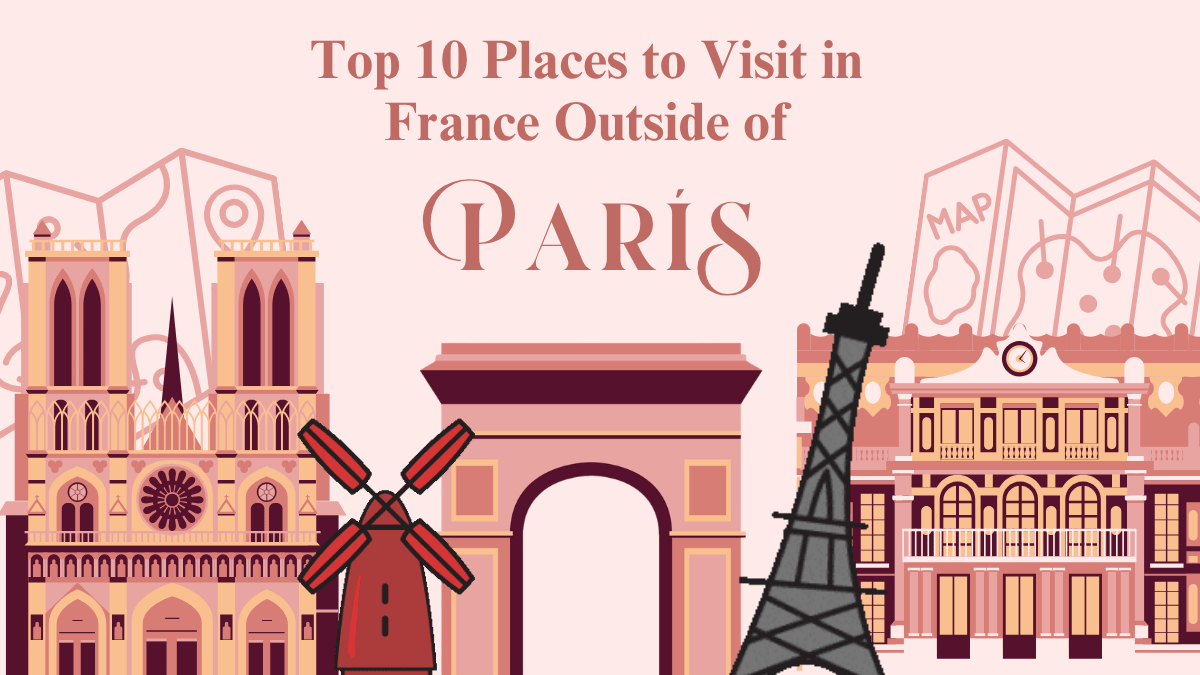
Top 10 Places to Visit in France Outside of Paris 2026

cover

The top 10 places to visit in France outside of Paris are Normandy, the Loire Valley, Strasbourg and Alsace, Lyon, Annecy, Bordeaux, the Dordogne, Provence, the French Riviera, and Corsica. Together, they cover medieval landmarks, vineyard landscapes, Alpine scenery, Mediterranean towns, regional food, and some of the country's most memorable coastlines.

For a first trip beyond the capital, choose two or three areas that connect logically instead of trying to cover all ten. The guide below explains what each destination does best, how long to consider staying, and which type of traveler it suits in 2026.

France Beyond Paris at a Glance

Destination Best for Suggested stay Good base
Normandy Mont-Saint-Michel, coast, history 2-4 days Bayeux or Rouen
Loire Valley Châteaux, gardens, cycling 2-4 days Tours or Amboise
Strasbourg and Alsace Storybook towns, wine villages 2-4 days Strasbourg or Colmar
Lyon Food, architecture, city culture 2-3 days Central Lyon
Annecy and the Alps Lake and mountain scenery 2-4 days Annecy
Bordeaux Wine country and elegant streets 2-4 days Bordeaux
Dordogne Villages, caves, countryside 3-5 days Sarlat-la-Canéda
Provence Markets, Roman heritage, hill towns 4-6 days Avignon or Aix-en-Provence
French Riviera Mediterranean coast and art towns 3-5 days Nice
Corsica Beaches, mountains, road trips 5-8 days Ajaccio, Calvi, or Bastia

1. Normandy: Mont-Saint-Michel, Coastal Towns, and History

Normandy belongs near the top of any list of famous French places to visit. Its headline sight is Mont-Saint-Michel, the dramatic abbey-crowned island rising from a broad tidal bay. An overnight stay nearby allows more time to appreciate the setting before or after the busiest daytime period.

Normandy


The region offers much more than one landmark. Bayeux is a practical base for its historic center, cathedral, and access to the D-Day landing beaches. Rouen has half-timbered streets and strong connections to Joan of Arc, while Honfleur is known for its old harbor and art history. Travelers with extra time can continue along the coast or add local markets, cider, cheese, and seafood to the route.

Best for: History, architecture, coastal scenery, and first-time visitors leaving Paris.

2. Loire Valley: Châteaux and Riverside Landscapes

The Loire Valley is one of the easiest regions to build around a clear theme. Chambord impresses with its scale, Chenonceau stretches across the River Cher, and Amboise combines a château with a walkable town. Gardens, smaller estates, wineries, and cycling routes add variety between major properties.

Loire Valley

Tours and Amboise both work as bases, but the best choice depends on the châteaux you prioritize. A rental car provides flexibility for rural stops; organized excursions can be simpler for travelers who prefer not to drive. Avoid scheduling too many large châteaux in one day. Two well-chosen visits, with time for lunch or a village walk, usually create a more satisfying experience than a rushed checklist.

Best for: Architecture, gardens, couples, families, and relaxed road trips.

3. Strasbourg and Alsace: Canals, Villages, and Wine Country

Strasbourg blends French and German influences in its architecture and food. The city's historic center includes the soaring Strasbourg Cathedral, canal-side Petite France, and compact streets that are easy to explore on foot. It also makes a convenient starting point for the Alsace wine route.

Strasbourg


Colmar, Eguisheim, Riquewihr, and Kaysersberg are among the region's most photographed towns. Their colorful façades can become crowded during holiday and summer periods, so staying overnight or visiting early often produces a calmer experience. Regional meals may feature tarte flambée, choucroute, local cheeses, pastries, and Alsatian wines. Travelers who want city culture plus small-town scenery will find this one of the most rewarding places to go in France besides Paris.

Best for: Walkable old towns, wine, food, and festive winter atmosphere.

4. Lyon: France's Essential Food City

Lyon deserves more than a meal stop. Vieux Lyon preserves Renaissance-era streets, Fourvière Hill provides broad city views, and the rivers Rhône and Saône shape attractive walking routes. The city's covered passageways, known as traboules, are another distinctive part of its urban history, though access varies because some pass through residential buildings.

lyon

Food is the main draw for many visitors. Traditional bouchons serve hearty Lyonnaise dishes, while markets, bakeries, contemporary restaurants, and specialty shops reveal a wider culinary range. Reserve sought-after restaurants ahead, but leave at least one meal unplanned for a neighborhood find. Lyon also connects well with Burgundy, the Rhône Valley, and the Alps, making it useful in a multi-region itinerary.

Best for: Food-focused travel, architecture, museums, and short city breaks.

5. Annecy and the French Alps: A Lake-and-Mountain Escape

Annecy pairs a turquoise Alpine lake with canals, pastel buildings, and mountain views. The old town is compact enough for a relaxed walk, while the lakeside path suits cycling, picnics, and gentle sightseeing. In warmer weather, boat trips and water activities become part of the appeal; colder months shift the focus toward snow scenery and nearby mountain resorts.

Annecy


This destination works best when travelers build in flexibility. Mountain weather can change quickly, and seasonal services differ throughout the year. Spend at least two nights if you want more than a brief look at the old town. Hikers should choose trails suited to their experience and check local conditions before setting out.

Best for: Outdoor activities, scenic breaks, families, and photographers.

6. Bordeaux: Wine, Architecture, and Atlantic Day Trips

Bordeaux is both an elegant city and a gateway to one of the world's best-known wine regions. Within the city, visitors can walk along the Garonne, explore historic squares, visit food markets, and learn about wine culture without leaving the center. The dining scene also makes Bordeaux worthwhile for travelers who are not planning vineyard tastings.

Bordeaux


Outside the city, Saint-Émilion combines vineyards with a compact historic village. The Médoc and other wine areas offer different landscapes and appellations, while Arcachon Bay provides a coastal contrast. Winery visits often require reservations, and a guided outing removes concerns about driving after tastings. Plan one focused wine day rather than packing several distant areas into the same schedule.

Best for: Wine, gastronomy, architecture, and couples' trips.


7. Dordogne: Villages, Prehistory, and Slow Travel

The Dordogne offers a quieter alternative to France's major city circuit. Sarlat-la-Canéda is a popular base for honey-colored architecture, markets, and access to the surrounding countryside. Nearby, travelers can visit cliffside villages, castles, river viewpoints, and sites connected to prehistoric art and human history.

Dordogne


Canoeing on the Dordogne River is a classic warm-weather activity, with castles and villages appearing along the route. Driving is useful because many attractions are rural and scattered. Instead of changing hotels every night, stay in one base and organize day trips by area. The region's pace suits travelers interested in local food, landscape, and history rather than a dense schedule of headline attractions.

Best for: Road trips, families, rural scenery, and history enthusiasts.

8. Provence: Markets, Hill Towns, and Roman Heritage

Provence is a region rather than a single stop, so choosing a base matters. Avignon suits travelers interested in medieval and papal history, Aix-en-Provence combines markets with an attractive urban setting, and the Luberon offers hill towns such as Gordes and Roussillon. Arles and Nîmes add major Roman sites to a broader southern route.

Provence


Lavender is highly seasonal, and bloom timing varies by location and weather. Do not build an entire trip around seeing peak fields without checking current local conditions closer to departure. Provence remains worthwhile in other seasons for markets, vineyards, olive groves, art connections, and village walks. A car is helpful in rural areas, while city-to-city travel can often be handled by public transport.

Best for: Road trips, markets, photography, history, and countryside stays.

9. The French Riviera: Nice, Antibes, Menton, and Èze

The French Riviera combines Mediterranean scenery with cities and villages that can be linked without changing hotels every night. Nice is the most practical base for many visitors, offering an extensive seafront, the colorful streets of Vieux Nice, museums, markets, and transport connections along the coast.

Antibes


Antibes adds an old town and harbor; Menton is known for gardens and a bright waterfront; and hilltop Èze provides dramatic coastal views. Summer brings heat, higher demand, and crowded beaches, while spring and fall can be more comfortable for walking. Travelers focused on swimming should check seasonal conditions; those interested in art, food, and coastal scenery can enjoy the region throughout much of the year.

Best for: Coastal views, art, food, couples, and car-free itineraries.

10. Corsica: Beaches, Mountains, and a Distinct Island Identity

Corsica feels different from mainland France, with rugged mountains, clear coves, fortified towns, and a strong regional character. Ajaccio, Bastia, Calvi, and Bonifacio can each anchor a trip, but distances and winding roads make it important to plan conservatively. Trying to circle the island too quickly leaves little time for beaches, walks, or village stops.

Corsica


The island suits active travelers as well as beach-focused visitors. Coastal paths offer accessible scenery, while high-mountain routes require preparation and appropriate experience. Ferries and flights connect Corsica with the mainland, but schedules vary by season. For a first visit, choose one or two areas and stay longer rather than treating the island as a rapid driving tour.

Best for: Beaches, hiking, road trips, and travelers with at least five days.

Best Places to Visit Around Paris Before Traveling Farther

Not every trip has time for a cross-country route. Among the best places to visit around Paris are Versailles for its palace and gardens, Fontainebleau for a château and forest setting, Giverny for Monet-related art and seasonal gardens, and Reims for cathedral architecture and Champagne-country access.

These destinations work well as day trips or as the first stop in a longer journey. Check attraction opening days, advance-booking requirements, and transportation details close to your 2026 travel dates, especially if your plans fall on a holiday or during a major event.

How to Plan a France Trip Beyond Paris

Start with geography. Normandy and the Loire Valley pair naturally with Paris, while Lyon can connect with Annecy or Provence. Bordeaux combines well with the Dordogne, and Nice is a logical base for the French Riviera. Corsica usually deserves a separate segment because reaching and crossing the island adds travel time.

Use these practical guidelines:
  1. Limit hotel changes. Spend two or more nights in most bases and take day trips where practical.
  2. Combine rail and car travel. Trains work well between major cities, while rural Provence, the Dordogne, and parts of Corsica are easier by car.
  3. Reserve selectively. Book essential transport, signature attractions, winery visits, and high-demand stays first; keep some meals and local stops flexible.
  4. Check current details. Confirm schedules, closures, road conditions, and entry requirements through official sources shortly before departure.
  5. Match the season to the experience. Coastal swimming, Alpine hiking, lavender, holiday markets, and vineyard activity do not peak at the same time.

Choose the France That Fits Your Trip

The most rewarding places to visit in France are not limited to the capital. Normandy and the Loire Valley bring history and monumental architecture; Lyon and Bordeaux anchor food-and-wine trips; Annecy, Provence, the Riviera, and Corsica provide distinct landscapes; and Alsace and the Dordogne reward a slower pace. Pick a compact route, allow time for regional character to emerge, and use Paris as a gateway rather than the entire itinerary. Travelers comparing organized routes can review France vacation packages.
 

FAQ

What is the best place to visit in France besides Paris for a first-time traveler?

The Loire Valley is ideal for châteaux and countryside, Lyon is strongest for food and city culture, and Provence offers the broadest mix of towns, history, markets, and landscapes. Choose according to your interests and available time rather than treating one destination as universally best.

How many destinations should I include in a one-week France trip?

Two main bases are usually enough for one week. A Paris-Loire Valley route, a Lyon-Annecy pairing, or a Nice-Provence itinerary offers variety without excessive packing and transit. Three bases can work when connections are direct and travel days remain light.

Which destinations outside Paris are easiest to reach by train?

Lyon, Strasbourg, Bordeaux, Avignon, and Nice have useful rail connections from Paris. Annecy and many Normandy or Loire Valley stops are also accessible by train, though rural sights may require a local bus, taxi, guided excursion, or rental car.

Where should I go in France for beaches and coastal scenery?

Choose the French Riviera for lively coastal cities and easy day trips, Corsica for beaches paired with rugged mountains, or Normandy for dramatic shores and historic sites. The best choice depends on whether swimming, scenery, history, or nightlife matters most.

Should I book France attractions and tours in advance?

Booking is sensible for major châteaux, popular museums, winery visits, guided excursions, and summer accommodation in high-demand destinations. Keep some local meals and minor stops flexible, but confirm official schedules and reservation policies close to your travel dates.

Resumen

France Beyond Paris at a Glance

1. Normandy: Mont-Saint-Michel, Coastal Towns, and History

2. Loire Valley: Châteaux and Riverside Landscapes

3. Strasbourg and Alsace: Canals, Villages, and Wine Country

4. Lyon: France's Essential Food City

5. Annecy and the French Alps: A Lake-and-Mountain Escape

6. Bordeaux: Wine, Architecture, and Atlantic Day Trips

7. Dordogne: Villages, Prehistory, and Slow Travel

8. Provence: Markets, Hill Towns, and Roman Heritage

9. The French Riviera: Nice, Antibes, Menton, and Èze

10. Corsica: Beaches, Mountains, and a Distinct Island Identity

Best Places to Visit Around Paris Before Traveling Farther

How to Plan a France Trip Beyond Paris

Choose the France That Fits Your Trip

FAQ

America's 250th Anniversary Mega Sale

image