Three ancient sites carry the city, and they sit close enough together to cover in a day and a bit. The museum that explains them sits at the foot of the rock. Start with the rock and the rest follows downhill, which is the whole argument for getting up early.
The Acropolis, First Thing
Go up before the day has warmed the rock. The climb is short, steep and almost entirely without shade, and there is no version of this visit that is pleasant at midday in July.
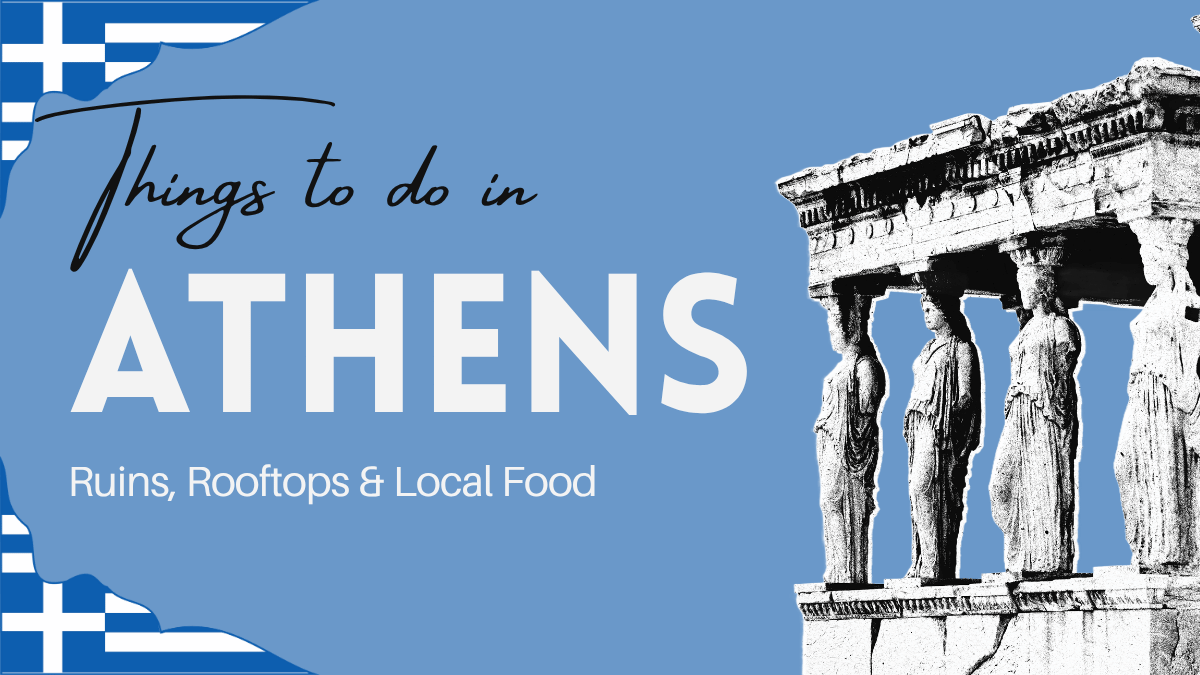
The gateway is the Propylaea. Inside it, the Temple of Athena Nike sits small and low, and then the Parthenon takes the whole top of the hill, with the Erechtheion and its Porch of Maidens on the far side. This is the citadel UNESCO lists, and the buildings date to the 5th century BC, when Athens spent the money of an empire on its own sacred ground.
Give it 90 minutes, or two hours if you stop for the view. The labels explain less than you would expect, so read a little first or take a guide.
The Acropolis Museum, Straight After
The new museum sits at the foot of the rock, and it is the second half of the visit rather than an optional extra. Inside are the votives, the objects of daily life, the statues from the archaic period, the Caryatids, and a floor given to the Parthenon hall with its metopes, pediments and frieze.

Come directly after the hill, when the heat has arrived, and you want to be indoors. Two hours covers it at a walk; three if you read everything.
That order is what makes the hill legible. Seen afterwards, the frieze comes with the position it held on the building, and the rubble turns into a story.
A half-day Athens tour does the two in one morning with entrance fees and a guide, and walks past the museum's ticket line instead of standing in it.
Ancient Agora and the Temple of Olympian Zeus
Both sit lower and flatter than the Acropolis, which is why they belong after lunch. The Ancient Agora was the civic heart of the classical city, and it surprises people who expected everything after the Parthenon to be minor.

The Temple of Olympian Zeus stands a short walk away, and you pass it on any drive across the center, along with Hadrian's Arch and the Zappeion. Walking is better: the columns are enormous at ground level.
Do both in one late afternoon and walk back through Plaka for dinner, which is where the evening belongs.