AthensGreeceEuropePlaces to GoThings to DoFood & DrinkTravel TipsVacations
Show All

Things to Do in Athens: Ruins, Rooftops & Local Food

cover

Athens punishes a checklist. The Acropolis sits in the middle of the city, and everything else arranges itself around that one visit: the streets below the rock, the market, the marble stadium, the long tables of a taverna.


People have lived here for 7,000 years, and the city admits it. You walk past a gateway from the 5th century BC on the way to lunch, and a Roman temple on the way to a bar. 3 or 4 days is the right length. The day works one way: stone in the morning, museum at midday, streets in the afternoon, and a roof at sunset. Swap the first two and the day falls apart in the heat.

The Ruins, in the Order That Works

Three ancient sites carry the city, and they sit close enough together to cover in a day and a bit. The museum that explains them sits at the foot of the rock. Start with the rock and the rest follows downhill, which is the whole argument for getting up early.


The Acropolis, First Thing


Go up before the day has warmed the rock. The climb is short, steep and almost entirely without shade, and there is no version of this visit that is pleasant at midday in July.


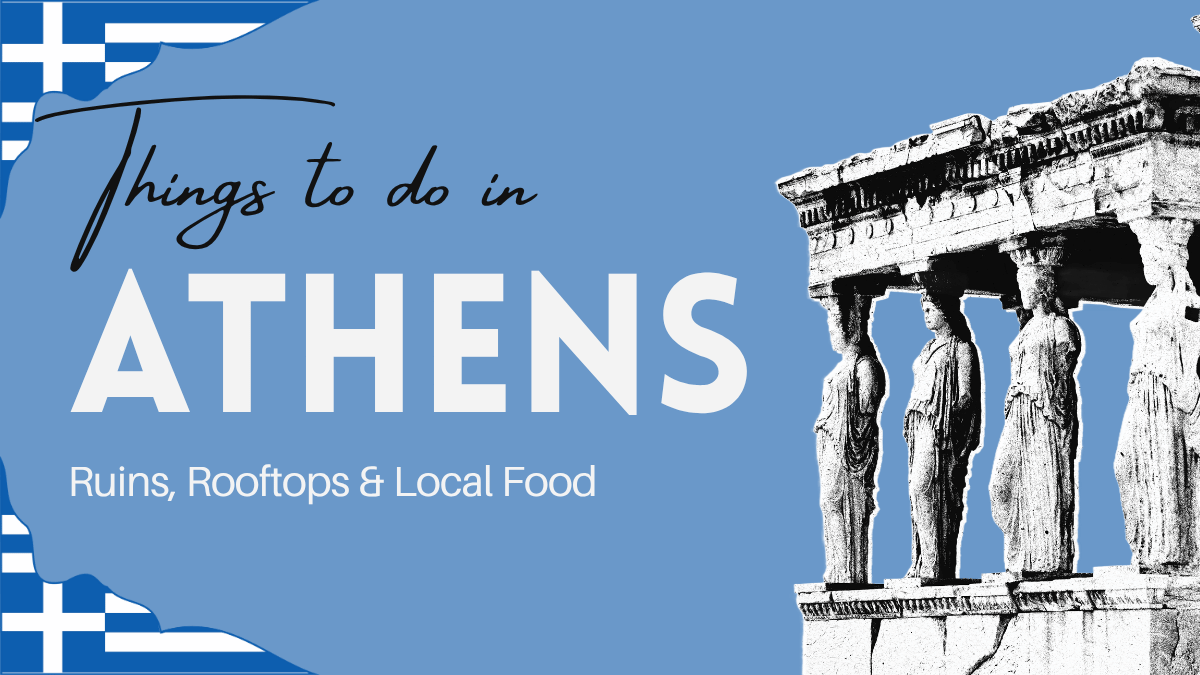
The gateway is the Propylaea. Inside it, the Temple of Athena Nike sits small and low, and then the Parthenon takes the whole top of the hill, with the Erechtheion and its Porch of Maidens on the far side. This is the citadel UNESCO lists, and the buildings date to the 5th century BC, when Athens spent the money of an empire on its own sacred ground.


Give it 90 minutes, or two hours if you stop for the view. The labels explain less than you would expect, so read a little first or take a guide.


The Acropolis Museum, Straight After


The new museum sits at the foot of the rock, and it is the second half of the visit rather than an optional extra. Inside are the votives, the objects of daily life, the statues from the archaic period, the Caryatids, and a floor given to the Parthenon hall with its metopes, pediments and frieze.

Acropolis Museum


Come directly after the hill, when the heat has arrived, and you want to be indoors. Two hours covers it at a walk; three if you read everything.


That order is what makes the hill legible. Seen afterwards, the frieze comes with the position it held on the building, and the rubble turns into a story.


A half-day Athens tour does the two in one morning with entrance fees and a guide, and walks past the museum's ticket line instead of standing in it.


Ancient Agora and the Temple of Olympian Zeus


Both sit lower and flatter than the Acropolis, which is why they belong after lunch. The Ancient Agora was the civic heart of the classical city, and it surprises people who expected everything after the Parthenon to be minor.

Temple of Olympian Zeus


The Temple of Olympian Zeus stands a short walk away, and you pass it on any drive across the center, along with Hadrian's Arch and the Zappeion. Walking is better: the columns are enormous at ground level.


Do both in one late afternoon and walk back through Plaka for dinner, which is where the evening belongs.

Rooftops, Hills and Sunset Views

Athens has two kinds of sunset. One is from a height, and the other is from a table. They are not interchangeable, and you should do both if the weather holds.


Lycabettus Hill for the Whole City


Lycabettus is the hill above Kolonaki, and from the top you get the basin at once: streets running to the sea on one side, the Acropolis below you on the other at a distance that finally makes its size clear.


Go up an hour before sunset and stay for the change: in daylight you read the city, after dark you read its shape. The climb is steep and unshaded, so wear what you would wear for a hill.


Rooftop Terraces Facing the Rock


The other sunset is horizontal, and it happens on the roofs. Plaka and the streets between Monastiraki and Syntagma are lined with low buildings that carry a terrace, and many of those are bars, restaurants or hotel roofs open to anyone who books a table.


What you want is a seat facing west, a booking in summer, and the acceptance that you are paying for the chair rather than the cooking.


Is it worth rearranging dinner for? In summer, yes. The rock goes gold, then pink, then gray, and the streets below light up while you are still holding the menu. The change is quick, and it is the reason to book a table rather than just a meal.

Neighborhoods Worth Walking

The center is small enough to walk, and these districts run into each other, so you can cover them in an afternoon without much of a plan.


Plaka Under the Rock


Plaka is the oldest district of Athens, and it sits directly under the Acropolis, so the streets climb as you go south and the rock appears at the end of every second alley. This is where you still see the capital as it looked a hundred years ago: low houses, shutters, cats on the steps.


It is also the most walked ground in the city, and the restaurants with photographs of the food outside are the ones to pass. Come early, or come late, after the day groups have gone back.

plaka


Monastiraki and the Flea Market


Monastiraki is where Plaka turns into commerce. The flea market is the reason to come: stalls of furniture, records, tools and icons spilling out of the square into the side streets.


It is lively rather than precious, and an hour there is a good antidote to a morning of marble. It is also the thickest crowd in the center, so keep a hand on your bag.


Syntagma, the National Garden, Ermou and Kolonaki


Syntagma is the square in front of the Parliament, with the Tomb of the Unknown Soldier at the top of it and the changing of the guard as free entertainment. The National Garden gives you shade, and Ermou runs west from the square as a pedestrian shopping street.

Syntagma


Kolonaki is the other direction, up toward Lycabettus, and it is where the shopping gets serious. Ermou, Kolonaki and Voukourestiou are the three streets that come up when you ask where to buy anything here.


Two stops fit the same walk. The Panathinaiko Stadium is the white marble bowl where the first modern Olympic Games were held in 1896. A few streets away, the Athens Trilogy lines up the University, the Academy and the National Library.

What to Eat and How to Order It

Athenian food is not complicated, and that is the point of it. A small set of things is done well and eaten constantly, and three days is enough to work through the repertoire.


Souvlaki, Eaten Standing Up


Souvlaki is the baseline: pork or chicken on a skewer, wrapped in pita with tomato, onion and fries, eaten on a curb or at a counter. It is cheap, it is fast, and it is the meal you will think about at the airport. Order two at lunch; one is a decision you regret at four in the afternoon.


Stuffed Olive Leaves and the Taverna Rhythm


Stuffed olive leaves, dolmades on most menus, arrive cold with lemon as one of the small plates that open a taverna meal. Order four or five between two people instead of a main each, add bread and a salad, and you have the shape of a Greek dinner.


The rhythm matters more than the menu. A taverna meal runs two hours at minimum, the table is yours as long as you sit at it, and nobody brings the bill until you ask. Lunch is the meal to stretch.


Coffee, and How to Pay


Coffee is a sit-down institution here rather than something you carry. Order one after the meal and it arrives with a glass of water and no suggestion that you should move on.


Carry cash. Small tavernas and island shops may not take cards, and a card machine that is not working is a normal Tuesday rather than a trick.


If you would rather not spend the first evening working out which taverna deserves the walk, Tours4fun runs Greece itineraries with transfers and several meals already arranged, which leaves you the ordering.

Easy Day Trips

Athens works as a base as much as a destination, and these trips are short enough to do without moving hotels: one is a drive, one is a boat, one is a night on an island, and one is a full day.


Cape Sounion and the Coast Road


Sounion is the headland where the land runs out, and the Aegean opens up, and the drive south is most of the trip. Go for the water rather than for a site, because the reward is the open sea at the end of the road.


This is the trip for the afternoon you want the sea without a ferry: down in the morning, a walk out to the point, back for a late dinner. Take it on a clear day, because on a hazy one there is nothing to look at.


The Island Cruise out of Piraeus


The one-day cruise out of Piraeus covers three islands in a single loop, and it is the efficient version of island hopping for anyone who has not booked ferries. Aegina is the island the route is named after, and it is the one to get off on: a harbor walk, a long lunch, and back before the boat leaves.


Aegina Without the Boat Schedule


Aegina rewards people who stay rather than loop, because a day trip barely gets past the harbor. Ferries are the main way around the islands, with several departures a day in high season, and booking ahead for July and August is worth the trouble.

aegina


Delphi is the fourth option and the longest. It sits northwest of the city on the mainland and takes a full day, so it competes with the ruins you have already seen.


Longer Greece tour routes tend to start and finish in Athens, which makes the city a natural place to add a day out instead of booking one separately.

Practical Notes for a First Visit


Heat and the Calendar


June through early September is peak season: hot, crowded on the islands, and more expensive for rooms. July and August bring heatwaves, and wildfires can disrupt travel, so check local news before a day trip in high summer.


April, May and September into early October are the better months: warm enough to swim, quieter, cheaper. November through March is quiet, with many islands shut for the season, though Athens stays lively all year.


Ferries and the Airport


Island ferries leave from the port of Piraeus rather than the center of the city, and Athens International Airport sits well outside it. Book boat tickets early in summer, especially on busy routes, and treat the timetable as a plan rather than a promise.


The Small Practicalities


Greece is a safe destination by most measures, and the precautions are the ordinary city ones: watch your belongings in crowds, keep cash for the places that do not take cards, and learn two words of Greek.


If you would rather land with the room and the pickup settled, Athens vacation packages wrap the city into a few nights with a transfer at arrivals.


Then leave a day loose. The hours people remember from Athens are the ones they did not schedule: a second coffee, a third lap of Plaka, a hill climbed because the light looked good from the street.

FAQ

How many days do you need in Athens?

Three or four, and the museum earns half of one of them.

When should you go?

Spring or fall, when the sea is still warm and the crowds have thinned. Summer works if you start early; winter is quiet and the city stays open.

Is one day enough for the Acropolis and the museum?

Yes, if you start at opening. They sit minutes apart, and a half day with a guide covers both.

Are the day trips worth the time?

Sounion and the island cruise, yes. Delphi costs a full day, so save it for a longer trip.