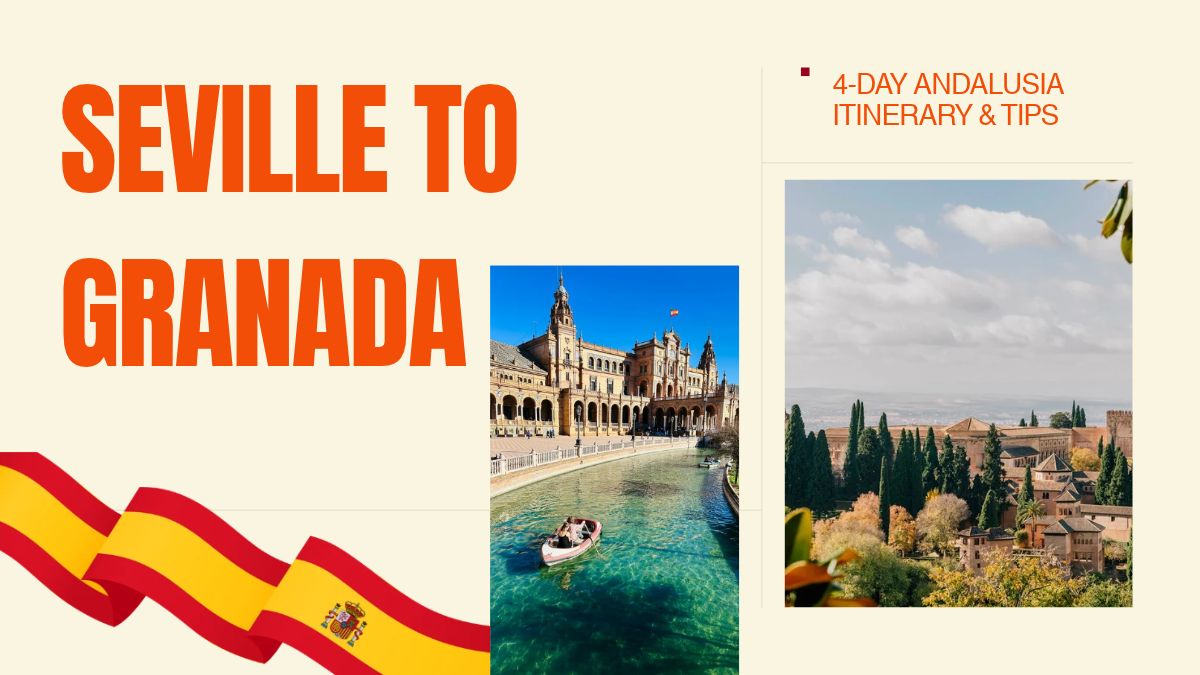
Two nights in Seville followed by two in Granada keeps the packing to a single move. If your booking runs the other way, the content of each day still holds; you'd simply swap Day 3 and Day 4 with Day 1 and Day 2.
Day 1: The Alcázar, the Cathedral and Santa Cruz
Start at the Real Alcázar, the oldest royal palace still in use in Europe and a Mudéjar building where Christian and Islamic craft share the same rooms. The Courtyard of the Maidens and the gardens take time, so allow three hours at minimum and buy your entry slot before you fly, because the palace controls daily numbers. The upper levels are still the royal family's official Seville residence.
Then walk to the cathedral, the largest Gothic cathedral in the world, and climb La Giralda for the view across the old town. Christopher Columbus is buried inside, which surprises visitors who expect him somewhere in the Americas. End the day in Barrio Santa Cruz, the old Jewish quarter, where narrow streets open onto small plazas and tapas bars fill in the evening. Order at the bar, keep the evening short, and walk back along the Guadalquivir.

Day 2: Plaza de España, Triana and the Parasol
Give the morning to María Luisa Park. The Plaza de España was built for the 1929 Ibero-American Exposition and curves around a canal, with tiled alcoves for each Spanish province; it's busiest in the late morning, so go early if you want photographs without a crowd in them. The park next door is a good place to sit down.
Cross the Isabel II bridge into Triana for the Mercado de Triana and the pottery shops, and eat lunch on that side of the river. For the afternoon, pick one: the Metropol Parasol, a timber structure with a rooftop walk and Roman remains in the antiquarium beneath it, or the quieter Casa de Pilatos, a preserved Andalusian palace. If you can add a morning, Córdoba is a 45-minute train ride away and the Mezquita-Cathedral is worth the early start.

Day 3: The Move East, the Albaicín and a Long Dinner
Travel in the morning and keep the afternoon loose. Whichever way you cross, you arrive with half the day gone, so leave the bags at the hotel and walk the Albaicín, the Moorish quarter on the hill facing the Alhambra. The lanes climb, and the viewpoints at the top frame the palace against the Sierra Nevada. Wear shoes for cobbles, and time the walk for late afternoon when the light is softer, and the tour groups have gone.
Evening tapas is the plan in Granada. Bars cluster in the lower Albaicín and around the cathedral, so order a couple of plates at each stop instead of committing to one table, and let the evening run. If you want flamenco, book it before you arrive, because the small rooms fill. Keep the night short enough that you are fresh for the Alhambra.

Day 4: The Alhambra and the Generalife
The Alhambra is a Nasrid citadel and palace on the Sabika hill and one of the most visited sites in Spain, so the ticket, not the transport, is the part of this trip that needs planning. Daily access is capped, and the reservation window printed on many tickets falls between 1:30 and 2:30 in the afternoon, which means the morning is yours and the palace is not. Book on the official ticket site before you fly and let that slot decide the shape of the day.
Inside, the Comares Palace and the Palace of the Lions carry most of the carving people come for, and the Generalife gardens sit on the slope above with long views back across the city. Give the whole complex the day rather than folding it into a morning.
If you finish with light left, the Cathedral of Granada and the Royal Chapel are down in the center, and a last walk through the Albaicín is a good way to close the four days.