Granada ProvinceSevilleGranadaSeville ProvinceSpainEuropePlaces to GoThings to DoFood & DrinkTravel TipsVacations
Show All

Seville to Granada: 4-Day Andalusia Itinerary & Tips

cover

Two cities, 4 days, and one leg in between that people tend to over-plan. Seville and Granada sit in the same corner of Andalusia, close enough that the transfer is a morning's work rather than a travel day, which is why two nights in each city beats splitting the middle. Trains, coaches and cars all cover the ground from Seville to Granada, and the real differences show up at the edges of the trip: the walk to the station, the bag you are dragging, the hour you gain or lose on the other end.


Day 1 and Day 2 belong to Seville, with the Alcázar, the cathedral and its tower, then the Plaza de España and the river. Day 3 moves you east to Granada for the Albaicín and a long evening of tapas, and Day 4 is the Alhambra and the Generalife gardens. That's a comfortable pace for two cities that reward slow mornings.


If you'd rather not drive or book each leg yourself, a motorcoach tour can cover the same ground in the opposite order, Granada before Seville. Check the sequence before you fix your dates.

4-Day Granada Itinerary Starting from Seville

Two nights in Seville followed by two in Granada keeps the packing to a single move. If your booking runs the other way, the content of each day still holds; you'd simply swap Day 3 and Day 4 with Day 1 and Day 2.


Day 1: The Alcázar, the Cathedral and Santa Cruz


Start at the Real Alcázar, the oldest royal palace still in use in Europe and a Mudéjar building where Christian and Islamic craft share the same rooms. The Courtyard of the Maidens and the gardens take time, so allow three hours at minimum and buy your entry slot before you fly, because the palace controls daily numbers. The upper levels are still the royal family's official Seville residence.


Then walk to the cathedral, the largest Gothic cathedral in the world, and climb La Giralda for the view across the old town. Christopher Columbus is buried inside, which surprises visitors who expect him somewhere in the Americas. End the day in Barrio Santa Cruz, the old Jewish quarter, where narrow streets open onto small plazas and tapas bars fill in the evening. Order at the bar, keep the evening short, and walk back along the Guadalquivir.


Day 2: Plaza de España, Triana and the Parasol


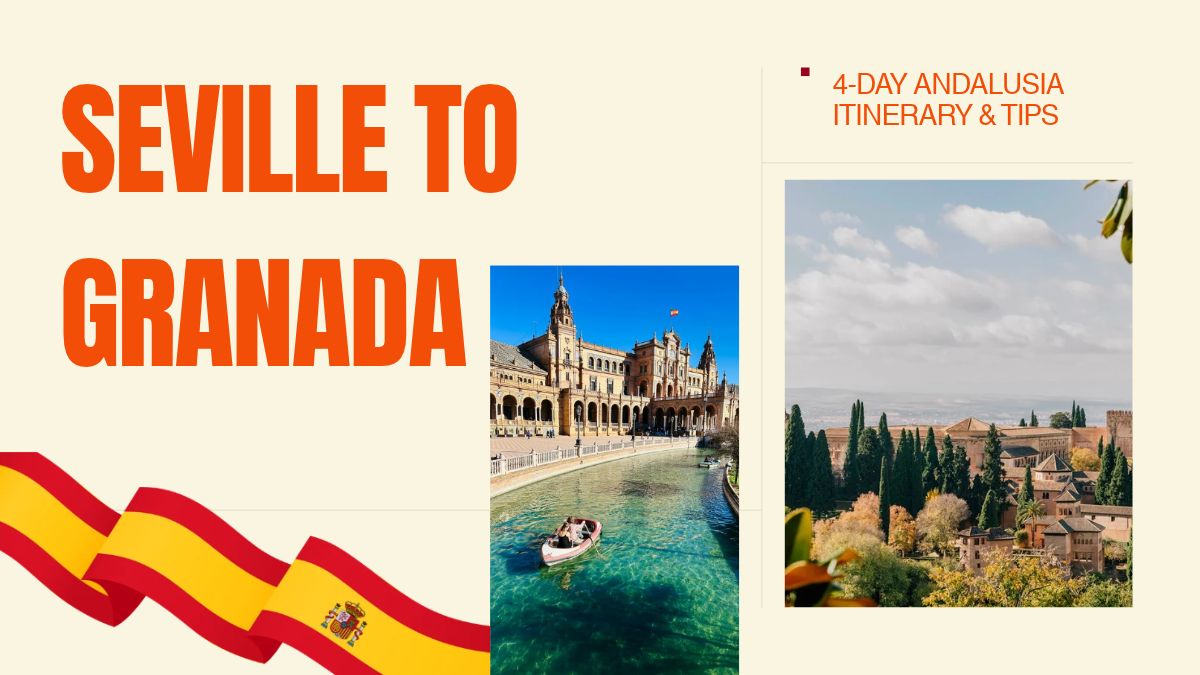
Give the morning to María Luisa Park. The Plaza de España was built for the 1929 Ibero-American Exposition and curves around a canal, with tiled alcoves for each Spanish province; it's busiest in the late morning, so go early if you want photographs without a crowd in them. The park next door is a good place to sit down.


Cross the Isabel II bridge into Triana for the Mercado de Triana and the pottery shops, and eat lunch on that side of the river. For the afternoon, pick one: the Metropol Parasol, a timber structure with a rooftop walk and Roman remains in the antiquarium beneath it, or the quieter Casa de Pilatos, a preserved Andalusian palace. If you can add a morning, Córdoba is a 45-minute train ride away and the Mezquita-Cathedral is worth the early start.

Seville


Day 3: The Move East, the Albaicín and a Long Dinner


Travel in the morning and keep the afternoon loose. Whichever way you cross, you arrive with half the day gone, so leave the bags at the hotel and walk the Albaicín, the Moorish quarter on the hill facing the Alhambra. The lanes climb, and the viewpoints at the top frame the palace against the Sierra Nevada. Wear shoes for cobbles, and time the walk for late afternoon when the light is softer, and the tour groups have gone.


Evening tapas is the plan in Granada. Bars cluster in the lower Albaicín and around the cathedral, so order a couple of plates at each stop instead of committing to one table, and let the evening run. If you want flamenco, book it before you arrive, because the small rooms fill. Keep the night short enough that you are fresh for the Alhambra.

grannad


Day 4: The Alhambra and the Generalife


The Alhambra is a Nasrid citadel and palace on the Sabika hill and one of the most visited sites in Spain, so the ticket, not the transport, is the part of this trip that needs planning. Daily access is capped, and the reservation window printed on many tickets falls between 1:30 and 2:30 in the afternoon, which means the morning is yours and the palace is not. Book on the official ticket site before you fly and let that slot decide the shape of the day.


Inside, the Comares Palace and the Palace of the Lions carry most of the carving people come for, and the Generalife gardens sit on the slope above with long views back across the city. Give the whole complex the day rather than folding it into a morning.


If you finish with light left, the Cathedral of Granada and the Royal Chapel are down in the center, and a last walk through the Albaicín is a good way to close the four days.


Granada

4-Day Spanish Delights Tour

4-Day Spanish Delights Tour from Barcelona: Valencia, Alicante, Granada, Seville, Lisbon | Hotel  Breakfasts Included
Guaranteed Departure
Shared Room Available
Affordable
4.4( 10 reviews )
Tour Code: 738918
Start / End City
Barcelona, Lisbon
Duration
4 Days
City & Attractions
Alicante, Valencia, Granada+10 more
Languages
English Live
Group Size
Max. 50 travelers
Tour Audience
Chinese speakers
Save 10%
From$573.49
$516.14


Seville to Granada: The Options

Three ways to handle the Seville, Spain to Granada leg, and the timetable is the least interesting part of the choice. Which one should you book? That depends on two things, and neither of them is the vehicle: how much luggage you are moving and how far your hotel sits from the station at each end.


Here is how the three compare on the parts that do not change with the season.


Option Where it puts you Luggage Flexibility What it costs you
Train Seville's Santa Justa station, outside the old town Bags stay with you, so you lift them at both ends Fixed departures and a seat you booked A transfer at each end of the line
Bus Granada's Estación de Autobuses, where buses from Málaga Airport arrive Bags go in the hold, so loading eats a few minutes at each end More departures spread across the day A longer sit and one local hop up to the Albaicín
Car Door to door, wherever you find parking Trunk space, and nobody else handles it Leave when you like and stop where you like Parking in two historic centers and a one-way rental


The Seville to Granada train is the option most people picture, and it rewards booking early rather than turning up. Santa Justa sits outside the old town instead of inside it, so add a taxi or a walk with luggage at the start; taxis are easy to find there. At the Granada end, add a taxi or a local bus if your room is up in the Albaicín.


Bus from Seville to Granada is the budget answer with one clear advantage: the bus lands at Granada's Estación de Autobuses, the station that also handles services from Málaga Airport, so you stay connected to the rest of Andalusia if you are carrying on. The trade-off is a longer sit and one more local hop at the end.


A rental car wins if you want to stop between the cities, though Ronda's gorge and the Puente Nuevo bridge are easier on an organized tour than on a self-drive day. A Spain tour that folds Granada and Seville into one booking removes the decision altogether, at the price of someone else's schedule.


Distance from Seville to Granada matters less than where you start and end within each city. A hotel beside Santa Justa saves you nothing if you spend both days in the old town, and an Albaicín address adds a climb to the end of every leg. Count those steps before you compare, and check the operator timetables as of November 2026, because seasonal services change.

Where to Stay in Each City

Two nights in each city means one decision each, and it should be made on walking distance rather than on stars. What follows is neighborhood logic, not a shortlist of hotels.


Seville: Centro or Triana


Centro is the tourist-friendly choice. It's flat; it puts the Alcázar, the cathedral and the Plaza de España within walking distance, and it has restaurants on every block. Triana, across the Isabel II bridge, suits you better if you want evenings in a working neighborhood with the market and the pottery shops at hand, with the old town still a walk across the bridge.


For two nights you will walk everywhere, so the Tarjeta Turista is not worth buying yet; it earns its keep on stays of three days or more, when the city buses and the MetroCentro tram start doing real work. If you would rather bundle the Seville nights with the rest of the trip, compare Seville vacation packages before you settle on a neighborhood.


Granada: The Flat Center or the Hill


Granada sits at 738 meters and the Albaicín climbs a hill, so a place described as near the Albaicín can still mean stairs at the end of every evening. Stay on the flat streets in the center if you want short walks to dinner and the cathedral, or accept the climb if a view from the window is the point. Either way, check the walk to your Alhambra slot before you book, because that is the one appointment you cannot move.

Granada

Booking the Alhambra and Other Timed Entries

So what has to be reserved before you fly? Two palaces, and one of them decides the shape of your last day.


The Alhambra, Before Anything Else


Daily access to the Alhambra is capped, so the ticket is what sells out for a given date, not the hotel. Book on the official ticket site, accept the reservation window you are offered, and build Day 4 around it rather than around the other sights.


The Alcázar and the Rest


The Alcázar in Seville runs the same kind of access control, with a mid-afternoon reservation window on some tickets, so reserve that one at home rather than standing in line on the day. Flamenco is the other thing worth booking ahead, in either city, because the small rooms fill and the large ones are not the same experience.


The 48-hour Granada Card costs €31 and covers seven monuments plus city transport, which is decent value if you plan to visit several of them. It doesn't cover the Nasrid Palaces, so it cannot replace an Alhambra ticket. Buy it for the monuments and keep the palace ticket separate.

Conclusion

4 days buys two proper looks at each city and nothing more, so the thing to cut is the Córdoba morning rather than the Alcázar or the Alhambra. Those two tickets are what the trip is built on, and everything else can shift around them.


What you can compress is the transfer day. Take an early crossing, leave the bags at the hotel, and treat the first Granada afternoon as a walk and a long dinner rather than a sightseeing block.


Skip the rental car if you are staying inside both old towns. Parking in two historic centers is the least rewarding part of driving here. If the Alhambra is sold out for your dates, move the dates rather than the itinerary.

FAQ

How to go from Seville to Granada without a car?

Take the train from Seville's Santa Justa station, or a bus that arrives at Granada's Estación de Autobuses. Book either one for the busy spring and autumn weeks, and expect to add a taxi or a local bus at the far end. Confirm the current timetables before you commit, since seasonal services change.

Do I need to reserve the Alhambra before I travel?

Yes. Daily access is capped and whole dates sell out, so book on the official ticket site and take the reservation window you are offered, which on many tickets falls between 1:30 and 2:30 in the afternoon. Plan the rest of that day around the slot instead of the other way round.

Is four days enough for Seville and Granada?

Two nights in each city covers the Alcázar, the cathedral, the Plaza de España, the Albaicín and the Alhambra, plus a slow dinner in both places. It does not stretch to Córdoba, so treat that 45-minute train ride as a swap for a Seville afternoon rather than a fifth day.

Which neighborhood should I pick in Granada?

The flat center if you want short walks to dinner, the Albaicín if you want the view and do not mind climbing. Granada sits at 738 meters and the quarter is built on a hill, so the same distance takes longer uphill with a bag.

When is the best time to visit?

Spring runs from March to May and warms from about 20°C to 28°C, with Semana Santa and the Feria de Abril pushing prices up. Autumn cools from 32°C in September to 20°C by November and brings smaller crowds. Summer rewards early starts, with highs near 36°C and above 40°C in July and August.