Province of PisaPisaItalyEuropePlaces to GoThings to DoTravel Tips
Mostrar todo

Pisa Travel Guide: Is the Leaning Tower Worth the Stop?

cover

Pisa asks one question of every traveler passing through Tuscany: is it worth the stop? The answer turns on what you expect from the place. As a monument, the Leaning Tower is a serious piece of engineering history that happens to lean 3.99 degrees off vertical. As a city to wander for a day, Pisa is thin. Nearly everything you came for sits inside one square.


Any Pisa travel guide should begin with the monument and the clock, because that pairing decides whether the stop works. The Tower is the fixed point; the rest of the square is negotiable.


The shape of the day follows from that. The monuments cluster, the Tower runs on timed entry, and the cathedral queue moves at its own pace. That means one booking decides your morning, and everything else fits around it. Travelers who arrive without a Tower slot spend their time in a line they cannot win.


So how much time do you need? Half a day covers the square and the climb. A full day buys you the city around it, the river, and a slower lunch. If Pisa is one stop on a longer Tuscan route, half a day is the version that keeps the rest of your trip intact.

Pisa Day Trip From Florence
Pisa Day Trip From Florence W/ Leaning Tower Fast Pass**Leaning Tower of Pisa Skip the Line || UNESCO World Heritage**video icon
Free Cancellation 4 Days Before
5.0
Código del tour: 204589
Ciudad de inicio / Ciudad de fin
Florence
Duración
5.8 Hours
Ciudad y atracciones
Pisa, Leaning Tower of Pisa, Pisa Cathedral+1 más
Idiomas
English Live, Spanish Live
Tamaño del grupo
Máx. 50 viajeros
Audiencia del tour
English speakers
De
$102.51


What the Tower and the Duomo Actually Give You

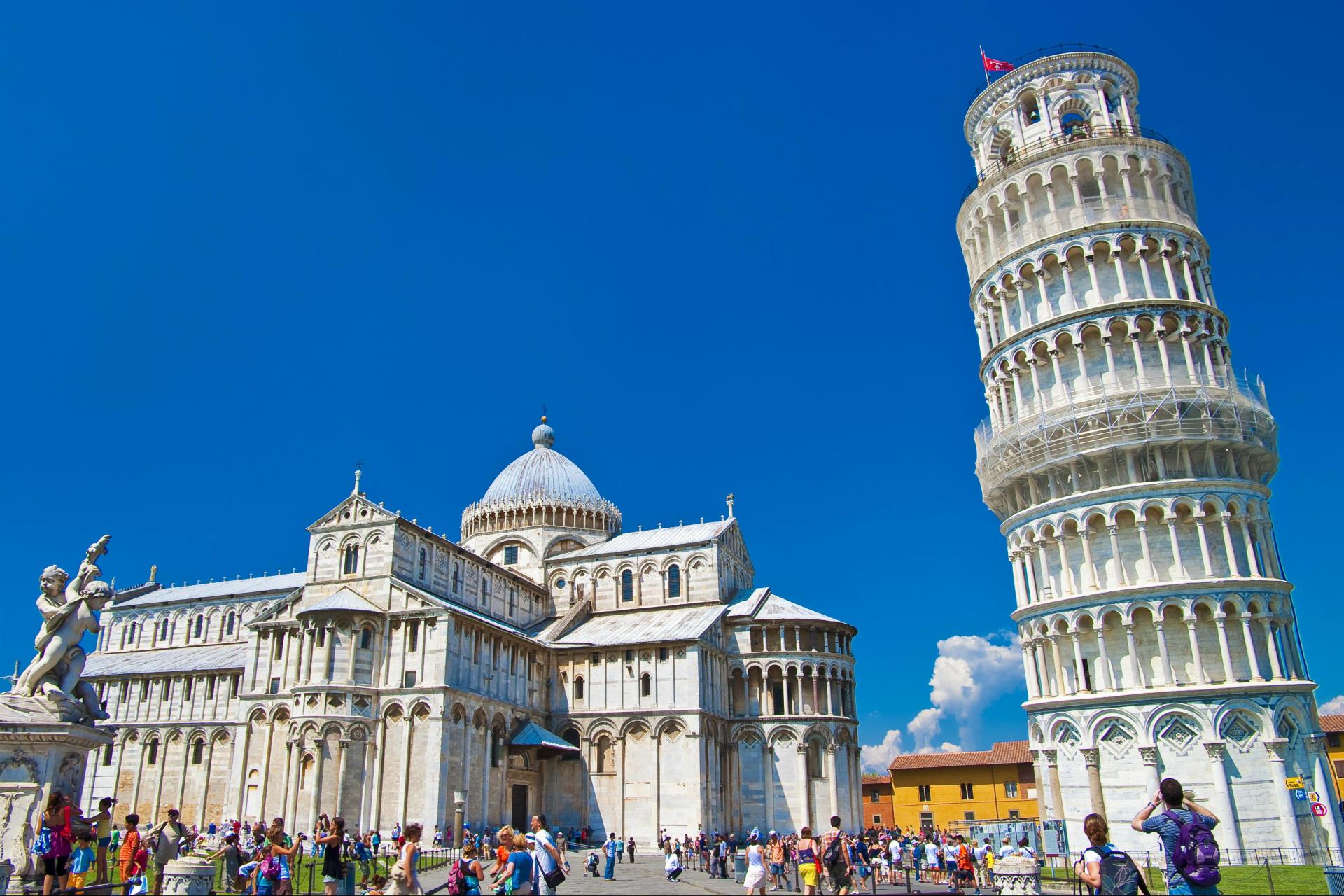
The stop has two halves, and they ask different things of you. One is vertical, a spiral staircase inside a building that should have fallen over centuries ago. The other is horizontal, a walk across a square of white marble.

pasa


The Climb: 294 Steps and Thirty Minutes Inside


The interior visit lasts about 30 minutes, so it is a short, steep push rather than a slow look around. You go up 294 steps in a spiral; the operator puts the staircase at about 300, which tells you the count is approximate and the effort is not. Wear shoes you can climb in.


The building measures 55.86 meters on the low side and 56.70 meters on the high side, and that gap of nearly a meter is the lean made physical. It sits 3.99 degrees off vertical because the subsoil beneath it is weak and unstable. You feel the angle in your legs before you feel it in the view.


Age rules are enforced at the door: children under 8 are turned away outright, kids of 8 to 12 go up hand in hand with an adult, and 12- to 18-year-olds need an adult with them. Anyone with a heart condition should stay on the grass. Walking the external passageways is forbidden, so the route is the inside staircase.


The Duomo, the Baptistery and the Camposanto


The cathedral is the reason the square exists as a set piece, and it is the model of the Pisa Romanesque style. The baptistery beside it is round rather than square, wrapped in columned arcades. Then there is the Camposanto, a cemetery by origin and a quadrangular cloister by shape, its marble façade closing the square to the north.


The name Piazza dei Miracoli, the square of miracles, comes from the beauty and singularity of what was grouped there rather than from any military or commercial purpose. Cathedral admission comes with the guided day, and when the queue keeps you out of the interior, a guided visit is offered in its place.


What the Rest of Pisa Adds


Beyond the four monuments, the city holds smaller stops that fit a longer afternoon: Santa Maria della Spina, Knights Square, the Medici Palace and the University of Pisa Botanical Garden. The university dates from the 12th century, which is why the city around the square feels lived in. Archaeology here reaches back to the 6th century BC.

How to Walk the Square in One Continuous Pass

Four monuments on one lawn sounds like an easy morning. The catch is the Tower slot, which pins you to a clock while everything else drifts.


Take the Cathedral While the Queue Is Short


Go into the Duomo first, because it is the building where waiting is the whole cost. Interior visits slow down when a coach group arrives, and the queue outside eats a morning. Inside, the nave gives you the scale the façade hides.


Then the Baptistery and the Camposanto


The baptistery comes next, and the round plan is the point: outside you see the columned arcades stacked in rings; inside, the round wall wraps the room around you. Walk on to the Camposanto, where the quadrangular cloister and its marble wall hold the north side of the square. It draws the fewest people of the four.


Climb in Your Slot, Not Before It


Turn up at the Tower door a few minutes before your time. The visit runs to a fixed window with no extension, so a late arrival gets no climb rather than a shortened one. Do not book the climb last if you have a connection to catch.


The Photo Stop Takes Longer Than You Plan For


Perspective shots are half the reason people come. Stand far enough back that your hand lines up with the tower's edge, and the flat lawn gives you the space. Fifteen minutes go fast, so treat it as a stop with a time limit.

Half a Day or a Full Day

Most people underestimate how small the monument zone is and overestimate how much time the city deserves. If you have a train to catch, do the square and skip the city.


Half a Day Covers the Reason You Came


The square, the climb, the baptistery and the Camposanto fit into half a day with room to sit down. That is the version most travelers take, and it is enough to answer the question the trip was built on. The guided day from Florence is sold as 5.8 hours end to end, which is most of a day once you add the meeting point and the walk in; the square itself is the half day.


A Full Day Means Leaving the Square


Staying longer pays off away from the monuments. Santa Maria della Spina sits by the river, the Medici Palace and Knights Square hold the city's political history, and the Botanical Garden belongs to a university that has been teaching since the 12th century. None of these are the reason people book a ticket to Pisa, and all of them are why a second visit makes more sense than a rushed first one.


Decide by What Sits on Either Side of the Stop


If Pisa is a day trip from Florence, half a day is right, because the other half belongs to Florence. Coming from another Tuscan town, half a day still works as long as the Tower slot is not last. If you are sleeping in Pisa, give the city the evening as well, when the coach groups have gone and the square belongs to whoever is left.


What you should not do is arrive with no slot and hope. The climb is the one part of the day you cannot improvise, and everything else on the square is flexible by comparison.

Getting There From Florence, and Picking Your Hour

The transfer is the part people plan last and regret first. Two decisions matter: how you get to Pisa, and whether your arrival time puts you ahead of the crowd or behind it.


What the Guided Day Takes Off Your Plate


On the guided version you meet the escort in Florence, ride out with the group and walk the square with a local guide who handles the commentary and the cathedral entry. Check-in is not a suggestion. Miss the meeting time and the operator treats it as a no-show, with no refund and no reschedule, which is why an early arrival at the meeting point beats a tight one every time. The trip also needs two passengers to run, so a solo booking is worth confirming before you build a day around it. Live guides run in English and Spanish, which matters if your group splits languages.


Doing the Transfer Yourself


Independent travelers keep the day flexible but own the risk. You buy your own cathedral and Tower entries, and the Tower entry has to be locked in ahead, because the visit runs to a fixed 30-minute window. Building the day around a slot you booked weeks earlier is easier than finding one on the morning you arrive. If you are still weighing operators and departure times, start with Pisa tours before you commit to a date.


Morning or Afternoon


Mornings are the better call for the monuments. The square is at its emptiest before the coach groups land, the light on the marble is flatter and easier to photograph, and you finish the climb before the heat builds in summer. A later option exists as well: one departure leaves at 13:30, which puts you on the square in the afternoon. That version works if you are coming from Florence after a morning there, and it costs you the quiet window.


Whichever you pick, add a buffer at the end. The climb is tied to your slot, the cathedral queue is unpredictable, and a missed train or coach cannot be fixed on the spot.

When the Square Sheds Its Crowds

Crowd levels on Piazza dei Miracoli track the calendar more than the clock. Late October to early April is the window with fewer people, summer brings the highest volumes, and the shoulder months give you cooler weather and shorter lines, particularly on weekday mornings.


Autumn, From Late September to November


September opens mild, with temperatures running 18°C to 24°C, and slides down to around 10°C by November. That spread is what makes October the month to aim for: warm enough to stand on the lawn, cool enough to make the climb without arriving at the top soaked. Crowds thin out once the school holidays end, so the same slot that draws a long line in August is easy to get in October.


Winter, When the City Belongs to Residents


Winter holds between 5°C and 13°C, with occasional rain and cool breezes off the Ligurian Sea. Snow is rare. The lack of tourists is the whole argument for this season, and the marble reads better in low gray light than in hard summer sun. Pack a rain shell rather than an umbrella, because the wind on an open square turns an umbrella inside out.


Spring and Summer


Spring runs 15°C to 20°C with sunny skies, which is close to ideal for a walking day and the reason April and May fill up early. Summer averages around 28°C, and that number changes how you plan: climb in the morning, take the baptistery and Camposanto in the middle of the day, and do the lawn and the photos when the light softens.


Booking Around School Holidays


If your dates are fixed by school holidays or a flight you already bought, work backwards from the Tower slot instead of forwards from the calendar. The Tower slot is the part that has to be booked ahead, and it is easier to move a lunch than a climb. Travelers stretching the trip beyond a day out of Florence can compare Pisa vacation packages with a single day trip before the flights go in.

Is Pisa Worth the Stop?

Yes, on one condition: you go for the monument and not for a city break. The Leaning Tower, the cathedral, the baptistery and the Camposanto are a tight group of buildings on a single lawn, and half a day is enough to see them properly. What Pisa will not give you is a full day of urban life to fill, and travelers who expect one leave disappointed.


The stop rewards a traveler who wants one thing done well rather than several done quickly.


Drop Pisa from the plan if the climb is off the table for your group, since children under 8 cannot go up, anyone with a heart condition should skip it, and the square by itself rarely justifies the detour. Keep it if you want a dense half day of Romanesque architecture and a view from the top of a building that has no business still standing. Give it half a day, arrive early, and it earns its place on the route.

FAQ

Is Pisa worth stopping for, or is it just a photo?

The photo is the smallest part of it. The square holds a Romanesque cathedral, a round baptistery and a cloister as well as the Tower, and the climb puts you on top of a building leaning almost four degrees off vertical. Half a day is enough; a full day is worth it for the city around the square.

How long is the Tower visit?

About 30 minutes inside, with 294 steps up a spiral staircase. Turn up at the door a few minutes before your slot.

Can kids climb the Leaning Tower?

Under 8, no, under any circumstances. Ages 8 to 12 go up with an adult holding their hand the whole way, and 12 to 18 need an adult with them. Anyone with a heart condition or comparable health problem should not climb.

How much time do you need in Pisa?

Half a day for the monuments and the climb, a full day if you want the river, Santa Maria della Spina and the smaller squares. A day trip out of Florence fits the shorter version without crowding the rest of your trip.

When are the crowds thinnest?

Late October to early April, and weekday mornings inside that window. Summer brings the heaviest volumes to the Tower, and shoulder-season trips also get cooler walking weather.

Resumen

What the Tower and the Duomo Actually Give You

How to Walk the Square in One Continuous Pass

Half a Day or a Full Day

Getting There From Florence, and Picking Your Hour

When the Square Sheds Its Crowds

Is Pisa Worth the Stop?

FAQ

America's 250th Anniversary Mega Sale

image