DublinIrelandEuropePlaces to GoThings to DoTravel TipsExcursionsVacations
Mostrar todo

Ireland Itinerary: 7 to 10 Days from Dublin to the West

cover

Most Ireland itineraries fail for a boring reason: the days get counted and the driving gets ignored. Distances look short on a screen, then the driving takes longer than the map suggested and the afternoon disappears. So the useful question isn't how much you can fit in. It's how much of each day you want to spend sitting down.


This Ireland itinerary runs from seven to ten days, starts and ends in Dublin, and treats the west coast as the point of the trip rather than a day out. Three decisions shape everything after that: how many days you have, whether you cross into Northern Ireland, and whether you drive yourself or let someone else do it.


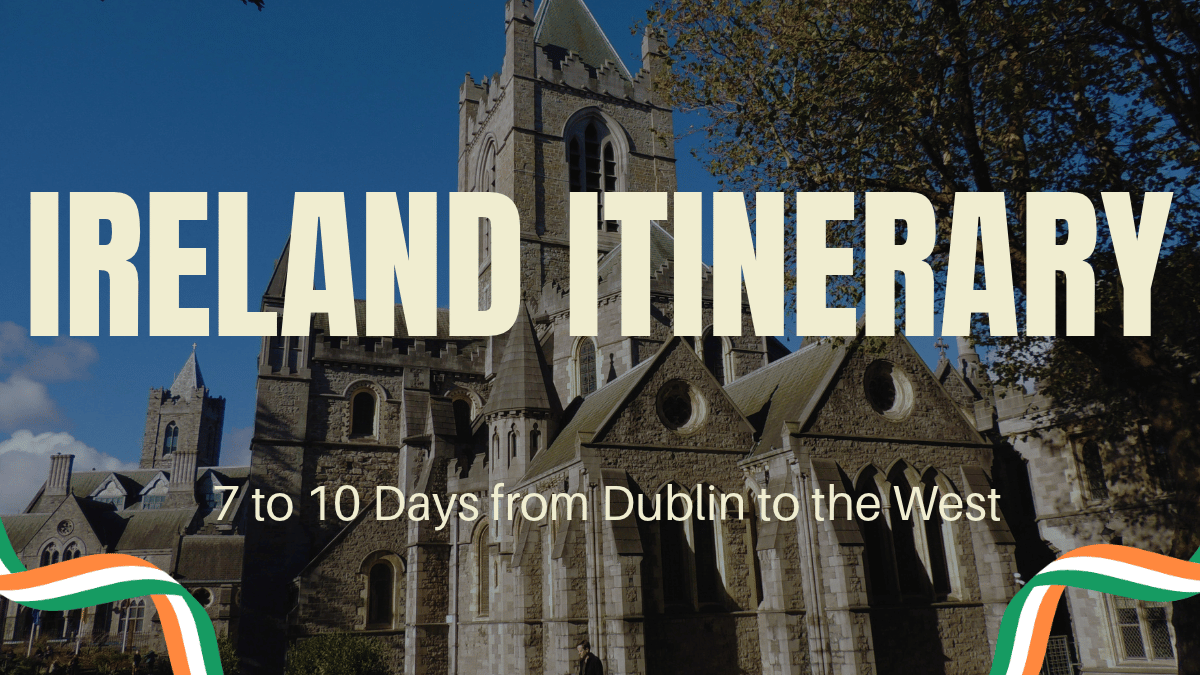
Dublin rewards more than the arrival afternoon most trips give it. The capital sits on Dublin Bay at the mouth of the River Liffey, and at the 2022 census the city council area held 592,713 people, which makes it the largest city on the island. That concentration is why a short stay still works. Trinity College, St. Patrick's Cathedral, Dublin Castle and the pubs around Temple Bar all sit in the middle of the city, so a morning and an evening cover more ground than you would guess.


So where do the days go? Start with the count, because the number decides the map.

How Many Days Are Enough in Ireland?

Two numbers cover most trips: seven and ten. Nine is the middle version, and it buys the north rather than more of the west. If you would rather not book a dozen hotels yourself, Ireland vacation packages for both lengths take the rooms off your list.


Seven Days: Dublin, the South and the West


A week on the road covers the east, the south and a slice of the west: Dublin first, then a run through County Wicklow to Kilkenny and the Rock of Cashel, Cork and Kinsale, Killarney, Adare, the Cliffs of Moher and Galway before the road turns back east.


A week leaves out the north, and the Ring of Kerry unless you drop something else. That is the honest trade: breadth along one line, and not much time in any one place.


Nine to Ten Days: Adding the North, or Going Deeper West


Nine days is where the north fits. The southern half stays as it is, then the route keeps going after Limerick, north through Westport and Donegal, across to the Giant's Causeway and Belfast, and back down to Dublin. That adds a second country, and prices in Belfast come in pounds rather than euro, since Northern Ireland is part of the United Kingdom.


Ten days does something different: it stays in the Republic and goes deeper instead of farther. Waterford and its crystal workshop, Kilkenny, Blarney, Killarney with a full day on the Ring of Kerry, Bunratty Castle, the Cliffs, Galway, then Connemara and Kylemore Abbey, a night in Sligo and a last day in Dublin.


The choice comes down to a second country or a slower west, and both are good trips.

10-Day itinerary in Ireland

The seven-day line is the spine of the trip, and both longer versions build on it. Its first two nights are in Dublin, because the flight lands there and a city is the easiest place to lose half a day. The nine-day and ten-day versions leave Dublin after the first night, for Killarney and for Kilkenny.


Days 1-2: Dublin, Arrival and the City


Day one is a travel day. Check in, walk the middle of the city, eat near Grafton Street or Temple Bar, and leave the sights for the morning. If you join a coach trip, the first afternoon often includes a city sightseeing run past St. Patrick's Cathedral and Trinity College, which is a soft way to start.


Day two is yours. The National Museum, the National Gallery and Dublin Castle fill a day without a rush, and a tasting at the Irish Whiskey Museum covers an afternoon when the rain sets in.


Days 3-4: Wicklow, Kilkenny, Cork and Killarney


Day three heads south through County Wicklow, with Powerscourt and its gardens as the first stop, then Kilkenny, then the Rock of Cashel, and Cork for the night. Three stops on one long driving day, so pick which one earns the extra hour. Kilkenny is a medieval town with a castle and riverside walks, and the Rock of Cashel is the stop after it.


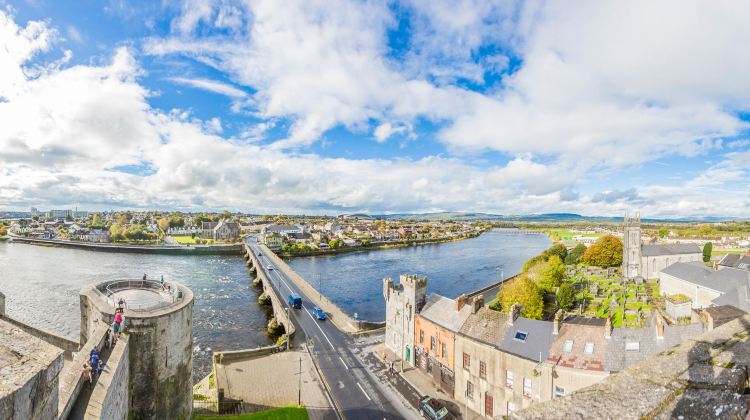
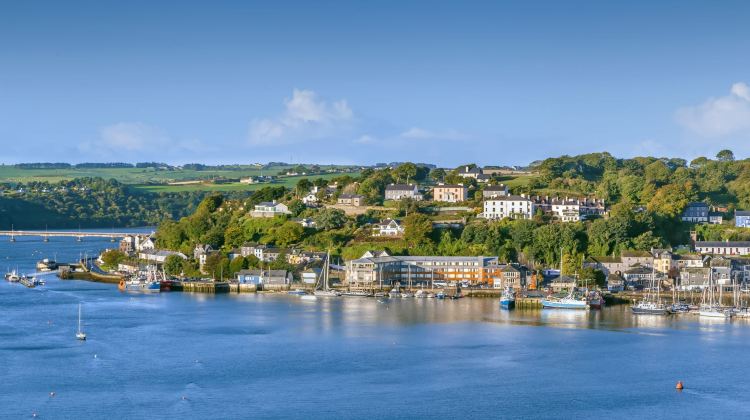
Day four is gentler. Kinsale, then Killarney, with Adare on the way and Limerick for the night. Killarney is where most Ring of Kerry drives begin, and the national park starts at the edge of town, so a jaunting car ride or a short boat trip on the lake at Ross Castle gets you into it without a hike.


Days 5-7: The Cliffs, Galway and the Road Back


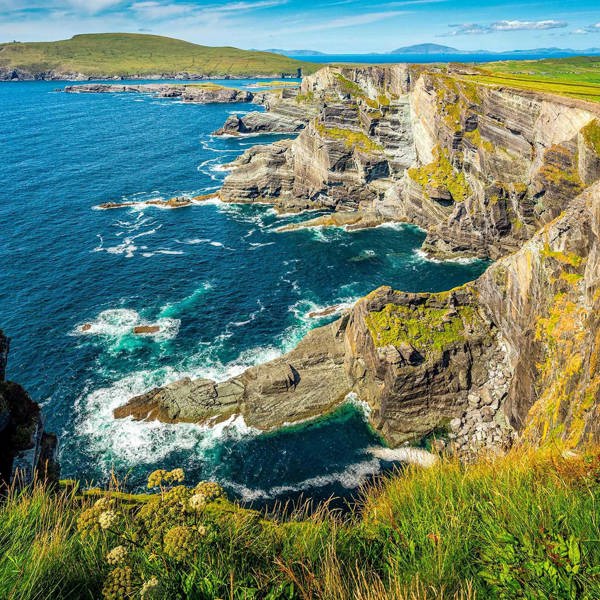
Day five starts at Bunratty Castle and its folk park, then the Cliffs of Moher, then Galway for the night. The cliffs run for about five miles and stand 700 feet above the Atlantic, and the visitor center is where you find out what you are looking at.


Day six turns inland with two stops, Cong and the monastic ruins at Clonmacnoise, then the road back to Dublin. Clonmacnoise is the last stop before the city.


Day seven is a Dublin morning and a flight home.


Days 8-10: Where the Extra Days Go


On the nine-day version, the extra days go north after Limerick. Those days run through Westport for an orientation stop and Donegal for a night beside a lough, then to the Giant's Causeway, a night in Belfast, a Belfast morning with the murals and City Hall, and the drive back to Dublin. The causeway is 40,000 interlocking basalt columns running into the sea, and the story that comes with it involves a giant named Finn MacCool.


On the ten-day version, they spread west and south instead: a Waterford morning at the crystal workshop, a full day on the Ring of Kerry, then Connemara and Kylemore Abbey, the Marian shrine at Knock, and a night in Sligo before the last run to Dublin.


So which extra days are better? The north gives you a coastline and a city that feel nothing like the south. The west gives you bogs, stone walls and Irish spoken in a shop, and it asks for slower days rather than more of them.



Dublin: What to Do With the First and Last Day

Dublin gets the scraps of most itineraries, and it deserves better. Two half-days show you the shape of the city if you split them well: the arrival afternoon for the streets, the last morning for the one sight you could not fit.


The middle of the city is compact. Trinity College and the Book of Kells, St. Patrick's Cathedral, Dublin Castle and Grafton Street cluster together, which is why half a day works. Pick two rather than four, and let the walking between them do the rest.


If you want the history attached to the buildings, a guided Dublin tour earns its place on day one. The 1916 Rising, the General Post Office and the Georgian streets all make more sense with someone talking.


Evenings are the easy part. Temple Bar is the loud version of a Dublin night, Grafton Street the walkable one, and a trad session beats a hotel bar. The airport run eats whatever is left of the last morning.

The Wild Atlantic Way: Where It Actually Starts

The Wild Atlantic Way is a signed driving route along the west coast, and it is longer than most people picture. Wikipedia's entry on the route, read in November 2026, measures it at 2,500 km, which is about 1,553 miles, running through nine counties and three provinces from the Inishowen Peninsula in Donegal to Kinsale in County Cork. It was launched in 2014, with 157 discovery points and more than 2,500 activities along it.


That length is why the question about where it starts has two answers. Inishowen marks the top end, with Malin Head as the most northerly point on the island, and Kinsale marks the bottom one. The route is broken into five sections, from Donegal down through Mayo, Clare and Kerry to Cork. Most tours join it in Clare or Kerry, because that is where the cliffs and the peninsulas are.


The Cliffs of Moher are the piece everybody knows, and they sit in the Clare stretch of the route. The Ring of Kerry is the other anchor: a circuit of the Iveragh Peninsula running close to 115 miles past Ross Castle, Muckross Abbey, Torc Waterfall and Derrynane House.

Getting Around Without a Car

Ireland drives on the left, and that decides the car question before any budget argument. If driving on the left sounds fine, rent a car and take the coast at your own pace. If it sounds like work, a guided Ireland tour puts a professional driver in front and a guide beside them, so the road happens while you look out of the window.


There is a middle option: base yourself in one town for three nights and take day trips out of it. Killarney runs day trips around the Ring of Kerry, the lakes and Dingle, and Galway puts Connemara and the Aran ferries within reach.


What does not work is treating the west like a city break. Three towns in three nights means the trip is spent packing.

When to Go, and What the Weather Does

Weather is the part of an Ireland itinerary you cannot schedule around, so you dress for it instead. As of November 2026, seasonal summaries put September daytime temperatures at 13-14°C, or 55-57°F, sliding to about 10°C, or 50°F, by November.


Summer is the mild end of the range rather than the hot one. June to August averages 14-16°C, or 57-61°F, with the odd day at 20°C, which is 68°F. Daylight runs until late evening, and a long evening is a second sightseeing session.


Winter runs 5-6°C, or 41-43°F, on average. Snow is rare in the lowlands; rain and wind are not, and the days are short enough to plan around. Spring climbs from about 7°C in March to 10-11°C by May, and mid-March brings St. Patrick's Day parades in Dublin and Galway.


For crowds, aim at late spring or September. The scenery is the same, the castles are calmer, and the crowds thin out.

Putting the Trip Together

Strip the planning down and two decisions are left: where to base yourself in the west, and how to spend the last morning.


Pick one base for the west rather than three. Killarney for the Ring of Kerry, Galway for Connemara and the Aran ferries, with three nights in whichever you pick. Packing and unpacking eat a short trip faster than driving does.


Leave the last Dublin morning empty. When the day gets tight, drop the second museum and keep the walk along the river: a fixed ticket and an afternoon flight rarely sit well together.

FAQ

How many days does an Ireland itinerary need?

Seven for Dublin, the south and the west. Nine buys the north, and ten stays inside the Republic and goes deeper west.

Should I rent a car or join a coach trip?

Rent if you want the coast at your own pace. Join a coach trip if you would rather not drive on the left.

Where does the Wild Atlantic Way start?

Inishowen in Donegal at one end, Kinsale in Cork at the other. You drive sections of it, not the whole thing.

Which month is best for the west coast?

Late spring or September, when the crowds thin and the light lasts.

Do I need two currencies?

Only if you cross into Northern Ireland, where prices are in pounds. The Republic uses the euro.

Resumen

How Many Days Are Enough in Ireland?

10-Day itinerary in Ireland

Dublin: What to Do With the First and Last Day

The Wild Atlantic Way: Where It Actually Starts

Getting Around Without a Car

When to Go, and What the Weather Does

Putting the Trip Together

FAQ

America's 250th Anniversary Mega Sale

image