MunichGermanyEuropePlaces to GoThings to DoFood & DrinkTravel TipsVacations
Mostrar todo

Munich Itinerary 3 Days: City Sights and Neuschwanstein

cover

Three days in Munich split into two city days and one day in the Bavarian Alps, and a Munich itinerary 3 days long is the shortest version that still fits Neuschwanstein. Two days forces a choice between the castles and the city, and a fourth day needs a plan of its own rather than another beer hall.


The city half is compact. Marienplatz, the Residenz and Viktualienmarkt sit within walking distance of each other, and the English Garden is a short U-Bahn ride east. The castle half is a single long day out, which is why it deserves its own slot rather than an afternoon. Is three days too tight? Not if you fix the castle day and let the two city days flex around weather. This plan keeps one indoor block on each city day, so a wet morning costs you a change in museum order rather than the whole morning.

3 Day Munich Itinerary

This is the order that keeps walking to a minimum and leaves the longest day out for last. The 3-day Munich itinerary below assumes you sleep in the center and start each morning on foot.


Day 1: Marienplatz, the Markets and the Residenz


Start at Marienplatz, where the Old and New Town Halls face each other across the square. The Glockenspiel pulls a crowd into the square, and the square empties again within a few minutes.

Marienplatz


Midday: Viktualienmarkt


A few minutes south sits Viktualienmarkt, the open food market, and eating standing up there costs less than a restaurant table. It also sets up the afternoon without a sit-down break.


Afternoon: the Residenz


Then the Residenz, the Wittelsbach palace that housed Bavaria's rulers from 1508 until the end of World War I and now runs as a museum full of their treasures. Half a day covers the state rooms and the treasury, which is the block to cut short if the weather turns.


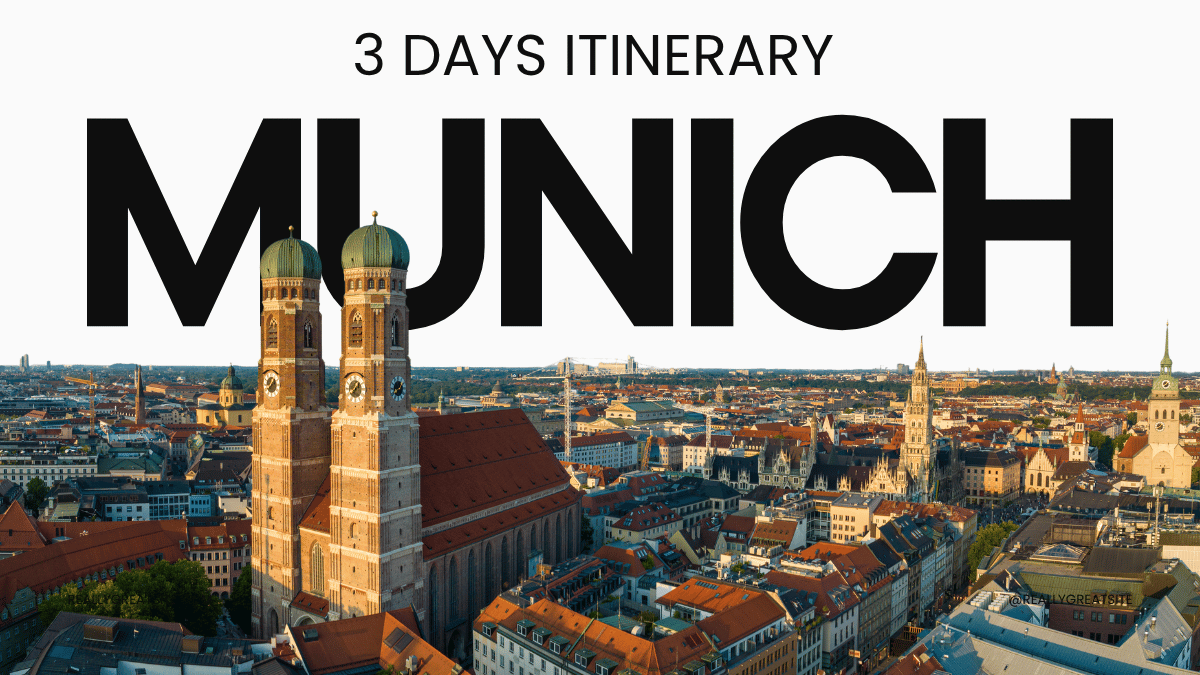
Pass the Frauenkirche on the walk back. Its red roof is the silhouette you will recognize from the postcards.


If you would rather have the old town explained than simply walked, a Munich tour covers the same square, church and palace in one loop, which suits a first afternoon when you are still learning the geography.


Day 2: Museums and the English Garden


Give the morning to the Kunstareal, the museum quarter, and pick one Pinakothek building rather than three. Trying three before lunch usually means remembering a lot of rooms and no paintings.


A morning is a fair first pass through one collection; less than that and you are walking rather than looking. Traveling with kids, the morning is the ceiling, and the park straight afterward is the reward.


Afternoon: the English Garden and the Eisbach


Ride the U-Bahn across to the English Garden, one of Europe's largest city parks, and walk to the Eisbach where it enters the park. Surfers queue on the bank to ride the standing wave in the river, and the crowd that gathers stays longer than it planned. The wave runs whatever the weather, which is why it earns a stop even on a cold afternoon.


Carry on to the Chinese Tower beer garden inside the park and take a long table under the trees. Order at the counter, find a seat, and treat the afternoon as the day's soft landing rather than a stop to rush. Three days in Munich does not need a booked table every night, and a beer garden is how the city avoids it.


If You Still Walk: Olympiapark


Olympiapark, built for the 1972 Games, is the third option and the one to take when the weather holds. It is a short U-Bahn ride from the middle of town, and it works as the late-afternoon stop rather than the main event.


Rain changes the order, not the day. Move the museum block to the wet hours and keep the park for a dry window; the Bavarian State Opera gives you an indoor evening if the forecast is hopeless.


Day 3: Neuschwanstein and Linderhof


Day three starts with an alarm. The coach leaves Munich in the morning, covers King Ludwig II's two castles and returns you to the city in the evening, so the whole outing runs about ten and a half hours and takes the entire day.


Neuschwanstein comes first: the castle sits high in the Bavarian Alps above a valley, which is why the walk up takes longer than the map suggests and why the view back down is the part people photograph. Linderhof follows, smaller than its neighbor and more flamboyant inside, with an artificial grotto and a small lake on the grounds.


You get back in time for a late dinner, which is the right way to end the trip: one long day out, then a table and a beer.


Linderhof

How the Neuschwanstein Day Trip Works

The two-castle day is the one piece of this trip you should settle before you fly. As of October 2026, the combined Neuschwanstein and Linderhof outing from Munich runs with an English-speaking guide and starts from $89 per person. Cancellation is free up to four days before departure, which matters when the castle day has to move with your flight.


A coach loop solves the problem that makes the pair awkward on your own: the distance between the two palaces. On the organized version you are driven between them and dropped at each entrance, so the transfers stop being your problem.


Footwear is the practical part: the approach to Neuschwanstein climbs over uneven ground, so sneakers with grip beat sandals, and the suitcase stays at the hotel either way. Linderhof is the gentler stop, and the one that surprises people who expected a second copy of the first castle.


Pick the day carefully if you travel in September. Oktoberfest draws visitors from around the world, so book the castle day earlier than you would for a May trip.

What to Book Before You Go

Two things are worth paying for in advance: the castle day and a transit pass. Everything else in this Munich 3 day itinerary can be decided on the morning, which is how you keep the two city days flexible.


On transport, buy a multi-day card instead of singles. The City Tour Card and the Munich Card both bundle transit with attraction discounts for several days, and either usually works out cheaper than singles for three days of moving between the museum quarter, the park and the center. Munich runs its U-Bahn, S-Bahn, trams and buses on an honor system: validate your ticket before boarding, because inspectors do spot checks and the fine is the expensive way to learn the rule.


If you would rather not assemble the pieces yourself, Tours4fun books the castle day and the rail leg into Munich as one booking, which saves you a morning of comparing departure times.


Munich also works as the start of a longer run. A Germany tour that begins here usually carries on to Salzburg and Vienna, and the longer loops add Prague and Budapest, so the three days become the front half of a two-week trip.

Munich

Where to Stay in Munich

Where you sleep decides how much of the day you spend in transit. Three areas make sense for a 3-day Munich itinerary, and each one trades something off.


Old Town, Around Marienplatz


This is the easy answer for a first visit. Day one starts outside your door; the Residenz and Viktualienmarkt are a walk away, and the U-Bahn and S-Bahn handle everything else. The trade-off is evening noise and a higher room rate than the park side.

Munich


The English Garden Side


Staying near the park gives you quieter nights and a green walk before breakfast, and the U-Bahn still puts you in the old town in a few stops. It suits anyone who would rather end the day in a beer garden than on a bar street.


Near Theresienwiese in September


If Oktoberfest is the reason for the trip, the ground around Theresienwiese is where you want to be, since the festival runs on that open space and the walk home beats a crowded platform. Book that window early, because hotels fill months ahead and the rest of the city fills with the same crowd.


December is the other tight month, when the Christmas markets pull people into the center, and rooms near Marienplatz go first. If you want the hotel and the day trips settled in one go, Munich vacation packages bundle a city stay with the castle day, which saves you from booking the two separately.

Eating and Drinking Between Stops

Bavarian food is heavy in the way that suits a walking day: you eat at midday and you are not hungry again until dark. Plan the big meal for lunch and keep dinner light if you want to be out early the next morning.


The beer gardens do the work of a restaurant without the formality. Hirschgarten is one of the gardens that anchors local summer life, and on a warm evening a long table there beats another museum. Beer halls cover the cold months and the late hours, and the city has enough of them that you never need to plan around one address.

Munich beer


Markets handle the in-between meals. Viktualienmarkt sits in the center and covers the gap between lunch and dinner without a reservation, and in December the Christkindlmarkt at Marienplatz gives you a second place to eat standing up on the same walk.


If your dates land in late September, Oktoberfest is a food and music event as much as a beer event, with Bavarian cooking and brass bands on Theresienwiese. Go early in the day if you want a table, and treat it as the third day's alternative rather than an add-on after the castles.

When the Season Changes the Plan

Three days holds in any month, but what fills it moves.


Autumn, September to November


These are the weeks when the city looks the way people picture it, with the trees in the English Garden and along the Isar turning gold. September brings Oktoberfest to Theresienwiese, and the streets thin out again once the festival crowd leaves, which makes late October and November the easier weeks to walk.


Winter, December to February


Temperatures sit between -3°C and 5°C, with occasional snow and short daylight. December is the month to plan around: the Christmas market on Marienplatz fills with mulled wine and handcrafted gifts, and the Bavarian State Opera and the beer halls give you warm rooms once the stalls close. January and February are among the quietest weeks of the year, which is when the museums belong to whoever shows up.


Spring, March to May


Daytime temperatures climb from 5°C to 18°C between March and May. April rain is the risk, and layers are the answer; the payoff is the gardens at Nymphenburg coming back and fewer people in front of every sight than you will meet in July.


Summer, June to August


Summer is when a 3 day Munich Germany itinerary needs the most planning. Beer gardens fill, the lakes at Starnberg and Ammersee become the weekend plan, and afternoon thunderstorms are common enough that an indoor block in the morning is the safer order.

What to Cut If the Trip Shrinks

Two days instead of three is the common case, usually because a flight moved. Drop the second city day rather than the castles: keep day one on foot in the old town and keep the Neuschwanstein day, then let the museum quarter go. You lose paintings, not the thing you came to Bavaria for.


If the trip runs to four days, add the Dachau Memorial Site or a day on the Zugspitze rather than a third museum. Both change the register of the trip, and a fourth city day mostly repeats the second.


Whatever shape it takes, three days in Munich is two city days plus one Alps day, and every cut follows from that split. Decide which date is the castle day before you book a hotel, since it is the one fixed point and everything else can slide by a day without breaking.

FAQ

How many days does a first visit to Munich need?

Three covers the two city days and the castle day. Plan five to seven if you want the museums plus a seasonal event like Oktoberfest or the Christmas markets.

Do you need a car for Neuschwanstein?

No. The organized day covers both palaces with an English-speaking guide, drives you between them and returns you to Munich the same evening, so the transfers never become your problem.

How far ahead should the castle day be booked?

Earlier than you think in September, when Oktoberfest pulls the crowd. Outside that month a few weeks is usually enough, and cancellation stays free until four days out.

Is there a Christmas market at the airport?

Yes. Munich Airport holds one with stalls, ice rinks and local treats from mid-November through December, so a late-November arrival can start the trip before reaching the center.

Resumen

3 Day Munich Itinerary

How the Neuschwanstein Day Trip Works

What to Book Before You Go

Where to Stay in Munich

Eating and Drinking Between Stops

When the Season Changes the Plan

What to Cut If the Trip Shrinks

FAQ

America's 250th Anniversary Mega Sale

image