Zoella Última actualización 16 Sep 2026
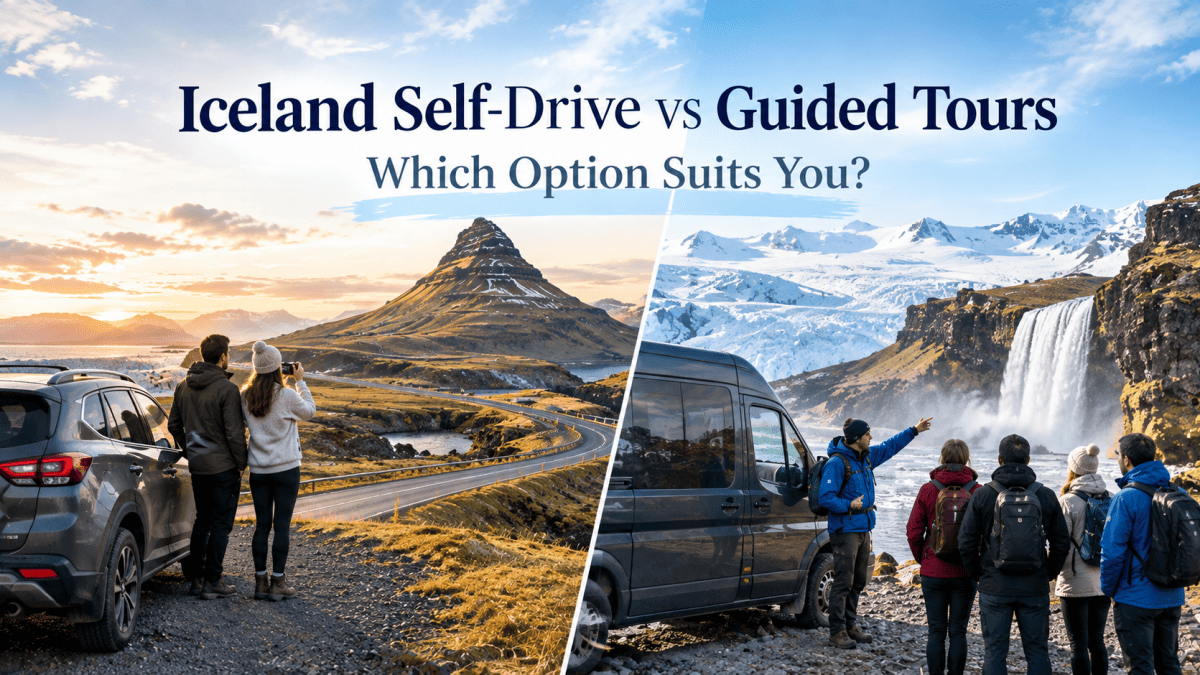
Planning a trip to Iceland means making an important decision: should you travel independently or join an organized group? The choice between Iceland self drive or tour options depends on your travel style, budget, comfort level, and what you want to experience. Both approaches offer unique advantages, and the right choice varies from traveler to traveler.
Here's a quick comparison to help you understand the key differences between Iceland self drive vs tour options:
| Factor |
Self-Drive |
Guided Tour |
| Flexibility |
Complete freedom to change plans |
Fixed itinerary, less flexibility |
| Cost |
Can be cheaper or more expensive |
Predictable pricing, often includes extras |
| Stress Level |
Higher (navigation, weather, bookings) |
Lower (everything handled for you) |
| Local Knowledge |
Self-research required |
Expert guide provides context |
| Social Experience |
Solo or private group |
Meet other travelers |
| Safety |
Your responsibility |
Guide handles emergencies |
| Time Efficiency |
May miss hidden gems |
Optimized route, no time wasted |
| Best For |
Independent travelers, photographers |
First-timers, nervous drivers |
Iceland Self-Drive: Freedom and Flexibility
Advantages of Self-Drive Travel
Choosing Iceland self drive gives you complete control over your itinerary. You can stop whenever you spot a beautiful waterfall, spend extra time at a location that captivates you, or change plans based on weather conditions. This flexibility is invaluable for photographers who need to chase the perfect light or travelers who prefer a relaxed pace.

Cost Considerations
When should you rent a car in Iceland for budget reasons? Self-drive can be economical if you're traveling with a group of 3-4 people who can split costs. However, solo travelers or couples might find that guided tours offer better value when you factor in accommodation, fuel, car rental, insurance, and potential breakdown costs. Car rental prices in Iceland are among the highest in Europe, especially for 4WD vehicles needed for highland roads.
Challenges You'll Face
Driving in Iceland presents unique challenges. Weather changes rapidly, and road conditions can deteriorate quickly. F-roads (highland roads) require 4WD vehicles and river crossing experience. Winter driving demands confidence in snow and ice conditions. You'll need to navigate unfamiliar roads, often with limited cell service, and make all accommodation bookings yourself during peak season when availability is tight.
Who Should Choose Self-Drive?
Self-drive works best for experienced drivers comfortable with challenging conditions, travelers who value independence over convenience, photographers needing schedule flexibility, and those who have visited Iceland before and know what to expect. If you enjoy road trip adventures and don't mind handling logistics, Iceland tour or self drive might lean toward the latter option for you.Guided Tours: Convenience and Expertise
Benefits of Joining a Tour
Best Iceland guided tours provide experienced drivers who know the roads, weather patterns, and hidden gems you might miss on your own. Guides share local knowledge about geology, history, and culture that enriches your experience. You'll learn why a particular lava field formed, what sagas connect to a specific location, and where locals actually eat rather than tourist traps.
Stress-Free Travel
When you join a guided tour, someone else handles the logistics. No worrying about navigation, parking, fuel stops, or vehicle issues. If the car breaks down, the tour company provides a replacement. If weather forces route changes, your guide knows alternatives. This stress reduction lets you focus entirely on enjoying the landscape rather than managing transportation.
Social Aspects
Group tours let you meet fellow travelers from around the world. Many people form lasting friendships sharing meals and experiences. For solo travelers, this social element can enhance the trip significantly. However, if you prefer solitude or traveling only with your partner, a private guided tour might be the better Iceland self drive or tour choice.
Who Should Choose Guided Tours?
Guided tours suit first-time visitors to Iceland, nervous drivers uncomfortable with challenging conditions, solo travelers wanting to meet others, those who prefer not to handle logistics, and anyone wanting expert interpretation of the landscape. If you value convenience and knowledge over complete independence, guided tours likely offer more value. Tours4fun's Iceland vacation packages are designed with these travelers in mind, providing expert guides and comfortable transportation. Cost Breakdown: Self-Drive vs Guided Tours
Self-Drive Expenses
A typical 7-day self-drive trip for two people includes: car rental (800-1500 USD depending on season and vehicle type), fuel (300-500 USD), accommodation (100-300 USD per night), food (50-100 USD per person daily), and activities (200-500 USD total). Total estimate: 3000-5000 USD for two people. Solo travelers pay nearly the same, making per-person costs higher.
Guided Tour Pricing
Guided tours typically cost 200-500 USD per person per day for group tours, including transportation, accommodation, some meals, and activities. For a 7-day tour, expect 1400-3500 USD per person. While this seems expensive, it includes everything and eliminates hidden costs. When comparing Iceland self drive vs tour options, factor in the value of your time and stress reduction.
Hidden Costs to Consider
Self-drive travelers often underestimate expenses. CDW insurance (mandatory in Iceland) adds 20-40 USD daily. Gravel protection and sand/ash insurance are wise additions. Parking fees at popular sites add up. If you need roadside assistance, costs can reach 300-500 USD. Guided tours include these costs in their pricing, making budgeting more predictable. Safety Considerations
Road Conditions and Weather
Iceland's weather is notoriously unpredictable. Conditions can change from sunny to blizzard within an hour. Self-drivers must monitor road.is and vedur.is constantly. Closing roads due to weather are common, especially in winter. Guided tour drivers have experience reading weather patterns and knowing when to alter routes for safety.

River Crossings and F-Roads
Highland F-roads require river crossings that can be dangerous without experience. Water levels change rapidly, and vehicles get swept away annually. If you choose Iceland self drive, never attempt river crossings without proper knowledge and equipment. Guided tours either avoid these roads or use experienced drivers with modified vehicles.
Emergency Situations
In remote areas, cell service is unreliable. If you break down or have a medical emergency, help might be hours away. Guided tours carry emergency equipment and have communication systems. Drivers know emergency procedures and contact points. This safety net provides peace of mind, especially for those unfamiliar with Arctic conditions.Time Efficiency and Experience Quality
Making the Most of Limited Time
If you have only 5-7 days in Iceland, time efficiency matters. Guided tours optimize routes to maximize sightseeing time. They know which stops deserve 30 minutes versus 3 hours. Self-drivers often spend time figuring out routes, finding parking, or visiting sites in suboptimal order. For short trips, Iceland tour or self drive decisions should weigh time constraints heavily.
Depth of Experience
Guides provide context that transforms sightseeing into understanding. Learning about tectonic plates while standing between them at Thingvellir, or understanding glacier formation while walking on ice, adds layers to your experience. Self-drivers can read guidebooks or use audio guides, but real-time expert interpretation offers something books cannot match.
Flexibility for Photography
Photographers often prefer Iceland self drive because they need schedule flexibility. Golden hour happens once daily, and weather affects light dramatically. Self-drivers can chase conditions, return to locations, or wait for the perfect moment. Group tours must maintain schedules for all participants, limiting photography opportunities at specific times. Seasonal Factors in Your Decision
Summer Travel (June-August)
Summer offers the easiest driving conditions with 24-hour daylight and mostly clear roads. Self-drive is most feasible during this season. However, it's also peak tourist season, meaning crowded sites and expensive accommodation. Guided tours handle bookings and know less-crowded times to visit popular attractions.
Winter Travel (September-May)
Winter dramatically changes the Iceland self drive or tour equation. Snow, ice, and limited daylight (4-5 hours in December) make driving challenging. Many roads close regularly. If you want to see northern lights, guided tours position you optimally and handle nighttime driving. For winter visits, guided tours are strongly recommended unless you have extensive winter driving experience.
Shoulder Seasons (May, September)
Shoulder seasons offer a middle ground. Conditions are generally manageable for self-drivers, crowds are smaller, and prices lower. Weather remains unpredictable, so flexibility helps. These seasons work well for either Iceland self drive vs tour options depending on your comfort level and experience. Making Your Decision: Key Questions to Ask
Assess Your Driving Experience
Have you driven in snow and ice? Are you comfortable with narrow roads, single-lane bridges, and gravel surfaces? Do you handle navigation stress well? If you answered no to these questions, guided tours reduce risk significantly. Iceland's driving conditions differ from most countries, and overconfidence leads to problems.
Consider Your Travel Style
Do you prefer planning every detail or having things arranged for you? Do you enjoy meeting strangers or prefer privacy? Do you value flexibility or convenience? Your natural travel preferences should guide your Iceland self drive or tour choice more than cost considerations alone.
Evaluate Your Budget Realistically
Calculate total self-drive costs including all insurance, fuel, accommodation, food, activities, and emergency funds. Compare this to all-inclusive tour pricing. For solo travelers, tours often provide better value. For families or groups of 4+, self-drive might be cheaper. Don't forget to value your time and stress reduction in the comparison. Final Thoughts
The choice between Iceland self drive or tour options has no universal right answer. Your decision should reflect your driving experience, travel preferences, budget, and trip goals. Both approaches can provide incredible experiences in this extraordinary country.
Self-drive offers freedom and flexibility for confident drivers who enjoy independence. Guided tours provide convenience, knowledge, and stress reduction for those who prefer experts handling logistics. Consider your comfort level with challenging conditions, your budget when all costs are calculated, and what you value most in travel experiences.
Whether you choose self-drive or guided tours, Iceland tours and independent adventures both reveal a landscape unlike anywhere else on Earth. The waterfalls, glaciers, volcanoes, and hot springs will amaze you regardless of how you choose to explore them. For those considering organized travel, Iceland vacation packages handle all the details so you can focus entirely on the experience.
FAQ
Is it safe to self-drive in Iceland?
Self-driving in Iceland is safe for experienced drivers comfortable with challenging conditions. Summer driving on paved roads is straightforward. Winter driving and highland F-roads require significant experience. Always check road.is before traveling and never drive in conditions beyond your skill level.What type of car do I need for Iceland self-drive?
For Ring Road and main attractions in summer, a 2WD car suffices. For F-roads, highlands, or winter travel, 4WD is essential. Compact cars struggle on gravel roads. Mid-size SUVs offer good balance of capability and fuel efficiency. Always get CDW insurance plus gravel and sand/ash protection.Are guided tours worth the extra cost?
Guided tours provide value through expert knowledge, stress reduction, safety, and time efficiency. If you value learning, convenience, and meeting other travelers, tours justify their cost. If you prioritize independence and have driving experience, self-drive might offer better value. The answer depends on your priorities and travel style.Can I combine self-drive with guided tours?
Yes, many travelers combine both approaches. Self-drive between major sites, then join day tours for specific activities like glacier hiking, ice caving, or whale watching. This hybrid approach gives you flexibility for exploration while ensuring expert guidance for specialized activities. Best Iceland guided tours often offer this flexibility.What's the best option for first-time visitors to Iceland?
First-time visitors typically benefit most from guided tours. Iceland's landscape, weather, and driving conditions are unfamiliar to most travelers. Guides provide context, handle logistics, and ensure safety. After experiencing Iceland once, returning visitors often switch to self-drive to explore at their own pace and revisit favorite locations.