ChinaAsiaPlaces to GoTravel Tips
Mostrar todo

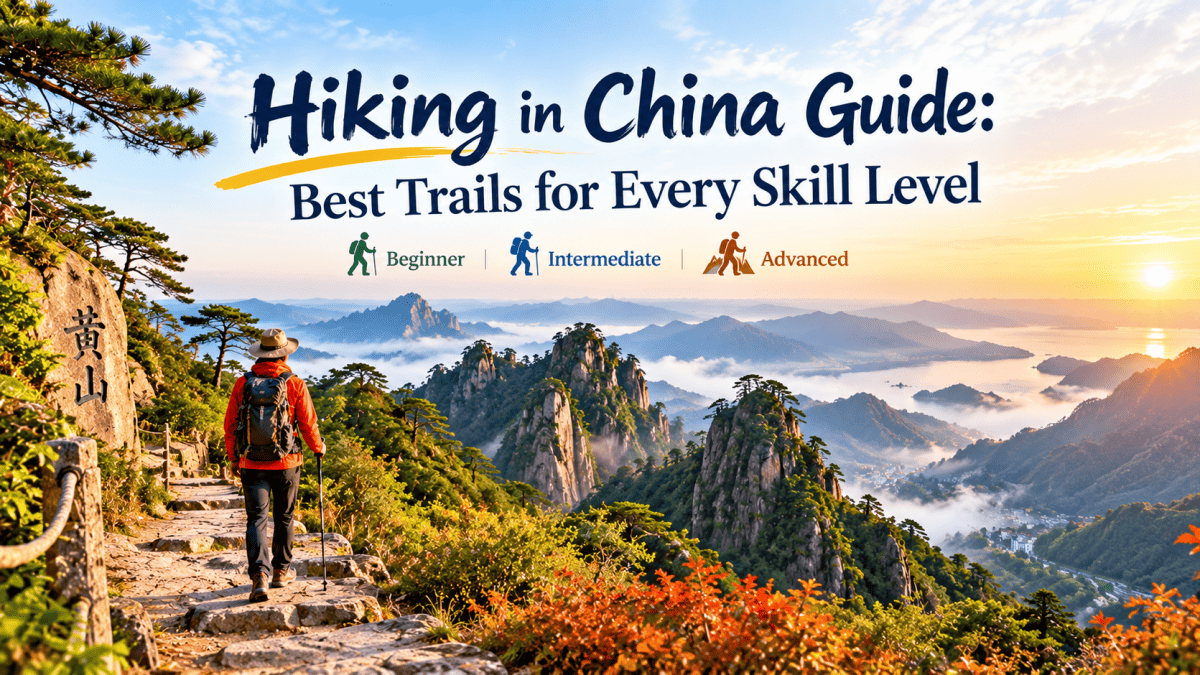
Hiking in China Guide: Best Trails for Every Skill Level

cover

Hiking in China can mean a gentle walk beside karst peaks, a full day climbing stone steps on a sacred mountain, or a high-altitude trek through western valleys. The best trail depends less on reputation than on your fitness, experience, available time, and ability to manage weather and elevation.

For beginners, Mutianyu, Yangshuo, and selected routes in Zhangjiajie offer manageable scenery with tourist facilities nearby. Intermediate hikers can consider Jinshanling, the Longji Rice Terraces, Huangshan, or Mount Emei. Tiger Leaping Gorge and the high-altitude landscapes of western Sichuan are better suited to experienced hikers who can prepare for remote conditions and sudden changes.

Access rules, trail conditions, and reservation systems can change. Always check official park notices and local weather shortly before departure, particularly for high mountains, protected areas, and multi-day routes.

Best China Hikes by Skill Level

Trail or region Suggested level Typical format Main appeal
Mutianyu Great Wall Beginner to intermediate Half or full day Restored Great Wall and mountain views
Yangshuo countryside Beginner Half or full day Karst scenery, villages, and rivers
Zhangjiajie National Forest Park Beginner to intermediate 1-3 days Sandstone pillars and maintained paths
Jinshanling Great Wall Intermediate Full day Longer ridge walking and fewer urban views
Longji Rice Terraces Intermediate Full day or overnight Terraced hills and village landscapes
Huangshan Intermediate to challenging 1-2 days Granite peaks, pines, and cloud scenery
Mount Emei Intermediate to challenging 1-3 days Forest, temples, and a sacred mountain route
Tiger Leaping Gorge Challenging Usually multi-day Deep gorge and mountain scenery
Mount Siguniang area Experienced/high altitude Day hikes or multi-day trek Alpine valleys and western Sichuan scenery
Yading Nature Reserve Experienced/high altitude Long day or multi-day visit Lakes, meadows, and sacred peaks

Difficulty is approximate. A maintained trail may still be strenuous because of stairs, heat, ice, altitude, or a long descent. Judge the route by current conditions and your own experience rather than the label alone.

Beginner-Friendly Hiking in China

1. Mutianyu Great Wall: Flexible Hiking Near Beijing


Mutianyu is a practical introduction to Great Wall hiking because visitors can choose how far to walk and use available uplift options to reduce the climb. The restored wall follows a steep ridge, so even a short outing involves uneven stone and many steps. Good footwear matters.

Start with a modest section and turn around before fatigue affects your descent. Travelers seeking a longer and quieter Great Wall hike can progress to Jinshanling after learning how their knees and balance respond to the stairs.

mutianyu

2. Yangshuo Countryside: Easy Karst Scenery


The countryside around Yangshuo offers low-elevation walks among limestone peaks, farms, villages, and river landscapes. Routes near the Yulong River can be adapted for a short stroll or a longer outing, making the area suitable for mixed-ability groups.

Heat, humidity, rain, and traffic on shared village roads can still affect the experience. Begin early in warm weather, carry water, and confirm that a proposed path is public and open. A local guide is useful if you want quieter lanes without navigation uncertainty.

yangshuo

3. Zhangjiajie: Maintained Paths Through Dramatic Landscapes


Zhangjiajie National Forest Park is known for tall sandstone pillars, forested ravines, and elevated viewpoints. Many popular areas use maintained paths, stairs, shuttle connections, and lifts, allowing visitors to adjust how much they walk.

The infrastructure does not make every route easy. Steps can accumulate quickly, viewpoints may be crowded, and wet surfaces can be slippery. Choose one main area per day, check the final return connection, and avoid building an itinerary that depends on rushing between distant sections.

zhangjiajie

Intermediate China Hiking Routes

4. Jinshanling Great Wall: Longer Ridge Walking


Jinshanling suits hikers who want a more sustained Great Wall experience than a short sightseeing visit. The route includes repeated climbs and descents, exposed ridges, towers, and a mix of walking surfaces. Stay on officially open sections and obey barriers around unrestored or restricted areas.

There is limited shade along much of the wall. Sun protection, water, and a conservative turnaround time are important. Transport logistics should be confirmed before setting out rather than improvised at the end of the hike.

jinshanling

5. Longji Rice Terraces: Village-to-Village Paths


The Longji area near Guilin combines terraced hillsides with settlements linked by paths and roads. Depending on your base and route, a visit can range from a viewpoint walk to a longer village-to-village hike with sustained climbs.

Stone paths may become slick in rain, and fog can reduce visibility. Pack lightly if staying overnight and confirm where luggage can be stored or transferred. Respect farm activity, remain on established routes, and ask before photographing residents at close range.

longji

6. Huangshan: Famous Peaks and Relentless Steps


Huangshan, or the Yellow Mountains, is one of the best hikes in China for travelers who enjoy dramatic granite scenery but do not need a wilderness route. The main scenic area has developed paths and extensive stone stairways, with cable cars available on selected approaches.

A cable car can reduce ascent time, but walking between viewpoints still requires stamina. Weather can shift from clear views to rain, wind, or fog, and winter conditions may add ice. Plan a shorter circuit than your maximum ability and verify which paths are open on the day.

huangshan

7. Mount Emei: Temples, Forest, and a Long Ascent


Mount Emei in Sichuan combines hiking with Buddhist heritage, forest scenery, and major elevation change. Visitors can use transport within the scenic area to create anything from a shorter temple walk to a demanding route spread across multiple days.

Stone stairs dominate many sections, making the descent as tiring as the climb. Monkeys are present in parts of the mountain; keep food secured, maintain distance, and follow local instructions rather than feeding or approaching them. Lodging and access arrangements should be checked in advance for longer routes.

emei

Challenging and High-Altitude Treks

Travelers searching for the best trekking in China often focus on Yunnan and western Sichuan. These areas offer exceptional landscapes, but altitude, isolation, changing regulations, and limited emergency access make preparation essential. A traveler who excels at low-elevation day hikes isn't automatically ready for a remote, high-altitude trek.

8. Tiger Leaping Gorge: A Demanding Yunnan Classic


Tiger Leaping Gorge follows a dramatic valley between high mountain ranges in Yunnan. The well-known upper trail includes steep climbs, narrow or exposed sections, guesthouse stops, and long periods away from road access. It is commonly approached as a multi-day hike rather than a hurried day trip.

Heavy rain can increase the risk of landslides and trail disruption. Check current local advice, accommodation availability, and entry conditions before starting. Hike with company or a qualified local guide when experience is limited, and do not continue past closures or warning signs.

 Tiger Leaping Gorge

9. Mount Siguniang Area: Alpine Valleys in Sichuan


For hiking in Sichuan, the Mount Siguniang area offers high-altitude valleys, forests, meadows, and views of snow-covered peaks. Changping Valley and other authorized routes can support day outings or longer treks, depending on current park rules and local arrangements.

Altitude is the main challenge even on non-technical routes. Allow time to acclimatize, keep the first day conservative, and use a qualified guide for remote or overnight travel. Climbing the major peaks is mountaineering—not ordinary hiking—and requires different skills, equipment, permits, and risk management.

siguniangshan

10. Yading Nature Reserve: High-Altitude Lakes and Sacred Peaks


Yading in western Sichuan is known for alpine lakes, meadows, and views toward sacred peaks. Even routes used by regular park visitors can feel difficult because of elevation, cold, wind, and rapidly changing weather. Transport inside the reserve may shorten parts of the outing but does not remove altitude risk.

Use only officially open paths and adjust the plan if you develop symptoms or the weather deteriorates. Longer or less-developed routes require current local guidance. Do not treat a scenic photo location as evidence that a route is safe for an unprepared traveler.

yading

How to Choose the Right Trail

Use four questions to narrow the options:
  1. What is your recent hiking experience? Base the decision on hikes completed in the past year, not general fitness alone.
  2. How do you handle stairs and descents? Great Wall sections, Huangshan, and Mount Emei can be especially demanding on knees.
  3. Have you spent time at altitude? Western Sichuan requires more caution than low-elevation routes near Yangshuo.
  4. How independent do you want to be? Major scenic areas have clearer infrastructure, while remote treks require stronger navigation and contingency planning.
The best route leaves a margin for weather, delays, and a slower-than-expected pace. If every day requires perfect conditions, the itinerary is too tight.

Best Times for China Hiking

There is no single best season across such a large country.
  • Spring: Often comfortable in lower-elevation areas, though rain, fog, or lingering mountain snow may affect routes.
  • Summer: Suitable for some high-altitude regions but hot and humid in many eastern and southern destinations. Heavy rain can disrupt gorge and mountain trails.
  • Fall: Frequently offers comfortable temperatures in many regions, but popular destinations may be busy during major holidays.
  • Winter: Can bring clear scenery and fewer visitors, but ice, snow, cold, and seasonal closures require additional preparation.
Check regional forecasts, daylight, trail notices, and transport schedules shortly before each hike. Nationwide holiday periods can affect reservations and crowd levels.

Permits, Guides, and Trail Access

Many developed scenic areas require an entrance ticket or reservation. Remote regions, protected zones, or routes near sensitive areas may have additional restrictions, and eligibility can differ for international visitors. Carry your passport and use the name shown on your travel documents when booking.

A guide is particularly valuable for remote routes, high-altitude trips, uncertain navigation, or areas where transport and lodging must be coordinated. Verify the guide's experience with the specific route and confirm what emergency plan, equipment, permits, meals, and accommodation are included.

Travelers planning a broader itinerary can compare China tours or review China vacation packages when organized transportation and multi-destination planning would be helpful.

What to Pack for Hiking in China

Pack for the route rather than for the destination name. A practical day-hike kit usually includes:
  • Broken-in hiking shoes with reliable grip
  • A light rain shell and adaptable layers
  • Water, snacks, sun protection, and personal medication
  • An offline map or saved route information
  • A charged phone and backup battery
  • Passport, reservation details, and accommodation address in Chinese
  • A small first-aid kit and trekking poles when appropriate
High-altitude or multi-day China hikes require a route-specific list from the guide or operator. Do not rely on buying specialized gear after reaching a remote trailhead.

Essential Safety Tips

  • Tell someone your route, accommodation, and expected return time.
  • Stay on open paths and treat barriers as safety instructions.
  • Turn back for worsening weather, poor visibility, illness, or an unsafe surface.
  • Never assume mobile coverage or electronic payment will work on a remote trail.
  • Keep extra time, water, warmth, and battery power in reserve.
  • At altitude, ascend gradually and take symptoms seriously; descend and seek medical assistance when necessary.
  • Buy travel insurance appropriate for the elevation and activities planned, and understand its exclusions.
China hiking conditions can change quickly. A safe decision made on the trail is more important than completing the planned route.

Build a Route That Matches Your Experience

The strongest hiking itinerary is not the one with the hardest trail. It is the one that fits your fitness, handles the season realistically, and allows a safe alternative when conditions change. Start with a managed scenic area, progress to longer mountain days, and reserve remote trekking for a trip supported by the right preparation and local expertise.
 

FAQ

Is hiking in China suitable for beginners?

Yes. Mutianyu, Yangshuo, and selected paths in Zhangjiajie offer flexible beginner options. Choose a short route, account for stairs and weather, and use cable cars or park transport where available rather than treating assistance as a failure.

What are the best hikes in China for mountain scenery?

Huangshan is accessible and highly developed, while Tiger Leaping Gorge offers a more demanding valley trek. Mount Siguniang and Yading provide high-altitude scenery for properly acclimatized travelers. The best choice depends on experience, season, and current access.

Do I need a guide for hiking in China?

Not for every developed scenic-area walk. A guide is strongly recommended for remote, multi-day, high-altitude, or poorly marked routes, and whenever permits, transport, or lodging are complicated. Follow local rules where guiding is mandatory.

Is Great Wall hiking difficult?

Difficulty varies by section. Mutianyu can be adjusted with cable-car access and a shorter walk, while Jinshanling involves more sustained climbing and descending. Uneven stone, steep stairs, exposure to the sun, and seasonal ice can increase difficulty.

What should I know before hiking in Sichuan?

Many western Sichuan routes are high, remote, and weather-sensitive. Acclimatize gradually, keep the first outing conservative, verify access rules, and arrange an experienced local guide for overnight or isolated routes. Distinguish trekking in valleys from technical peak climbing.

Resumen

Best China Hikes by Skill Level

Beginner-Friendly Hiking in China

Intermediate China Hiking Routes

Challenging and High-Altitude Treks

How to Choose the Right Trail

Best Times for China Hiking

Permits, Guides, and Trail Access

What to Pack for Hiking in China

Essential Safety Tips

Build a Route That Matches Your Experience

FAQ

America's 250th Anniversary Mega Sale

image