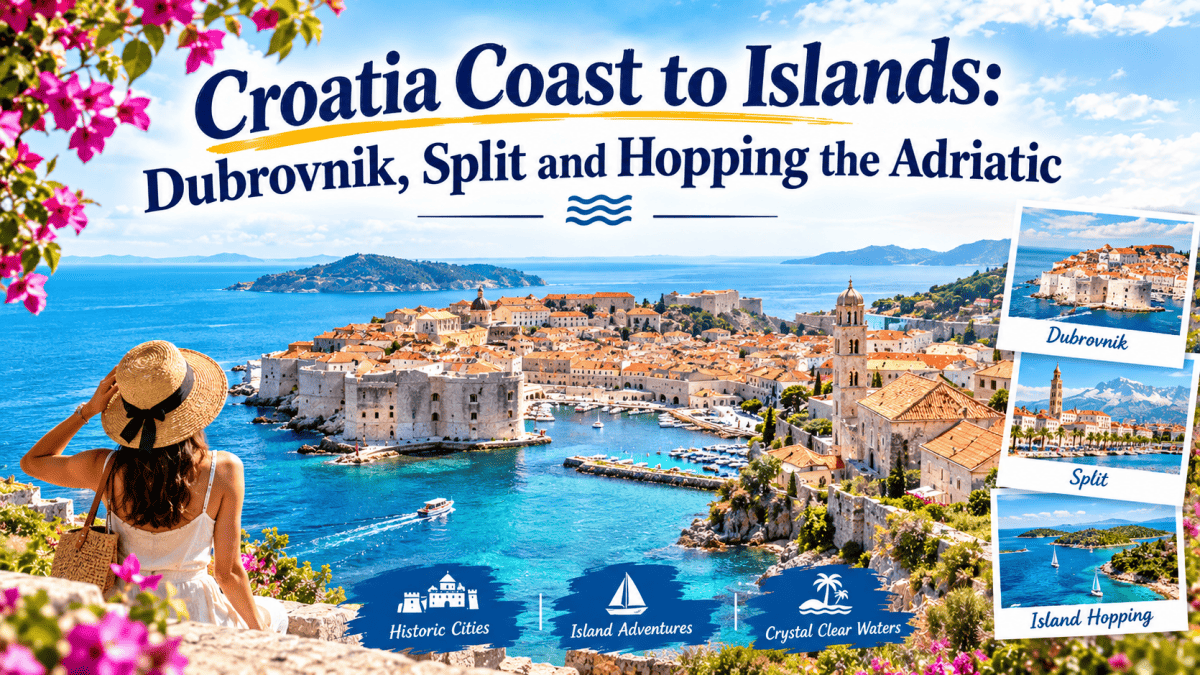
Croatia's Adriatic shore combines walled cities, Roman ruins, pine-backed coves, fishing towns, vineyards, and hundreds of inhabited and uninhabited islands. Dubrovnik and Split provide the strongest city anchors, while Hvar, Brač, Korčula, Vis, and the Elaphiti Islands create different stays. The key is to build a route around workable ferry connections instead of collecting as many ports as possible.
First-time visitors with 10 days can pair Dubrovnik and Split with one or two islands. Two weeks allows a slower Croatian island-hopping route with beach time and weather buffers. Ferries and catamarans are seasonal, schedules change, and not every island connects directly to every other one, so the precise order should be checked against current operator timetables before booking accommodation.
Best Croatia Multi-Day Tours
Croatia Island Hopping: Route Ideas
7 Days: Split, One Island, and Dubrovnik
Spend two nights in Split, three nights on Hvar, Brač, or Korčula, and two nights in Dubrovnik. This route is simple only when the chosen island has a practical onward connection. If it does not, return through Split or use a mainland transfer rather than forcing a complicated same-day chain.
10 Days: Split, Hvar, Korcula, and Dubrovnik
Begin with two nights in Split, continue to Hvar for three nights, move to Korcula for two nights, and finish with three nights in Dubrovnik. This classic southbound route reduces backtracking, but direct links are not guaranteed in every season. Build the final version using published schedules for the actual travel dates.
14 Days: Add Brac, Vis, or Mljet
With two weeks, keep the 10-day framework and add one island rather than shortening every stay. Choose Brač for convenience and beaches, Vis for a slower offshore retreat, or Mljet for forest and water-based activities near the southern end of the route.Ferries, Catamarans, and Coastal Transport
Ferries fall into two broad categories. Vehicle ferries carry cars as well as passengers and often use larger ports. Passenger catamarans are faster on many routes but do not carry private vehicles. Different operators serve the network, and tickets are not automatically interchangeable.
Seasonality is the main planning constraint. Summer brings the widest network, while shoulder-season and winter services may be less frequent or follow different routes. Weather can cause delays or cancellations at any time. Check the operating company's current timetable shortly before travel and leave a buffer before an international flight.
If traveling with a car, confirm whether booking guarantees a place for the vehicle or only provides a ticket for the selected sailing. Port procedures differ. Arrive early and follow operator instructions rather than relying on a rule from another route.
Without a car, choose accommodation near the ferry port or verify local bus and transfer options. Island ports can be far apart, and a town sharing the island's name may not be the arrival point for a particular service.
Croatian Coast Cruises: What to Consider
Croatian coast cruises range from small-ship itineraries to private sailing charters and larger vessels calling at major ports. Small ships can link islands without repeated hotel changes and may reach swimming coves that are awkward by land. The trade-offs are a fixed schedule, less choice over overnight locations, and sensitivity to sea conditions.
Before booking, compare cabin size, included meals, port fees, swim-stop policy, shore time, luggage space, and whether the route starts and ends in the same city. A cruise labeled Dubrovnik to Split may visit a different island mix from a land-and-ferry itinerary using the same endpoints.
Travelers who enjoy independent evenings and longer stays should favor ferries and hotels. Those who value simple logistics and daily water access may prefer a small ship. Neither format is universally better.
FAQ
How many days do you need for the Croatian coast?
Ten days is enough for Dubrovnik, Split, and one or two islands. Two weeks support a slower route with three islands or an additional mainland stop. Seven days means you can only choose one island.Is Split or Dubrovnik better for island hopping?
Split offers a broader range of practical connections in central Dalmatia, including routes to Brač, Hvar, Vis, and Šolta. Dubrovnik is more useful for the Elaphiti Islands, Mljet, and southern connections. The best hub depends on the specific islands and season.Do you need a car on the Croatian islands?
No, not for a route focused on port towns and passenger catamarans. A car helps with rural beaches, inland villages, and larger islands, but it also limits ferry options and adds vehicle-booking logistics.Which Croatian island is best for first-time visitors?
Hvar suits travelers who want historic towns, dining, nightlife, and boat outings. Brac is convenient and family-friendly, Korčula combines history with wine country, and Vis is better for a slower trip. The best choice follows travel style rather than a universal ranking.Are ferries to Croatian islands available all year?
Some routes operate year-round, while many visitor-oriented connections are seasonal or less frequent outside summer. Always check the current operator timetable for the exact date and port.