ChinaAsiaTravel Tips
Mostrar todo

China Small Group Tours Vs Large Tours: What's the Difference?

cover

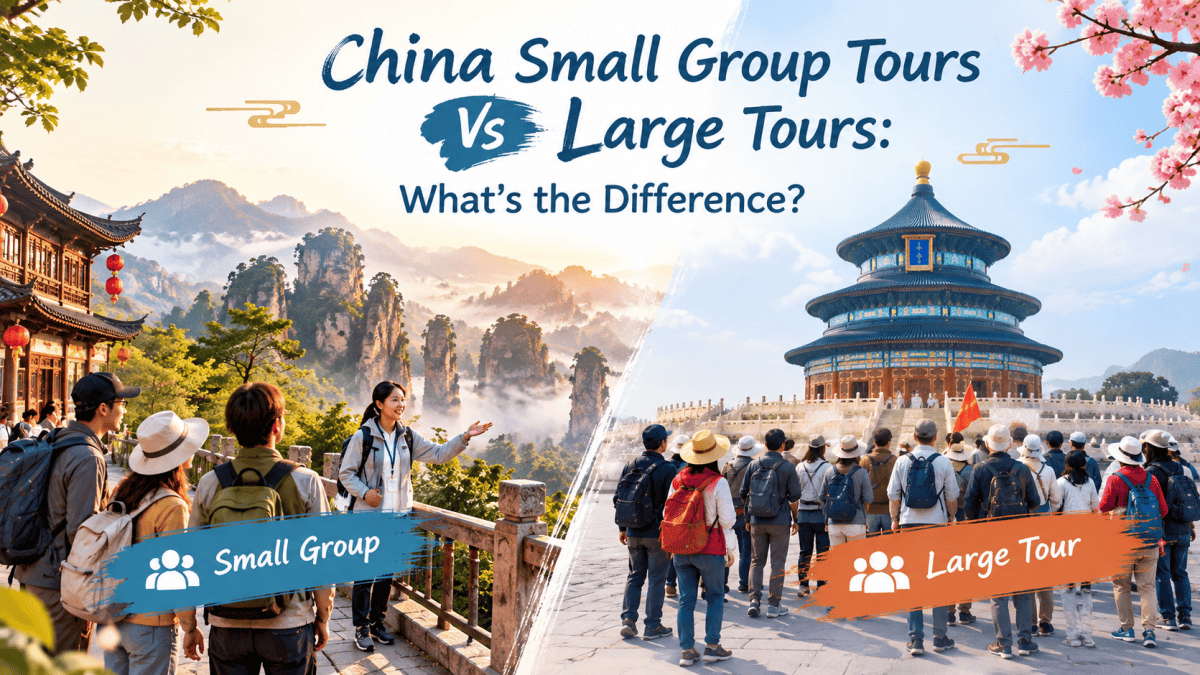
The main difference between small group tours and large tours in China comes down to group size, flexibility, and experience quality. Small group tours typically carry 6-15 travelers with personalized guide attention, flexible pacing, and access to intimate local experiences. Large group tours pack 25-45+ people onto buses with fixed schedules, limited guide interaction, and standardized tourist experiences. For first-time visitors who want meaningful cultural immersion and the ability to ask questions, small group tours deliver significantly better value. For budget-conscious travelers who simply want to check off major attractions, large group tours offer the lowest price point.


Group Size: The Core Difference

Small Group Tours (6-15 People)


Small group tours in China typically carry between 6 and 15 travelers. This size creates a fundamentally different experience:
  • Your guide knows your name and can answer individual questions
  • The group moves quickly through attractions without waiting for stragglers
  • You can have genuine conversations with fellow travelers
  • Restaurants and venues don't need special group arrangements
  • Transportation uses comfortable minivans or small coaches

Large Group Tours (25-45+ People)


Large group tours in China pack 25 to 45 or more travelers onto full-size buses:
  • Your guide manages logistics for a crowd, not individual experiences
  • The group moves slowly—counting heads, waiting for bathrooms, coordinating meals
  • Conversations happen only with the people sitting next to you
  • Restaurants reserve entire sections for your group
  • Transportation means climbing aboard a full coach with limited legroom

Head-to-Head Comparison

 
Factor Small Group (6-15) Large Group (25-45+)
Group Size 6-15 travelers 25-45+ travelers
Vehicle Minivan or small coach Full-size tour bus
Guide Attention High—answers individual questions Limited—manages crowd logistics
Pacing Flexible—adjusts to group energy Fixed—strict schedule
Restaurant Choices Local spots, authentic cuisine Pre-arranged group dining halls
Attraction Access Enter quickly, explore freely Wait for group assembly, fixed timing
Photo Opportunities Guide helps, less crowding Compete with your own group for photos
Social Experience Meet everyone, form connections Know only nearby seats
Price Higher per person Lower per person
Shopping Stops Rare or optional Frequent (commission-based)
Flexibility Can adjust itinerary slightly No changes permitted
Best For Experience-focused travelers Budget-focused travelers

Guide Quality and Attention

Small Group Tours


On a small group tour in China, your guide functions as a personal interpreter, historian, and cultural ambassador. With only 6-15 people, the guide can:
 
  • Answer detailed questions about Chinese history, politics, and daily life
  • Adjust commentary based on your interests (architecture, food, photography, religion)
  • Help you order food at local restaurants, explaining dishes and customs
  • Spend extra time at attractions that fascinate you
  • Provide individual assistance with language barriers, transportation, or navigation
The guide-to-traveler ratio on small group tours is typically 1:10 or better. This means your guide has time to notice when you're confused, when you want to linger at a particular exhibit, or when you need a break.
 

Large Group Tours


On a large group tour, your guide functions primarily as a logistics manager. With 25-45 people, the guide must:
  • Spend most of their time counting heads and coordinating movement
  • Deliver commentary to a crowd, often through a microphone on the bus
  • Follow a rigid schedule to keep everyone on track
  • Handle group meal arrangements and bathroom breaks
  • Manage different energy levels and interests across a large group
The guide-to-traveler ratio on large group tours is typically 1:25 or worse. Your guide simply cannot provide individual attention when managing a crowd this size.

china tours

Itinerary Flexibility

Small Group Tours


Small group tours in China offer meaningful flexibility:
 
  • If the group loves the Terracotta Warriors, the guide can extend your visit
  • If you're tired after a long flight, the group can skip an optional activity
  • If someone wants to visit a specific market or neighborhood, the guide can accommodate
  • Weather adjustments happen naturally—moving outdoor activities to clearer times
  • The group can decide together whether to spend more time at the Great Wall or head to dinner early
This flexibility transforms a rigid itinerary into a responsive experience that adapts to real conditions and group preferences.

Small Group Tours

Large Group Tours


Large group tours follow fixed schedules with no room for adjustment:
 
  • Every stop has a predetermined duration (often announced with a return time)
  • The bus departure time is firm—latecomers are left behind
  • Restaurants are pre-booked with set menus at set times
  • Optional activities require splitting the group, which creates logistical challenges
  • Weather doesn't change the plan—you visit attractions in rain or shine
The fixed schedule exists because coordinating 40 people requires military precision. Any deviation creates cascading delays that affect hotel check-ins, restaurant reservations, and transportation connections.

Dining Experiences

Small Group Tours


Small group tours eat at local restaurants that serve authentic regional cuisine:
 
  • Tables of 6-10 people fit naturally into normal restaurants
  • Guides order shared dishes that represent local specialties
  • You taste real Chinese food—not adapted for tourist palates
  • Restaurants are chosen for quality and authenticity, not group capacity
  • Dietary restrictions are easier to communicate and accommodate
In Chengdu, a small group might eat at a family-run Sichuan restaurant where the owner personally explains each dish. In Xi'an, the group might visit a Muslim Quarter stall serving freshly made roujiamo (Chinese hamburgers).

Large Group Tours


Large group tours eat at designated group dining halls:
 
  • Restaurants must accommodate 25-45 people simultaneously
  • Menus are standardized—similar food at every stop across China
  • Food quality prioritizes quantity and speed over authenticity
  • Meals happen on a strict schedule, often at unusual times (11 AM or 2 PM lunches)
  • Dietary restrictions are difficult to accommodate for large groups
These group dining halls exist specifically to serve tour buses. They're efficient and cheap, but the food rarely represents the best of local cuisine. You'll eat similar dishes in every city—generic stir-fry, steamed rice, and a token soup.

Shopping Stops: The Hidden Difference

Small Group Tours


Small group tours in China rarely include forced shopping stops. If shopping is included, it's at genuine markets or artisan workshops where you can browse without pressure:
 
  • Silk factories in Suzhou that demonstrate actual production
  • Tea houses in Hangzhou where you taste and learn about local varieties
  • Pearl markets where you browse without obligation
  • Optional visits based on group interest

Large Group Tours


Large group tours frequently include commission-based shopping stops:
 
  • The tour price is kept low because the operator earns commissions from shops
  • You spend 30-60 minutes at jade factories, tea centers, or silk showrooms
  • Sales pressure can be intense—staff follow you through the store
  • These stops eat into sightseeing time but generate revenue for the tour operator
  • Refusing to enter shops can create tension with guides and drivers
This shopping model is common on budget large group tours in China. The tour appears cheap upfront, but you pay through lost time and purchase pressure. Small group tours eliminate this model.

Transportation Comfort

Small Group Tours


Small group tours use minivans (for 6-10 people) or small coaches (for 11-15 people):
 
  • Every traveler gets a window or aisle seat with good legroom
  • Vehicles can access narrower roads and smaller parking areas
  • Boarding and exiting is quick—no waiting for 40 people to file through the door
  • Luggage space is adequate without cramming bags into overhead compartments
  • Air conditioning works effectively in smaller spaces

Large Group Tours


Large group tours use full-size coaches:
 
  • Middle seats and back rows have limited legroom and poor views
  • Boarding takes 10-15 minutes as 40 people find seats and stow luggage
  • Bathroom breaks require coordinating the entire group
  • Large buses cannot access some scenic roads or small town centers
  • Air conditioning struggles with 40 bodies generating heat

Access to Authentic Experiences

Small Group Tours


Small group size opens doors that large groups cannot enter:
 
  • Visit a local family's home for a dumpling-making session
  • Explore hutong neighborhoods on foot with a guide who knows residents
  • Attend a private tea ceremony with a master in Chengdu
  • Watch sunrise at the Great Wall before crowds arrive
  • Visit local markets where vendors don't speak to tour groups
These experiences require intimate group sizes. A 40-person bus cannot pull up to a family's home or walk through narrow hutong alleys.

Large Group Tours


Large group tours stick to major attractions designed for mass tourism:
 
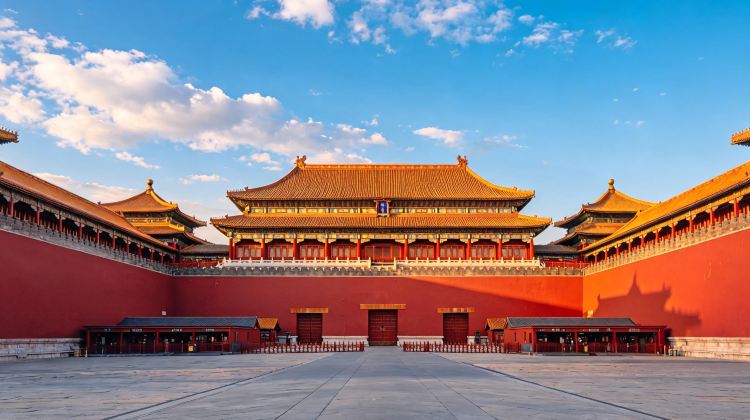
  • The Forbidden City (where you join thousands of other visitors)
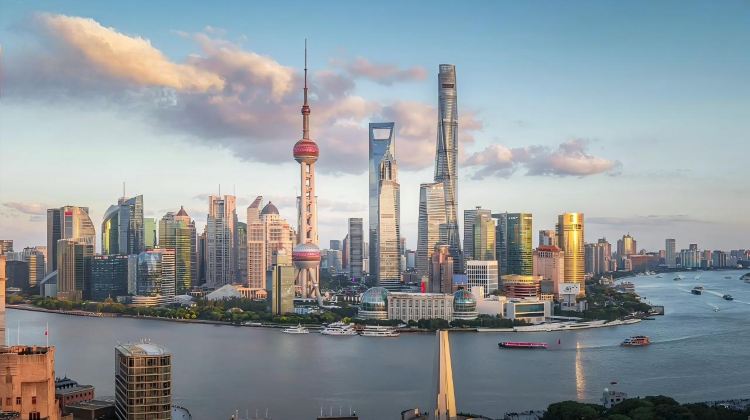
  • The Bund in Shanghai (where crowds are constant)
  • Pre-arranged cultural shows (acrobatics, kung fu performances)
  • Large temple complexes with wide pathways
  • Standardized river cruises with hundreds of other tourists
These attractions are worth visiting, but they represent the tourist version of China—not the authentic daily life that makes the country fascinating.

Price Comparison

Small Group Tours


Small group tours in China typically cost 30-60% more than large group tours:
 
  • Higher guide-to-traveler ratio increases labor costs
  • Better restaurants and authentic dining cost more than group dining halls
  • Smaller vehicles have higher per-person transportation costs
  • No shopping commissions means the tour must cover costs through pricing
  • Quality accommodations in central locations cost more
Typical price range: $150-300 per person per day for quality small group tours

Large Group Tours


Large group tours in China offer the lowest price point:
 
  • Economies of scale reduce per-person costs for transportation and accommodations
  • Shopping commissions subsidize the tour price
  • Group dining halls offer bulk pricing
  • One guide manages 40 people instead of 10
  • Standardized itineraries allow bulk booking discounts
Typical price range: $80-150 per person per day for budget large group tours

The price difference is significant, but consider what you're getting. Small group tours deliver better food, more guide attention, authentic experiences, and no shopping pressure. Large group tours deliver basic sightseeing at the lowest cost.

Who Should Choose Small Group Tours & Large Group Tours?

Small group tours in China are ideal for:

First-time visitors to China. If this is your first trip, you need a guide who can answer questions, help with language barriers, and provide cultural context. Small groups make this possible.

Travelers interested in culture and history. If you want to understand what you're seeing—not just photograph it—you need a guide who can engage with you individually. Small groups enable deep cultural exchange.

Photographers and enthusiasts. Small groups move quickly, arrive early, and can spend extra time at photogenic locations. Your guide can help with angles, timing, and access.

Solo travelers. Small groups create instant communities. You'll meet 5-14 fellow travelers who share your interests, making the experience social and fun.

Travelers with dietary restrictions. Small groups can communicate your needs to restaurants and find alternatives. Large groups struggle to accommodate special diets.

Experience-focused travelers. If you value authentic meals, local interactions, and cultural immersion over checking boxes, small group tours deliver the experience you want.

Large group tours in China work well for:

Budget travelers. If your primary goal is seeing major attractions at the lowest cost, large group tours deliver basic sightseeing efficiently.
Travelers with limited mobility. Large coaches have comfortable seating, and the pace is slower with more structured breaks. If walking long distances is challenging, large group tours minimize physical demands.

Social travelers who prefer structure. If you like knowing exactly what happens next and don't want to make decisions, large group tours provide complete structure.

Repeat visitors to China. If you've already experienced China's highlights and just want to revisit specific sites, a large group tour provides efficient transportation and basic logistics.

Travelers who don't need guide interaction. If you prefer exploring independently and only need transportation and accommodations arranged, a large group tour provides the logistics without demanding your attention.

Common Misconceptions

"Small group tours are only for luxury travelers"

False. Small group tours span a range of price points. While premium small group tours exist with 5-star accommodations, many small group tours offer 3-4 star hotels and authentic (not luxury) experiences at moderate prices. The defining feature is group size, not price.

"Large group tours are uncomfortable and boring"

Not necessarily. Many large group tours operate professionally with comfortable buses, good guides, and well-planned itineraries. The experience is different from small groups—more standardized, less personal—but not inherently bad. If your expectations match what large tours deliver, you can have a positive experience.

"Small group tours are slower"

Actually, small group tours are typically faster. Without counting heads, coordinating 40 people, or waiting for stragglers, small groups move through attractions more efficiently. You often see more in less time on a small group tour.

"Large group tours have better deals on shopping"

The shopping stops on large group tours benefit the tour operator through commissions, not you. The prices at these shops are typically inflated, and the products may not represent good value. Small group tours that skip shopping stops save you time and money.

How to Identify Group Size When Booking

When browsing China tours, look for these indicators:

Explicit group size. Reputable operators state the maximum group size clearly—look for "max 12 people" or "small group guaranteed."
Vehicle type. Minivan or small coach indicates a small group. A full-size bus indicates a large group.

Price point. If the tour seems unusually cheap, it's likely a large group tour subsidized by shopping commissions.

Itinerary detail. Small group tours describe specific restaurants, local experiences, and flexible elements. Large group tours use generic language about "group meals" and "cultural experiences."

Shopping mentions. If the itinerary includes "silk factory visit" or "tea ceremony demonstration," these are likely commission-based shopping stops typical of large group tours.

When browsing China vacation packages, compare group sizes across operators. Tours4fun clearly specifies group size and inclusions, so you know exactly what to expect.

Final Thoughts

The choice between small group tours and large group tours in China fundamentally shapes your travel experience. Small group tours deliver personalized attention, authentic experiences, flexible pacing, and meaningful cultural exchange. Large group tours deliver basic sightseeing at the lowest possible cost.

Your decision should reflect your priorities. If you value experience quality, cultural immersion, and personalized service, small group tours are worth the premium. If you prioritize budget and simply want to see major attractions, large group tours efficiently deliver the highlights.

Either way, understanding the differences before you book ensures your expectations match reality. Read tour descriptions carefully, check group sizes, and choose the format that aligns with how you want to experience China.


FAQ

What is the ideal group size for a China tour?

Most experienced travelers consider 8-12 people ideal for China tours. This size is small enough for personalized guide attention and authentic restaurant visits, but large enough to create a social atmosphere and share transportation costs. Groups larger than 15 start feeling like crowds, while groups smaller than 6 may lack social energy.

Are small group tours worth the extra cost?

For most travelers, yes. The extra $50-150 per day buys significantly better guide attention, authentic dining experiences, flexible pacing, and no shopping pressure. Over a 10-day tour, this adds $500-1,500 to the total cost—but delivers an experience that feels fundamentally different from a large group tour.

Can I join a small group tour as a solo traveler?

Absolutely. Small group tours are excellent for solo travelers. You join an existing group of 6-15 people, instantly creating a travel community. Many solo travelers specifically choose small group tours because they provide built-in companions and shared experiences.

Do small group tours include shopping stops?

Quality small group tours rarely include forced shopping stops. Some may offer optional visits to artisan workshops or local markets, but these are genuinely educational or cultural—not commission-driven sales events. If a small group tour includes multiple shopping stops, consider it a red flag.

Can large group tours be customized?

No. Large group tours follow fixed itineraries with no room for customization. The logistics of coordinating 25-45 people require strict adherence to the schedule. If you want customization, you need a private tour or small group tour.

Resumen

Group Size: The Core Difference

Guide Quality and Attention

Itinerary Flexibility

Dining Experiences

Shopping Stops: The Hidden Difference

Transportation Comfort

Access to Authentic Experiences

Price Comparison

Who Should Choose Small Group Tours & Large Group Tours?

Common Misconceptions

How to Identify Group Size When Booking

Final Thoughts

FAQ

America's 250th Anniversary Mega Sale

image