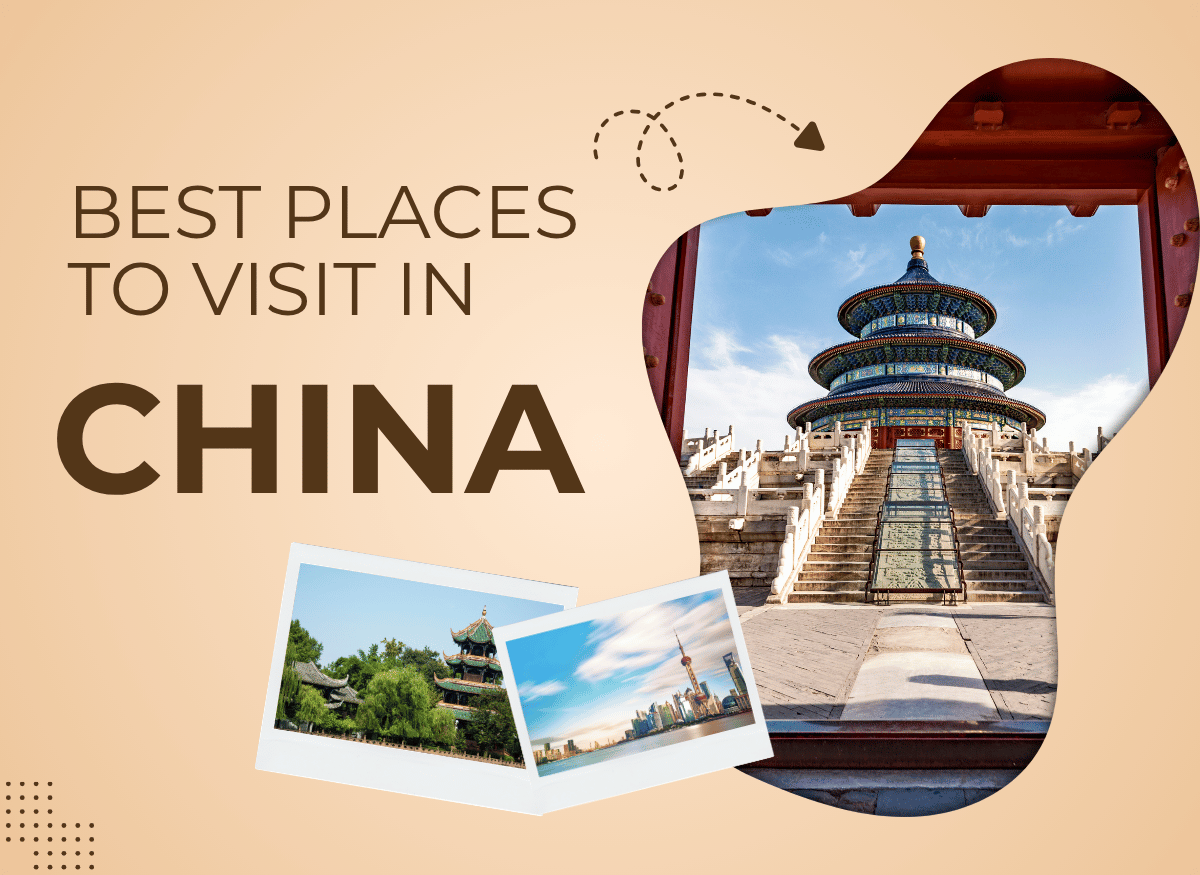
For first-time visitors to China, the best destinations are Beijing, Shanghai, Xi'an, Guilin, and Chengdu. These five cities offer the perfect introduction to China's history, culture, natural beauty, and modern development. Beijing showcases imperial heritage with the Great Wall and Forbidden City; Shanghai blends colonial architecture with futuristic skylines; Xi'an reveals ancient history through the Terracotta Warriors; Guilin displays stunning natural landscapes; and Chengdu offers panda encounters and Sichuan cuisine.
Top 5 China Destinations for First-Timers
| Destination | Best For | Must-See Attractions | Recommended Days | Travel Style |
| Beijing | History and culture | Great Wall, Forbidden City, Temple of Heaven | 3-4 days | Cultural immersion |
| Shanghai | Modern China and architecture | The Bund, Yu Garden, Pudong skyline | 2-3 days | Urban exploration |
| Xi'an | Ancient history | Terracotta Warriors, City Wall, Muslim Quarter | 2 days | Historical discovery |
| Guilin | Natural scenery | Li River, Yangshuo, Longji Rice Terraces | 3-4 days | Nature and photography |
| Chengdu | Wildlife and cuisine | Panda Base, Jinli Street, Leshan Buddha | 2-3 days | Relaxed cultural experience |
Beijing: The Imperial Capital
Beijing is the logical starting point for most first-time China itineraries. As the capital for over 800 years across multiple dynasties, Beijing contains more UNESCO World Heritage Sites than any other city in the world. The sheer scale of historical landmarks here is staggering, and no other Chinese city offers such a concentrated dose of imperial Chinese history.
Most international flights land in Beijing, making it the most convenient entry point. The city also serves as the northern anchor for the classic Beijing-Xi'an-Shanghai route that first-time visitors often follow.

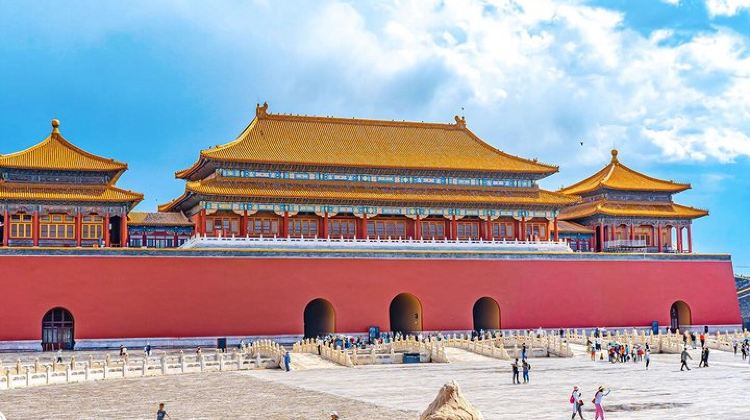
The Forbidden City (Palace Museum) served as the imperial palace for 24 emperors across the Ming and Qing dynasties. This massive complex contains 980 buildings and nearly 1,000 rooms. Plan for at least half a day here, and consider hiring a guide or joining a tour to understand the historical context. Without guidance, the Forbidden City can feel like an overwhelming maze of similar-looking courtyards.
The Temple of Heaven is where emperors performed annual ceremonies to pray for good harvests. The circular Hall of Prayer for Good Harvests is one of Beijing's most iconic structures, and the surrounding park provides a glimpse into daily life as locals practice tai chi, play cards, and dance.
The Summer Palace is a vast imperial garden complex built around Kunming Lake. It served as a retreat for emperors escaping the summer heat of the Forbidden City. The Long Corridor, stretching 728 meters along the lake shore, features over 14,000 paintings depicting scenes from Chinese literature and history.
Three to four days allow you to cover the major highlights without rushing. This includes one full day for the Great Wall, one day for the Forbidden City and surrounding area (Tiananmen Square, Jingshan Park), one day for the Temple of Heaven and Summer Palace, and a fourth day for hutong exploration, the Lama Temple, or a day trip to the Ming Tombs.
Most international flights land in Beijing, making it the most convenient entry point. The city also serves as the northern anchor for the classic Beijing-Xi'an-Shanghai route that first-time visitors often follow.
What to See in Beijing
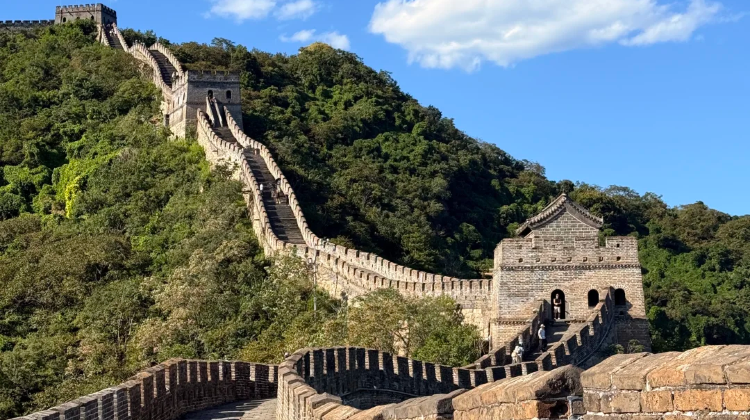
The Great Wall is obviously the headline attraction, but which section should you visit? For first-time visitors, Mutianyu offers the best balance of accessibility, restoration quality, and crowd avoidance. The section is fully restored, less crowded than Badaling, and about 90 minutes from central Beijing. If you want a more rugged, less touristy experience, Jinshanling is about 2.5 hours away and offers spectacular views with far fewer visitors.
The Forbidden City (Palace Museum) served as the imperial palace for 24 emperors across the Ming and Qing dynasties. This massive complex contains 980 buildings and nearly 1,000 rooms. Plan for at least half a day here, and consider hiring a guide or joining a tour to understand the historical context. Without guidance, the Forbidden City can feel like an overwhelming maze of similar-looking courtyards.
The Temple of Heaven is where emperors performed annual ceremonies to pray for good harvests. The circular Hall of Prayer for Good Harvests is one of Beijing's most iconic structures, and the surrounding park provides a glimpse into daily life as locals practice tai chi, play cards, and dance.
The Summer Palace is a vast imperial garden complex built around Kunming Lake. It served as a retreat for emperors escaping the summer heat of the Forbidden City. The Long Corridor, stretching 728 meters along the lake shore, features over 14,000 paintings depicting scenes from Chinese literature and history.
How Many Days in Beijing?
Three to four days allow you to cover the major highlights without rushing. This includes one full day for the Great Wall, one day for the Forbidden City and surrounding area (Tiananmen Square, Jingshan Park), one day for the Temple of Heaven and Summer Palace, and a fourth day for hutong exploration, the Lama Temple, or a day trip to the Ming Tombs.
Beijing Travel Tips
- Best time to visit: April to May (spring) or September to October (autumn). Summer is hot and crowded; winter is cold and dry.
- Getting around: Beijing's metro system is extensive and English-friendly. Taxis and DiDi are also widely available.
- Avoid national holidays: The first week of October (National Day) and late January/early February (Chinese New Year) bring massive domestic crowds.
Best Beijing Tours


Shanghai: Where East Meets West
Shanghai represents a completely different side of China from Beijing. Where Beijing feels ancient and imperial, Shanghai feels modern, cosmopolitan, and forward-looking. The city's unique blend of Chinese and Western influences, a legacy of its history as an international trading port, creates an atmosphere you will not find anywhere else in China.
Shanghai also serves as a practical hub for first-time visitors. The city has excellent international flight connections, efficient public transportation, and a tourism infrastructure that caters well to English speakers.

The Bund is Shanghai's most famous waterfront. This mile-long stretch along the Huangpu River features a collection of colonial-era buildings from the 1920s and 1930s, representing various architectural styles including Art Deco, neoclassical, and Renaissance. Across the river, the Pudong skyline showcases modern China with iconic structures like the Oriental Pearl Tower, Shanghai Tower (China's tallest building), and the Shanghai World Financial Center.
Yu Garden is a classical Chinese garden dating back to the Ming Dynasty. Despite its location in the heart of the bustling old city, Yu Garden offers peaceful pavilions, rockeries, ponds, and covered walkways. The surrounding bazaar area is touristy but worth exploring for traditional snacks and crafts.
The French Concession is a neighborhood of tree-lined streets, European-style villas, trendy cafes, boutique shops, and restaurants. This area perfectly captures Shanghai's cosmopolitan character and is ideal for wandering without a specific destination in mind.
Shanghai Museum houses one of the world's finest collections of Chinese art, including ancient bronze vessels, ceramics, calligraphy, jade, and paintings. The museum is free to visit and provides excellent context for understanding Chinese artistic traditions.
Two to three days is sufficient for the major highlights. This includes time for The Bund and Pudong, Yu Garden and the old city, the French Concession, and at least one museum or cultural experience.
Shanghai also serves as a practical hub for first-time visitors. The city has excellent international flight connections, efficient public transportation, and a tourism infrastructure that caters well to English speakers.
What to See in Shanghai
The Bund is Shanghai's most famous waterfront. This mile-long stretch along the Huangpu River features a collection of colonial-era buildings from the 1920s and 1930s, representing various architectural styles including Art Deco, neoclassical, and Renaissance. Across the river, the Pudong skyline showcases modern China with iconic structures like the Oriental Pearl Tower, Shanghai Tower (China's tallest building), and the Shanghai World Financial Center.
Yu Garden is a classical Chinese garden dating back to the Ming Dynasty. Despite its location in the heart of the bustling old city, Yu Garden offers peaceful pavilions, rockeries, ponds, and covered walkways. The surrounding bazaar area is touristy but worth exploring for traditional snacks and crafts.
The French Concession is a neighborhood of tree-lined streets, European-style villas, trendy cafes, boutique shops, and restaurants. This area perfectly captures Shanghai's cosmopolitan character and is ideal for wandering without a specific destination in mind.
Shanghai Museum houses one of the world's finest collections of Chinese art, including ancient bronze vessels, ceramics, calligraphy, jade, and paintings. The museum is free to visit and provides excellent context for understanding Chinese artistic traditions.
How Many Days in Shanghai?
Two to three days is sufficient for the major highlights. This includes time for The Bund and Pudong, Yu Garden and the old city, the French Concession, and at least one museum or cultural experience.
Shanghai Travel Tips
- Best time to visit: March to May or October to November. Summer is hot and humid; winter can be chilly.
- Maglev train: Take the Maglev from Pudong Airport to the city center. It reaches speeds of 431 km/h and covers the 30-kilometer distance in just 8 minutes.
- River cruise: An evening Huangpu River cruise offers spectacular views of both The Bund and Pudong lit up at night.
Best Shanghai Tours


Xi'an: Gateway to Ancient China
Xi'an served as the capital for 13 Chinese dynasties and was the eastern terminus of the Silk Road. For over 1,000 years, Xi'an was one of the largest and most important cities in the world. Today, it remains one of China's most historically significant destinations.
The headline attraction, the Terracotta Warriors, alone justifies a trip to Xi'an. But the city offers much more, including one of the best-preserved ancient city walls in China, a fascinating Muslim Quarter with distinctive cuisine, and easy access to Mount Hua, one of China's five sacred Taoist mountains.

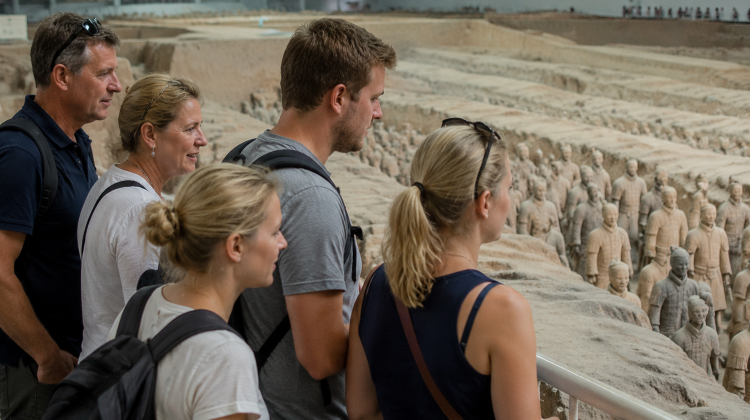
The Terracotta Warriors are the remains of the army buried with Qin Shi Huang, the first emperor of China, over 2,200 years ago. Discovered accidentally by farmers digging a well in 1974, this archaeological site contains an estimated 8,000 life-sized warriors, 670 horses, and 130 chariots. Each warrior has unique facial features, suggesting they were modeled after real soldiers. The site is about 40 kilometers east of Xi'an, requiring about an hour of travel time.
The Ancient City Wall is the best-preserved city wall in China, dating back to the Ming Dynasty. The wall forms a complete rectangle around the old city, measuring 13.7 kilometers in perimeter. You can walk, jog, or rent a bicycle to cycle along the top of the wall, offering unique views of both the old city and modern development beyond.
The Muslim Quarter is a vibrant neighborhood behind the Drum Tower, home to Xi'an's Hui Muslim community. The area is famous for its distinctive cuisine, which blends Chinese cooking techniques with Islamic dietary restrictions. Must-try dishes include roujiamo (Chinese hamburger), yangrou paomo (crumbled bread in lamb soup), and biangbiang noodles (thick, hand-pulled noodles).
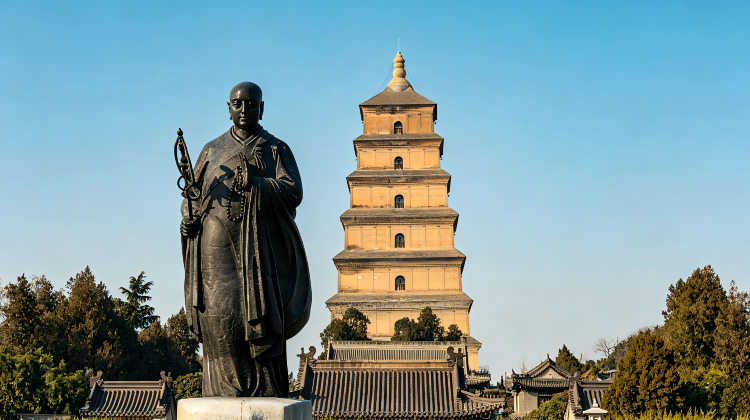
The Big Wild Goose Pagoda was built in 652 AD to store Buddhist scriptures brought from India by the monk Xuanzang. The pagoda and surrounding temple complex remain active religious sites, and the north square features a large musical fountain show.
Two days cover the essential highlights: one day for the Terracotta Warriors and another for the City Wall, Muslim Quarter, and other city attractions. Add a third day if you want to visit the Shaanxi History Museum, climb the Big Wild Goose Pagoda, or take a day trip to Mount Hua.
The headline attraction, the Terracotta Warriors, alone justifies a trip to Xi'an. But the city offers much more, including one of the best-preserved ancient city walls in China, a fascinating Muslim Quarter with distinctive cuisine, and easy access to Mount Hua, one of China's five sacred Taoist mountains.
What to See in Xi'an
The Terracotta Warriors are the remains of the army buried with Qin Shi Huang, the first emperor of China, over 2,200 years ago. Discovered accidentally by farmers digging a well in 1974, this archaeological site contains an estimated 8,000 life-sized warriors, 670 horses, and 130 chariots. Each warrior has unique facial features, suggesting they were modeled after real soldiers. The site is about 40 kilometers east of Xi'an, requiring about an hour of travel time.
The Ancient City Wall is the best-preserved city wall in China, dating back to the Ming Dynasty. The wall forms a complete rectangle around the old city, measuring 13.7 kilometers in perimeter. You can walk, jog, or rent a bicycle to cycle along the top of the wall, offering unique views of both the old city and modern development beyond.
The Muslim Quarter is a vibrant neighborhood behind the Drum Tower, home to Xi'an's Hui Muslim community. The area is famous for its distinctive cuisine, which blends Chinese cooking techniques with Islamic dietary restrictions. Must-try dishes include roujiamo (Chinese hamburger), yangrou paomo (crumbled bread in lamb soup), and biangbiang noodles (thick, hand-pulled noodles).
The Big Wild Goose Pagoda was built in 652 AD to store Buddhist scriptures brought from India by the monk Xuanzang. The pagoda and surrounding temple complex remain active religious sites, and the north square features a large musical fountain show.
How Many Days in Xi'an?
Two days cover the essential highlights: one day for the Terracotta Warriors and another for the City Wall, Muslim Quarter, and other city attractions. Add a third day if you want to visit the Shaanxi History Museum, climb the Big Wild Goose Pagoda, or take a day trip to Mount Hua.
Xi'an Travel Tips
- Best time to visit: March to May or September to November. Summer is hot; winter is cold.
- Getting to the Terracotta Warriors: Tourist buses depart from Xi'an Railway Station, or you can hire a taxi or join a guided tour.
- Food adventure: The Muslim Quarter can be overwhelming. Go with an open mind and be willing to try unfamiliar dishes.
Best Xi‘an Tours

Guilin: China's Natural Masterpiece
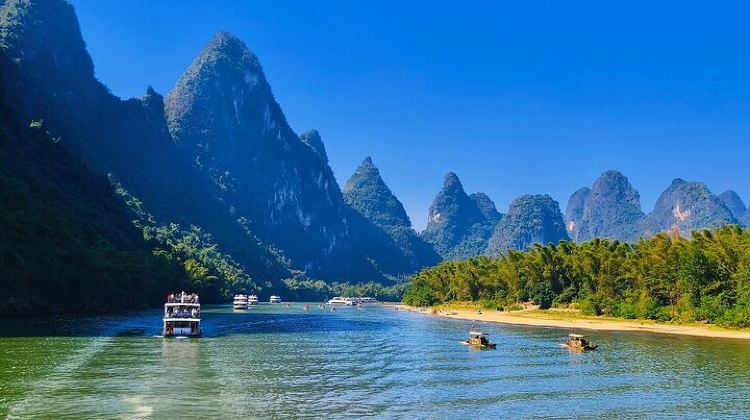
When you have seen Chinese landscape paintings featuring dramatic limestone karsts rising from misty rivers, you have seen Guilin. The scenery here is so iconic that it appears on the 20 yuan note. For first-time visitors, Guilin and the nearby town of Yangshuo offer a necessary contrast to the urban intensity of Beijing, Shanghai, and Xi'an.
The Li River cruise from Guilin to Yangshuo is one of China's most celebrated travel experiences, and the surrounding countryside offers excellent opportunities for cycling, hiking, and photography.

The Li River Cruise covers 83 kilometers from Guilin to Yangshuo, passing through some of the most spectacular karst landscapes in the world. The 4- to 5-hour journey takes you past dramatic limestone peaks, bamboo groves, fishing villages, and water buffalo grazing in rice paddies. Traditional cormorant fishing, though now mostly performed for tourists rather than actual fishing, remains a photogenic sight along the river.
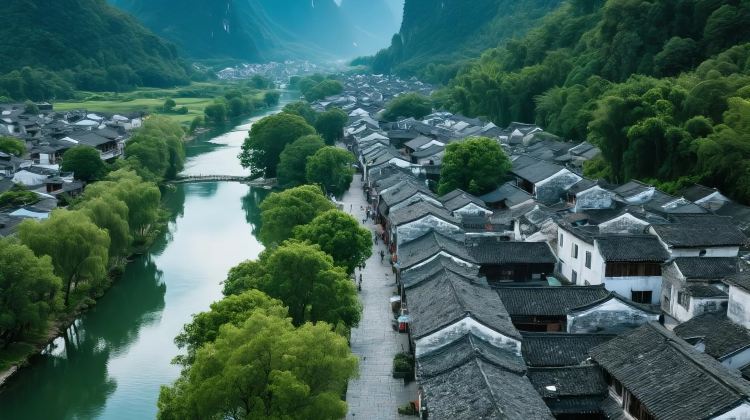
Yangshuo is a small town that has become the base for exploring the surrounding countryside. West Street, the main drag through the old town, is lined with restaurants, bars, and shops catering to international travelers. Beyond the town center, the landscape offers incredible opportunities for cycling through rice paddies, bamboo rafting on the Yulong River, and hiking to viewpoints like Moon Hill and Big Buddha.
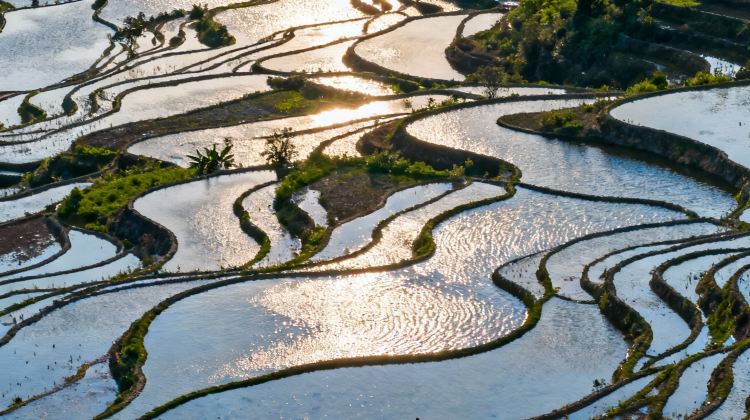
The Longji Rice Terraces (Dragon's Backbone Rice Terraces) are about 2 hours from Guilin. These terraced fields, built along the contour of steep mountainsides, create stunning patterns that change with the seasons. In spring, the terraces fill with water and reflect the sky. In autumn, the rice turns golden yellow. The area is also home to ethnic minority villages, including Zhuang and Yao communities.
Reed Flute Cave is a limestone cave near Guilin filled with stalactites, stalagmites, and other rock formations illuminated with colored lighting. The cave has been a tourist attraction for over 1,200 years.
Three to four days gives you time for the Li River cruise, a day or two exploring Yangshuo and the surrounding countryside by bicycle or scooter, and a day trip to the Longji Rice Terraces if time allows.
The Li River cruise from Guilin to Yangshuo is one of China's most celebrated travel experiences, and the surrounding countryside offers excellent opportunities for cycling, hiking, and photography.
What to See in Guilin and Yangshuo
The Li River Cruise covers 83 kilometers from Guilin to Yangshuo, passing through some of the most spectacular karst landscapes in the world. The 4- to 5-hour journey takes you past dramatic limestone peaks, bamboo groves, fishing villages, and water buffalo grazing in rice paddies. Traditional cormorant fishing, though now mostly performed for tourists rather than actual fishing, remains a photogenic sight along the river.
Yangshuo is a small town that has become the base for exploring the surrounding countryside. West Street, the main drag through the old town, is lined with restaurants, bars, and shops catering to international travelers. Beyond the town center, the landscape offers incredible opportunities for cycling through rice paddies, bamboo rafting on the Yulong River, and hiking to viewpoints like Moon Hill and Big Buddha.
The Longji Rice Terraces (Dragon's Backbone Rice Terraces) are about 2 hours from Guilin. These terraced fields, built along the contour of steep mountainsides, create stunning patterns that change with the seasons. In spring, the terraces fill with water and reflect the sky. In autumn, the rice turns golden yellow. The area is also home to ethnic minority villages, including Zhuang and Yao communities.
Reed Flute Cave is a limestone cave near Guilin filled with stalactites, stalagmites, and other rock formations illuminated with colored lighting. The cave has been a tourist attraction for over 1,200 years.
How Many Days in Guilin?
Three to four days gives you time for the Li River cruise, a day or two exploring Yangshuo and the surrounding countryside by bicycle or scooter, and a day trip to the Longji Rice Terraces if time allows.
Guilin Travel Tips
- Best time to visit: April to October for the Li River cruise (higher water levels). September to October offers the best weather and rice terrace colors.
- Getting there: Guilin has an international airport with flights from major Chinese cities. High-speed rail also connects Guilin to Guangzhou (about 3 hours) and other cities.
- Cycling in Yangshuo: Renting a bicycle is the best way to explore the countryside around Yangshuo. Many hostels and hotels offer bike rentals.
Best Guilin Tours
Chengdu: Pandas, Spice, and Relaxation
Chengdu offers something that the other major Chinese cities do not: a relaxed, unhurried atmosphere. Known as the land of abundance, Chengdu is famous for two things: giant pandas and Sichuan cuisine. The city serves as the gateway to the best panda viewing in the world and introduces visitors to one of China's most distinctive and beloved regional cuisines.
Chengdu also provides a more laid-back contrast to the intensity of Beijing and Shanghai. The city's teahouse culture, park scenes, and slower pace make it an ideal destination for travelers who want to experience China without constant sightseeing pressure.

The Chengdu Research Base of Giant Panda Breeding is the world's largest captive panda population and the best place to see giant pandas up close. The base houses over 200 giant pandas in a naturalistic environment. Visit early in the morning (before 9 AM) when pandas are most active during feeding time. Afternoon visits often find pandas sleeping. The base also houses red pandas, which are equally adorable but smaller and more agile.
Jinli Ancient Street is a reconstructed Qing Dynasty-style street lined with traditional architecture, local snacks, tea houses, and shops. The street is particularly atmospheric in the evening when lanterns illuminate the traditional buildings.
Wuhou Shrine is dedicated to Zhuge Liang, the famous strategist from the Three Kingdoms period, and Liu Bei, the founder of the Shu Han kingdom. The shrine and surrounding park offer a peaceful escape from the city's bustle.
The Leshan Giant Buddha is about 2 hours from Chengdu by high-speed rail. This 71-meter-tall Buddha statue, carved into a cliff face during the Tang Dynasty, is the largest stone Buddha in the world. You can view the Buddha from a platform at foot level or take a boat ride for a full panoramic view.
Two to three days cover the panda base, city attractions, and local cuisine exploration. Add a day if you want to visit the Leshan Giant Buddha or explore nearby Mount Emei, one of China's four sacred Buddhist mountains.
Chengdu also provides a more laid-back contrast to the intensity of Beijing and Shanghai. The city's teahouse culture, park scenes, and slower pace make it an ideal destination for travelers who want to experience China without constant sightseeing pressure.
What to See in Chengdu
The Chengdu Research Base of Giant Panda Breeding is the world's largest captive panda population and the best place to see giant pandas up close. The base houses over 200 giant pandas in a naturalistic environment. Visit early in the morning (before 9 AM) when pandas are most active during feeding time. Afternoon visits often find pandas sleeping. The base also houses red pandas, which are equally adorable but smaller and more agile.
Jinli Ancient Street is a reconstructed Qing Dynasty-style street lined with traditional architecture, local snacks, tea houses, and shops. The street is particularly atmospheric in the evening when lanterns illuminate the traditional buildings.
Wuhou Shrine is dedicated to Zhuge Liang, the famous strategist from the Three Kingdoms period, and Liu Bei, the founder of the Shu Han kingdom. The shrine and surrounding park offer a peaceful escape from the city's bustle.
The Leshan Giant Buddha is about 2 hours from Chengdu by high-speed rail. This 71-meter-tall Buddha statue, carved into a cliff face during the Tang Dynasty, is the largest stone Buddha in the world. You can view the Buddha from a platform at foot level or take a boat ride for a full panoramic view.
How Many Days in Chengdu?
Two to three days cover the panda base, city attractions, and local cuisine exploration. Add a day if you want to visit the Leshan Giant Buddha or explore nearby Mount Emei, one of China's four sacred Buddhist mountains.
Chengdu Travel Tips
- Best time to visit: March to June or September to November. Summer is hot and humid; winter is cool and cloudy.
- Panda base timing: Arrive early. The base opens at 7:30 AM, and pandas are most active during morning feeding.
- Spice warning: Sichuan cuisine is famous for its numbing spice (mala). If you cannot handle heat, ask for less spicy options, though even mild Sichuan dishes pack a punch.
Best Chengdu Tours

How to Connect These Destinations
The Classic First-Timer Route
Most first-time visitors follow a route that connects Beijing, Xi'an, and Shanghai, with optional extensions to Guilin and Chengdu. Here is how these destinations connect:
-
Beijing to Xi'an: High-speed rail takes 4.5 hours, or flights take about 2 hours plus airport time.
-
Xi'an to Shanghai: High-speed rail takes 6-7 hours, or flights take about 2.5 hours.
-
Shanghai to Guilin: Flights take about 2.5 hours (no direct high-speed rail).
-
Guilin to Chengdu: High-speed rail takes about 6 hours, or flights take about 2 hours.
Recommended Itinerary Lengths
-
10-12 days: Beijing (3 days), Xi'an (2 days), Shanghai (3 days), plus travel days
-
14-16 days: Add Guilin/Yangshuo (3-4 days) to the above
-
16-18 days: Add Chengdu (2-3 days) for pandas and Sichuan cuisine
Transportation Between Cities
High-speed rail is the most convenient way to travel between Beijing, Xi'an, and Shanghai. Trains are punctual, comfortable, and connect city centers directly. For longer distances, such as Shanghai to Guilin or Chengdu, domestic flights save significant time.
If coordinating multi-city transportation feels complicated, Tours4Fun offers a China vacation package that handles all logistics, including intercity transportation, accommodations, and guided exploration of major attractions. Their itineraries cover the classic Beijing-Xi'an-Shanghai route and extensions to Guilin, Chengdu, and other destinations.
Conclusion
China offers an extraordinary range of experiences for first-time visitors, from imperial history in Beijing to modern innovation in Shanghai, ancient wonders in Xi'an, natural beauty in Guilin, and cultural richness in Chengdu. These five destinations provide a well-rounded introduction to China's diverse attractions without overwhelming you with too much travel or too many new experiences at once.
The key to a successful first trip to China is realistic planning. Choose three or four destinations that match your interests, allow enough time in each place, and build in travel days for getting between cities. Whether you explore independently or join a guided tour, China's tourism infrastructure is well-developed and increasingly accessible to English-speaking visitors.
No matter which destinations you choose, your first trip to China will introduce you to a civilization spanning 5,000 years, a culture rich in tradition and rapid modernization, and landscapes ranging from imperial palaces to dramatic karst mountains. China rewards curiosity and openness, and first-time visitors consistently return home with stories that challenge their expectations and expand their understanding of the world.
The key to a successful first trip to China is realistic planning. Choose three or four destinations that match your interests, allow enough time in each place, and build in travel days for getting between cities. Whether you explore independently or join a guided tour, China's tourism infrastructure is well-developed and increasingly accessible to English-speaking visitors.
No matter which destinations you choose, your first trip to China will introduce you to a civilization spanning 5,000 years, a culture rich in tradition and rapid modernization, and landscapes ranging from imperial palaces to dramatic karst mountains. China rewards curiosity and openness, and first-time visitors consistently return home with stories that challenge their expectations and expand their understanding of the world.