BaliIndonesiaAsiaPlaces to GoTravel Tips
Mostrar todo

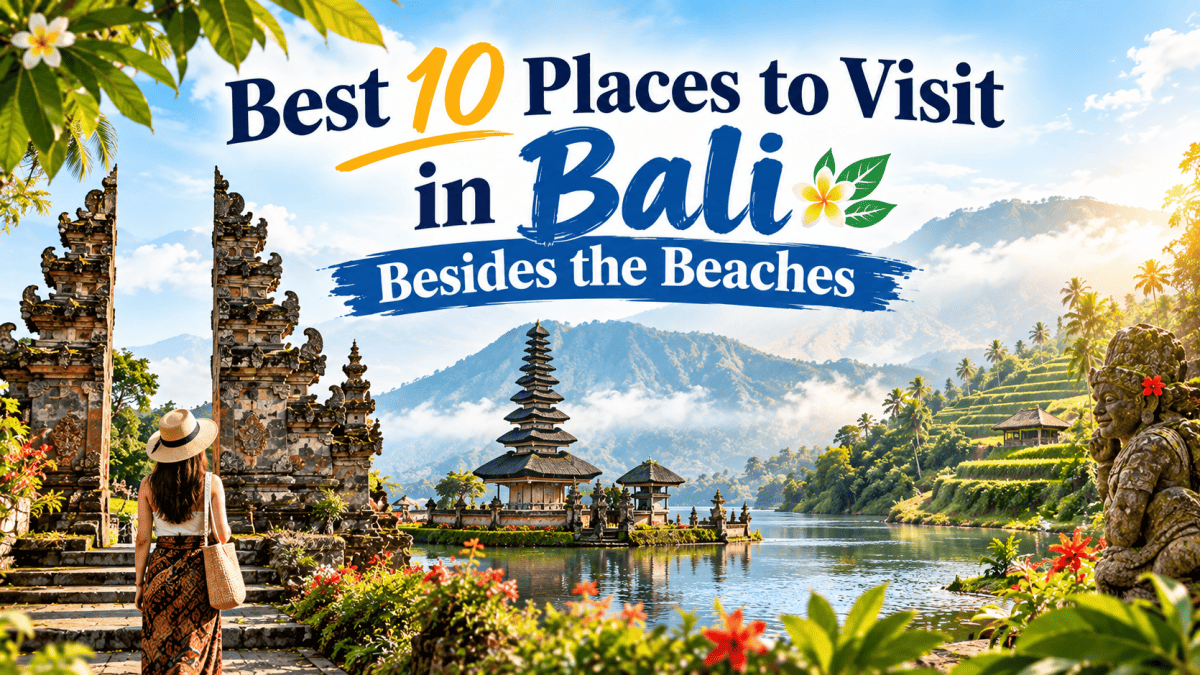
Best 10 Places to Visit in Bali Besides the Beaches

cover

Bali is famous for its beaches, but the island offers far more than sun and surf. Inland mountains, ancient temples, emerald rice terraces, and quiet highland villages create a layered travel experience that rewards visitors who venture beyond the coastline. From artistic hubs surrounded by jungle to volcanic peaks visible at dawn, the best places to visit in Bali include landscapes and cultural sites that have shaped the island for centuries.

Travelers planning a Bali trip often spend their entire stay in Seminyak or Nusa Dua without realizing what lies just an hour or two inland. This guide highlights ten destinations that showcase the real depth of the island. From sacred water temples to remote waterfalls tucked into the northern highlands, the options extend well beyond the coastline.


1. Ubud: The Cultural Heart of Bali

Ubud sits in the central highlands of Bali, surrounded by rice paddies and steep ravines. Long established as the island's artistic and cultural center, the town hosts galleries, traditional dance performances, and some of Bali's most important temples. The Ubud Palace and the nearby Saraswati Temple, with its lotus-filled moat, anchor the town center.

ubud


What to Do in Ubud

The Sacred Monkey Forest Sanctuary protects a stretch of ancient forest home to hundreds of long-tailed macaques and three Hindu temples dating to the 14th century. Walking trails wind through the canopy past carved stone statues and moss-covered shrines. Beyond the monkey forest, the Neka Art Museum and Agung Rai Museum of Art offer substantial collections of Balinese and Indonesian painting.

Best Time to Visit

Ubud is enjoyable year-round, but the dry season from April to September brings the most comfortable conditions for walking and outdoor activities. Early mornings are the quietest time to visit popular spots before tour groups arrive.

2. Tegallalang Rice Terraces

Just north of Ubud, the Tegallalang Rice Terraces demonstrate the ancient subak irrigation system, a UNESCO-recognized cooperative water management tradition that has shaped Balinese agriculture for over a thousand years. The terraces cascade down a hillside in precise geometric patterns, creating one of the most photographed landscapes on the island.

Walking the Terraces

A network of paths leads through and around the paddies, allowing visitors to walk at different elevations and observe the irrigation channels in action. Local farmers tend the fields throughout the year, and the planting cycle means the terraces change color from bright green to golden yellow across the seasons. Small warungs along the upper ridge serve fresh coconut water and local snacks with views across the valley.

3. Mount Batur Sunrise Trek

Mount Batur is an active volcano in northeastern Bali, rising 1,717 meters above sea level. The pre-dawn trek to the summit is one of the top places in Bali to visit for travelers who want a physical challenge paired with a dramatic natural payoff. The two-hour ascent follows a volcanic gravel path, and the reward at the top is a panoramic view of the caldera, the lake below, and neighboring Mount Agung across the horizon.

Practical Details

Most treks begin around 4:00 AM with a guide, and the descent takes roughly 90 minutes. Guides typically prepare a simple breakfast of eggs cooked in volcanic steam at the summit. The trailhead is accessible by road from Ubud in about 45 minutes. Proper footwear and a light jacket are essential, as temperatures near the summit can drop to 10 degrees Celsius before sunrise.

4. Tirta Empul Holy Water Temple

Tirta Empul, located near Tampaksiring in central Bali, is one of the island's most important Hindu water temples. Founded in 926 CE, the temple complex is built around a natural spring that produces clear water considered sacred by Balinese Hindus. Visitors and worshippers alike participate in melukat, a purification ritual in which they move through a series of spouts, letting the holy water wash over them.

Visiting the Temple

The outer courtyard is open to visitors, and the purification pools are accessible to those who dress appropriately with a sarong and sash, available for rent at the entrance. The temple grounds also include a larger ceremonial area and a modern pool fed by the same spring. Tirta Empul is a cool, quiet place to observe Balinese spiritual practice firsthand, and it ranks among the most meaningful places to visit in Bali for culturally minded travelers.

Tirta Empul

5. Sidemen Valley: Quiet Rural Bali

Sidemen Valley lies in eastern Bali, tucked between rice paddies and the slopes of Mount Agung. Unlike the busier tourist areas, Sidemen retains a rural character with few commercial developments and a pace of life dictated by farming and temple ceremonies. The valley offers some of the most scenic walking and cycling routes on the island, with paths that pass through terraced fields, across small bridges, and past family compounds.

Why Sidemen Stands Out

Travelers looking for cool places to visit in Bali away from crowds find Sidemen particularly appealing. The valley has a small number of boutique stays and homestays, most built in traditional Balinese style with open-air pavilions overlooking the rice fields. Ikatan weaving villages nearby produce hand-loomed endek cloth using techniques passed down through generations.

Sidemen Valley

6. Besakih: The Mother Temple of Bali

Besakih Temple, known as Pura Agung Besakih, sits on the southwestern slope of Mount Agung at an elevation of about 1,000 meters. It is the largest and holiest Hindu temple complex in Bali, comprising over 20 separate temples spread across terraced hillsides. The complex has served as the spiritual center of Bali for more than seven centuries.

Exploring the Complex

The main temple, Pura Penataran Agung, features elaborate multi-tiered meru towers dedicated to the Hindu trinity of Brahma, Vishnu, and Shiva. On clear days, the view extends across the Balinese landscape to the southern coast. Visitors should hire a local guide, as the temple grounds are extensive and the layout can be confusing. A qualified guide also helps explain the religious significance of each structure and ensures respectful behavior in this active place of worship.

Besakih

7. Nusa Penida: Dramatic Cliffs and Hidden Bays

Nusa Penida is a rugged island southeast of Bali, separated by a narrow strait. While it has beaches, the island's real draw is its dramatic coastal geology: sheer limestone cliffs, natural arches, and turquoise coves accessible only by steep trails. Kelingking Beach, with its T-Rex-shaped headland jutting into the sea, has become one of the most recognizable natural landmarks in Indonesia.

Key Viewpoints

Beyond Kelingking, Broken Beach forms a natural arch through which the ocean flows into a sheltered bay, and Angel's Billabong is a natural infinity pool carved into the clifftop. The roads on Nusa Penida are narrow and often rough, so most visitors hire a driver or join a guided day trip from the main harbor. A full day allows time for at least two or three viewpoints plus a stop at Crystal Bay for snorkeling.

Nusa Penida

8. Munduk: Waterfalls and Highland Lakes

Munduk is a highland village in northern Bali, situated at around 1,000 meters of elevation in a region of coffee plantations, clove trees, and dense forest. The cooler climate and lush scenery make it a refreshing contrast to the heat and congestion of southern Bali. The area is known for its waterfalls, including Munduk Waterfall, which drops roughly 50 meters into a forested gorge.

Things to Do

In addition to waterfall visits, the twin lakes of Tamblingan and Buyan offer kayaking, fishing, and lakeside walking trails through misty forest. The nearby Gitgit Waterfall is one of the most accessible in Bali, located just off the main road between Singaraja and Bedugul. Munduk is a strong choice for travelers seeking top places to visit in Bali that emphasize nature and tranquility over nightlife and beach clubs.

9. Amed: Snorkeling and Salt Farming on the East Coast

Amed is a string of fishing villages along Bali's northeastern coast, known for its calm waters, black volcanic sand beaches, and excellent snorkeling and diving. The offshore reef system, including the USAT Liberty shipwreck at nearby Tulamben, draws divers from around the world. On clear days, Mount Agung towers above the coastline, creating a striking backdrop.

amed

Traditional Salt Making

Amed is also one of the last places in Bali where traditional sea salt farming continues. During the dry season, local families pump seawater onto beds of volcanic sand, let the sun evaporate the moisture, and collect the remaining salt crystals by hand. Visitors can observe the process and purchase salt directly from the farmers. This combination of marine activity and cultural observation makes Amed one of the more distinctive places to visit in Bali.

10. Campuhan Ridge Walk: A Scenic Trail Above Ubud

The Campuhan Ridge Walk is a paved trail that follows a narrow ridge between two river valleys just west of central Ubud. The path offers open views over coconut palms, tropical forest, and distant hills, with several small cafes and rest stops along the way. It is one of the most accessible nature walks in Bali, suitable for all fitness levels and free to use.

Campuhan Ridge Walk

Getting the Most from the Walk

The trail is roughly two kilometers one-way from the starting point near the Ibek Coffee shop to the village of Campuhan. Early morning or late afternoon walks avoid the midday heat and offer the best light for photography. The ridge connects to a network of smaller paths that lead deeper into the surrounding countryside, making it a good starting point for longer walks into the rice terraces beyond.

Practical Tips for Exploring Bali Beyond the Beaches

Getting Around

Most inland destinations require a car or motorbike. Hiring a private driver for the day typically costs between 500,000 and 700,000 Indonesian rupiah and is the most comfortable option for visiting multiple sites. Scooter rental is popular but requires confidence with Bali's traffic conditions. For travelers who prefer organized logistics, Bali vacation packages through Tours4fun bundle transport and guided sightseeing, which simplifies planning for visitors covering several destinations in one trip.

Dress Code for Temples

All Hindu temples in Bali require visitors to wear a sarong and sash. Most major temples provide rentals at the entrance, but carrying your own is convenient if you plan to visit several in one day. Shoulders and knees should be covered, and shoes must be removed before entering temple grounds.

Budget and Timing

Entrance fees at most temples and natural sites range from 15,000 to 50,000 rupiah. The dry season from April to September is the most popular time to visit, but the shoulder months of March and October offer good weather with smaller crowds. Starting excursions early in the morning helps avoid both heat and the largest tour groups.

FAQ

How many days do you need to see the best places in Bali?

A minimum of seven days allows time for southern beaches plus three or four inland destinations. Ten to twelve days provides a more relaxed pace and the opportunity to visit eastern and northern areas without rushing.

Is it easy to visit temples without a guide?

Smaller temples are straightforward to visit independently. Larger complexes like Besakih benefit significantly from a local guide who can explain the religious context and help navigate the extensive grounds.

What is the best base for exploring inland Bali?

Ubud is the most practical base for central and eastern destinations, with good road connections to Tegallalang, Tirta Empul, Sidemen, and Mount Batur. For northern areas like Munduk, a night or two in the highlands reduces daily driving time.

Are these destinations suitable for families?

Yes. The Campuhan Ridge Walk, Tegallalang Rice Terraces, and Tirta Empul are all family-friendly. Mount Batur's sunrise trek is better suited to older children and teenagers due to the early start and steep terrain.

Can you do the Mount Batur trek independently?

Local regulations require trekkers to be accompanied by a registered guide. Guides can be arranged through hotels in Ubud or booked at the trailhead. The cost typically includes the guide fee and a simple summit breakfast.

Resumen

1. Ubud: The Cultural Heart of Bali

2. Tegallalang Rice Terraces

3. Mount Batur Sunrise Trek

4. Tirta Empul Holy Water Temple

5. Sidemen Valley: Quiet Rural Bali

6. Besakih: The Mother Temple of Bali

7. Nusa Penida: Dramatic Cliffs and Hidden Bays

8. Munduk: Waterfalls and Highland Lakes

9. Amed: Snorkeling and Salt Farming on the East Coast

10. Campuhan Ridge Walk: A Scenic Trail Above Ubud

Practical Tips for Exploring Bali Beyond the Beaches

FAQ

America's 250th Anniversary Mega Sale

image