This order follows the geography rather than a wish list. Day one never leaves the center, day two runs east along the old divide, and day three makes one long leg west before the train carries you back across the middle. You cross the city once, not twice.
If you're landing jet-lagged and want the center explained before you walk it, a Berlin tour on the first morning covers the orientation and leaves the afternoon free.
Day 1: The Gate, the Memorial and Museum Island
Start at the Brandenburg Gate while the light is still low and the tour buses haven't parked. It has watched the country's high points and its worst ones, and it reads now as a symbol of peace and unity after the Wall came down.

Walk south a few minutes to the Holocaust Memorial, then head back up Unter den Linden, the old ceremonial street, toward the river. The Zeughaus Armoury along the way counts as one of the oldest buildings in the city, and it works as a short stop rather than a full one.
Gendarmenmarkt is the detour that pays off. The Berlin Cathedral, the French Cathedral and the Konzerthaus share one square, and a slow loop around it covers all three. In winter the square hosts a Christmas market with acrobats, jugglers and street performers.
Finish on Museum Island, where the river splits around a cluster of museums. Pick one interior, not three, or you'll spend the afternoon in rooms that start to blur.
Day 2: Checkpoint Charlie, Potsdamer Platz and the East Side
Day two is about the division itself. Begin at Checkpoint Charlie, the crossing everybody photographs, then walk south to Potsdamer Platz, which fills its space with art, entertainment and shopping.
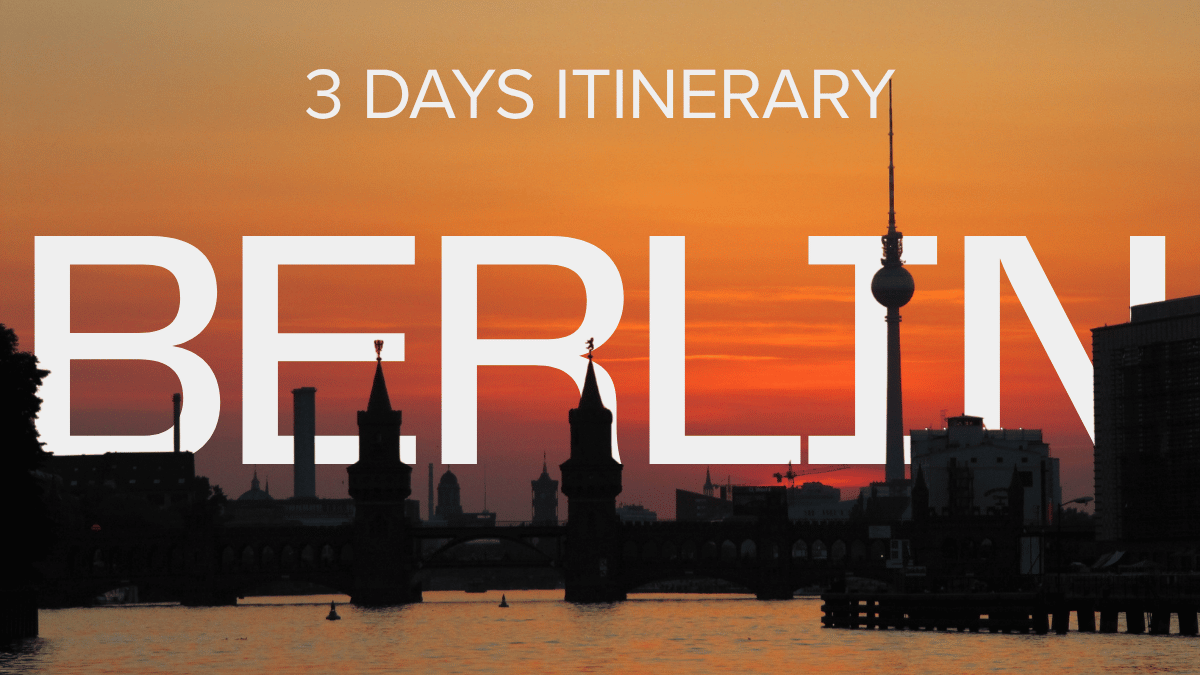
From there, ride the U-Bahn east instead of walking. The East Side Gallery covers a surviving stretch of the Wall in paint, and the Spree runs beside it, so you can end the afternoon on the water with the towers of the center behind you.
Day 3: Charlottenburg, Tiergarten and Prenzlauer Berg
The last day starts with the longest ride of the three, west to Charlottenburg Palace, which shows the architectural tastes of the people who lived there since the first Queen of Prussia. The gardens behind it turn gold in autumn, so give the morning to the palace and the grounds.
Then the U-Bahn brings you back east to the Tiergarten, the big park at the center of the city. In spring the trees come back and the paths fill with cyclists, which is a pleasant way to spend an afternoon without paying for anything.
Prenzlauer Berg handles the evening, one more ride northeast. The district runs on cafes and terraces, and it stays lively in spring without the crush of the center.

Where the Evenings Go
Day one leaves you a short walk from dinner, with the river still in sight. Day two stays out on the Spree, where summer evenings fill the open-air beer gardens along the water.
Day three lands in Prenzlauer Berg, which is where you want to be when the walking stops and the terraces fill for the evening.
If It Rains
Rain in Berlin usually arrives as a shower rather than a lost day, so swap a block instead of rebuilding the plan. Move Museum Island to the wet afternoon, since the interiors are the point, and give one of them the hours you would have spent on the pavement.
For day two, Potsdamer Platz covers art and shopping under cover, so put it in the middle of the wet hours and keep the East Side Gallery for a break in the weather. Charlottenburg Palace on day three is indoor work anyway.