BerlinGermanyEuropePlaces to GoThings to DoFood & DrinkTravel TipsVacations
Show All

Berlin Itinerary 3 Days: History, the Wall & Local Food

cover

Berlin is a city where the history did not get put behind glass. The Wall survives as a painted gallery, the gate that once stood beside it is now where everybody meets, and the old imperial parade street runs straight into a cluster of museums. You can walk the whole chain in an afternoon.


3 days is the length that fits it. Two days forces you to choose between the east and the west, and a week turns into a holiday about museums instead of a city. With three, the districts line up in an order that makes sense on the ground.


The plan below bends easily. When a museum queue eats an hour, you give up a stop and keep walking, and the rest of the route still holds.

Berlin 3 Day Itinerary

This order follows the geography rather than a wish list. Day one never leaves the center, day two runs east along the old divide, and day three makes one long leg west before the train carries you back across the middle. You cross the city once, not twice.


If you're landing jet-lagged and want the center explained before you walk it, a Berlin tour on the first morning covers the orientation and leaves the afternoon free.


Day 1: The Gate, the Memorial and Museum Island


Start at the Brandenburg Gate while the light is still low and the tour buses haven't parked. It has watched the country's high points and its worst ones, and it reads now as a symbol of peace and unity after the Wall came down.

Brandenburg Gate


Walk south a few minutes to the Holocaust Memorial, then head back up Unter den Linden, the old ceremonial street, toward the river. The Zeughaus Armoury along the way counts as one of the oldest buildings in the city, and it works as a short stop rather than a full one.


Gendarmenmarkt is the detour that pays off. The Berlin Cathedral, the French Cathedral and the Konzerthaus share one square, and a slow loop around it covers all three. In winter the square hosts a Christmas market with acrobats, jugglers and street performers.


Finish on Museum Island, where the river splits around a cluster of museums. Pick one interior, not three, or you'll spend the afternoon in rooms that start to blur.


Day 2: Checkpoint Charlie, Potsdamer Platz and the East Side


Day two is about the division itself. Begin at Checkpoint Charlie, the crossing everybody photographs, then walk south to Potsdamer Platz, which fills its space with art, entertainment and shopping.


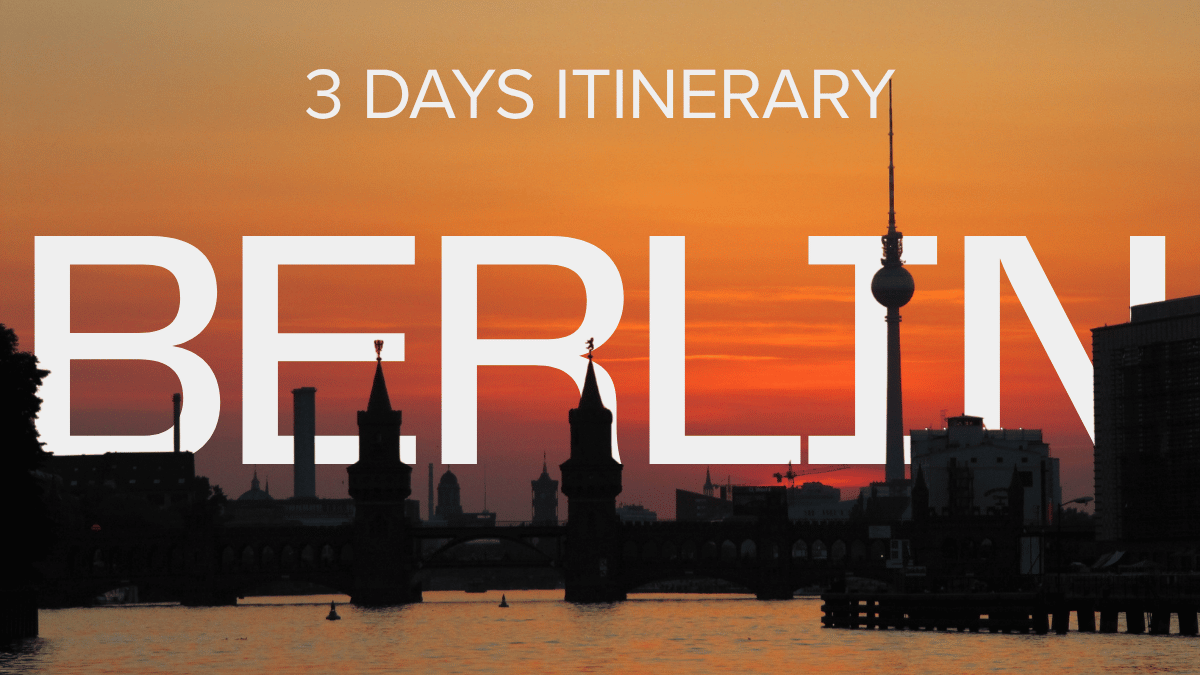
From there, ride the U-Bahn east instead of walking. The East Side Gallery covers a surviving stretch of the Wall in paint, and the Spree runs beside it, so you can end the afternoon on the water with the towers of the center behind you.


Day 3: Charlottenburg, Tiergarten and Prenzlauer Berg


The last day starts with the longest ride of the three, west to Charlottenburg Palace, which shows the architectural tastes of the people who lived there since the first Queen of Prussia. The gardens behind it turn gold in autumn, so give the morning to the palace and the grounds.


Then the U-Bahn brings you back east to the Tiergarten, the big park at the center of the city. In spring the trees come back and the paths fill with cyclists, which is a pleasant way to spend an afternoon without paying for anything.


Prenzlauer Berg handles the evening, one more ride northeast. The district runs on cafes and terraces, and it stays lively in spring without the crush of the center.

tiergarden


Where the Evenings Go


Day one leaves you a short walk from dinner, with the river still in sight. Day two stays out on the Spree, where summer evenings fill the open-air beer gardens along the water.


Day three lands in Prenzlauer Berg, which is where you want to be when the walking stops and the terraces fill for the evening.


If It Rains


Rain in Berlin usually arrives as a shower rather than a lost day, so swap a block instead of rebuilding the plan. Move Museum Island to the wet afternoon, since the interiors are the point, and give one of them the hours you would have spent on the pavement.


For day two, Potsdamer Platz covers art and shopping under cover, so put it in the middle of the wet hours and keep the East Side Gallery for a break in the weather. Charlottenburg Palace on day three is indoor work anyway.

Food, Season by Season

Berlin eats by the calendar as much as by the map, and matching your three days to that calendar is easier than chasing addresses across town.


Summer, Autumn and December


Summer is the easy one. Tables move outside, and Tempelhofer Feld turns into a park where half the city sits on the grass with food from home. Join them with bread, cheese and something cold from a shop on the way.


Autumn brings the harvest side of the menu, with food and wine festivals running through September and November while the cafes turn cozy again. This is the season for a long lunch that takes the place of an afternoon of walking.


December belongs to the Christmas markets, where mulled wine and regional treats do the work of a restaurant meal. Eat standing up, walk it off, and repeat at the next square.

berlin


Cafes and the Afternoon Habit


Cafes carry the middle of the day here. Sitting down with a coffee and something baked is not lost sightseeing time; it is how the city paces itself between two long walks.


In autumn, when the rain starts and the light goes early, the cozy rooms are where you dry off and re-plan. Nobody hurries you out.


Where the Day Puts You at Lunch


Day one puts you near Gendarmenmarkt and the river, so eat before Museum Island rather than after, since the interiors take more out of you than the streets do. Day two picks up the lunch options around Potsdamer Platz without any detour.


Day three is the one to plan around. Eat near Charlottenburg before the park, then keep dinner for the far end of the day, where the cafes stay open late enough to make a meal of it.

Pacing and Booking Ahead

3 days sounds generous until you count the walking. The plan works because each day has one long stretch on foot and one stretch where you sit down, and the sitting is scheduled rather than accidental.


How the Days Pace Themselves


Day one is the longest walk and the lightest on tickets, so let it run until mid-afternoon. Day two covers less ground, which leaves room for a slow lunch.


Day three is the gentle one: one indoor block in the morning, a park you cross at whatever speed you like, and an evening that asks nothing of your legs.


Where the Money Goes


Getting around is the small part. The spending concentrates in the interiors you decide to enter, so choose them before you arrive and treat the rest as street-level days that cost almost nothing.


Winter changes the arithmetic in your favor, since visitor numbers drop and accommodation prices come down with them. If the budget is tight, come between December and February and put the savings into the museums.

berlin at night


What to Settle Before You Land


Two decisions are worth making in advance: how many interiors you'll pay for, and where you sleep. A room inside the center saves a ride every morning. A room on the Prenzlauer Berg side gives you better evenings and a short walk home at night.


If You Get Two Days


Drop day three and keep the first two. The center and the Wall tell the story you came for, and losing the palace hurts less than losing the East Side. If palaces are the reason you travel, reverse it and give the second day to Charlottenburg instead of the eastern afternoon.


Travelers who want Berlin folded into a longer route can look at Berlin vacation packages that run the city alongside Prague or Amsterdam.

The Best Time to Visit Berlin

Autumn


Autumn runs from September to November and starts mild, with September around 15 to 20°C before November drops to roughly 7 to 10°C. Rain picks up and daylight shortens as the season goes on, so put the walking earlier and keep the interior for the late afternoon.


Winter


Winter holds between about -1 and 4°C from December to February, with occasional snow and short days. It also makes the plan simpler, because the museums are quiet and the short days push you indoors earlier.

berlin winter


Spring and Summer


Spring climbs from about 6 to 12°C in March to 15 to 20°C in May, with moderate rain and evenings that keep their light. It suits this route, because day one and day three both depend on being outside.


Summer stays between 18 and 25°C and its rain arrives as short showers, which makes a wet afternoon easier to work around than in November. Long evenings also let you push the last block later, and a summer night in Prenzlauer Berg runs much longer than a winter one.

Getting Around Berlin

Central Berlin is flat and compact, and the sights on day one sit closer to each other than the map suggests. Walking is the default, and it is also the point: the streets between the gate and the river are where the city explains itself.


The U-Bahn earns its fare on the long legs rather than the short ones, since the center rewards walking better than it rewards trains. Signage is clear and the trains are frequent, so you don't need to study a timetable before you leave the hotel, and you buy your ticket before you go down to the platform.


If you would rather not work out the legs yourself, Tours4fun runs a Germany tour that starts or ends in Berlin.

Three Days, One Version of Berlin

Three days won't make you an expert on this city, and that's fine. What you get is its shape: the gate and the memorial on one side, the painted Wall on the other, and the palaces and parks west of the center that most short trips skip.


Protect the walking days from extra stops, since every interior you add to day one is an hour off the street, and the street is where Berlin makes sense. The route holds because each day runs in one direction, and the last one turns north when the walking is done.


A three-day plan with two strong days and one gentle one beats three rushed days, and you'll leave wanting the fourth.

FAQ

Is three days enough for Berlin?

For the center and the Wall, yes, with one museum interior a day. A fourth day would go to the museums you skipped or an afternoon at a lake outside the city.

Do you need the U-Bahn, or can you walk?

Day one is a walking day. Beyond that, the train saves the long hops, and the center itself is easy on foot.

What do you do if it rains?

Museum Island and Potsdamer Platz work under cover, and the East Side Gallery waits for a break in the weather.

When should you go?

September to November gives mild early weather and fewer people. Summer brings long evenings outside, and winter brings lower room rates.