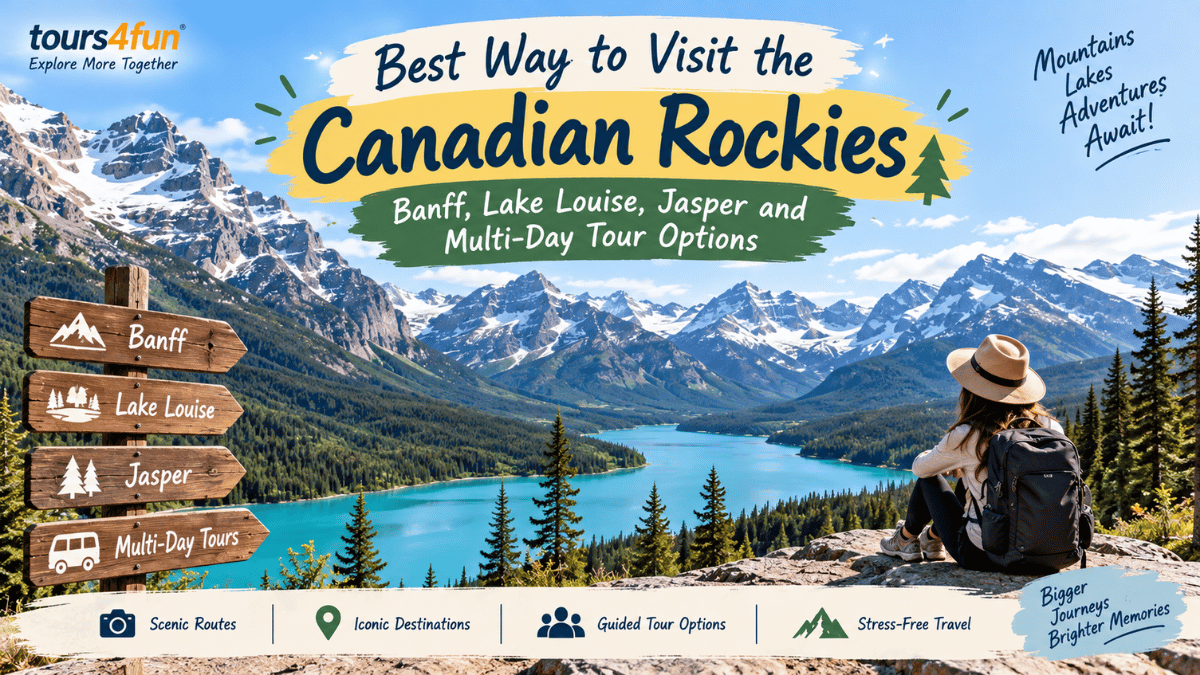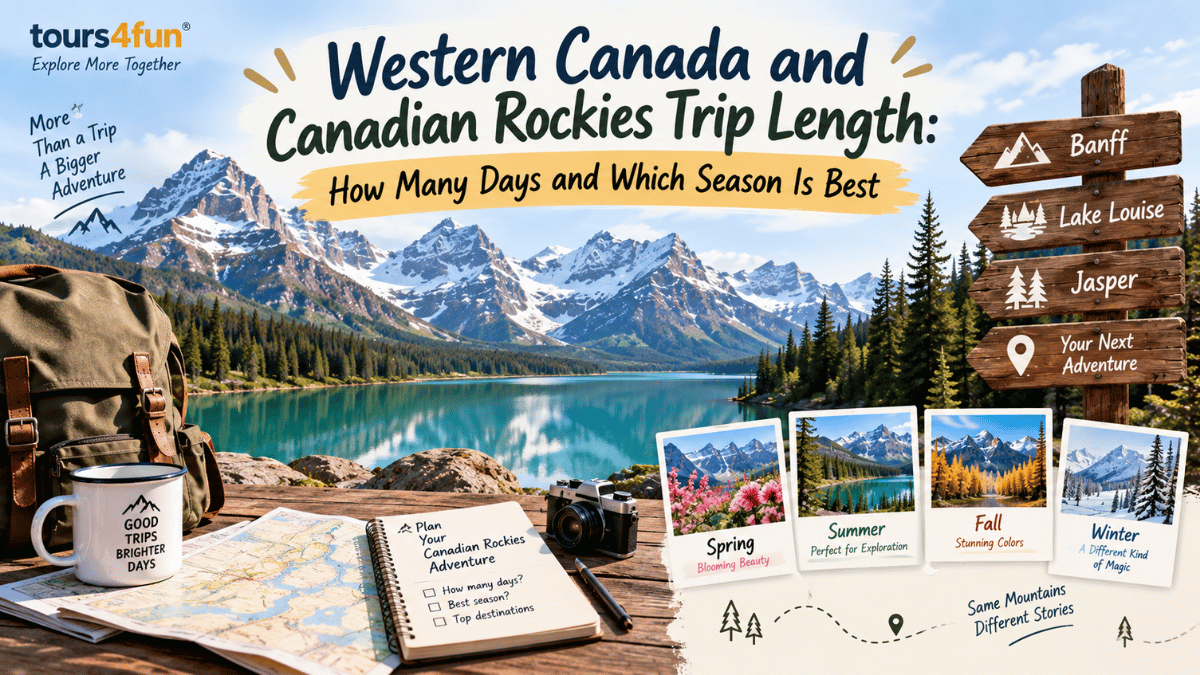
Allow five to seven days for Banff, Lake Louise, the Icefields Parkway, and Jasper, or ten to fourteen days if Western Canada also includes Vancouver and another coastal or interior stop. Four days works for a guided Rockies highlights tour, but it will feel fast. For the widest road, trail, and sightseeing access, late June through September is usually best; July and August offer the most dependable summer conditions but also the greatest demand. September balances cooler weather, autumn color, and fewer families, while May and early June bring lower-elevation access with lingering alpine snow. Winter suits skiing and snow scenery, not a summer-style road trip. Choose dates by your priority, then build the trip length around gateway distances and full sightseeing days rather than counting arrival and departure days as usable time.
Use Five to Seven Days for the Essential Rockies
A first trip focused on the mountain corridor needs at least five usable days. Two nights in Banff and its surrounding park support one full sightseeing day after arrival. Add a day for Lake Louise, a full day to travel the Icefields Parkway, and two nights around Jasper. This sequence limits backtracking and recognizes that the 232-kilometer parkway is an experience with viewpoints and short walks, not a quick transfer.
Five days is workable when transportation, accommodation, and the sightseeing order are organized in advance. It leaves little protection against weather, fatigue, or an unexpectedly long stop. Six or seven days is the better default for independent travelers: add one flexible day in Banff or Jasper and avoid changing hotels every night. Hikers, photographers, families, and anyone recovering from a long flight should favor the longer range.
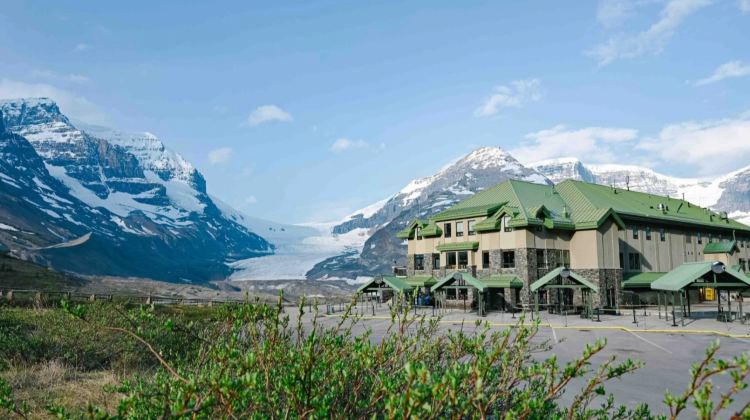
For a compressed itinerary, the 4-Day Jasper and Columbia Icefield Canadian Rockies tour from Calgary fits travelers with limited vacation time who still want the northbound mountain corridor. Its route links a Calgary start with Jasper and the Columbia Icefield area, reducing the work of coordinating major transfers. The tradeoff is a highlights pace: four days does not leave much room for long hikes, late mornings, or spontaneous detours.
Five days is workable when transportation, accommodation, and the sightseeing order are organized in advance. It leaves little protection against weather, fatigue, or an unexpectedly long stop. Six or seven days is the better default for independent travelers: add one flexible day in Banff or Jasper and avoid changing hotels every night. Hikers, photographers, families, and anyone recovering from a long flight should favor the longer range.
For a compressed itinerary, the 4-Day Jasper and Columbia Icefield Canadian Rockies tour from Calgary fits travelers with limited vacation time who still want the northbound mountain corridor. Its route links a Calgary start with Jasper and the Columbia Icefield area, reducing the work of coordinating major transfers. The tradeoff is a highlights pace: four days does not leave much room for long hikes, late mornings, or spontaneous detours.
Recommend Tour


4.8
( 28 reseñas )
Código del tour: 753558Ciudad de inicio / Ciudad de fin
Calgary
Duración
4.0 Days
Ciudad y atracciones
Calgary, Jasper, East Kootenay
+21 más
Idiomas
Chinese Live, English Live
Tamaño del grupo
Máx. 13 viajeros
Ahorrar 10%
De $1,145.13
$1,030.62
Add Time When Vancouver Is Part of Western Canada
“Western Canada” covers a larger trip than “the Canadian Rockies.” Vancouver and Calgary are separate gateways, and the journey from the Pacific coast to the Alberta Rockies consumes meaningful time. For Vancouver plus Banff, Lake Louise, and Jasper, plan ten to fourteen days. A balanced twelve-day outline might give Vancouver three nights, an interior travel stop, five or six nights across the Rockies, and one or two flexible transfer days.
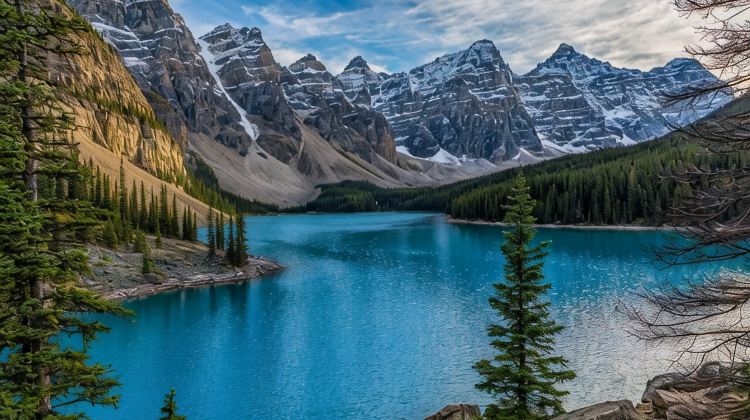
A five-day coast-to-mountains trip is possible only when movement is a major part of the itinerary. The 5-Day Canada tour from Vancouver is suited to travelers already starting on the coast who want an organized overland route rather than repositioning to Calgary. The Vancouver gateway is its practical benefit. Its limitation is distance: some of those five days must be devoted to reaching and crossing western landscapes, leaving less time for deep exploration in each park. If Vancouver is not a priority, fly into Calgary and devote the saved days to Lake Louise sightseeing, Banff, and Jasper. If both coast and mountains matter, avoid squeezing them into a nominal seven-day vacation that includes international arrival and departure. Count nights and usable days separately, and consider an open-jaw flight to reduce repetition.
A five-day coast-to-mountains trip is possible only when movement is a major part of the itinerary. The 5-Day Canada tour from Vancouver is suited to travelers already starting on the coast who want an organized overland route rather than repositioning to Calgary. The Vancouver gateway is its practical benefit. Its limitation is distance: some of those five days must be devoted to reaching and crossing western landscapes, leaving less time for deep exploration in each park. If Vancouver is not a priority, fly into Calgary and devote the saved days to Lake Louise sightseeing, Banff, and Jasper. If both coast and mountains matter, avoid squeezing them into a nominal seven-day vacation that includes international arrival and departure. Count nights and usable days separately, and consider an open-jaw flight to reduce repetition.
Recommend Tour
4.9
( 30 reseñas )
Código del tour: 727947Ciudad de inicio / Ciudad de fin
Vancouver
Duración
5.0 Days
Ciudad y atracciones
Kamloops, Kelowna, West Kelowna
+24 más
Idiomas
Chinese Live, English Live
Tamaño del grupo
Máx. 13 viajeros
Audiencia del tour
Primarily Mandarin-Speaking Travelers
De
$1,898.72
Choose the Best Season for Your Main Priority
| Season | Best For | Main Tradeoff |
| Late June to August | Broad summer access, long daylight, hiking | Highest demand and advance planning |
| September | Cooler walks, autumn color, balanced touring | Shorter days and variable late-season weather |
| May to early June | Lower-elevation sights and shoulder-season travel | Frozen lakes, snow, and limited alpine access |
| October | Quiet towns and scenic drives when conditions cooperate | Reduced services and early winter conditions |
| November to April | Skiing, snow scenery, winter activities | Specialized driving and fewer summer-style stops |
Late June through September is the strongest all-purpose window for a first Canadian Rockies journey. Lakes generally thaw as summer arrives, while high alpine trails may remain snowy into July. July and August suit visitors who want the broadest hiking choice and long daylight. They also require early accommodation and transportation planning, especially around popular lakes.
September is often the best compromise for adults with flexible dates. Days are cooler, summer crowds begin to ease, and larch color can become a seasonal highlight. Conditions are not guaranteed: snow can fall in the mountains at any time, and daylight contracts quickly. May and early June work better for scenic drives, towns, and lower trails than for travelers expecting every lake and alpine route to look or operate like midsummer.
A glacier-centered stay can make seasonal access feel more purposeful. The 5-Day Canadian Rockies tur with Glacier View Lodge fits travelers who want the Columbia Icefield corridor to be a defining part of the trip. The lodge-focused routing gives that landscape more weight than a brief roadside stop. The tradeoff is concentration: dedicating an overnight to the glacier area can reduce free time elsewhere, so it best serves visitors who value the parkway as much as Banff and Jasper.
Recommend Tour

4.8
( 36 reseñas )
Código del tour: 748728Ciudad de inicio / Ciudad de fin
Calgary, Banff
Duración
5.0 Days
Ciudad y atracciones
Jasper, East Kootenay, Banff
+29 más
Idiomas
Chinese Live, English Live
Tamaño del grupo
Máx. 13 viajeros
Ahorrar $45.00
De $1,449.12
$1,404.12
Plan Spring, Fall, and Winter Differently
Shoulder-season savings do not automatically make a trip better. Icefields Parkway services generally operate from early May to mid-October, while winter weather can persist from early November into mid-June. Lakes may stay frozen late into spring, and alpine trails are often not snow-free until mid-July. Instead of building a summer checklist for May, choose lower-elevation walks, town-based activities, and scenic drives with backup plans.
Winter is a distinct vacation. The parkway remains a remote mountain road with no services between Lake Louise and Jasper in winter, limited communication coverage, and changing conditions. Snow tires or chains are required on the Icefields Parkway from November 1 through March 31 and whenever it is snow-covered. A winter trip is better based in one or two places, with skiing, snowshoeing, hot springs, and guided activities, rather than a rapid multi-stop road circuit.
Before choosing dates, review the current status of Jasper attractions and routes, seasonal roads, trails, and any temporary closures. Wildfire effects, wildlife restrictions, road work, or early snowfall can reshape a plan. Build at least one flexible half-day into a shoulder-season itinerary and avoid making a single remote attraction the only reason for the trip.
Winter is a distinct vacation. The parkway remains a remote mountain road with no services between Lake Louise and Jasper in winter, limited communication coverage, and changing conditions. Snow tires or chains are required on the Icefields Parkway from November 1 through March 31 and whenever it is snow-covered. A winter trip is better based in one or two places, with skiing, snowshoeing, hot springs, and guided activities, rather than a rapid multi-stop road circuit.
Before choosing dates, review the current status of Jasper attractions and routes, seasonal roads, trails, and any temporary closures. Wildfire effects, wildlife restrictions, road work, or early snowfall can reshape a plan. Build at least one flexible half-day into a shoulder-season itinerary and avoid making a single remote attraction the only reason for the trip.
Match the Duration to Your Travel Style
A Canadian Rockies tour package is useful when four or five days is a firm limit. Coordinated transportation turns more of a short vacation into sightseeing time, although departure schedules and stop durations are fixed. Self-driving becomes more rewarding at six or seven days because the extra time lets travelers adapt to weather and spend longer at viewpoints or trails.
When comparing options on Tours4fun, focus on usable sightseeing time, start and end cities, hotel changes, and the role of the Icefields Parkway. Do not assume an extra calendar day always means more time in the parks. The best duration matches energy level, seasonal daylight, and tolerance for fixed schedules.
Finally, reserve the hardest elements first: accommodation, lake transportation, and any date-specific activity that anchors the trip. Keep secondary viewpoints flexible. A well-paced six-day route in September can deliver more than a rushed ten-day checklist, while a four-day guided trip can outperform an improvised self-drive when time is scarce.
- Four days: Choose a guided highlights route from Calgary and accept a quick pace.
- Five days: Cover the core corridor with careful sequencing or select one themed experience.
- Six to seven days: Use the ideal first-timer range for Banff, Lake Louise, the parkway, and Jasper.
- Ten to fourteen days: Combine Vancouver and the Rockies without turning every other day into a transfer.
- Two weeks or more: Add Vancouver Island, the Okanagan, or slower hiking days rather than stacking distant stops.
Finally, reserve the hardest elements first: accommodation, lake transportation, and any date-specific activity that anchors the trip. Keep secondary viewpoints flexible. A well-paced six-day route in September can deliver more than a rushed ten-day checklist, while a four-day guided trip can outperform an improvised self-drive when time is scarce.