Yellowstone is the rare park where the ground is the show. Steam drifts across a boardwalk, a geyser goes up on something close to a schedule, and bison stand in the road as if they own it. Yellowstone National Park covers more than 2 million acres across Wyoming, Montana, and Idaho, and this Yellowstone travel guide sticks to the decisions that shape your days: which basins to see and in what order, how long the big geyser keeps you, and where the animals tend to be when you arrive.
Coming from Salt Lake City, a common pattern is one long transfer day via Jackson and Grand Teton, a full day in the geyser country, then a night in West Yellowstone. That puts you at the boardwalks early, which is the difference between a photo of steam and a photo of somebody's shoulder.
So how do you fit geysers, hot springs, and a valley full of bison into four days? You cut something, and you build each day around eruption windows instead of a checklist.
Best Yellowstone National Park Tours
How the Geothermal Basins Work
The features along these boardwalks do not all behave the same way. Geysers throw water and steam on a cycle, hot springs sit still with microbial mats painting rings of orange and yellow around the pool, and mud pots bubble thick and loud. Each one asks for a different kind of attention: a wait, a look, or a listen.
The named basins do the sorting for you. Upper Geyser Basin is the geyser stop. Midway Geyser Basin holds Grand Prismatic Spring. Norris Geyser Basin mixes pools, steam, and geysers in one walk; Mud Volcano and Fountain Paint Pots are the mud pot stops; Biscuit Basin and West Thumb add smaller pools, and Mammoth Hot Springs throws in cascading travertine terraces that look nothing like the rest of the park.

Steam is the thing nobody plans for. Wind pushes it across the boardwalk and hides the water for a minute, then it clears, so a little patience beats a fast lap. Morning cold makes the plumes thicker; midday light brings the pool colors out instead. Both versions are worth standing through.
If you have one morning, give it to Upper Geyser Basin for the geyser show and Midway for the color. Everything else is a bonus stop, not a substitute.
Old Faithful and the Upper Geyser Basin
The Upper Geyser Basin is the stop everyone pictures before they arrive, and Old Faithful is why. It erupts every 60 to 110 minutes, throws 3,700 to 8,400 gallons of water anywhere from 106 to 184 feet in the air, and a single eruption can last five minutes.
That interval is regular enough to build a stop around. Walk the boardwalk while you wait, then come back for the next window instead of standing in place for an hour with your phone up.
Yellowstone Old Faithful got its name during the Washburn Expedition of 1870, back when reliable timing was rare enough to be worth writing down. The historic district around the geyser holds the Old Faithful Inn, a U.S. National Historic Landmark, and a cluster of other structures from the same era.

Crowds, not geology, decide how the visit feels. From June through August, the parking lot fills by 10 AM, so either arrive before 9 AM or come after 6 PM, when the steam reads better against the light anyway. Outside the summer peak, you get the same boardwalk with a fraction of the shoulders in your photos.
I'd budget two hours here for one eruption and the loop, three if you want to catch a second one. Anything shorter and you are gambling on the next window.
Grand Prismatic and Midway Geyser Basin
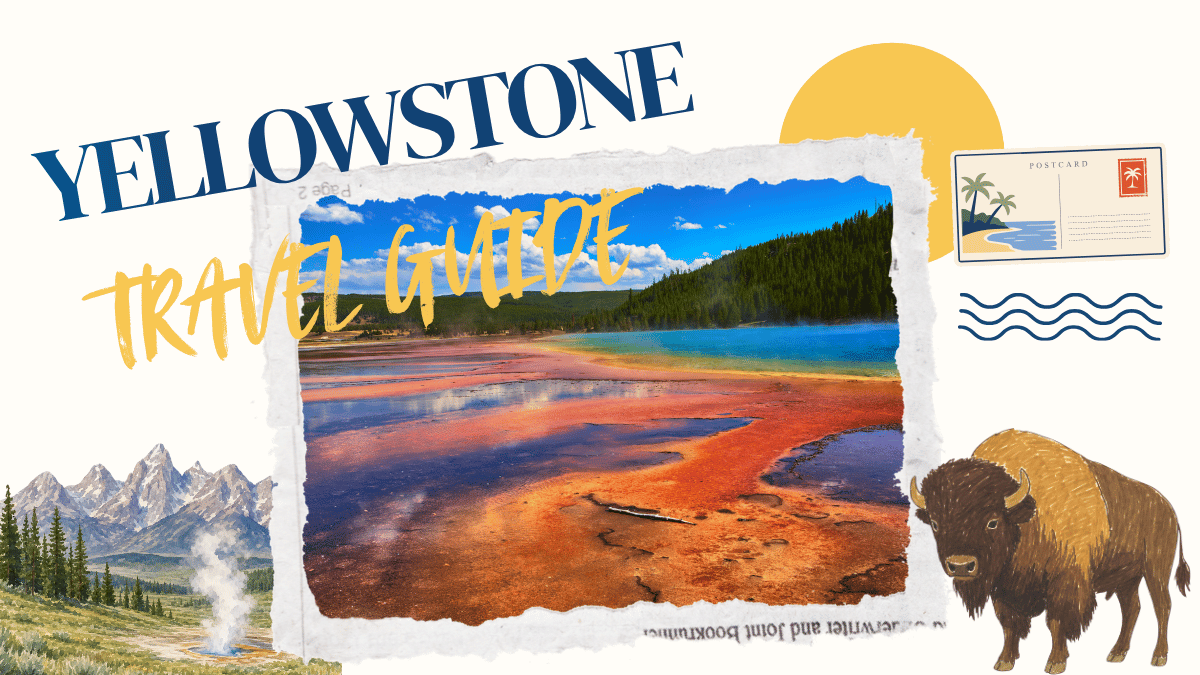
Grand Prismatic Spring is the largest hot spring in the United States, and the color is the whole reason people cross a parking lot at speed. Rainbow bands of water and the microbial mats around them do the work, and the steam drifting across the top just adds to it.
The boardwalk puts you at the water's edge, close enough to watch steam roll across the surface. The view from above is the one on every postcard, and it comes from the Fairy Falls Overlook trail rather than the main loop. That route costs you a climb and buys you the entire pool in one frame. Which view do you want: water at eye level, or the whole spring at once?

Midway Geyser Basin fills up early too. From June through August, the lot is full by 10 AM, and the same early-or-late rule from Old Faithful applies here. If the boardwalk is shoulder to shoulder when you arrive, head for the overlook trail and come back once the coaches have moved on.
Light decides how much color you get. Cloud cover flattens the water into a gray disc, and direct sun brings the bands back, so if you are choosing between an overcast morning and a clear evening, take the clear one.
Where the Wildlife Shows Up
More than 70 mammal species and 322 bird species live inside the park boundary, and what you see depends less on luck than on where you are and how early you start. Any Yellowstone travel guide that promises wolves and bears is selling a lottery ticket; what you can plan around is the easy stuff. Bison and elk are the reliable ones. Wolves and bears are the ones people talk about for the rest of the trip.

Valleys Are the Safe Bet
Lamar Valley is where spring brings bison calves and elk births, and it rewards an early start more than any thermal basin does. Hayden Valley does a similar job on the drive between the geyser country and the canyon. A herd on the move there can add hours to the drive, and that is not an exaggeration worth testing: bison weigh around 2,000 pounds and are the leading cause of wildlife-related injuries in the park.
Water and Edges for Birds
Yellowstone Lake covers over 130 square miles and holds otters, bald eagles, and cutthroat trout. The action happens along the edges, so pull into a turnout and scan the shoreline instead of watching the water through a windshield.
How Close Is Too Close
The rule is specific and rangers enforce it: 100 yards from bears and wolves, 25 yards from bison and elk. If an animal changes what it is doing because you are standing there, you are too close, and no photo is worth the fine or the hospital. Bear spray belongs on your hip even on a busy boardwalk, and canisters can be rented or bought at park entrances and gift shops.
The Best Time to Travel to Yellowstone National Park
Yellowstone's seasons are less about temperature than about which roads open and how many people turn up. Each stretch of the year gives you a different park, and the trade-off is always access against crowds.
Summer: Full Access, Full Lots
Daytime highs run about 70 to 80 °F at lower elevations, nights stay cool enough for a jacket, and this is the driest stretch with the most reliable road access. Old Faithful, the canyon, and the lake area are all open, ranger programs run, and long daylight lets you fit two basins into one day. It is also peak season, which is why the 9 AM rule matters more in July than in May.
Fall: Fewer Cars, Faster Weather
Early fall sits in the 60 to 70 °F range and slides to 40 to 50 °F by late November, with nights close to freezing. Snow can arrive in September or October at higher elevations, some services close late in the season, and the aspen and cottonwood turn color. You get shorter lines at the boardwalks and a real chance of a cold snap.
Winter: Snowcoaches and Steam
Daytime highs hover near 0 °F or below, and many parts of the park average around 150 inches of snow. Most roads are closed to regular vehicles, so you move by snowcoach or snowmobile. Geysers steaming against white ground are the payoff, and the crowds are gone entirely.
Spring: Calves, Snow and Closed Roads
Highs climb from roughly 30 to 60 °F, and March and April can still drop a foot of snow in a day. Bison calves and elk births appear in valleys like Lamar Valley, and higher-elevation roads may stay closed or unstable. Late spring puts steam against snow-tipped ground, which is the version photographers wait for.
For a trip that mixes access with quiet, late May or September is the window I'd book. You skip the worst of the parking problem without losing a single road. If the choice comes down to July or late September, the later one costs you a jacket and saves you an hour of hunting for a space.
A Practical Order for the Park
Drive it yourself or join a Yellowstone National Park tour, and the sequence still decides your day: it keeps you ahead of the coaches and out of the worst of the traffic. Four days is enough to see the geysers, one canyon and one wildlife valley without spending the trip in the car.
Day 1: Arrive and Take the Short Loop
Most people travel to Yellowstone from Salt Lake City, which means a long transfer day before the boardwalk. Use what is left of the afternoon on West Thumb and Biscuit Basin, then sleep in West Yellowstone so the morning starts close to the geysers.
Day 2: Geysers Before the Coaches
Start at Upper Geyser Basin when the lot is still half empty and stay for one eruption. Move to Midway Geyser Basin next, before the midday rush, and take the overlook trail if the boardwalk is packed. Afternoon is for the smaller pools you skipped.
Day 3: Norris, the Canyon and Mud Volcano
Norris Geyser Basin works early, while the steam is thick. Then drive to Upper Falls and Artist Point for the canyon, stop at Mud Volcano for the mud pots, and finish along Hayden Valley as the light drops, which is when the animals move.
Day 4: Lamar Valley at Dawn
Give the last morning to Lamar Valley, because that is where spring calves and elk herds show up, and dawn is when they are out. Mammoth Hot Springs fits on the way back if you have the time and legs for the terraces.
If you would rather not book the hotel nights yourself, Yellowstone National Park vacation packages follow much the same order with the driving included. What they cannot do is move the animals or the eruption schedule, so the early starts are still on you.
What Two Million Acres Ask of You
The park is roughly the size of Rhode Island and Delaware combined, the speed limit is 45 mph, and a bison jam can add hours to a day you had plans for. Distance here is measured in hours, not miles, which is the single easiest thing to get wrong when you sketch a route on paper.
Cell service is nearly nonexistent outside the main villages like Canyon or Old Faithful. Download offline maps before you drive in, keep a paper backup, and ask at any of the nine visitor centers which road closed that morning. Twelve campgrounds are spread across the park, so sleeping inside it is an option worth booking early.
Then there is the sheer inventory: 290-plus waterfalls, more than 1,100 plant species, a petrified forest and the largest high-altitude lake in North America. Nobody covers that in a week, and the people who try spend the trip in the driver's seat watching the scenery go past the window.
For a newcomer, keep the geyser basins and one wildlife valley, drop the canyon's other overlook and the extra waterfall stop, and leave one afternoon empty for whatever the rangers mention that morning. Yellowstone rewards a schedule with slack in it more than it rewards a long list.
FAQ
How many days should you give Yellowstone?
Four days is the comfortable answer. Two days works only if you drop the canyon and stay near West Yellowstone.When is the best time to travel to Yellowstone National Park if you hate crowds?
Late May or September. Full road access, shorter lines, none of the July traffic.Is Yellowstone Old Faithful worth a whole morning?
Two hours is enough; walk the basin between windows instead of standing at the rail.Can you count on seeing wolves or bears?
No. Dawn in a valley is your best odds, and the early alarm is the only part you control.