Best China Itinerary 7 Days: Which Route Fits You Needs?

cover

If you had a week in China, which cities would you like to visit? First of all, we all know that China is a vast country, and a week is nowhere near enough time to see all of it. So where should you start? The key is to choose an itinerary that meets your expectations for the trip.

Below, you'll find three full 7-day China travel itinerary options, broken down day by day with where to stay along the way. Whether it’s your first trip to China or you’re looking to explore other cities, you can find inspiration from these itineraries.

The Best Time to Visit China

Spring, from April through May, and fall in China, from September through October, are generally the sweet spot. You'll get mild temperatures, lower humidity, and clearer skies than what you'd find in the middle of summer.

Summer in China brings heat and humidity to cities in the south and elsewhere, with daytime temperatures often exceeding 90 degrees Fahrenheit. This is also the peak travel season for domestic tourists, as schools are on break, and popular attractions quickly become crowded. Winter in the north presents the opposite challenge: temperatures can drop well below freezing, but if you don’t mind the cold, you’ll find fewer crowds.

7 Days China Travel Itinerary

Here are three different 7-day itineraries for China that I’ve put together based on popularity and each city’s tourism development.

BeijingShanghai

Beijing and Shanghai are typically the two most popular Chinese cities among international tourists; one is the capital, and the other is the financial center.

Day 1

Land in Beijing and take it easy. After a long flight, there's no need to rush straight into sightseeing. Settle into your hotel, grab a simple meal nearby, and maybe take a short evening walk around Tiananmen Square if you've got the energy. It's lit up at night and less crowded than during the day. Or you could head over to Wangfujing for a stroll—it's right near Tiananmen Square, and there are plenty of great restaurants in the area.

tiantan park


Where to stay

Book somewhere in the Dongcheng district, close to the Forbidden City and Tiananmen Square. You'll be within walking distance of several major sights, and the subway connections here make it easy to reach everything else on your list.

Day 2

The next day, we visited the Forbidden City; this vast complex of historic buildings will definitely keep you busy for a whole day. As you walk through the various corridors, courtyards, and exhibition halls, you’ll learn about the stories behind them. If you’re in the mood for Peking duck, there’s a very popular restaurant called Siji Minfu right outside the Forbidden City, where you can also enjoy views of the Forbidden City. Of course, if there’s a long line, you can always try another place—it’s a chain restaurant.

If you have some time left in the afternoon, head to Tiantan Park, which was once the site of imperial sacrifices. Today, you can see locals strolling or playing chess in the park.

Forbidden City


Day 3

This is your Great Wall day. If you're trying to decide between Mutianyu and Badaling, the Mutianyu section is a smart pick since it's less packed than Badaling and has a cable car if you'd rather skip the steep climb up. Plan for a half-day trip including transportation, then spend the afternoon wandering one of Beijing's old hutong neighborhoods for a completely different pace and atmosphere.

Day 4

Take a morning high-speed train from Beijing to Shanghai; the trip runs about 4.5 to 6 hours depending on the route you book. Once you arrive, check in and take an evening stroll along the Bund. Seeing the skyline lit up at night, with the historic buildings on one side of the river and futuristic towers on the other, makes for a strong first impression of the city. For dinner, try the local pan-fried buns, noodles, or fried pork chops to fully experience the authentic flavors of Shanghai.

Where to stay

Choose a hotel near People's Square or the Bund. Both areas put you close to the metro and within easy reach of Shanghai's main attractions, so you won't waste time commuting.

Day 5

Visit the Yu Garden in the morning, a classical Chinese garden tucked into the older part of the city, then wander the surrounding bazaar for snacks and souvenirs. In the afternoon, head to the old French Concession, where tree-lined streets and colonial-era buildings offer a quieter, more residential feel compared to the skyscrapers nearby. If you have enough time, you can also stop by Jing'an Temple along the way—a Buddhist temple located in the heart of the city.

yu garden


Day 6

Take a day trip to Zhujiajiao, a canal town about an hour outside Shanghai, if you want a break from the city entirely. Alternatively, if you're traveling with family or just enjoy theme parks, Shanghai Disneyland makes for a fun full-day alternative. Either way, save the evening for one last dinner somewhere along the river.

Day 7

Spend your last morning doing some final shopping or enjoying a leisurely breakfast—you can head to Renmin South Road for some shopping or enjoy brunch on Wukang Road. Then head to the airport to catch your flight home.

7 Day Beijing and Shanghai Tour

7-Day Beijing and Shanghai Tour: The Great Wall, Temple of Heaven, the Great Chinese Imperial Palace, Lingu Temple, Pudong Area | Ticket Admission Included |
Daily breakfast
Select Meals Included
High Value Tour
5.0 ( 5 reseñas )
Código del tour: 708672
Ciudad de inicio / Ciudad de fin
Beijing, Shanghai
Duración
7.0 Days
Ciudad y atracciones
Beijing, Nanjing, Suzhou +1 más
Idiomas
English Live, Spanish Live
Operador
Europamundo Vacaciones
De
$1,704.00

ChengduChongqing

If food and a slower travel pace appeal to you more than checking off famous landmarks, this Sichuan-based route is worth serious consideration.

Day 1

Arrive in Chengdu and spend the rest of your time relaxing. Head to the IFS on Chunxi Road to see the adorable giant panda sculptures. Then visit the nearby Taikoo Li, a shopping district built around the tranquil Daci Temple. With its many fashion and luxury brands, as well as restaurants and bars, it’s the perfect place to spend your first day. 

kuanzhai alley


Where to stay

Stay near Kuanzhai Alley or Tianfu Square. Both put you close to Chengdu's main sights and give you easy access to the metro system.

Day 2

Head to the Chengdu Research Base of Giant Panda Breeding first thing in the morning. Pandas tend to be most active early in the day before they settle in for a nap, so an early start pays off. Spend the afternoon at Jinli Street, a historic shopping street with traditional architecture and plenty of food stalls.

Day 3

If you’re planning a day trip, consider visiting the Giant Buddha of Leshan, which is about a two-hour drive from Chengdu. Carved into a cliff face and dating back more than a thousand years, it is the world’s largest stone Buddha statue. For a more relaxing experience, head to a teahouse in People’s Park to enjoy some tea and chat. Afterward, you can stroll through the nearby Kuan Zhai Alley, but I wouldn’t recommend trying the snacks there; they aren’t authentic.

leshan Giant Buddha


Day 4

The train ride from Chengdu to Chongqing takes about 1.5 to 2 hours. Head to Hongya Cave in the evening; after dark, this squat, bulky complex of buildings lights up, resembling the layered hillsides in a fantasy movie. If it feels too crowded, Chongqing Chaotianmen Square is also a great spot to enjoy the night view. You can also stroll around the nearby Raffles City or choose a restaurant there.
Where to stay

Book a hotel in the Jiefangbei or Yuzhong district. This central area puts you close to Hongyadong, the main shopping streets, and the riverfront, making it easy to explore on foot.

hongya cave


Day 5

In the morning, head to Liziba Station to see the light rail pass through the building. Have lunch nearby or at Bayi Food Street, where you can try Chongqing-style noodles or sour and spicy rice noodles. In the afternoon, head to Baixiangju to take photos of the retro apartment buildings and the Yangtze River views, and then stop by Jiefangbei to check out the city’s landmarks.

Day 6

Visit Ciqikou Ancient Town, a preserved riverside village with narrow streets, traditional buildings, and plenty of food stalls. Save room for Chongqing hot pot at dinner; its spicy, numbing broth is arguably even bolder than what you'll find in Chengdu, and trying it here feels like completing the trip properly.

ciqikou


Day 7

On the last day, pack your bags, see if there are any souvenirs you want to buy, and then have one last cup of Chongqing milk tea before heading home.

7 Day Chengdu and Chongqing Tour

7D6N · Private Tours · Muslim-Friendly Fal&Winter Pre-sale: Chongqing, Chengdu, Pandas, Huanglong, Jiuzhaigou & Huangcheng Mosque
Guaranteed Departure
Free Cancellation
5.0
Código del tour: 755199
Ciudad de inicio / Ciudad de fin
Chengdu, Jiuzhaigou
Duración
7.0 Days
Ciudad y atracciones
Jiuzhaigou, Chengdu, Chongqing +21 más
Idiomas
English Live
De
$510.20

ChangshaZhangjiajie

For travelers who care more about scenery than city sightseeing, this route leads to some of the most dramatic landscapes in the country.

Day 1

Changsha is considered China’s entertainment capital. Once you arrive, head to May Day Square in the city center to find a restaurant. Don’t forget to try the city’s most famous milk tea, called Chayanyueshuo, which has numerous locations. If it’s still early, the IFS shopping center is nearby; it’s a magnificent mall.

changsha


Where to stay

Stay near Wuyi Square or Orange Isle. Both areas are central and give you quick access to the subway and to Changsha's main attractions.

Day 2

One of Changsha’s major attractions is Orange Isle. It is a long riverside park featuring walking paths and river views, as well as views of the surrounding downtown area. At the far end stands a statue of Chairman Mao’s head, where domestic tourists often stop to take photos. In the evening, head to Du Fu Jiangge to take in the stunning night view of the Xiang River, then grab dinner at “Nanmenkou” to enjoy authentic local snacks and experience Changsha’s nightlife.

Day 3

In the morning, you can enjoy a cup of coffee or relax at the hotel, and in the afternoon, head to the high-speed rail station. The trip from Changsha to Zhangjiajie is usually taken by high-speed train and takes about 2.5 to 3 hours. Upon arrival in Zhangjiajie, you can have dinner in the city before heading to your hotel.

zhangjiajie


Where to stay

Choose accommodation near Wulingyuan or the park's main entrance. Staying close by cuts down on daily travel time and gives you more hours to actually spend inside the park.

Day 4

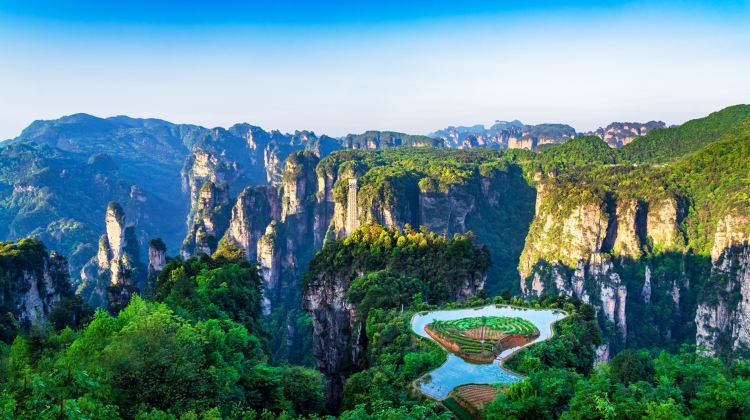
Enter Zhangjiajie National Forest Park and spend the full day among its towering sandstone pillars, the same formations that inspired the floating mountains in the movie Avatar. Take the Bailong Elevator, the tallest outdoor elevator in the world, to save yourself hours of climbing and reach some of the best viewpoints with far less effort.

Bailong Elevator

Day 5

Cross the Zhangjiajie Glass Bridge, which stretches across a canyon nearly 1,000 feet deep. It's not for anyone with a fear of heights, but it delivers a serious rush for everyone else. Spend the rest of the day exploring more of the park's trails and viewpoints at your own pace.

Day 6

Visit Tianmen Mountain, home to the famous "Heaven's Gate" rock arch and a glass-bottomed walkway that wraps around the cliff face. The cable car ride up is an attraction in itself, offering sweeping views of the valley below.

Tianmen Mountain


Day 7

Pack your bags and head back to Changsha, where you can buy some souvenirs or enjoy some delicious Hunan cuisine before heading home.

7 Day Changsha and Zhangjiajie Tour

7D6N · Private Tours · Changsha + Zhangjiajie National Forest Park + Huanglong Cave + Baofeng Lake + Fenghuang Ancient Town
Guaranteed Departure
Free Cancellation
5.0
Código del tour: 755727
Ciudad de inicio / Ciudad de fin
Changsha
Duración
7.0 Days
Ciudad y atracciones
Zhangjiajie, Shaoshan, Fenghuang County +39 más
Idiomas
Chinese Live
De
$651.52

Visa Requirements for a 7-Day Trip to China

China’s visa policies have undergone several updates over the past two years. Citizens of many countries—including the United States, the United Kingdom, and most European Union member states—are currently eligible for visa-free short-term stays in China under certain transit and tourism policies, though specific regulations vary depending on the port of entry and length of stay.

Currently, China’s policies regarding short-term tourism mainly fall into the following categories:

240-hour (10-day) transit visa-free

If your country is not on the list of countries eligible for the 30-day visa-free entry, you may use the 240-hour visa-free transit option. You must:
  • Be a citizen of an eligible country (such as the United States)
  • Enter China from a third country or region
  • Hold a through ticket to a third country or region
  • Enter China at a designated port of entry
  • Stay for no more than 240 hours (10 days)

30-day visa-free entry

Currently, holders of ordinary passports from certain countries can enter China for tourism without a visa for stays of up to 30 days. The following countries are eligible for visa-free entry: Australia, New Zealand, France, Germany, Italy, Spain, the Netherlands, Switzerland, Ireland, the United Kingdom, Canada, Japan, South Korea, Brazil, Argentina, and more.

If you are not on the visa-exemption list and do not meet the requirements for a transit visa, you will need to apply for a Chinese tourist visa (L visa).

7 Day Trip to China Cost

International flights are usually the largest expense, typically running $600 to $1,200 round-trip depending on your departure city and how early you book. Domestic transportation between cities, mostly high-speed trains, generally costs $50 to $150 per leg depending on distance and seat class.

Accommodation varies widely by comfort level. Budget hotels or hostels run $20 to $40 per night, mid-range hotels land between $50 and $100 per night, and luxury options in major cities can run several hundred dollars per night if that's what you're after.

Food is one of the more affordable parts of a China trip. Street food and casual local restaurants can cost as little as $3 to $8 per meal, while a nicer sit-down dinner might run $15 to $30 per person. Entrance fees for major sites like the Forbidden City, the Chengdu panda base, or Zhangjiajie National Forest Park typically fall between $10 and $40 each.

Add it all up, and a mid-range week-long trip, not counting international flights, usually lands somewhere between $700 and $1,200 per person.

FAQ

Is 7 days enough in China?

7 days is enough time to thoroughly explore a region of China or two cities that are close together.

Is $1000 enough for a week in China?

Yes, $1000 can comfortably cover a mid-range week in China, as long as that figure doesn't include your international flights. It typically covers domestic transportation, mid-range hotels, meals, and entrance fees across any of the itineraries above.

What is the nicest month in China?

October is often cited as one of the nicest months, thanks to comfortable temperatures and generally clear skies across most regions. April and May are close contenders too, especially if you want to catch spring blooms in northern cities like Beijing. Just keep in mind that early October overlaps with China's National Day holiday, when domestic travel spikes and popular sites see a noticeable jump in crowds.