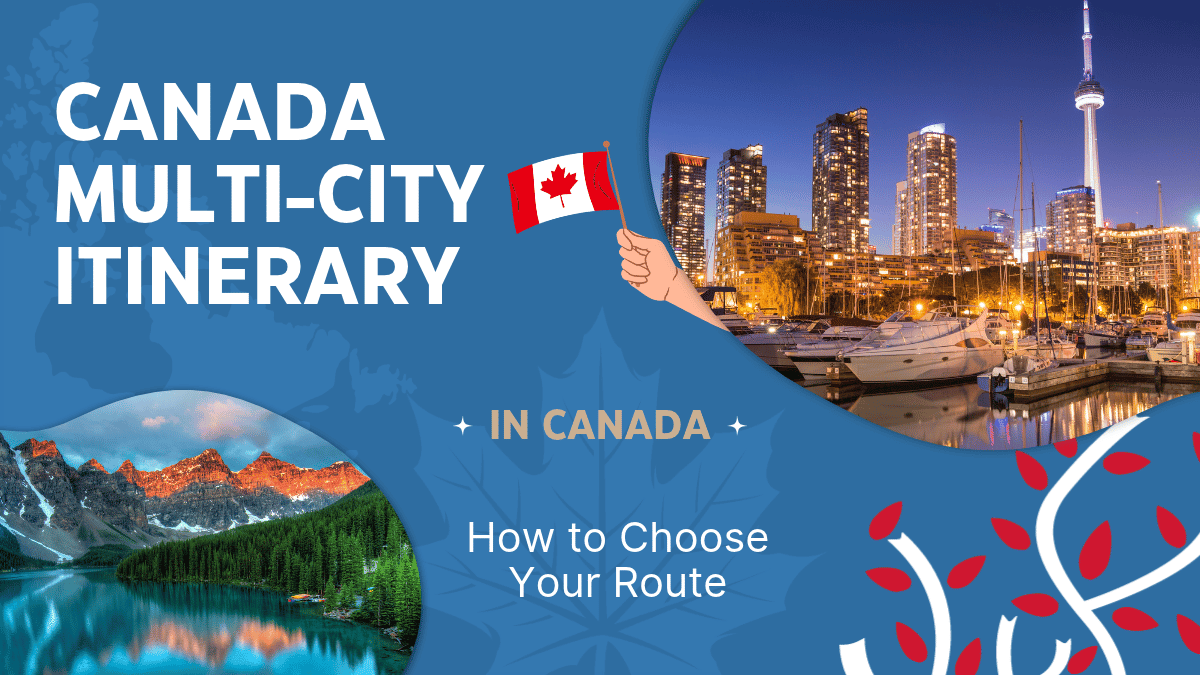
Once the half and the season are settled, the rest is arithmetic. Count nights rather than cities, pick your base, and leave the connections to whichever mode suits the terrain.
How many days each line needs
The west loop needs four days at a minimum: a road day out to Salmon Arm, a day in the Rockies, a road day back through Kamloops, and time to reach the airport. Add four and you get Victoria plus two free Vancouver days.
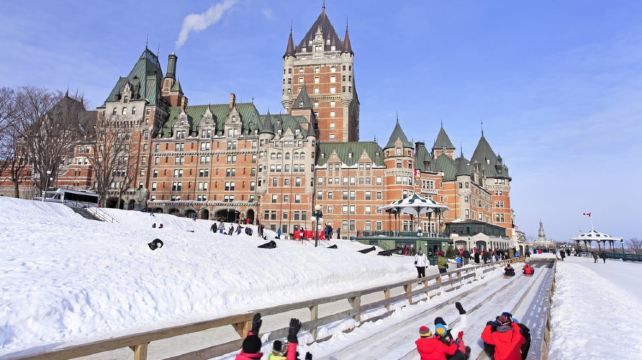
The east loop runs five days and covers Niagara, Montreal, Quebec City and the St. Lawrence corridor without a wasted leg. Three days force a choice between the falls and Old Quebec. Below four days, pick one city and treat the rest as next time.

Open-jaw versus round trip
Any travel itinerary to Canada starts with the gateway, and both loops end where they began: the west in Vancouver, the east in Toronto. That makes a round-trip ticket the simple buy. An open-jaw ticket, landing in Toronto and leaving from Vancouver, earns its cost when you join the halves, and the over-four-hour flight is the entry fee.
Book a buffer night at the second airport whenever a Canada travel itinerary switches gateways, because a delayed domestic hop can cost you the long-haul seat.
If you would rather skip the driving math, Canada vacation packages bundle the hotel nights and the road legs.
Where to put the rest day
Put the rest day after the longest drive, not on arrival. On the west loop that means Vancouver after the mountains, with nothing on the calendar. On the east loop it means the morning after the Quebec City return. A rest day at the start is wasted, since you will be awake at four anyway.