BordeauxFranceEuropePlaces to GoThings to DoFood & DrinkTravel TipsVacations
Mostrar todo

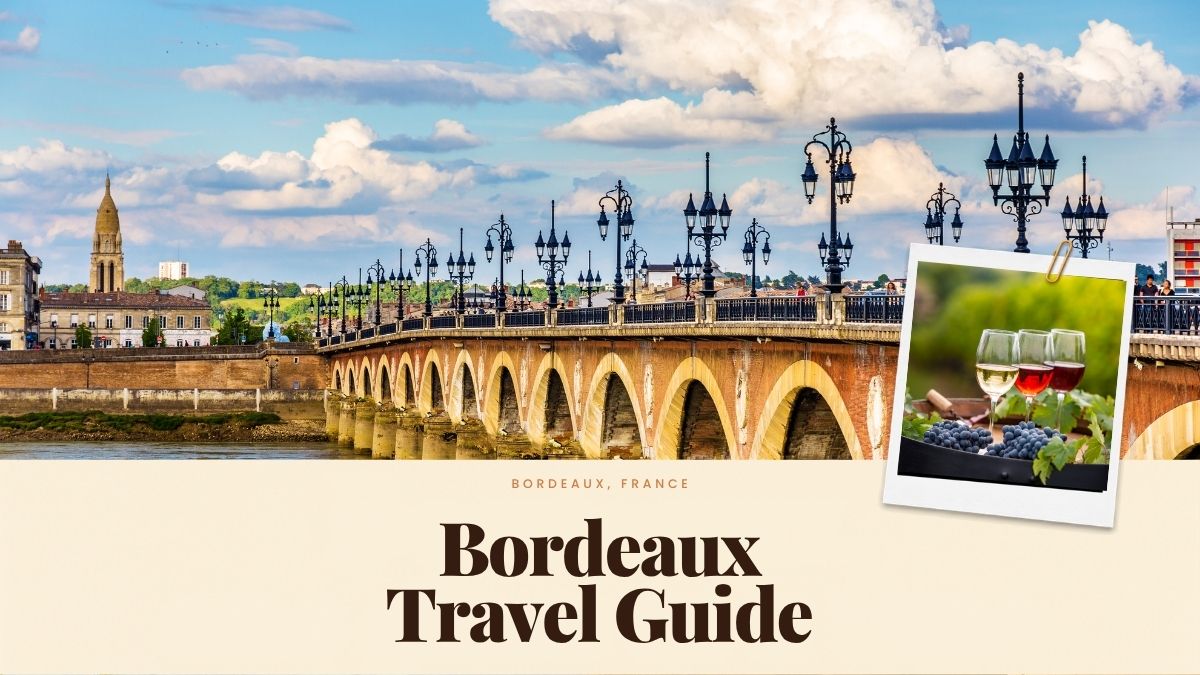
Bordeaux Travel Guide: Wine, Châteaux and the Garonne

cover

Bordeaux looks easy from a distance. A river, a wine region, a city small enough to walk. Then the planning starts, and the questions arrive in a heap: how far out of the city the vineyards begin, whether a château needs booking weeks ahead, how much you can see without a car.


Start in the old town, then work outward, because that is how the place is built. The old town curves along the Garonne, and a short drive from the quays puts you among vineyards that have shipped wine abroad since the eighth century. The region is the second-largest wine producer in the world, which sounds like a slogan until you try to cover it in two days.


So what do two days actually buy you? Enough for the old town and one village, provided you decide what to drop before you arrive. 3 days adds the museum that explains what you have been drinking. Anything beyond that is a different trip, and a good one, but it is not this one. Read a Bordeaux travel guide for the order, not the list.

15-Day France Grand Tour from Paris

15-Day France Grand Tour from Paris: Bordeaux, Provence, Lyon & Burgundy | 24H Free Airport Pick-up
No Mandatory Fee
Downtown hotel
More Free Time
Admission Included
5.0
Código del tour: 692133
Ciudad de inicio / Ciudad de fin
Paris
Duración
15 Days
Ciudad y atracciones
Paris, Rouen, Caen+32 más
Idiomas
English Live, Spanish Live
Tamaño del grupo
Máx. 55 viajeros
Operador
Europamundo Vacations
Ahorrar 15%
De$3,189.72
$2,711.26


The City and the River

The old town is a crescent because the river made it one, curving around a bend the wine trade used for centuries. UNESCO listed the ensemble as the Port of the Moon for its architecture and for the trade that paid for it.

Bordeaux


The Water Mirror and the Quays


Start at the Water Mirror, the shallow granite slab in front of Place de la Bourse that turns the facades into a reflection. It is free, it takes ten minutes, and it is the photograph everyone takes. From there the old town runs on foot: pedestrian streets, an eleventh-century cathedral, and stone that stays cool at midday.


What Fits Into an Afternoon


Four stops carry a short visit. The Museum d'Aquitaine and the Basilica of Saint-Seurin hold the city's history, Porte Cailhau is the gate that faced the port, and the Esplanade des Quinconces is the open ground along the river. Pick two, not four, and leave time to sit down.


Cité du Vin, and Why to Go Early


The interactive museum on the history and production of wine earns its ticket by explaining the labels you will read all week. Go on day one, and every tasting after that makes more sense.


If you would rather not build the city days yourself, a Bordeaux tour is one place to start, and each listing says what it includes.

Wine Country at the Edge of the City

The vineyards begin a short trip outside the city in any direction, and the estates open their grounds for tours and tastings, so the famous names sit closer than a map of the whole region suggests. What the region does not offer is a shortlist: it is too large for one, and any itinerary that claims to cover it is really choosing a corner. Treat a Bordeaux region travel guide as a menu of directions rather than a route to finish.


One Direction a Day


Saint-Émilion sits at the heart of the wine-producing region, and the road in from the Dordogne runs through Collonges-la-Rouge before it, so the eastern side gives you a red-stone village, a wine town, and vineyard landscape in a single day. The Atlantic beaches are the other direction in summer. Choose one and give it the morning, because a second stop turns the day into a drive.


Summer, When the City Drinks


Wine festivals are common in the city through the summer months, which is when the old town competes with the vineyards for the same afternoon. Check the dates before you book, and keep one evening free for whatever is on.

Saint-Émilion and the Villages Around It

Ask which village to see, and the answer is always Saint-Émilion, the name most Bordeaux, France, travel guides lead with. It sits at the heart of the wine-producing region, a medieval town that has drawn its wealth from wine for over 2,000 years, and the money shows in the stonework.

Bordeaux


Saint-Émilion, and How Long to Give It


The coach route into Bordeaux stops here for about an hour, enough for the main street, the view across the vineyards, and one cellar. Half a day is better: a château in the morning, lunch in town, then the edge of the village while everyone else queues for the same photograph. The lanes climb, so bring shoes you can walk in.


Collonges-la-Rouge and the Red Stone


Collonges-la-Rouge justifies a detour for a geological reason: the whole place is built from red stone, on the Way of St. James. The route stops for lunch and a stroll and gives it roughly two and a half hours, which suits a village this size. Eat before you walk, because the lanes empty once the coaches move on.


Harvest Season, and What It Changes


Autumn is when the region fills up, and the harvest is why. Average temperatures sit near 59°F, the vines turn gold and red, and early autumn is usually sunny and dry before the rain arrives. Book cellars earlier than in spring, because everyone drawn by wine has the same idea.


Coming In From the Dordogne


Drive in from the east, and the approach becomes part of the trip. Sarlat holds a medieval and Renaissance center preserved well enough for UNESCO listing. Beynac is a medieval village under a castle on a high cliff, with admission included on the coach route. Rocamadour is a sanctuary town with a castle above it, where you can walk down the Via Crucis and take the lift back up.


If Bordeaux is one stop on a longer France tour, the Dordogne is where the route arrives from, and it adds a day most people count as a highlight.

Château Visits, and How to Book Them

A short drive out of the city in any direction puts you among vineyards, and the estates take visitors. The trouble is that a château visit covers about four different things, and the price rarely tells you which one you booked.


What a Visit Usually Involves


Some estates walk you through the vats and the barrel room before a tasting. Others pour three wines in a shop and hand you a brochure. Ask two questions before you pay: does the price include the cellar, and how many wines do you taste? Ask about the tour language too, because a visit you cannot follow is an expensive hour of nodding.


Booking, in Plain Terms


Book with the estate directly when it takes bookings, and do it earlier than feels necessary in September, when the harvest fills the calendar. Small family properties tend to answer a short email faster than a booking platform answers a form. If you plan three estates in a day, start with the one you care about, while you still have a palate and patience.


What the Coach Route Covers


The admissions that come with the 15-day route are for castles and gardens elsewhere in France. In Bordeaux, the time you get is the walk through Saint-Émilion. That is a fine way to see the village and a poor way to understand a cellar, so if a tasting is the reason you came, treat it as a separate booking with its own morning.


Do You Need a Car?


Not for the city, which is flat and walkable along the river. For the vineyards, yes, unless you hire a driver: the estates sit close to Bordeaux but far from each other, and the roads between them are slow.

Eating Beyond the Vineyards

Bordeaux drinks wine and eats accordingly. The city's food reputation is real, and most of it is not built on tasting menus poured around a cellar tour. It is built on the quays, where the Garonne runs past a long line of restaurants that fill at lunch and stay full.


The Quays at Lunch


Walk the riverbank around midday and pick by eye rather than by ranking. The stretch along the water is where the city eats when the sun is out, and the tables face the river instead of the street. Book nothing for lunch and see what looks busy with locals. For dinner, the pedestrian streets of the old town do the same job with more candles and higher prices.


What a Coach Trip Actually Feeds You


Breakfast is the reliable meal on the 15-day route, a buffet every morning. Three dinners come with the trip, in Amboise, Lourdes and Rocamadour. Lunch and dinner in Bordeaux are yours, which is the arrangement most people want here, because the city rewards wandering more than a set menu.


Winter, When the Wine Slows Down


Winter is mild and wet, the quietest season, and usually the cheapest. It is also when the indoor version of Bordeaux works: museums in the morning, the Grand Théâtre in the afternoon, and a long lunch that runs on. Fewer people, lower rates, and no need to book a table a month out.

3-Day Bordeaux Itinerary

Two days is the honest minimum. Three is comfortable. The order matters more than the count, because the city and the vineyards want different parts of the day. If you are comparing bordeaux vacation packages, the ones that work put the old town ahead of the wine.


Here is the shape of a three-day visit.


Day Morning Afternoon
One Water Mirror, Place de la Bourse, old town and cathedral Cité du Vin, then dinner on the quays
Two Saint-Émilion and one cellar The edge of the village, back to the city for the evening
Three A château outside the city Esplanade des Quinconces, then the quays


Day One: The Crescent on Foot


Keep day one in the city and keep it slow. The Water Mirror, Place de la Bourse, the cathedral, and the pedestrian streets fit into four hours at walking pace. Put Cité du Vin in the afternoon, or on the morning of day three if you would rather not spend a sunny afternoon indoors.


Day Two: Saint-Émilion, With or Without a Car


Saint-Émilion takes the morning and much of the afternoon. Book one cellar rather than three and walk the lanes; the village is small enough that the rest of the afternoon looks after itself. With a car, add a second estate on the way back. Without one, stay in town and let the afternoon stretch.


Day Three: A Château, or the Atlantic


The last day is the choice day. An estate outside the city in the morning is the wine answer. In summer, the Atlantic beaches are the other, with the vineyards in full leaf on the drive out. Pick one. Doing both puts you in the car for most of the day.


The City Pass, and When It Pays


The Bordeaux City Pass comes in 24, 48 and 72-hour versions. It covers public transport, including unlimited tram and bus rides, and free or discounted entry to more than 20 sites, Cité du Vin and the Musée des Beaux-Arts among them. On a two-day visit with museum stops it earns its price. On a vineyard trip it does not.

Making the City the Point, Not the Base

Most trips to Bordeaux open with the vineyards and treat the city as a place to sleep. The city is the better half of the trip, and it is the half people cut when the calendar gets tight. A working port that has shipped wine since the eighth century leaves its money in the stone, and you can read most of that story on foot.


Nothing in the old town needs a booking. The Water Mirror costs nothing, and the quays give you a long walk with the river on one side and lunch on the other. Compare that with a day in a car between estates, and the case for staying in town gets stronger the shorter your trip is.


The short version: the city, then the village, then the château if you have the day to spare. Two days means the old town and Saint-Émilion, with the third day cut. Three days adds the estate and drops the coast. More than that and the Dordogne villages start to make sense.

FAQ

How many days do you need in Bordeaux?

Two for the city and one village, three if you want a château as well. Less than two and you spend the trip in transit.

When is the best time to visit?

May and June, or September into early October. Both are mild and quieter than July and August. September adds the harvest, and with it more competition for cellar bookings.

Do you need a car?

Only for a second estate. The 15-day route already reaches Saint-Émilion, so a car is what gets you to the cellars the coach skips.

What is worth reading before you go?

Search for the best Bordeaux travel guide and you will mostly get lists of châteaux. The useful preparation is smaller: know which direction you are driving, and book the cellar before you book the flight.

Resumen

The City and the River

Wine Country at the Edge of the City

Saint-Émilion and the Villages Around It

Château Visits, and How to Book Them

Eating Beyond the Vineyards

3-Day Bordeaux Itinerary

Making the City the Point, Not the Base

FAQ

America's 250th Anniversary Mega Sale

image