Each block of the year gives you something and charges you for it somewhere else on the map. Here is what each one does to the standard loop out of Seoul, and which stop absorbs the cost.
Spring
Spring is the block to pick when the walking is the point of the trip. The loop's best days on foot are the hanok lanes of Jeonju, the alleys of Andong Hahoe Folk Village and the tomb park at Gyeongju, and those are days you want to stretch rather than rush. Suncheon Bay National Garden and the tea terraces at Boseong sit on the longer version of the route, which is why that version carries both.
Spring costs you pace. The gardens and tea terraces sit near the end of a driving day, so build the plan around arriving rather than around leaving early. If a garden stop lands at four in the afternoon, that is fine. If it lands at noon with two more sites behind it, you will walk it at a pace nobody enjoys.

Summer
Summer splits the route cleanly. The coast is the reason to travel: Haeundae Beach in Busan and the Jagalchi seafood market both belong to this half of the year, and the garden at Suncheon Bay sits on the same stretch of road. The mountain is the weak point, for the reason the operator's note gives, and a plan built on the summit and the fortress cable car can lose both.
Humidity sets the schedule. Travelers who went in late June describe a warm, humid week where water and light clothing mattered more than any plan, and the practical response is to put the outdoor stop first and the market or the temple second. Ask about the walking before you book, too. The five-day loop covers a lot of ground on foot, and the notes from travelers who have done it keep coming back to shoes.
Autumn
Autumn is the block most people name before they check the mountain. Book a fall departure for the palaces, the hanok villages, and Gyeongju, and you will be fine. Book it for Seorak, and you are leaning on the stop the operator's note already flagged.
What Autumn does well is the rest of the loop. Gyeongbokgung Palace, the National Folk Museum, and the folk village outside Seoul are day stops rather than weather-dependent ones, and the walking at Jeonju and Andong Hahoe happens at the pace you set. Autumn leaves more of the loop intact if the mountain is not your reason for going. If the mountain is why you are going, ask which dates the operator expects to run it before you pick.

Winter
Winter moves the trip east and indoors. Pyeongchang hosted the 2018 Winter Olympics, and the drive past the venues is part of the route rather than a detour from it, which gives the cold months a claim on that stretch of the country. Ask whether the Seorak day is expected to run on your date, and treat the cable car up to Gwongeumseong Fortress as an optional add-on to settle before you go rather than at the ticket window.
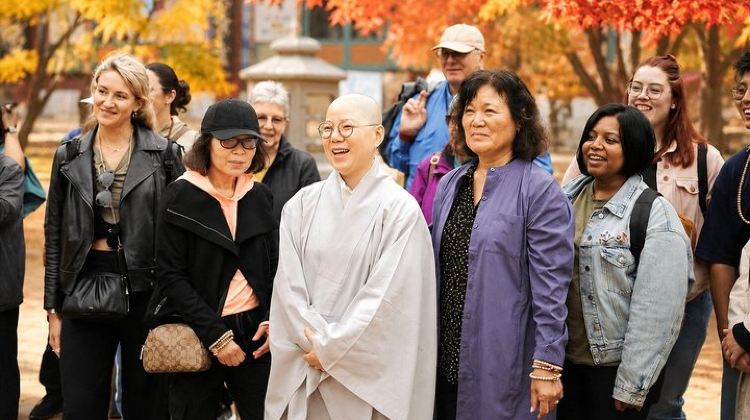
The indoor side of the loop suits the same weeks: tea with a Buddhist monk at Baekyangsa, a sweets-making session, hanbok in Jeonju Hanok Village, and the museum stops in Seoul. Those are booked sessions rather than lucky ones, which is what makes the cold half workable without depending on the weather.