Beijing Xi'an China Asia Places to Go Things to Do Travel Tips

Beijing vs Xi'an: Which Offers the Best Cultural Experience?

cover

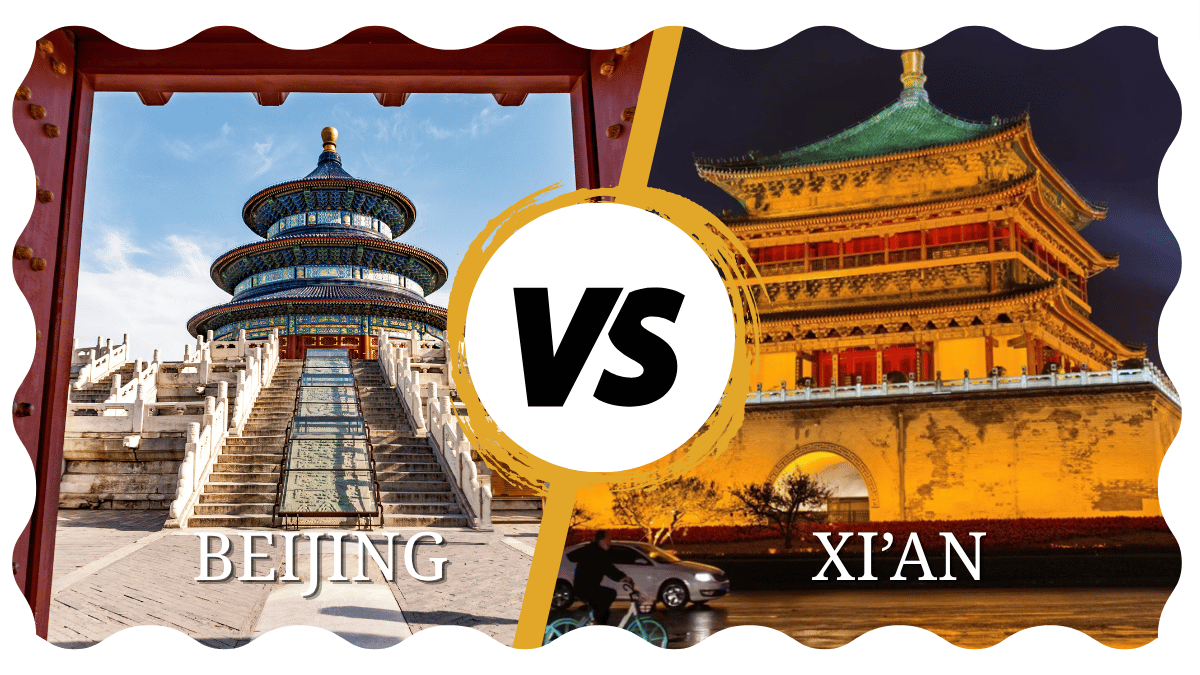
Choosing between Beijing and Xi'an for your next trip to China is a common dilemma. Both cities served as ancient capitals and offer deep cultural experiences, but they showcase different sides of Chinese civilization. Beijing, the current capital, impresses with imperial grandeur and modern energy. Xi'an, the starting point of the Silk Road, reveals China's ancient roots through archaeological wonders and multicultural heritage.

This comparison breaks down what each city offers in terms of historical sites, food culture, local experiences, and practical travel considerations. Whether you're planning a focused China tour or trying to decide where to spend your limited vacation days, you'll have the information you need to make the right choice.

beijing vs xian

Why Compare Beijing and Xi'an?

Beijing and Xi'an consistently rank as the top two cultural destinations in China for first-time visitors. Both cities have UNESCO World Heritage Sites, both served as capitals for multiple dynasties, and both offer experiences you cannot find anywhere else in the world. The question isn't whether either city is worth visiting, but which one better matches your interests, travel style, and available time.

Many travelers find that visiting both cities provides the most complete picture of Chinese culture. A typical itinerary pairs Beijing's imperial heritage with Xi'an's ancient history, often combined with Shanghai for a modern contrast. But if you need to choose just one, this guide will help you decide.

 
Category Beijing Xi'an
Historical role Imperial capital for ~800 years (Yuan, Ming, Qing) Capital for 13 dynasties over 1,000+ years (Zhou, Qin, Han, Tang)
Signature sites Forbidden City, Great Wall, Temple of Heaven, Summer Palace Terracotta Army, Ancient City Wall, Muslim Quarter, Big Wild Goose Pagoda
Signature food Peking duck, jianbing, zhajiangmian Roujiamo, yangrou paomo, biangbiang noodles
Time needed 3-4 days, plus a full day for the Great Wall 2-3 days
Best for Imperial grandeur, the Great Wall, a mix of ancient and modern culture Ancient history, archaeology, a compact walkable itinerary
Cost level Higher (capital and global city pricing) Generally more affordable

Historical Background

Beijing: Imperial Capital for 800 Years


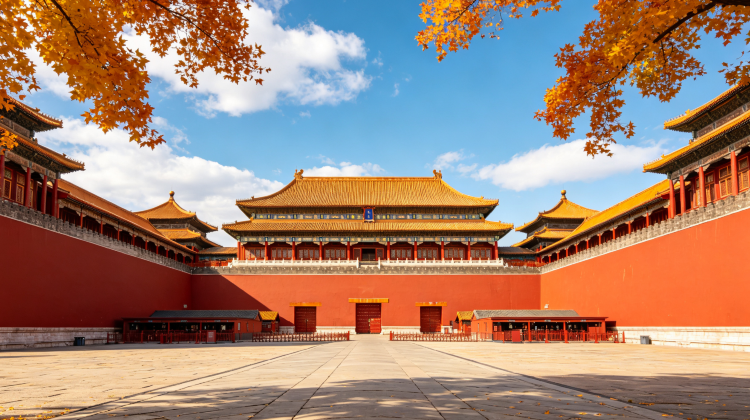
Beijing has served as China's capital for most of the past 800 years, during the Yuan, Ming, and Qing dynasties. The city's historical significance centers on imperial power, with the Forbidden City serving as the seat of government for 24 emperors. Beijing's cultural heritage reflects the grandeur of imperial China, with massive palace complexes, imperial gardens, and ceremonial sites designed to project the emperor's authority.

The city also played a central role in modern Chinese history. From the Opium Wars to the founding of the People's Republic, Beijing has been at the center of China's transformation from empire to modern nation. This layered history means you'll encounter both ancient and modern cultural elements throughout the city.

summer palace

Xi'an: Ancient Capital for 13 Dynasties


Xi'an (formerly known as Chang'an) served as the capital for 13 Chinese dynasties over a span of more than 1,000 years, including the powerful Zhou, Qin, Han, and Tang dynasties. As the eastern terminus of the Silk Road, Xi'an was a cosmopolitan center where Chinese, Persian, Arab, and Central Asian cultures mixed. This multicultural heritage remains visible in the city's Muslim Quarter and its unique blend of Chinese and Islamic traditions.

Xi'an's cultural significance lies in its role as the cradle of Chinese civilization. The Terracotta Army, built for China's first emperor, represents one of the most important archaeological discoveries in history. The city's ancient city wall, the best-preserved in China, offers a tangible connection to medieval urban life.

xian

Top Cultural Attractions

Beijing's Must-See Sites


Beijing's cultural attractions emphasize imperial power and ceremonial grandeur. The Forbidden City, with its 980 buildings and 8,000 rooms, is the world's largest palace complex and a masterpiece of traditional Chinese architecture. The Temple of Heaven, where emperors prayed for good harvests, demonstrates the spiritual dimension of imperial rule.

The Great Wall, accessible at several sections near Beijing, represents China's military engineering and determination to protect its borders. The Summer Palace, an imperial garden retreat, showcases the aesthetic sensibilities of Chinese royalty. Tiananmen Square, the symbolic center of modern China, connects the imperial past to the present.

For those interested in Beijing tours, guided visits to these sites provide historical context and logistical convenience that enhance the cultural experience.

Xi'an's Must-See Sites


Xi'an's cultural attractions emphasize ancient history and archaeological wonders. The Terracotta Army, with over 8,000 life-sized clay soldiers, is the city's crown jewel and one of the most significant archaeological discoveries of the 20th century. Each warrior has unique facial features, demonstrating remarkable craftsmanship from 2,200 years ago.

The Ancient City Wall, the best-preserved in China, allows you to cycle the entire 13.7-kilometer circumference and experience medieval urban fortifications. The Muslim Quarter, with its 1,000-year history, offers a unique blend of Chinese and Islamic culture, visible in the Great Mosque's architecture and the neighborhood's distinctive food. The Big Wild Goose Pagoda, built in 652 AD, represents the introduction of Buddhism to China.

Many Xi'an tours focus on the Terracotta Army and Ancient City Wall, providing expert commentary that brings the ancient history to life.

The Culinary Cultures of Beijing and Xi'an

Beijing Cuisine


Beijing's food culture reflects its status as the imperial capital. Peking duck, the city's signature dish, originated in the imperial court and remains a must-try experience. The dish features crispy skin and tender meat served with thin pancakes, scallions, and hoisin sauce. Several restaurants with over 100 years of history specialize in this dish.

Beyond Peking duck, Beijing cuisine features hearty northern Chinese dishes. Jianbing, a savory crepe filled with egg and sauces, is a popular breakfast item. Zhajiangmian, noodles with fried bean sauce, represents comfort food at its best. Mongolian hot pot, where you cook thinly sliced meat and vegetables in a shared pot, is popular in winter.

peking duck


Beijing's dining scene ranges from imperial court cuisine to street food, reflecting the city's social hierarchy throughout history. The city also has excellent restaurants serving cuisine from all over China and the world, reflecting its status as a modern international capital.

Xi'an Cuisine


Xi'an's food culture reflects its position on the Silk Road and its significant Muslim population. The city's cuisine blends Chinese and Central Asian influences, creating flavors you won't find elsewhere in China. Roujiamo, often called a Chinese hamburger, consists of chopped meat stuffed in a flatbread and represents one of Xi'an's most famous street foods.

Yangrou paomo, a hearty lamb soup where you tear flatbread into small pieces before the broth is added, demonstrates the Muslim influence on local cuisine. Biangbiang noodles, thick hand-pulled noodles served with various toppings, are a Xi'an specialty. The Muslim Quarter, with its hundreds of food stalls and restaurants, offers the best place to sample these dishes.

xian food


Xi'an's food culture is more diverse and street-oriented than Beijing's, reflecting the city's historical role as a trading center where merchants from many cultures gathered.

Local Experiences

Beijing Hutongs and Modern Culture


Beijing's hutongs, narrow alleyways lined with traditional courtyard houses, offer a glimpse into old Beijing life. Exploring these neighborhoods by bicycle, rickshaw, or on foot reveals a slower pace of life that contrasts with the modern city. The area around Shichahai (Houhai) lakes is popular for hutong exploration, with bars, restaurants, and shops catering to both locals and tourists.

Modern Beijing also offers vibrant cultural experiences. The 798 Art District, housed in former military factories, showcases contemporary Chinese art. Sanlitun, the trendy dining and nightlife district, attracts young professionals and expats. The city's theater scene includes traditional Peking opera and modern performances.

hutong

Xi'an Muslim Quarter and Ancient Traditions


Xi'an's Muslim Quarter offers a unique cultural experience that combines food, shopping, and religious heritage. The neighborhood has been home to the city's Hui Muslim community for over 1,000 years, dating back to the Silk Road era. The Great Mosque, one of the oldest and largest in China, blends Chinese and Islamic architecture in a peaceful setting amid the bustling streets.

Beyond the Muslim Quarter, Xi'an offers experiences like calligraphy lessons, traditional paper-cutting workshops, and visits to local markets. The city's ancient heritage is more immediately visible than in Beijing, with the city wall, pagodas, and temples integrated into daily life. Cycling the city wall at sunset provides a memorable experience that connects you to centuries of history.

xian

Practical Considerations

Getting There and Getting Around


Both cities have international airports and connect to each other by high-speed train (4.5 hours) and flights (2.5 hours). Beijing has two major airports (Capital and Daxing), while Xi'an has one main airport (Xi'an Yangqin). Beijing's metro system is more extensive, with 27 lines covering most attractions. Xi'an's metro is smaller but covers the main tourist areas.

In Beijing, attractions are spread across a larger area, requiring more travel time between sites. Xi'an's main attractions are more concentrated, with the city wall, Muslim Quarter, and Bell Tower within walking distance of each other. Both cities offer taxis, ride-hailing, and bike-sharing options.

Time Needed


Beijing requires at least 3-4 days to see the main attractions, with additional time needed for the Great Wall (a full day). If you want to explore museums, hutongs, and modern cultural sites, add another 2-3 days. Xi'an can be covered in 2-3 days, with one day for the Terracotta Army, one day for the city wall and Muslim Quarter, and a half day for other sites.

If you're short on time, Xi'an offers a more concentrated cultural experience. If you have a week or more, Beijing provides greater variety and depth.

Best Time to Visit


Both cities are best visited in spring (April to May) or autumn (September to October) when the weather is comfortable. Summer brings heat to both cities, with Beijing being more humid. Winter is cold and dry, with Beijing experiencing more severe cold than Xi'an.

Beijing's air quality can be a concern, particularly in winter. Xi'an generally has better air quality, though it can also be affected by pollution. Check air quality forecasts before your trip and plan accordingly.

Which City Should You Choose?

Choose Beijing If...


Beijing is the better choice if you want to experience imperial Chinese culture at its grandest. The Forbidden City, Temple of Heaven, and Summer Palace showcase the power and aesthetics of China's imperial past. If the Great Wall is on your bucket list, Beijing is your only option among these two cities.

Beijing also suits travelers who want a mix of ancient and modern culture. The city's contemporary art scene, international dining options, and vibrant nightlife provide contrast to the historical sites. If you prefer a cosmopolitan city with global connections, Beijing delivers.

Choose Xi'an If...


Xi'an is the better choice if you're fascinated by ancient history and archaeology. The Terracotta Army offers an experience unlike anything else in China, and the city's Silk Road heritage provides a different perspective on Chinese culture. If you're interested in the multicultural aspects of Chinese history, Xi'an's Muslim Quarter and Islamic heritage offer unique insights.

Xi'an also suits travelers who prefer a more compact, walkable city with concentrated attractions. The food culture is more diverse and street-oriented, appealing to adventurous eaters. If you want to experience a side of China that feels less touristy and more authentic, Xi'an delivers.

Why Not Both?


The best solution for most travelers is to visit both cities. A combined itinerary of 6-7 days allows you to experience Beijing's imperial grandeur and Xi'an's ancient heritage. The high-speed train connection makes it easy to travel between the cities, and many China vacation packages include both destinations in their itineraries.

Visiting both cities provides a more complete understanding of Chinese civilization, from the imperial power centered in Beijing to the ancient roots and Silk Road connections visible in Xi'an. The contrast between the two cities enriches the overall cultural experience.

FAQ

Which city is better for first-time visitors to China?

Beijing is generally better for first-time visitors because it offers the most iconic Chinese experiences, including the Great Wall and the Forbidden City. The city also has more English-friendly infrastructure and a wider range of international dining options. However, Xi'an is also excellent for first-timers, particularly those interested in ancient history and archaeology. If you can visit both, you'll get the most complete introduction to Chinese culture.

How many days do you need in Beijing and Xi'an?

Beijing requires at least 3-4 days for the main attractions, plus one full day for the Great Wall. Xi'an can be covered in 2-3 days. If you're short on time and must choose one city, Xi'an offers a more concentrated experience. If you have 5-7 days, Beijing provides greater variety. For the most complete experience, plan 6-7 days to visit both cities.

Which city is more touristy?

Beijing is more touristy overall, particularly at the Great Wall, Forbidden City, and Tiananmen Square. The city receives more international visitors and has more tourist infrastructure. Xi'an is also popular with tourists, particularly for the Terracotta Army, but the Muslim Quarter and other areas feel more authentic and less crowded. Both cities can be overwhelming during Chinese national holidays.

Can you do a China culture tour that includes both cities?

Yes, most China culture tours include both Beijing and Xi'an, often combined with Shanghai or other destinations. These tours handle transportation between cities, hotel bookings, and guided visits to major attractions. You can find options ranging from 5-day highlight tours to 14-day comprehensive itineraries.

Which city is more affordable?

Xi'an is generally more affordable than Beijing. Hotel prices, restaurant meals, and local transportation cost less in Xi'an. Beijing, as the capital and a global city, has higher prices for accommodations and dining. However, both cities offer options for different budgets, from hostels and street food to luxury hotels and fine dining. Entrance fees for major attractions are comparable between the two cities.