IrelandEuropePlaces to GoTransportationTravel TipsVacations
Show All

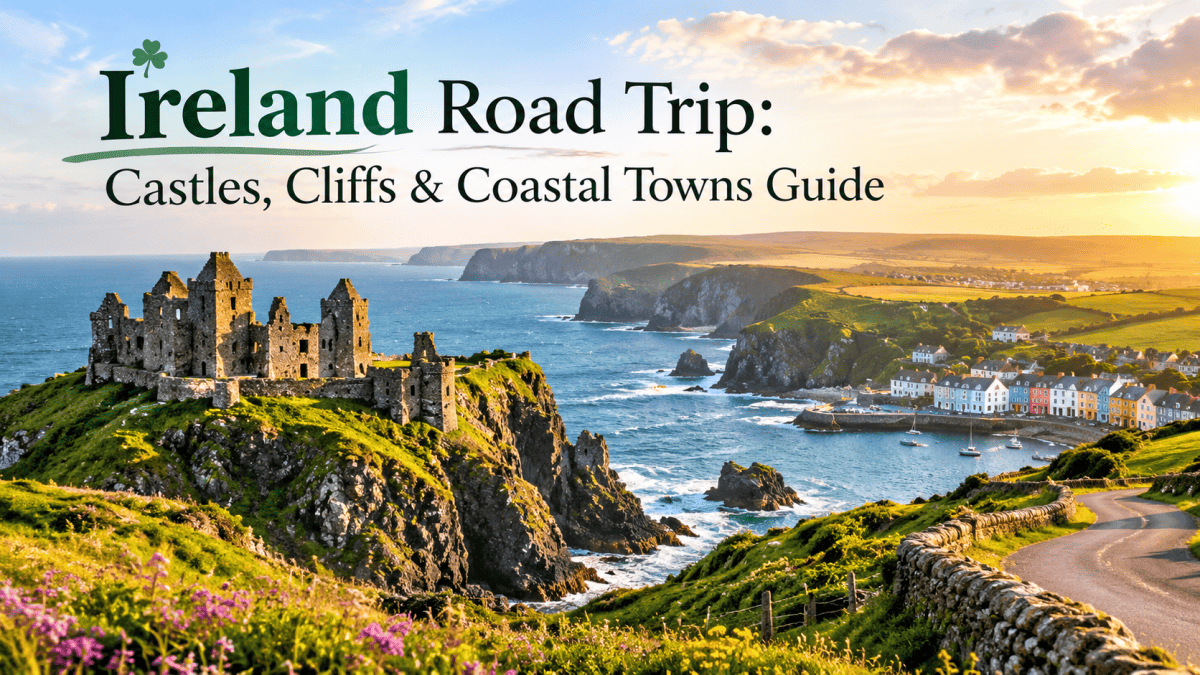
Ireland Road Trip: Castles, Cliffs & Coastal Towns

cover

An Ireland road trip lets you move at your own pace through some of Europe's most dramatic scenery, from the Cliffs of Moher plunging 700 feet into the Atlantic to medieval castles perched on rocky outcrops. Unlike guided tours that rush between major attractions, a road trip in Ireland lets you stop in small coastal villages, pull over for photos of sheep-dotted hillsides, and spend extra time in places that interest you.

This guide covers how to plan a road trip in Ireland, including a complete 7-day Ireland road trip itinerary, must-see castles, charming coastal towns, and practical driving tips for navigating Irish roads.

Why Choose Ireland for a Road Trip

Ireland's compact size and well-maintained road network make it ideal for self-drive exploration. The country measures roughly 300 miles from north to south and 170 miles from east to west, meaning you can cover significant ground without spending entire days in the car.

Scenic Coastal Drives


The Wild Atlantic Way stretches 1,500 miles along Ireland's western coast, ranking as one of the longest defined coastal routes in the world. You don't need to drive the entire length to experience its highlights. The Dingle Peninsula, Ring of Kerry, and stretches of County Clare offer some of Europe's most photogenic driving, with narrow roads winding past turquoise coves, sea stacks, and rugged headlands.

ireland

Historic Castles and Ancient Sites


Ireland has more than 30,000 recorded historical sites, including castles, round towers, and ancient monastic settlements. Many sit along secondary roads, visible from your car window or accessible via short detours. From the Rock of Cashel rising above the Tipperary plains to Blarney Castle near Cork, these structures tell stories spanning centuries of Irish history.

Charming Coastal Villages


Small towns like Kinsale, Dingle, and Galway offer colorful storefronts, traditional music sessions in pubs, and fresh seafood caught that morning. These villages provide the authentic Irish experience many visitors seek, far removed from the tourist crowds of Dublin's main attractions.

How to Plan a Road Trip in Ireland

Successful Ireland road trips require planning, particularly for car rental, accommodation, and route selection.

Best Time to Visit


May through September offers the most favorable driving conditions, with longer daylight hours and generally drier weather. June through August brings peak tourist season, meaning crowded attractions and higher accommodation prices. May and September provide a good balance of decent weather and fewer visitors.

Winter driving in Ireland presents challenges including shorter days (sunset around 4:30 PM in December), frequent rain, and occasional road closures in rural areas. If you visit between October and April, build flexibility into your schedule and pack waterproof gear.

Car Rental and Driving Tips


Rent your car at Dublin or Shannon Airport for convenience. Manual transmission vehicles cost less than automatics, but only book an automatic if you're comfortable driving one—automatic rentals sell out quickly during peak season.

Irish roads use kilometers, not miles, and speed limits appear in km/h. Rural roads often narrow significantly, with passing places for oncoming traffic. Drive on the left side of the road. Fuel stations are common in towns but sparse in remote areas—fill up when you see a station in rural regions.

Most rental companies charge extra for border crossing into Northern Ireland, though the border itself has no checkpoints. Check your rental agreement for restrictions before crossing.

ireland

Route Planning Basics


Start in Dublin, loop west through Galway and Clare, swing south through Kerry and Cork, then return east. This counterclockwise route covers the major highlights while keeping daily driving segments reasonable—aim for 2-3 hours of driving per day maximum to allow time for stops and exploration.

7-Day Ireland Road Trip Itinerary

This 7 day ireland road trip itinerary balances major attractions with smaller towns and scenic drives. Adjust based on your interests and pace.

Day 1-2: Dublin and the Ancient East


Spend your first day in Dublin exploring Trinity College, the Book of Kells, and Dublin Castle. Pick up your rental car on day two morning and drive south to the Rock of Cashel (2 hours), a 12th-century cathedral perched on a limestone outcrop. Continue to Kilkenny (1 hour) for an overnight stay. Visit Kilkenny Castle and stroll the medieval mile.

dubilin

Day 3: The Wild Atlantic Way – Galway


Drive from Kilkenny to Galway (2.5 hours). Galway serves as your base for exploring the western coast. Walk through the Latin Quarter, visit the Galway Cathedral, and enjoy traditional music in local pubs. The city's bohemian atmosphere and street performers create a lively evening scene.

Day 4: Cliffs of Moher and the Burren


Day trip from Galway to the Cliffs of Moher (1.5 hours). The cliffs stretch 5 miles along the coast, with O'Brien's Tower offering the best viewing platform. Continue to the Burren, a lunar-like limestone landscape with ancient tombs and unique flora. Return to Galway for the night. For curated itineraries, browse those that match your interests.

galway

Day 5: Ring of Kerry and Killarney


Drive from Galway to Killarney (2.5 hours). The Ring of Kerry forms a 106-mile circular route starting and ending in Killarney. Key stops include Muckross House, Ladies View, and the Skellig Islands viewpoint. The full loop takes 3-4 hours without stops, but plan 6-7 hours to properly enjoy the scenery and short walks.

Day 6: Dingle Peninsula


Drive from Killarney to the Dingle Peninsula (1 hour). This smaller peninsula offers equally dramatic scenery with less traffic than the Ring of Kerry. Visit the Gallarus Oratory, a 6th-century stone church, and drive to Slea Head for views of the Blasket Islands. Dingle town provides lunch and a chance to see Fungie, the famous dolphin (if you're lucky).

Day 7: Return to Dublin via Castles


Drive from Dingle to Dublin (4.5 hours direct, or longer with stops). Consider detouring to Blarney Castle near Cork (1.5 hours from Dingle) to kiss the Blarney Stone, or visit Cahir Castle in Tipperary (2.5 hours from Dingle), one of Ireland's largest preserved castles.

Dublin

Must-See Castles Along the Route

Blarney Castle


Located near Cork, Blarney Castle dates to 1446. Visitors climb 28 steps to kiss the Blarney Stone, supposedly granting the gift of eloquence. The castle grounds include gardens, a druid's circle, and walking trails along the river.

Rock of Cashel


This iconic site in County Tipperary features a 12th-century round tower, cathedral, and high crosses. The Rock served as the seat of Irish kings for over a thousand years before the Norman invasion.

Bunratty Castle


Near Shannon Airport, Bunratty Castle offers medieval banquets and folk park demonstrations. The 15th-century tower house sits on a site used by Vikings and Normans, with extensive grounds reconstructing a 19th-century village.

Coastal Towns Worth Stopping For

Kinsale


This colorful port town near Cork earned recognition as one of the world's best food destinations. The harbor fronts restaurants serving fresh seafood, while Star Fort offers historical context. Kinsale's pastel-painted buildings and narrow streets create excellent photo opportunities.

Dingle


This Gaeltacht (Irish-speaking) town on the Dingle Peninsula maintains strong Celtic traditions. The harbor fills with fishing boats each morning, and the town supports traditional music sessions nightly. Dingle's compact center makes it easy to explore on foot.

Galway


Ireland's cultural capital hosts buskers, artists, and festivals year-round. The Spanish Arch marks the site of the original 16th-century merchant quarter. Galway's proximity to Connemara and the Aran Islands makes it an ideal base for western exploration.

galway

Practical Tips for Driving in Ireland

Road Conditions and Signage


Primary roads between major cities are generally excellent, with dual carriageways or motorways. Secondary roads to smaller towns are narrower but well-maintained. Rural boreens (small country lanes) can be very narrow with overhanging hedges—slow down and use passing bays.

Road signs use Irish (Gaelic) first, then English. Distances appear in kilometers. Speed limits show in km/h: 120 km/h on motorways, 100 km/h on national roads, 80 km/h on regional roads, and 50 km/h in towns.

Fuel and Parking


Fuel costs around €1.70-1.80 per liter (2024 prices). Fill up in towns rather than remote areas. Most stations accept credit cards, but keep some cash for smaller stations.

Parking in cities costs €2-4 per hour in public lots. Many small towns offer free parking. Hotels often provide free parking for guests—confirm when booking. Never park in designated disabled spaces without a valid permit.

Weather Considerations


Irish weather changes rapidly. Pack layers and waterproof clothing even in summer. Fog can reduce visibility on rural roads, particularly in the mornings. Check weather forecasts before long drives, especially along the west coast where Atlantic storms can bring high winds.

Final Thoughts

An ireland road trip combines dramatic coastal scenery, ancient castles, and welcoming villages into one memorable journey. The 7-day itinerary outlined here covers the essential highlights while leaving room for spontaneous stops and findies. Tours4fun offers curated Ireland travel packages for those who want a guided experience without the hassle of planning.

Whether you're kissing the Blarney Stone, watching waves crash against the Cliffs of Moher, or enjoying a pint in a Dingle pub, Ireland rewards travelers who take the time to explore beyond the guidebook highlights. Plan your route, book your rental car, and hit the road—the real magic of Ireland happens along the way.

For travelers interested in guided alternatives or pre-planned itineraries, Ireland vacation packages offer structured tours with accommodations and transportation arranged. These packages work well for visitors who prefer not to drive but still want to experience Ireland's castles, cliffs, and coastal towns.

Travelers who prefer a guided experience can browse Ireland tours for curated itineraries covering the Wild Atlantic Way, ancient castles, and coastal villages.


FAQ

Is a road trip the best way to see Ireland?

A road trip offers flexibility and access to rural areas that public transport doesn't reach. You can stop at small villages, castles, and scenic viewpoints on your own schedule. However, if you prefer not to drive, Ireland has excellent guided tours and public transport connections between major cities. For curated itineraries, browse that match your interests. Ireland tours

How many days do you need for an Ireland road trip?

A 7-day ireland road trip covers the major highlights without rushing. Ten to fourteen days allow a more relaxed pace with additional stops. You can see the essentials in 5 days, but you'll miss smaller towns and scenic detours.

Is it easy to drive in Ireland?

Driving in Ireland is straightforward if you're comfortable with narrow roads and driving on the left. Rural roads require extra attention, particularly when meeting oncoming traffic. Urban driving in Dublin can be congested during rush hours.

What is the best route for an Ireland road trip?

A counterclockwise loop starting in Dublin, heading west through Galway, south through Kerry and Cork, then returning east, covers the major attractions. This route balances scenic coastal drives with historic sites and charming towns.

How much does an Ireland road trip cost?

Budget €80-120 per day for accommodation, €40-60 for car rental, €30-40 for fuel, and €30-50 for meals. Total costs for a 7-day trip run approximately €1,300-1,900 for two people, excluding flights and attraction fees.

Summary

Why Choose Ireland for a Road Trip

How to Plan a Road Trip in Ireland

7-Day Ireland Road Trip Itinerary

Must-See Castles Along the Route

Coastal Towns Worth Stopping For

Practical Tips for Driving in Ireland

Final Thoughts

FAQ

America's 250th Anniversary Mega Sale

image