ChinaAsiaFood & DrinkTravel Tips
Show All

China Tea Culture Guide: History, Varieties & Experiences

cover

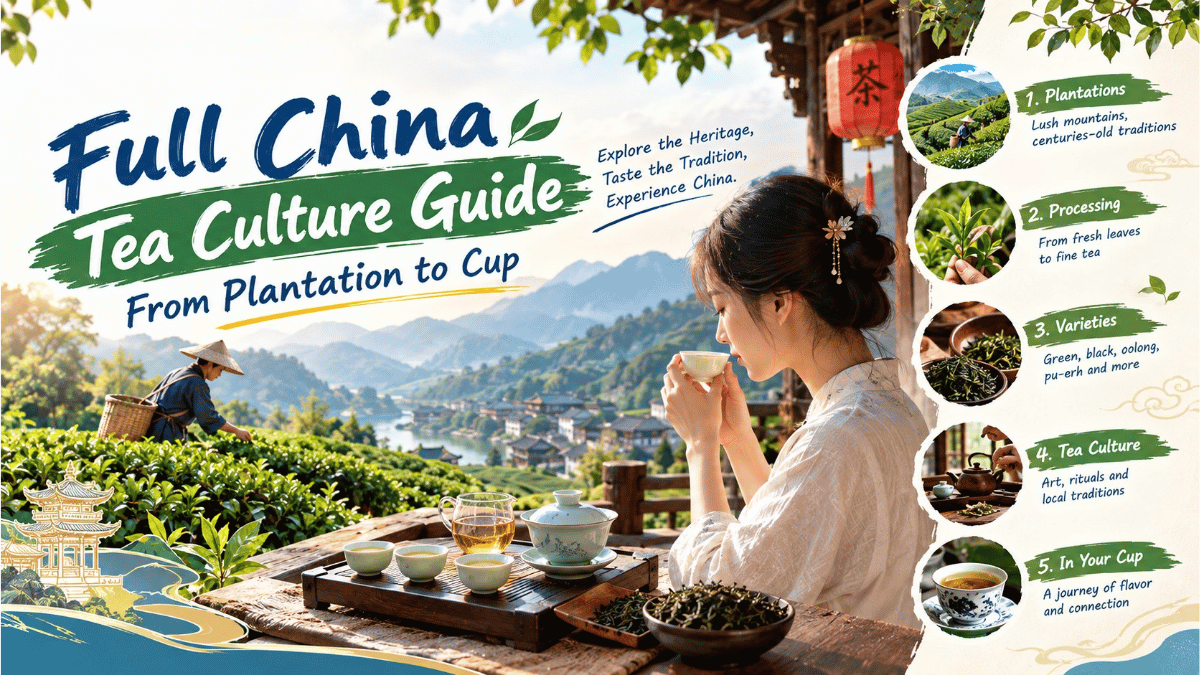
Tea culture in China represents one of the world's oldest and most sophisticated beverage traditions, spanning over 4,000 years of history, philosophy, and artistry. From the misty mountains where tea plants first grew wild to the elaborate ceremonies that honor each leaf's journey, Chinese tea culture embodies the Chinese values of harmony, respect, and mindfulness. This comprehensive guide takes you through every aspect of Chinese teas, from ancient origins to modern tea houses, revealing why this beverage remains central to Chinese social life and spiritual practice.

Whether you're planning to visit tea plantations, participate in traditional ceremonies, or simply understand the varieties of Chinese tea from China that grace tables worldwide, this guide provides the knowledge to appreciate tea as the Chinese do - as both daily refreshment and profound cultural expression.

The Ancient Origins of Tea Culture in China

Legendary Beginnings


Chinese legend attributes tea's origin to Emperor Shennong in 2737 BCE, when wild tea leaves supposedly blew into his pot of boiling water. While mythical, this story reflects tea's ancient origins in southwest China's Yunnan province, where wild tea trees still grow. Archaeological evidence confirms tea consumption dating to the Shang Dynasty (1600-1046 BCE), initially used as medicine before evolving into the beloved beverage we know today.

tea

Evolution Through Dynasties


Tea culture in China evolved dramatically across dynasties. The Tang Dynasty (618-907 CE) saw tea's golden age, with Lu Yu's Classic of Tea (Cha Jing) establishing the first comprehensive tea treatise. Tea spread from medicine to a daily beverage, with brick tea becoming trade currency along the Silk Road. The Song Dynasty (960-1279) introduced whipped tea preparation, while the Ming Dynasty (1368-1644) established loose-leaf brewing methods still used today. Each era refined cultivation, processing, and appreciation techniques.

Tea's Global Journey


Chinese teas traveled the world through trade routes, reaching Japan via Buddhist monks in the 9th century, Europe via Portuguese traders in the 16th century, and eventually becoming Britain's national drink. Despite global spread, authentic Chinese tea culture remains rooted in China, where traditional methods and ceremonies preserve ancient practices. Understanding this history enriches appreciation for every cup.

The Six Major Types of Chinese Teas

Green Tea: Fresh and Unoxidized


Green tea represents 70% of China's tea production and includes famous varieties like Longjing (Dragon Well) from Hangzhou, Biluochun from Jiangsu, and Huangshan Maofeng. The Chinese green tea drink category encompasses teas processed to prevent oxidation, preserving fresh, grassy flavors and high antioxidant content. Production involves pan-firing or steaming leaves immediately after picking to halt enzymatic activity. Each region's terroir creates distinct flavor profiles, from Longjing's chestnut notes to Biluochun's floral sweetness.

china tea

Black Tea: Fully Oxidized Richness


Known as red tea (hong cha) in China, black tea undergoes complete oxidation, creating robust flavors and dark liquor. Famous varieties include Keemun from Anhui with wine-like complexity, Dian Hong from Yunnan with malty sweetness, and Zheng Shan Xiao Zhong (Lapsang Souchong) from Fujian with pine-smoked character. These teas export well and form the base for many international blends, though Chinese consumption favors lighter varieties.

Oolong Tea: The Art of Partial Oxidation


Oolong represents the pinnacle of tea craftsmanship, with oxidation levels ranging from 10-80%. Fujian's Tie Guan Yin (Iron Goddess) offers floral notes, while Da Hong Pao from Wuyi Mountains delivers mineral complexity. Taiwan's high-mountain oolongs showcase alpine terroir. Processing requires skillful rolling and roasting to develop layered flavors. Oolong ceremonies emphasize multiple infusions, with each steeping revealing different taste dimensions.

White Tea: Minimal Processing, Maximum Purity


White tea undergoes the least processing - simply withering and drying - preserving delicate flavors and silvery appearance. Bai Hao Yin Zhen (Silver Needle) uses only buds, while Bai Mu Dan (White Peony) includes young leaves. Fujian province produces the finest examples, with flavors ranging from subtle sweetness to honey notes. White tea's minimal intervention appeals to those seeking purity and natural character.

Dark Tea: Post-Fermented Complexity


Dark tea (hei cha) undergoes microbial fermentation after processing, creating earthy, complex flavors that improve with age. Pu-erh from Yunnan leads this category, available as raw (sheng) or ripe (shou). Raw pu-erh ages naturally over decades, developing depth, while ripe pu-erh undergoes accelerated fermentation. These teas compress into cakes or bricks for storage and trade. Aged pu-erh commands premium prices, with vintage cakes selling for thousands.

Yellow Tea: The Rare Middle Ground


Yellow tea occupies the space between green and white teas, with slight oxidation creating mellow flavors. Jun Shan Yin Zhen from Hunan's Dongting Lake represents the most famous variety, with golden liquor and subtle sweetness. Production remains limited, making yellow tea rare even in China. The careful processing prevents grassy notes while maintaining freshness.

From Mountain to Cup: Tea Cultivation

Growing Conditions and Terroir


Tea plants (Camellia sinensis) thrive in China's diverse climates, from Yunnan's tropical highlands to Zhejiang's temperate hills. Elevation, soil composition, rainfall, and mist create distinct terroirs. High-mountain teas develop slower, concentrating flavors. Ancient tea trees, some over 1,000 years old in Yunnan, produce prized leaves with complex character. Understanding terroir helps appreciate regional differences in Chinese teas.

tea garden

Harvesting Seasons


Tea harvesting follows seasonal rhythms. Spring harvest (March-May) produces the finest leaves, tender and flavorful. Summer leaves grow faster but develop bitterness. Autumn harvest offers balanced flavors. Winter dormancy allows plants to recover. Premium teas like Pre-Qingming Longjing command high prices for early spring picking. Timing affects flavor profiles significantly, with each season offering distinct characteristics.

Processing Methods

 
  1. Withering and Fixation: Fresh leaves wither to reduce moisture and soften texture. Green teas undergo fixation (sha qing) through pan-firing or steaming to halt oxidation. Temperature and duration affect final flavor. Traditional methods use wok-firing, while modern production employs machines. This crucial step determines tea type and character.
  2. Rolling and Shaping: Rolling breaks cell walls, releasing enzymes and shaping leaves. Techniques vary: twisting for oolongs, pressing for pu-erh cakes, or gentle rolling for delicate greens. Some teas achieve distinctive shapes - Longjing's flat leaves, Biluochun's spirals, or Anji Baicha's needle form. Shaping affects both appearance and brewing behavior.
  3. Drying and Finishing: Final drying stabilizes tea for storage. Methods include sun-drying, charcoal firing, or mechanical drying. Temperature control prevents scorching while ensuring proper moisture content. Some teas receive additional roasting for flavor development. Proper drying preserves quality during storage and transport.

The Art of Chinese Tea Ceremony

Gongfu Cha: Brewing with Skill


Gongfu cha (kung fu tea) represents the pinnacle of Chinese tea culture ceremony, emphasizing precise technique and mindful preparation. This method uses small teapots (typically Yixing clay or porcelain gaiwan) with high leaf-to-water ratios and multiple short infusions. Each steeping reveals different flavor layers. The ceremony requires attention to water temperature, timing, and pouring technique. Practitioners develop skill through years of practice, much like martial arts - hence the name.

Essential Tea Ware


The traditional tea ceremony requires specific vessels. Yixing clay teapots, unglazed and porous, absorb tea flavors over time, becoming seasoned with use. Gaiwan (lidded bowls) offer versatility for all tea types. Fair cups (chai hai) ensure even distribution. Aroma cups capture fragrance before drinking. Tea trays (cha pan) catch spills and complete the setup. Each piece serves both functional and aesthetic purposes, enhancing the sensory experience.

Ceremony Steps and Etiquette


A proper gongfu cha ceremony follows specific steps: warming vessels, measuring tea, rinsing leaves (for oolongs and pu-erh), multiple infusions with precise timing, and appreciating each steeping's evolution. The host serves guests respectfully, pouring in circular motions to ensure equal strength. Recipients receive cups with both hands or fingers tapped in gratitude. Silence and mindfulness characterize the experience, allowing full appreciation of aroma, flavor, and mouthfeel.

Philosophical Dimensions


Tea ceremony embodies Chinese philosophical principles. Confucian values emphasize respect, harmony, and social bonding. Daoist philosophy connects tea to nature and simplicity. Buddhist monks use tea for meditation alertness. The ceremony creates space for reflection, conversation, and connection. Understanding these dimensions transforms tea drinking from mere consumption to cultural participation. Many China vacation packages include tea region visits as part of cultural heritage itineraries.

China's Premier Tea-Producing Regions

Fujian Province: Oolong and White Tea Homeland


Fujian produces China's most diverse tea portfolio. Wuyi Mountains yield rock oolongs like Da Hong Pao with mineral complexity. Anxi County grows Tie Guan Yin, the famous iron goddess oolong. Fuding and Zhenghe produce white teas - Silver Needle and White Peony. Zheng Shan Xiao Zhong originates here as the world's first black tea. Fujian's mountainous terrain and coastal climate create ideal growing conditions.

Zhejiang Province: Green Tea Paradise


Zhejiang claims China's most famous green tea: Longjing from Hangzhou's West Lake region. The flat, pan-fired leaves produce chestnut-flavored liquor considered China's premier green tea. Kaihua Longding and Anji Baicha (despite its name, a green tea) also originate here. The province's temperate climate and misty mountains create perfect conditions for delicate green tea production.

Yunnan Province: Ancient Trees and Pu-erh


Yunnan, China's tea birthplace, specializes in pu-erh and black teas. Ancient tea trees, some over 1,000 years old, grow in Xishuangbanna, Pu'er, and Lincang regions. These trees produce complex leaves for raw and ripe pu-erh. Dian Hong black tea showcases malty sweetness. Yunnan's tropical highlands and ethnic minority tea-growing traditions create unique character unavailable elsewhere.

yunnan

Anhui Province: Huangshan and Keemun


Anhui produces two legendary teas: Huangshan Maofeng green tea from Yellow Mountain with orchid notes, and Keemun black tea with wine-like complexity. Qimen County's Keemun ranks among China's top ten famous teas. The province's mountainous terrain and misty climate create ideal growing conditions. Tea culture here dates back centuries, with traditional methods preserved in remote villages.

Other Notable Regions


Jiangsu produces Biluochun, a tightly rolled green tea with floral notes. Hunan grows Jun Shan Yin Zhen yellow tea. Sichuan's Mengding Mountain yields ancient green teas. Guangdong specializes in Phoenix oolongs with diverse aromatic profiles. Each region contributes unique varieties to China's tea culture's rich tapestry. Tours4fun's cultural itineraries often include tea region visits with expert guides.

Health Benefits of Chinese Tea

Antioxidant Properties


Chinese teas contain powerful antioxidants, particularly catechins in green tea and theaflavins in black tea. These compounds combat free radicals, potentially reducing cancer risk and slowing aging. Green tea's EGCG (epigallocatechin gallate) receives extensive research attention for health-promoting properties. Regular consumption correlates with improved cellular health and reduced inflammation.

Cardiovascular Support


Studies suggest Chinese green tea drink consumption supports heart health by lowering LDL cholesterol, reducing blood pressure, and improving arterial function. Polyphenols prevent plaque buildup while flavonoids strengthen blood vessels. Populations with regular tea consumption show reduced cardiovascular disease rates. However, benefits require consistent consumption as part of a healthy lifestyle.

Mental Alertness and Calm


Tea's unique combination of caffeine and L-theanine provides an alert yet calm mental state. Unlike coffee's jittery stimulation, tea promotes focused attention without anxiety. L-theanine increases alpha brain waves associated with relaxed alertness. This balanced stimulation makes tea ideal for meditation, study, or creative work. Buddhist monks historically used tea to maintain wakefulness during long meditation sessions.

Digestive and Metabolic Benefits


Pu-erh and other fermented teas aid digestion and may support weight management. Microbial fermentation creates compounds that help metabolize fats and regulate gut bacteria. Traditional Chinese medicine prescribes pu-erh after heavy meals for this reason. Green tea's catechins may boost metabolism slightly, though effects remain modest. Tea's diuretic properties help reduce water retention.

Contemporary Tea Culture in China

Traditional Tea Houses


Tea houses (cha guan) remain social hubs in Chinese cities, though modernization has changed their character. Traditional establishments serve multiple tea varieties with snacks, providing space for conversation, business meetings, or solitary reflection. Chengdu's tea houses feature bamboo chairs and covered bowls, while Beijing's establishments emphasize imperial elegance. These venues preserve tea culture while adapting to contemporary tastes.

Modern Tea Innovations


Contemporary Chinese tea culture embraces innovation while honoring tradition. Bubble tea, originating in Taiwan, spread globally as sweet milk tea with tapioca pearls. Cold brew methods appeal to younger consumers. Tea blends with flowers, fruits, and herbs create new flavor profiles. However, traditionalists maintain pure tea appreciation, creating tension between innovation and preservation.

Tea Tourism and Experiences


Tea tourism grows as visitors seek authentic cultural experiences. Plantation tours in Hangzhou, Fujian, and Yunnan allow visitors to observe picking, processing, and tasting. Tea ceremonies in traditional settings provide hands-on learning. Some regions offer homestays with tea-farming families, revealing rural tea culture. Many China vacation packages include tea experiences as cultural highlights.

Tea in Daily Life


Despite ceremonial sophistication, tea remains an everyday beverage in China. Office workers brew large pots of green tea for all-day sipping. Families serve tea to guests as basic hospitality. Street vendors sell bottled teas alongside soft drinks. Restaurants provide complimentary tea with meals. This ubiquity demonstrates tea's deep integration into Chinese life, from formal ceremony to casual refreshment.

How to Experience Authentic Tea Culture

Visiting Tea Plantations


Tea plantation visits provide insight into cultivation and processing. Hangzhou's Longjing villages offer spring picking experiences. Fujian's Wuyi Mountains showcase rock tea production. Yunnan's ancient tree forests reveal tea's origins. Many plantations welcome visitors for tours, tastings, and purchasing. Spring season (March-May) provides the most active experience, though autumn offers pleasant weather and harvest activities.

Participating in Tea Ceremonies


Tea ceremony participation deepens cultural understanding. Many cities offer ceremony classes for visitors, teaching proper technique and philosophy. Tea houses in Beijing, Shanghai, and Chengdu provide authentic experiences. Some temples conduct tea ceremonies as meditation practice. Learning proper etiquette - receiving cups, appreciating aroma, sipping technique - shows respect for tradition and enhances enjoyment.

Shopping for Authentic Tea


Purchasing quality Chinese teas requires knowledge. Specialized tea shops (cha ye dian) offer expertise and proper storage. Markets like Beijing's Maliandao Tea City provide variety but require discernment. Plantation purchases ensure freshness and support producers directly. Look for proper packaging, harvest dates, and origin information. Avoid suspiciously cheap famous teas - authentic Longjing or Da Hong Pao commands premium prices.

Bringing Tea Home


Transporting tea requires care. Vacuum-sealed packages preserve freshness best. Green teas deteriorate quickly; consume within months. Oolongs and black teas keep longer. Pu-erh improves with age if stored properly. Avoid heat, light, moisture, and strong odors. Most travelers bring tea as gifts, sharing Chinese tea from China with friends and family. Proper storage ensures recipients experience the intended flavors.

Final Thoughts

Tea culture in China represents far more than beverage preparation - it embodies philosophy, artistry, social connection, and cultural continuity spanning millennia. From ancient tea trees in Yunnan's mountains to modern tea houses in Beijing's hutongs, Chinese teas connect past and present, rural and urban, simple and sophisticated. Each cup contains the wisdom of generations who perfected cultivation, processing, and appreciation.

Whether you experience tea through formal ceremony, casual conversation in a tea house, or quiet contemplation with a perfect Longjing, you participate in a living tradition. The mindfulness required to appreciate tea's subtle flavors, the respect shown through proper etiquette, the harmony created when sharing tea with others - these elements transform simple drinking into cultural practice. Understanding tea culture enriches any visit to China, revealing depths beneath the surface of daily life.


FAQ

What is the difference between Chinese and Japanese tea culture?

Chinese tea culture emphasizes variety, conversation, and multiple infusions, while Japanese culture focuses on single tea types (mainly green), formal ceremony (chanoyu), and single preparations. Chinese ceremonies allow flexibility and social interaction, whereas the Japanese tea ceremony follows precise choreography with spiritual overtones. China produces all tea types; Japan specializes mainly in green tea. Both traditions value mindfulness and respect, but express these values differently.

What is the best Chinese green tea drink for beginners?

Longjing (Dragon Well) suits beginners with its approachable chestnut flavor and smooth character. Biluochun offers floral sweetness that appeals to new drinkers. Anji Baicha provides delicate umami without bitterness. Start with lower-temperature water (75-80C/167-176F) and shorter steeping times to prevent bitterness. These teas introduce green tea's fresh character without overwhelming complexity.

How much does authentic Chinese tea cost?

Prices vary dramatically by quality and rarity. Everyday drinking tea costs 50-200 yuan per 100g. Mid-range famous teas like Longjing or Tie Guan Yin run 300-800 yuan per 100g. Premium grades reach 1,000-3,000 yuan per 100g. Ultra-rare teas like authentic Wu Yi Da Hong Pao or pre-Qingming Longjing exceed 10,000 yuan per 100g. Tourist areas often overcharge; specialized shops and direct plantation purchases offer better value.

What should I know about tea etiquette in China?

Key etiquette points: receive tea with both hands, or fingers tapped on table in gratitude. Never drink immediately - appreciate the aroma first. Allow the host to serve; don't pour your own tea in formal settings. Leave some liquid when finished to signal you'd like more (an empty cup means you're done). Avoid blowing on hot tea; let it cool naturally. These gestures show respect for tea culture and the host's effort.

How do I store Chinese tea properly at home?

Storage depends on tea type. Green and yellow teas require refrigeration in airtight containers and are best consumed within 6-12 months. Oolongs and black teas keep at cool room temperature in sealed containers for 1-2 years. Pu-erh needs airflow and stable conditions; store in paper or clay containers, not plastic. All teas require protection from light, heat, moisture, and strong odors. Proper storage preserves intended flavors and prevents deterioration.

Summary

The Ancient Origins of Tea Culture in China

The Six Major Types of Chinese Teas

From Mountain to Cup: Tea Cultivation

The Art of Chinese Tea Ceremony

China's Premier Tea-Producing Regions

Health Benefits of Chinese Tea

Contemporary Tea Culture in China

How to Experience Authentic Tea Culture

Final Thoughts

FAQ

America's 250th Anniversary Mega Sale

image