Los AngelesUnited StatesNorth AmericaPlaces to GoThings to DoWhere to StayTravel TipsVacations
Show All

Bus Tour Websites: How to Book Trips Without Driving

cover

You can drive somewhere and still miss it, because the person at the wheel is watching the road. That is the trade most travelers make without thinking about it, and Bus Tour Websites are where most of those searches start: a vague idea, a long list of tabs, and a deposit paid before anyone has read the fine print.


What follows is not a ranking of companies. It is the set of questions that separates a trip you will enjoy from one you will complain about on the way home, using real trips and real prices so the numbers mean something.

Why People Who Do Not Want to Drive Still Get on a Bus

The honest reason is not that buses are more comfortable than a rental car. It is that the parts of a road trip nobody budgets for stop being your job. Downtown parking, tolls, a car that sits in a garage for three days, and the drive back to the hotel after a long afternoon out all move to someone else.


The Costs You Stop Paying


Wikivoyage puts it plainly: buses are usually the cheapest option, at least on short distances. Price a day trip against fuel, tolls, and parking at the far end, and the rental car stops looking cheap before you have left the lot. The hour you would spend working out where to leave the car is the part nobody puts in the budget.


That is also why a bus is a sensible first move in a city you have never visited. You learn the shape of the place from a seat, then go back on foot to the two or three spots that caught your eye.


What You Hand Over in Return


Control over the clock. On most group departures, the bus leaves when the group leaves, and the stops are chosen for the group rather than for you. If one place is the reason you came, check how long that stop actually lasts before you book, because a quick look at a site you crossed an ocean for is a bad trade at any price.


Lunch is the other thing you hand over. Scheduled breaks tend to land at venues built for captive buses, which is how you end up paying $20 for a sandwich that was made two days earlier. Eat before the break or carry something with you, and the day costs less and tastes better.


So the question worth asking is whether the trade pays off for this route, on this date, with this much time.

What These Trips Actually Look Like in Practice

Trips get sold under one label and come in three shapes. A bus that circles a city for a day is a different purchase from one that carries a suitcase for four days, and the listing usually shows which of the two you are reading within a couple of lines.


Day Trips That Leave in the Morning


The day trip is the simplest thing sold: you board in a city, you come back to the same city the same evening, and the real decision is whether the stop list matches your list. From Las Vegas, the Hoover Dam Express runs at $96. From the same city, the Grand Canyon South Rim trip adds IMAX tickets and costs $150.


Half-day versions exist for people who want the afternoon back. A half-day Mutianyu Great Wall run is built that way, and a Quebec City panorama with a local guide sells for $40.66.


Multi-Day Loops With Hotel Nights


Many multi-day trips bundle the seat with rooms, and the number in front of the word day hides how many nights you actually sleep in a hotel. The 4-Day Bus Tour from Chicago heads south to Mammoth Cave National Park. The 3-Day from New York runs to Niagara Falls and Corning. Another 3-Day leaves San Francisco for Napa Valley.


The shape changes when a route crosses borders. The 5-Day West Loop starts in Paris, passes through Prague and Budapest, and finishes in Frankfurt, which means your flight home leaves from a different country than the one you landed in. A 2-Day Jeju loop keeps it tighter, covering the UNESCO sites on the east, south, and west of the island in two days.


Listings on Tours4fun carry both shapes, a $96 day run and a $635.46 five-day route, and the same label covers very different commitments.


Hop-On, Hop-Off and One-Way Combinations


The London 24-Hour Hop-On Hop-Off Open Top Bus Tour works another way: no fixed group to keep up with, a loop you leave and rejoin when you feel like it. Wikivoyage notes that tour buses can run on a hop-on-hop-off scheme and that the full price can be steep while special offers are common, so compare a 24-hour pass against a two-day one before you decide.


Some trips mix modes. The Mt Fuji and Hakone day trip returns by bullet train at $156.11, and the title tells you the coach takes one leg, and the train takes the other. That combination is often the difference between a long day and an exhausting one.

What a Bus Tour Website Should Tell You Up Front

Every listing answers four questions, and the ones that answer them in plain text are the ones worth your card details. The rest make you email a stranger to find out where to stand at dawn.


Days, Nights, and Where the Clock Goes


How many of those days are nights in a bed? Count nights, not days. A four-day trip with three hotel nights and a four-day trip with four nights are different products, and the gap shows up on the last morning when one group checks out and the other does not.


Then count the hours in the seat. Almost all buses are built for top speeds no higher than 110 km/h, and some do not reach 80 km/h, so a stretch of road that looks quick on a map takes longer than the distance suggests. A route that stops in every town moves slower than a direct one, and long-distance buses may stop at the main cities along the route, with one scheduled break on the way.


Boarding City and Finishing City


Most day trips hand you back where you started, though some finish at a different station or send you back by train. Multi-day routes often do not. The Paris to Frankfurt loop finishes in a different country from the one it began in, which changes your flight home, your last hotel night and how much you want to carry on the bus.


Ask the same question of the return leg. A trip that ends late in the evening is a different purchase from one that ends mid-afternoon, because the first one needs a hotel room you have not booked yet.


What the Price Covers


Two trips at the same price can include very different things. A listing that puts IMAX tickets in the title is telling you the ticket sits inside the price. A listing that mentions park entrance fees in the small print is telling you it does not.


Ask about the extras that appear on the day: park fees, city taxes, optional activities, and the single supplement if you are traveling alone. None of them usually shows up in the headline number, and together they can move a cheap trip into the middle of the range.


Who Else Is on the Bus


Some trips name the guide language in the first line; others bury it. A bus with a bilingual guide is a different day from one where the commentary runs in a language you do not speak, and that detail rarely shows up in photos of the scenery.


Group size matters for the same reason. A full bus and a small van can run the same itinerary and feel like two different days.

How to Judge a Bus Trip Before You Pay

Most of the risk in this category sits in three details that take a few minutes to check. None of them require an account, a phone call or a leap of faith, and a page that hides them is telling you something by hiding them.


Pickup Points Named, Not Hinted


The pickup address should be on the page before you type in a card number. If it appears for the first time in a confirmation email after payment, you have bought a surprise rather than a trip, and a meeting point to be advised is the phrase to watch for.


What if the address turns out to be a hotel across town from yours? A useful listing names the hotel or the corner and gives a time, because the gap between an early pickup and a later one is the difference between a short walk and a taxi across town.


Check the number of stops too. A bus that collects from several hotels adds time before the highway, and that time is not in the driving figure you were quoted.


Cancellation Terms and the Discount


The cancellation window cuts both ways. Weather closes mountain roads, ferries stop running, and a policy that covers your cancellation and nothing else is halfway to useless, so check what happens when the operator calls the trip off.


Wikivoyage points out that a tour bus can be a costly way to get around at full price, and that special offers are common. That is fine as long as you read what the offer costs you: a non-refundable rate saves money right up until the week you cannot travel.


If the trip crosses a border, look for the visa and document notes as well. A cross-border loop is not the place to discover a passport problem at the bus door.


Who Actually Runs the Bus


The seller and the operator are often two different companies, and the gap between them is where a booking goes wrong. Ask who holds the license for the vehicle, who you call if the bus does not show, and whether the confirmation arrives from the operator or from the site that took your money.


Regulation is the reason to ask. Bus companies are easy to start, and where regulation is light, there are many independent firms that do not always coordinate well, which is why connections often have to be checked locally.


Reviews help, and so does the age of the listing. A page with last year's schedule and no departure dates is a page to close.

When the Bus Is the Wrong Tool

Half the value of a decision framework is knowing when to leave the category alone. Three situations come up often enough to name.


Your List Is Three Small Towns


A coach goes where a coach fits, which means highways, parking lots and the gate that already has a turning circle. If your list is a trailhead, a village with one bakery and a museum nobody visits, the timetable will not bend that far and a car will.


The Train Already Covers the Corridor


On dense routes the train is hard to beat. You will not struggle to find a company running from Washington DC to New York City, while a trip between two smaller towns may be offered by one firm or none at all as a direct route. Rail tends to be organized at national level, which is why timetables line up better than they do between independent coach firms.


You Want Your Evenings Free


A multi-day bus sets the pace for the whole day, dinner included. If your idea of a good trip is a long lunch and a late walk, you are paying for a schedule you will spend the week trying to escape.


One exception to that rule is the overnight bus, since a night in a reclining seat saves a hotel room and hands you the morning. It also leaves you tired, and the trick works better on a route with few stops than on one that pulls into a town every hour.

A Short Checklist Before You Pay

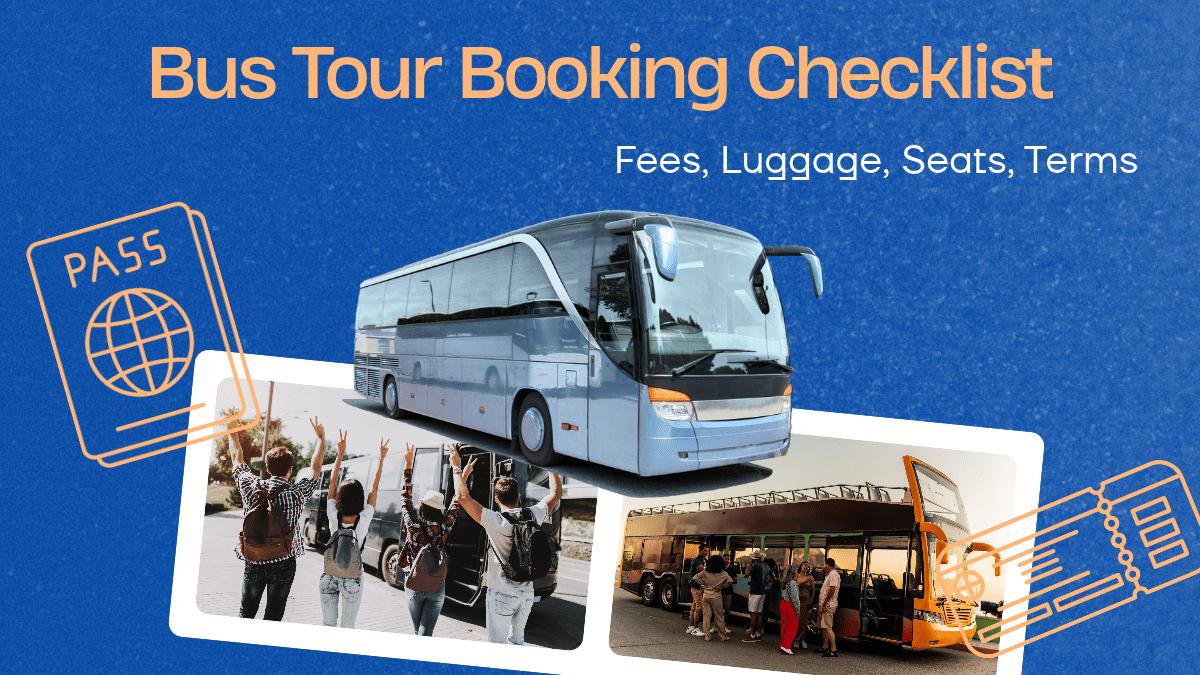
Four answers cover most of the risk, and none of them take longer than the time you would spend reading reviews. How many nights does the trip include, rather than how many days? Which city do you board in, and which one do you finish in? What is excluded and payable on the day? When does the cancellation window close?


Write those four answers down before you compare two trips, because the cheaper one usually wins on the headline number and loses on the second question. A day trip that starts at your hotel door and a cheaper one that starts at a station across town are not as far apart as the two numbers suggest.


Then pick the shape that matches the trip you are actually taking. Keep the day trip when one place is the point, and you want your evening back. Drop the cross-border loop if you would rather choose your own dinners. Skip the bus altogether when the train covers the same corridor in less time. The right answer changes with the route, and the listing gives you enough to see which one you are buying.

FAQ

Do I need to drive to join a bus tour?

No. The whole point of the format is that someone else handles the vehicle, so a license and a rental agreement are not part of the booking. You do need to reach the pickup point on time, which is why the address matters more than the map on the brochure.

How many nights are included in a multi-day bus tour?

Read the room line, not the day count. A four-day trip can carry three nights or four, and the answer changes your last morning and your flight home.

Is a day trip or a multi-day loop the better first purchase?

A day trip is the lower-risk start, since a short out-and-back tells you quickly whether you like traveling in a group with a set schedule. Move to a multi-day route once you know you can live with the pace.

How much of each day goes to sitting on the bus?

More than the map suggests. The ceiling on a bus is set by its design and, in many countries, by law, so a route that collects passengers town by town adds time before the open road even starts.

What should I confirm before paying a deposit?

The pickup address and time, the cancellation window in both directions, and which fees are collected on the day rather than included. If a bus tour website cannot answer those three before payment, keep looking.

Summary

Why People Who Do Not Want to Drive Still Get on a Bus

What These Trips Actually Look Like in Practice

What a Bus Tour Website Should Tell You Up Front

How to Judge a Bus Trip Before You Pay

When the Bus Is the Wrong Tool

A Short Checklist Before You Pay

FAQ

America's 250th Anniversary Mega Sale

image