PortugalEuropeBest TimePlaces to GoTravel Tips
Show All

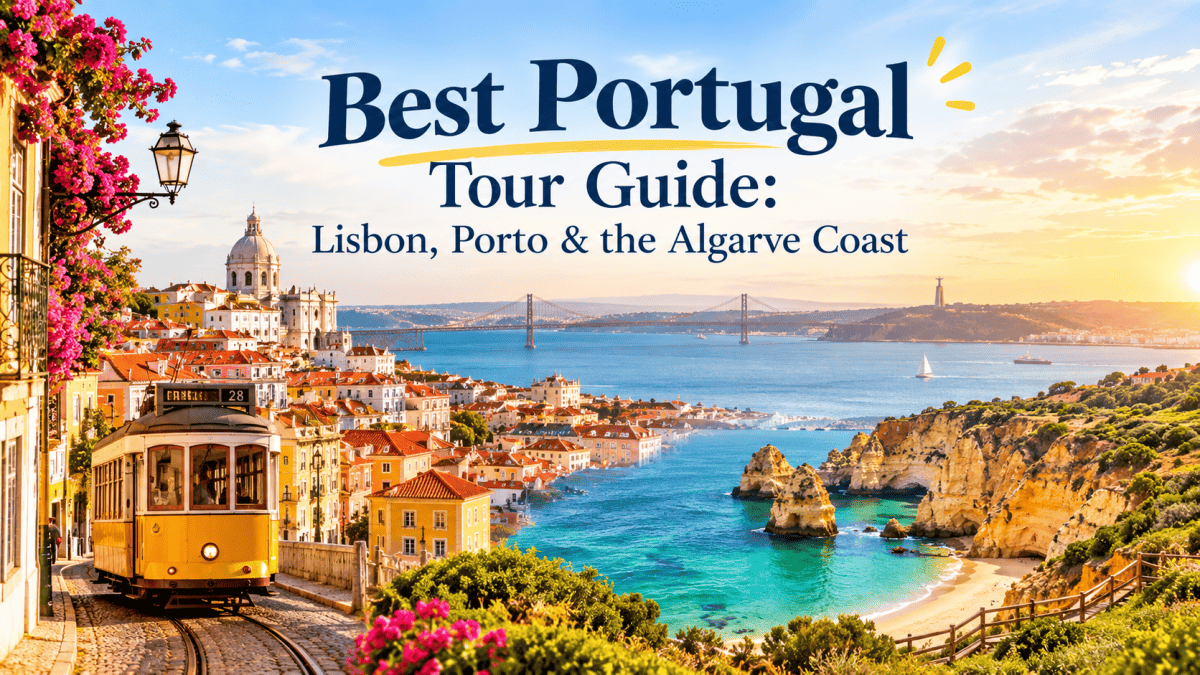
Best Portugal Tour Guide: Lisbon, Porto & the Algarve Coast

cover

Portugal packs an extraordinary range of experiences into a compact country on the western edge of Europe. From the tiled facades and tram-lined hills of Lisbon to the port wine cellars of Porto and the golden cliffs of the Algarve, each region offers a distinct character. Travelers choosing Portugal tours for the first time often find that the best cities to travel in Portugal include three main destinations—Lisbon, Porto, and the Algarve’s coastal towns—which cover the highlights while leaving room for quieter finds.

This guide breaks down what makes each region worth visiting, when to go, how to get around, and how to build an itinerary that balances cities, coastline, and culture.


Why Portugal Belongs on Your Travel List

Portugal consistently ranks among Europe’s most affordable destinations, with excellent food, wine, and welcoming locals. The country receives more sunshine than most of northern Europe, and its size—roughly the same as Indiana—means you can travel between major cities in two to three hours by car or train.

Affordable European Travel


Meals at local restaurants typically cost €10–15, a bottle of house wine runs €5–8, and mid-range hotels in city centers average €80–120 per night. These prices make Portugal one of the best-value destinations in Western Europe, particularly for travelers comparing it to France, Italy, or Spain.

portugal

Rich History and Culture


Portugal’s Age of Exploration legacy appears everywhere—in the Manueline architecture of Lisbon’s Belém district, the azulejo-tiled churches of Porto, and the Moorish-influenced buildings of the Algarve. The country’s fado music tradition, recognized by UNESCO, adds emotional depth to evenings spent in Lisbon’s Alfama neighborhood.

Diverse Landscapes


Within a few hours’ drive, you can move from the urban energy of Lisbon to the vine-covered Douro Valley, then south to the sea caves and sandy beaches of the Algarve. This geographic variety means a single trip can include city sightseeing, wine tasting, and beach relaxation.

Best Time to Travel to Portugal

The best time to travel to Portugal depends on your priorities. Spring (April–May) and early fall (September–October) offer warm weather, fewer crowds, and lower prices. Summer (June–August) brings peak beach season along the Algarve but also the highest prices and largest crowds in Lisbon and Porto.

Spring and Fall Advantages


April and May bring wildflowers across the Alentejo region, comfortable temperatures (18–24°C / 65–75°F), and thinner crowds at major attractions. September and October maintain warm sea temperatures along the Algarve while summer tourists thin out. These shoulder seasons offer the best combination of weather and value.

Summer Considerations


July and August see temperatures reaching 30–35°C (86–95°F) in inland areas. Lisbon and Porto can feel crowded, and accommodation prices rise 30–50 percent compared to shoulder season. The Algarve beaches become busy, though the western coast around Sagres remains less developed.

Winter Travel


November through February brings mild but wet weather, with temperatures around 10–15°C (50–59°F) in Lisbon and Porto. The Algarve stays quieter, with some hotels and restaurants closing for the season. Winter works well for city-focused trips and offers the lowest prices.

Lisbon: Portugal’s Capital of Culture

Lisbon sits on seven hills overlooking the Tagus River, with neighborhoods that each feel like separate villages. The city rewards slow exploration—riding the historic Tram 28, wandering through the Alfama’s narrow streets, and stopping for pastéis de nata at local bakeries.

Must-See Neighborhoods


The Alfama district preserves Lisbon’s oldest architecture, with Moorish-era alleys leading to viewpoints (miradouros) overlooking the river. Bairro Alto offers nightlife and restaurants, while Belém houses the Jerónimos Monastery and Belém Tower, both UNESCO World Heritage Sites. The LX Factory, a converted industrial complex, hosts shops, restaurants, and weekend markets.

Lisbon

Day Trips from Lisbon


Sintra lies 40 minutes west by train, with fairy-tale palaces including the colorful Pena Palace and the Moorish Castle. Cascais, a coastal town 30 minutes away, provides beach access and seafood restaurants. Both make excellent half-day or full-day excursions from the capital.

Food and Dining


Lisbon excels at seafood, particularly grilled sardines, bacalhau (salt cod prepared hundreds of ways), and cataplana, a seafood stew cooked in a copper pot. Time Out Market brings together top chefs under one roof, while neighborhood tascas serve hearty Portuguese meals at local prices.

Porto: Port Wine and Riverside Charm

Porto clusters along the Douro River, with the iconic Dom Luís I bridge connecting the city to Vila Nova de Gaia, where port wine cellars have operated for centuries. The city’s historic center, a UNESCO World Heritage Site, features baroque churches, azulejo-clad buildings, and narrow streets descending to the waterfront.

Porto

Historic Center Highlights


The São Bento railway station displays 20,000 azulejo tiles depicting Portuguese history. The Clérigos Tower offers 225 steps to panoramic city views. The Lello Bookstore, with its neo-Gothic facade and ornate staircase, inspired J.K. Rowling’s descriptions in the Harry Potter series (she lived in Porto in the early 1990s).

Port Wine Cellars


Cross the Dom Luís I bridge to Vila Nova de Gaia, where cellars such as Graham’s, Taylor’s, and Sandeman offer tours and tastings. Most tours include the history of port wine production followed by samples of ruby, tawny, and vintage ports. Budget €15–25 for a standard tour with tasting.

Douro Valley Excursion


The Douro Valley, about 90 minutes east of Porto, produces the grapes used in port wine. The terraced vineyards along the river form a UNESCO landscape. Day trips from Porto include river cruises, wine tastings at quintas (wine estates), and scenic train rides along the Douro line.

The Algarve Coast: Beaches, Cliffs, and Coastal Towns

The Algarve stretches along Portugal’s southern coast, known for dramatic limestone cliffs, sea caves, and golden sand beaches. The region divides into the central tourist area around Albufeira, the western coast near Sagres, and the eastern stretch toward the Spanish border. 

algarve

Top Beaches and Natural Attractions


Praia da Marinha, near Carvoeiro, consistently ranks among Europe’s most beautiful beaches, with turquoise water and limestone formations. Benagil Cave, accessible only by boat or kayak, features a hole in the ceiling opening to the sky. Ponta da Piedade, near Lagos, showcases towering rock formations and sea arches best viewed by boat tour.

Coastal Towns


Lagos combines historic walls and cobblestone streets with beach access and a lively marina. Tavira, in the eastern Algarve, offers a quieter atmosphere with Roman bridges and access to Ilha de Tavira, a barrier island beach. Sagres, at the southwestern tip, attracts surfers and hikers with its rugged coastline and the Fortaleza de Sagres, linked to Prince Henry the Navigator.

Activities Beyond the Beach


The Algarve supports golf (with more than 30 courses), hiking along the Rota Vicentina coastal trail, dolphin watching boat tours, and surfing at consistent breaks along the west coast. The region’s seafood restaurants serve cataplana and grilled fish caught daily from local waters.

Planning Your Portugal Trip

Getting Around


Portugal’s train network connects Lisbon, Porto, and the Algarve (via Faro) efficiently. The Alfa Pendular high-speed train covers Lisbon to Porto in about 2 hours 40 minutes. Renting a car provides flexibility for reaching smaller towns, beaches, and the Douro Valley, though city parking can be challenging. For curated itineraries, browse  that match your interests.

Suggested Itinerary Lengths


A 7-day trip covers Lisbon (3 days with Sintra day trip) and Porto (2 days with Douro Valley day trip), though it skips the Algarve. Adding 3–4 days allows time for the Algarve coast. A 10–14 day itinerary provides comfortable pacing across all three regions with room for smaller stops.

Budget Considerations


Daily budgets range from €60–80 for budget travelers (hostels, local restaurants, public transport) to €150–200 for mid-range comfort (hotels, sit-down meals, occasional tours). Portugal remains significantly cheaper than France, Italy, or the UK for comparable experiences.

Final Thoughts

Portugal delivers a complete European experience—historic cities, world-class wine, dramatic coastline, and warm hospitality—at prices that remain lower than most Western European destinations. Lisbon, Porto, and the Algarve each offer distinct experiences, and the country’s compact size makes combining them straightforward.

Whether you choose independent travel or Portugal guided tours with arranged logistics, the country rewards curiosity. Stop for wine tastings in the Douro Valley, wander through azulejo-decorated churches, and end your days watching the sunset from a cliff-top viewpoint along the Atlantic. Portugal’s best tours of portugal experiences happen when you balance planned highlights with spontaneous findies.

Portugal guided tours work well for visitors who want historical context and logistics handled. Browse Portugal tours for curated itineraries covering Lisbon, Porto, and the Algarve with accommodations arranged.

Travelers looking for structured itineraries can also browse Portugal vacation packages that combine Lisbon, Porto, and the Algarve with transportation and accommodations arranged. These packages work well for visitors who want to focus on the experience rather than logistics.

FAQ

How many days do you need in Portugal?

Seven days cover Lisbon and Porto with day trips. Ten to twelve days allow adding the Algarve coast and the Douro Valley. Two weeks provides a relaxed pace with time for smaller towns like Évora, Coimbra, and the Alentejo region.

Is Portugal good for guided tours?

Portugal guided tours work well for travelers who want historical context, logistics handled, and access to experiences like private wine tastings. Group tours suit solo travelers or those uncomfortable driving on narrow roads. Private guides offer flexibility for customizing itineraries around specific interests.

What is the best way to see Portugal?

A combination of trains between major cities and car rental for regional exploration offers the best balance. Trains handle Lisbon-Porto and Lisbon-Faro routes efficiently. A rental car works best for the Algarve beaches, Douro Valley wineries, and Alentejo villages.

What should I eat in Portugal?

Must-try dishes include pastéis de nata (custard tarts), bacalhau à brás (shredded salt cod with potatoes and eggs), grilled sardines (peak season June–July), francesinha (Porto’s layered sandwich), and port wine. Seafood restaurants along the coast serve fresh fish and cataplana stews.

Is Portugal safe for tourists?

Portugal ranks among the safest countries in Europe, with low violent crime rates. Petty theft like pickpocketing occurs in tourist areas of Lisbon and Porto, particularly on Tram 28 and in crowded viewpoints. Standard precautions—securing valuables, avoiding isolated areas at night—apply as in any European destination.

Summary

Why Portugal Belongs on Your Travel List

Best Time to Travel to Portugal

Lisbon: Portugal’s Capital of Culture

Porto: Port Wine and Riverside Charm

The Algarve Coast: Beaches, Cliffs, and Coastal Towns

Planning Your Portugal Trip

Final Thoughts

FAQ

America's 250th Anniversary Mega Sale

image