Why Four Stops Beat Six
South America is bigger than it looks on a map. A flight from Colombia to Chile takes nearly as long as a flight across the United States, so every city you add is another airport day taken out of the good ones.
Count moves instead of cities. Four bases means four travel days inside 21: the long arrival, then three hops. Six bases means six, and at least two land in the middle of a short stay. That is how three weeks turns into a chain of airport lounges with a waterfall in the middle.
Three weeks is also the length the continent rewards. The same guidance suggests at least two to three weeks to cover several countries, and it treats seven days as enough for one slice such as Peru's highlights or Buenos Aires plus Iguazu. If you want to travel South America in 3 weeks and still feel the places, four bases is the number that holds.

What a Fifth City Costs
A fifth stop does not add one day. You shave a night off two cities to pay for the flight, then lose the free day that made them worth stopping in. There is an altitude bill too: Cusco sits high enough that the first day goes to acclimatizing, which is the quiet argument for leaving Machu Picchu to a longer trip.
Where the Extra Nights Go
That is where the trip stops being a delivery route: five nights in Rio, a week in Buenos Aires. A week in one city lets you take a day out to the pampas and still keep a Sunday for nothing in particular.
The same loop is sold as a package in several variations, and comparing two or three South America tours side by side beats rebuilding the calendar from scratch.
21-day South America Tour of Argentina, Brazil, Peru and Galápagos
Ciudad de inicio / Ciudad de fin
Rio de Janeiro, Quito
Ciudad y atracciones
Rio de Janeiro, Santa Teresa, Buenos Aires+20 más
Tamaño del grupo
Máx. 50 viajeros
Audiencia del tour
English speakers
Operador
The Travel Corporation (TTC)
The Order That Saves Flights
The route runs west to east, then south: Lima, the falls, Rio, Buenos Aires. Each hop keeps moving the same way, so you never cross the continent twice. Flip it, and the last flight becomes the longest of the trip.
Finishing in Buenos Aires has a second benefit. It is the departure point for the rest of Argentina, so a week of Patagonia or a ferry to Uruguay can hang off the end.
How the 21 Days Split
Treat the 3 weeks in South America itinerary as four blocks with three flights between them. The nights are uneven on purpose: the shortest stay goes to the falls, where two full days cover both banks, and the longest to the city where you will want a day off.
| Leg |
Days |
Base |
What the days hold |
| Lima |
1-4 |
Miraflores |
Arrival, historic center, market lunch, one day on the coast |
| Iguazu Falls |
5-7 |
Argentine side |
Brazilian walkways, Devil's Throat, rainforest |
| Rio de Janeiro |
8-12 |
Copacabana |
Sugarloaf, Corcovado, both beaches, one free day |
| Buenos Aires |
13-20 |
Plaza San Martín |
City tour, La Boca, gaucho day, Tigre, tango |
| Flight home |
21 |
- |
Transfer and departure |
Three nights in Lima is the line people argue with. Four is better if you want a day trip, and the extra night costs little besides the flight you already paid for.
If four separate city stays sound like homework, the multi-country options under South America vacation packages put the whole loop on one reservation.
Lima: Three Nights on the Pacific
Lima opens with a surprise: this is a desert. Rain averages less than 3 cm a year, and the city sits in the river valleys of the Chillón, Rímac and Lurín with the Pacific on one side. About eleven million people live here, which explains the traffic and the appetite.
Francisco Pizarro founded it in 1535, and it stayed the seat of Spanish rule for three hundred years, which is why the downtown holds churches, cloisters, and monasteries worth a morning.

Miraflores as a Base
Miraflores is the upscale district where most visitors sleep: restaurants, nightlife, hotels, and a decent dinner within walking distance after a long flight. The airport sits in Callao, 17 km from Miraflores and 11 km from the historic core.
The Historic Center
Start at the Plaza Mayor and work outward. The Church of San Francisco carries an ornate baroque façade with catacombs underneath, and the Museo Larco covers the coastal and Andean cultures that came before the Spanish.
Why the Food Earns the Third Night
Peruvian cooking pulls ingredients from the coast, the mountains, and the Amazon, and the cold current offshore makes the sea rich in fish and seafood. A market walk and a cooking demonstration turn ceviche into something you can repeat at home.
Barranco, the bohemian beach-side district, takes the evening. A two-night Lima stop is what most people book and what most people regret; three nights let you eat properly twice and still take a morning off.
Iguazu: One Side or Both
The falls run along the border of Argentina's Misiones province and Brazil's Paraná state, and together they make up the largest waterfall system in the world. Two parks, two entrances, one river: most of the water drops on the Argentine side, and the wide views come from Brazil.

The Brazilian Side
Walkways push out over the water, low and close, with the whole curve of the falls in front of you. The rainforest behind the railings holds more than 2,000 species of vascular plants.
The Argentine Side
Cross the border and the scale changes. The park runs along the top of the falls and ends at the Devil's Throat, a wall of water you hear before you reach the railing. The Guarani community of Fortín M'bororé opens its doors nearby.
Three days covers both parks if you sleep on the Argentine side and cross early. With two days, take the Argentine side rather than splitting a morning across a border post. The optional Gran Aventura boat puts you under the water instead of beside it.
Two nights at Iguazu Falls lets you see both banks without a sprint. One day buys a single park and a photograph of the other.
Rio in Five Days
Rio is the second-largest city in Brazil and the largest in the country by international visitors, with about six million people in the city and thirteen million across the metro area. The geography does the work: mountains behind, beaches in front, a bay in the middle.
Sugarloaf and the Bay
The cable car pauses at Urca Hill before the summit, and the view runs across Guanabara Bay to Copacabana. The name comes from Brazil's sugar trade era, and the story is worth hearing on the way up.

Corcovado by Cogwheel Train
Christ the Redeemer stands on Corcovado, and the cogwheel train is how you reach the top. Book that day early in the stay, because the mountain is the one fixed appointment in Rio. The statue is not the reason to climb; the view is.
Beaches and the Free Afternoon
Copacabana is the long curve with the hotel strip behind it, Ipanema is where the afternoon stretches out, and a free day between the two mountains keeps five days from becoming a checklist. The Selarón Steps and a caipirinha class fill it well.
Evenings run on samba and bossa nova, and a churrascaria dinner is the standard finish. Five nights in Rio de Janeiro cover both mountains, both beaches, and a slow morning; three cover the mountains and a swim.
Buenos Aires to Finish
Buenos Aires is the capital of Argentina, with roughly three million people in the city and more than fifteen million around it. It has the gentlest learning curve of the four stops: a temperate climate with four real seasons and a flat grid you can walk.

Neighborhoods on Foot
Four of the 48 barrios cover most of what you came for. Centro holds the Casa Rosada, the Teatro Colón, and the Florida pedestrian street. Recoleta brings the French-style buildings and the cemetery; Palermo, the tree-lined streets and restaurants; La Boca, the color and the La Bombonera stadium.
A Day in the Pampas
San Antonio de Areco sits in gaucho country, and the day runs through streets lined with silversmiths, a workshop keeping the alpargata shoe tradition alive, and an asado at a family ranch with horsemanship and dancing.
Tango and the Last Week
Tango earns the ticket: a hall, a band, a room that takes it seriously. El Querandí, a house that started as a bar in 1920, is the quieter option if you would rather taste wine. The Tigre Delta fills another half-day, with summer houses and boats.
Seven nights in Buenos Aires sounds excessive until you count them: two for the city, one for the pampas, one for the delta, one for tango, and two that belong to no plan at all. Those two are why the route ends here.
What 3 Weeks in South America Cannot Cover
Three places get left out for the same reason: each is a week, not a detour.
The Galápagos and Patagonia
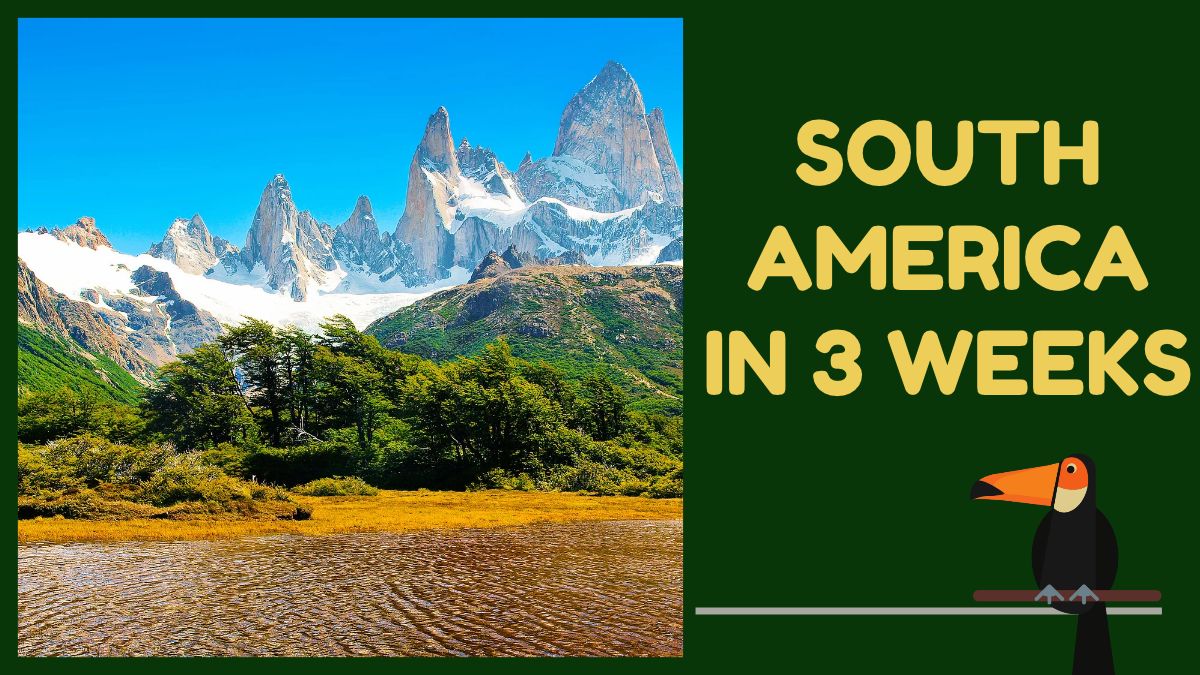
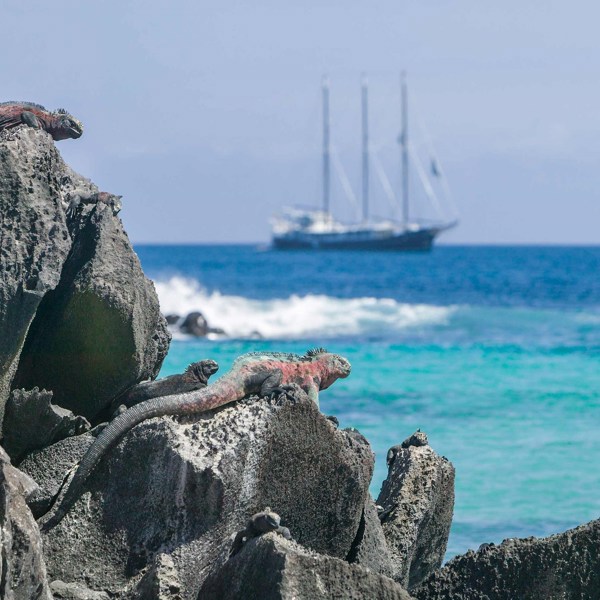
The Galápagos sit off Ecuador and run on their own flights and cruise schedules, so they belong at the end of a longer trip. Patagonia has the same problem in the other direction. Torres del Paine and the Perito Moreno Glacier are a southern trip with their own weather window, and December to March is when the trails and roads are open.
Cusco, Machu Picchu and the Amazon
Cusco, the Sacred Valley and Machu Picchu want four or five days once the altitude is counted, which is why they do not fit beside three other stops. Jungle trips out of Cusco are four-day affairs, not afternoons.
The Season Makes the Call
May through September is the dry stretch for the Andes, December to March is summer in Patagonia, and Brazil stays warm all year with Carnival filling Rio from December to February. April, October and November balance weather against crowds, and they suit this route since none of it depends on snow or a dry trail.
The honest answer to fitting everything in is no, and the choice is clear: keep the four stops and skip the Andes, or cut Rio and give that week to Cusco and Machu Picchu. Both trips work. Holding all six is how three weeks turn into a slideshow watched through a bus window.
FAQ
Can you travel South America in 3 weeks without rushing?
Yes, if you hold it to four bases and three internal flights. The split above gives Lima three nights, the falls two, Rio five and Buenos Aires a week, which leaves one slow day in each place.Does a 21 day South America itinerary leave room for Machu Picchu?
Not beside these four cities. Cusco, the Sacred Valley and the ruins cost four or five days once the altitude day is counted, so something has to go, and Rio is the usual sacrifice.Which side of the falls deserves the day?
Both, when the calendar allows. Brazil gives the panorama from walkways over the water, Argentina gives the Devil's Throat and the top of the falls. With a single day, Argentina.How are the travel days handled?
Each move is a half-day: morning transfer, flight, afternoon free. The four travel days are already inside the 21, so no city loses a full sightseeing day.