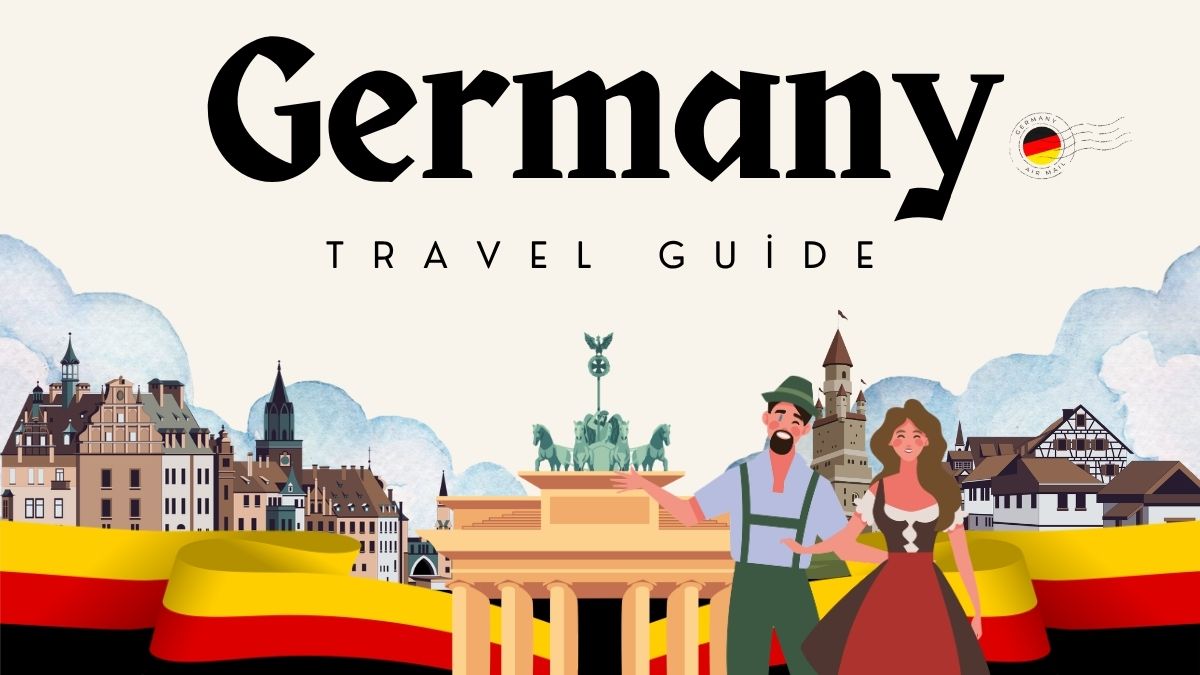
Most first trips go wrong at the map stage, because people treat Germany as one destination and then try to see all of it in a week. The country reads better as four travel regions, each with its own reason to go, and a Germany tour that tries to cover all four in five days spends most of it on the highway.
Berlin and the North-East
Berlin has been the capital since 1871 and sits in the north-east, and the city wears that century and a half on its streets. The Brandenburg Gate has watched the country's highest and lowest moments and now stands for peace and unity after the Wall came down.
Around it you get the Gendarmenmarkt with the Berlin Cathedral, Museum Island, the Reichstag, the Holocaust Memorial, the Wall Museum, Checkpoint Charlie, and Charlottenburg Palace. If you have a single day, a Berlin tour covers the gate, the memorial, and Museum Island in one loop, which saves a lot of walking.

Dresden sits south of Berlin, close enough to fold into a Berlin stay. The old Saxon capital is known as the pearl of the Elbe Valley, and Dresden Castle anchors the center.
Munich and Bavaria
Munich is the capital of Bavaria and the third-largest city in the country. Marienplatz faces the old and new town halls, the Residenz housed the Wittelsbach rulers from 1508 until the First World War, and the English Garden is one of Europe's largest city parks, with surfers on the Eisbach current.
The rest of the city fills the gaps: Nymphenburg Palace and its gardens, Olympiapark from the 1972 Games, and the beer gardens that come out whenever the sun does. Bavaria is also the alpine half of the country. Neuschwanstein and Linderhof sit south in the mountains, Zugspitze and the lakes at Starnberg and Ammersee are day trips, and a Munich tour usually means one day in town and one in the Alps.

Frankfurt, the Rhine and the West
Frankfurt looks like business, and it is: the city hosts the headquarters of a long list of European financial institutions. The old town pushes back. Römerberg, the medieval square of half-timbered houses, looks its best after dark, and Goethe's birthplace is in the same old town.
West and south of the city, the trip turns rural. The spa town of Baden-Baden sits out beyond the Black Forest, the dense woods that gave the Brothers Grimm so much of their material, and the Rhine valley is where the river cruises run. A Frankfurt tour that leaves the towers behind shows you the side of the city the offices hide.

Where Germany Turns Into Central Europe
Look at a German rail map and the borders stop mattering much. Munich launches routes into Austria, with Salzburg and Vienna on the same lines, while Frankfurt and Berlin both run south through Munich and then east to Prague, Budapest and Vienna. That is why so many German itineraries end somewhere else, and why you should decide early whether Germany is the whole trip or the first half of one.