Best Time to Visit Dubai
Dubai runs on a hot desert climate, and that reorganises everything else. The city sits on a coastal strip bordered by desert, so inland air is dry, and coastal air is heavy. Humidity of 60% to 70% along the coast is what makes the heat feel heavier than the number on the forecast.
The rule is simple. Outdoor time goes early or late; indoor time goes in the middle. A creek walk at 7 am and a mall at 2 pm beats the reverse, and that one choice decides most days.

Autumn: The Reliable Shoulder
September still behaves like summer, with highs in the mid-30s °C. By November, daytime temperatures settle into the mid-20s °C and the humidity drops away. As of November 2026, that is the version most visitors hope for: sunset trips up the tower, boat rides off the Palm, dune drives that do not leave you soaked.
Winter: High Season for a Reason
Daytime highs hover between 20 and 25 °C and nights can fall to 15 or 16 °C, colder inland where the sand gives up heat fast. This is the window for desert glamping, camel treks under a clear sky, and long al-fresco lunches. It is also the window everyone wants, so book early.
Spring: Warm Days, Cool Evenings
March starts near the low 20s °C and May finishes in the upper 20s, while evenings stay mild. Sea temperatures climb into the low 20s, so beach clubs along Jumeirah Beach Residence get busy, and a safari into the golden dunes of the Dubai Desert Conservation Reserve works without the sting of summer.
Summer: Indoor City, Early Desert
Midday heat passes 40 °C in July and August, and August has touched 54 °C in the city, with higher readings in the desert. This is when Dubai travel tips stop being optional: move outdoor plans to dawn or after sunset, and take any dune drive in the early morning rather than the afternoon.
The Burj Khalifa: Which Deck, Which Hour
The tower is the tallest building in the world, and it sits in Downtown Dubai, between Jumeirah and the outer suburbs. That location matters more than the height. From the top, you are not looking at a skyline in the distance but down into the middle of it, coast on one side and desert on the other.
Tickets for Burj Khalifa come in more shapes than most people expect, and the difference is mostly which floor and which hour you get.

Floor 124 and What the View Holds
The At the Top ticket takes you to the 124th floor, with 360-degree views. What you see is a forest rather than a single spike: Dubai has more than 900 high-rise buildings, so you are standing in the tallest tree in a very dense wood. On a clear day, the Palm Jumeirah reads as a shape, and the desert shows up as a flat gold band behind the last towers.
Midday Is the Slot to Skip
Late morning through mid-afternoon, the light goes flat, and the air holds dust, so the view loses what you came for. Take that slot if it is all you have, but put the money into the evening one if you can choose.
Sunset and After Dark
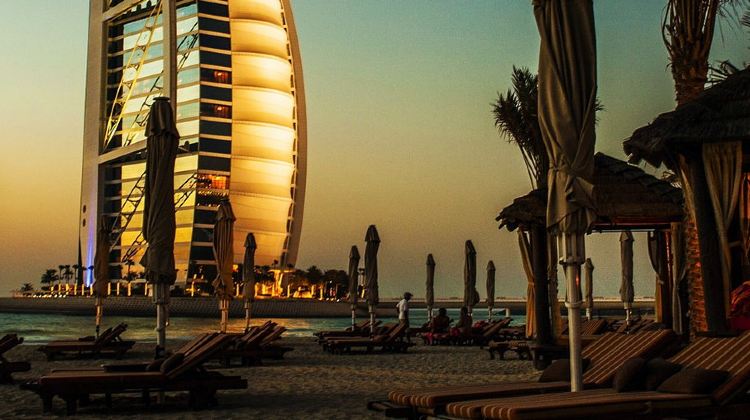
Which hour is worth the money? Sunset, the hour the tower is built for and the hour everyone books. You watch the city change colour and the desert deepen, then stay while the lights come up. Book days ahead rather than on the day, especially from November through March. The Dubai Mall sits at the base with 1,200 shops and a fountain show, so the evening fills itself.
Old Dubai, the Creek and the Souks
The creek is where this city began, as a fishing village and pearl-diving town that became a trading stop between Iran and India. It even used the Indian rupee at one point. Any Dubai city travel guide worth carrying spends a morning on these banks, not an afternoon, because the light is better and the lanes emptier.
Al Fahidi and the Fort
The Al Bastakiya district holds the wind-tower lanes, and the Dubai Museum sits inside the Al Fahidi Fort, built in 1787 and the oldest building in the city. Go early, before the tour groups arrive and before the courtyard walls start throwing heat back at you.
The Abra Crossing and the Souks
An abra across the creek puts you in Deira, the old financial centre, where the souks still run on negotiation rather than price tags. Spices on one side, gold on the other, and the gold trade is old enough to have given the city its nickname. Haggle, and remember that mall prices are fixed while souk prices are not. Shops open around 09:00 and run to 22:00, later on weekends.
What Desert Sits Outside the City
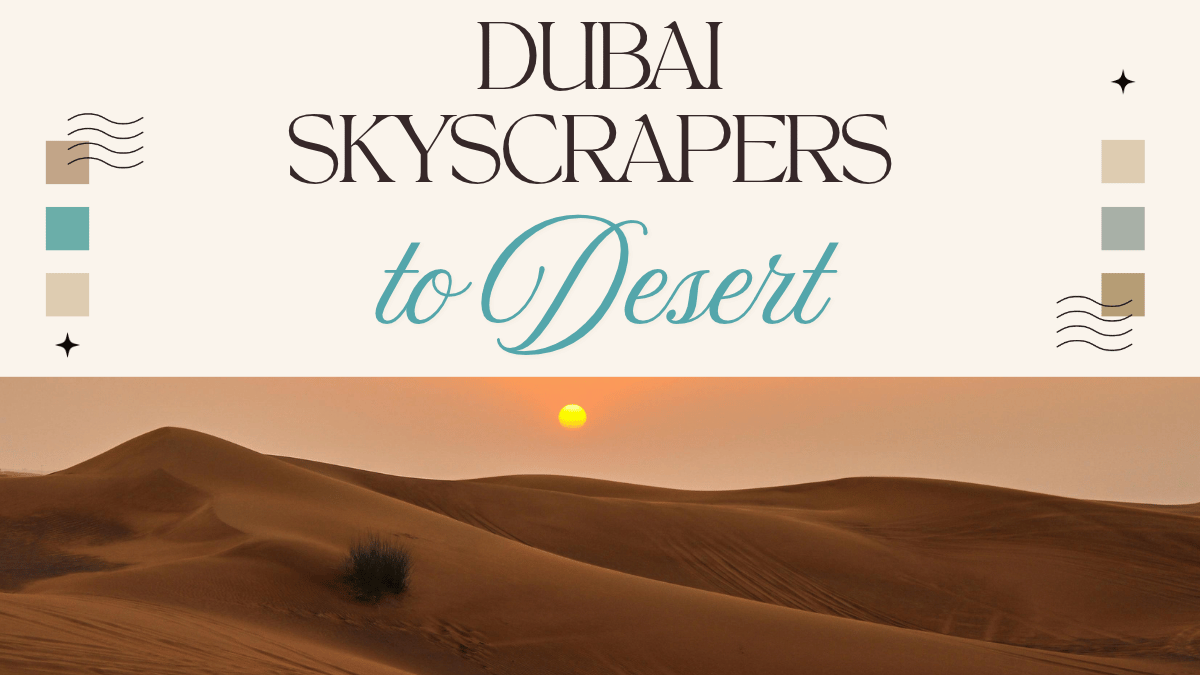
So what desert is in Dubai? Not a fenced park with a gate fee. The city sits on a coastal strip bordered by desert, and that desert is the Arabian Desert, the sand sea covering most of the Arabian Peninsula. Dubai is a thin line of glass pinned to its edge, which is why skyline and dunes share one horizon.
The transition is fast and slightly strange. Towers, then warehouses, then a highway with camel crossing signs, then sand in ridges. Within a short drive, you are in a landscape with no shade and no sound except wind and engines. It is the stretch most Dubai travel guides skip and every visitor remembers.

The Dune Belt at the City Edge
The near dunes are the ones most safari operators use, sand piled into ridges that rise and fall for kilometres. They are close enough to reach after lunch, and far enough that the city disappears behind the first ridge. This is the belt where dune buggies run, where sandboards come out, and where drivers work the ridges instead of racing them.
The Conservation Reserve
Further out sits the Dubai Desert Conservation Reserve, the protected dune country safari drives head into. Same sand, fewer tyre tracks, more of the quiet people claim they came for. If the landscape matters more than the camp show, ask which route runs through the reserve before you book.
Hatta, the Exclave Inland
The emirate's territory does not stop at the suburbs. Hatta is an exclave at the border with Oman, inland from the coast, and it is the other desert in the picture: same country, different ground, a full day rather than an evening. It asks for a fourth day rather than a second one.
How a Desert Safari Evening Runs
A desert safari in Dubai is a packaged evening with a fixed rhythm, and knowing the rhythm is most of the battle. The drive out happens in the afternoon, the dune work in the last good light, dinner in the dark. If you are comparing a Desert Safari Dubai package, check what sits inside each block, because that is where the differences hide.
Pickup and the Dune Drive
Pickup is by 4x4 from your hotel, then a highway run, then a drop in tyre pressure and a turn onto sand. The dune drive is the part people either love or endure: long climbs, soft crests, and slides down faces that look steeper from inside. Front seat for the view, back seat for the rollercoaster. Carry motion sickness tablets if you are prone.
Camels, Sandboards and Henna
At the camp edge, the pace drops. Camel rides run in short loops, which is enough: a camel is less comfortable than it looks, and twenty minutes makes the point. Sandboarding is one dune, one board, and a walk back up that takes four times as long as the ride down. Henna is the quiet option, done while you sit with something cold, and the stain outlasts the trip.
Dinner at Camp
The evening ends around low tables and a belly dancing show. Dinner comes off the grill with soft drinks included, and the eating is slower than the driving was. Dune nights cool fast from December to February, so the layer you almost left in the hotel is the one you want. Then a dark drive back, late enough that the next morning should stay free.

Getting Around and What to Wear
Much of the practical Dubai travel guide advice comes down to one line: this is a car city. Most visitors take taxis rather than the bus network, and taxis come from a queue or a raised hand, though rush hour makes both harder, and some drivers refuse short hops in jammed districts.
Signage is poor, and street names shift with every transliteration, so navigate by landmarks instead of addresses. Rental cars need an International Driving Permit unless you hold a UAE licence, and a car with a driver removes the navigation problem. The metro is the clean exception: Terminals 1 and 3 at the airport have their own station, and the ride into the centre takes 15 to 20 minutes.

Dress is casual almost everywhere, with two exceptions. The one mosque in Dubai open to the public, Jumeirah Mosque, expects covered shoulders and knees, and women should carry a scarf. Malls stop short of beachwear, so keep the pool clothes for the pool.
One planning note before you fix the days: Tours4fun groups Dubai by district and by tour type, which is the quickest way to see what fits a two-day plan and what needs a third. The Dubai tours page is the place to see what a dune evening or a city day usually includes.
Two Days or Four: How to Split the Trip
Trip length decides more than budget does. Two days force a choice between the city's two halves; four days let you stop choosing. Travel to Dubai for a week and the problem reverses, because the desert starts competing with Abu Dhabi day trips and the Palm.
Two Days: Pick Two Halves
Give the first morning to the creek and Al Fahidi, the first evening to the tower, and the second afternoon and night to the dunes. That is a complete trip, and it leaves the beach out. Trying to add the Palm and a mall crawl on top of it produces a weekend spent in traffic.
Four Days: The Full Shape
| Day |
Shape of the day |
| 1 |
Creek, abra, souks in the morning; 124th floor at sunset |
| 2 |
Slow morning, safari pickup in the afternoon, camp dinner, late return |
| 3 |
Palm Jumeirah and the beach early, mall during the hot hours, marina in the evening |
| 4 |
Hatta, or an Abu Dhabi day trip to Sheikh Zayed Mosque and Yas Island |
With three days, keep days one and two and cut day four rather than squeezing both. If your trip lands in July or August, drop the midday beach and skip Hatta, because a long inland drive in that heat buys nothing. Groups who would rather not rebuild this can lean on Dubai tours that include transfers, which remove the taxi guesswork on safari nights.
FAQ
What desert is in Dubai?
The Arabian Desert, the sand sea that fills most of the peninsula. Dubai sits on a coastal strip with sand right behind it, so the dunes start a short drive from the towers. The Dubai Desert Conservation Reserve is further out; Hatta is the inland exclave on the Omani border.How far ahead should I book the tower?
Days rather than hours for the hour before sunset between November and March, which sells out first. Midday is easier to find. The At the Top ticket covers floor 124.Can you do a safari in summer?
Yes, with a time shift. Early morning drives exist for that reason, and evening departures work once the sun drops. Afternoon dune driving in July or August is the one to avoid.What should I pack for the desert at night?
A light jacket and closed shoes. Open sand loses heat fast after dark, so the gap between afternoon and midnight beats the city forecast.