CanadaNorth AmericaThings to DoTravel Tips
Mostrar todo

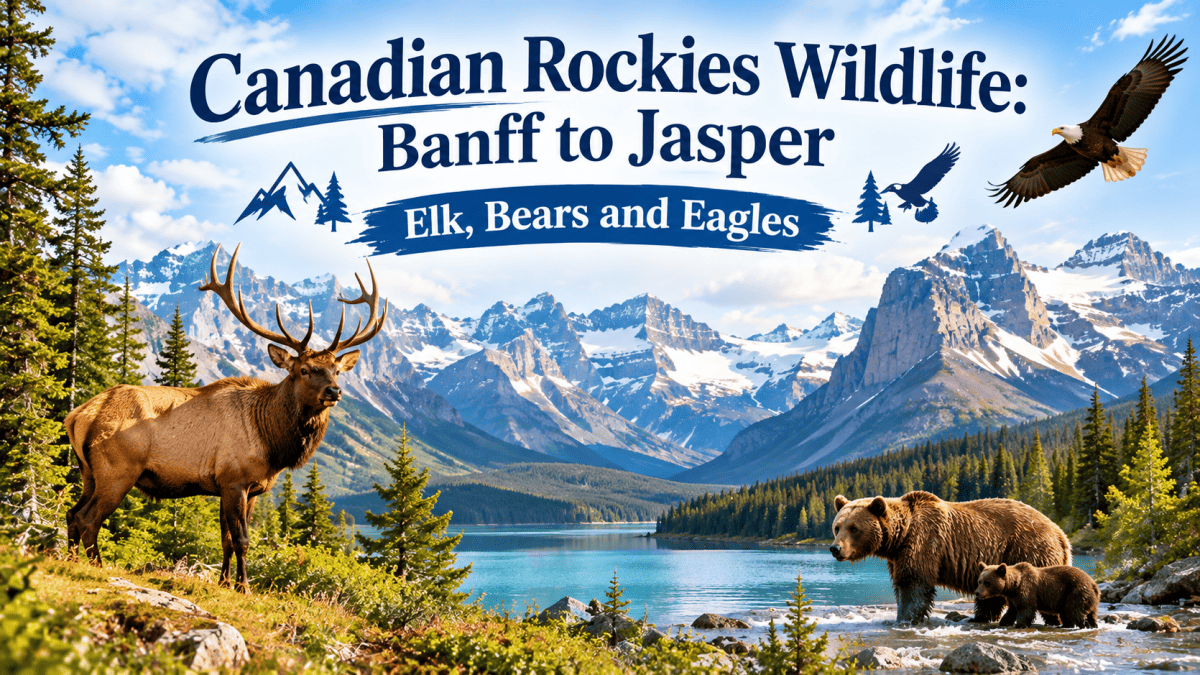
Canadian Rockies Wildlife: Banff to Jasper Elk, Bears and Eagles

cover

The Banff-to-Jasper corridor is one of Canada's strongest wildlife-viewing routes. Elk are frequently seen around valley bottoms and town edges, bighorn sheep favor rocky slopes, bears emerge seasonally, and bald or golden eagles may appear above rivers, lakes, and mountain ridges. Moose, deer, coyotes, wolves, mountain goats, and smaller mammals are also present, though sightings are never guaranteed.

The safest approach is to treat wildlife viewing as a bonus within a scenic road trip. Use pullouts, carry binoculars, stay inside the vehicle near large animals, and follow Parks Canada closures and distance rules. Never approach, feed, surround, or follow an animal for a photograph.


Canadian Rockies Wildlife

Animal Where travelers may encounter it General viewing period Main safety point
Elk Banff and Jasper valleys, meadows, town edges Year-round Give extra space during calving and rutting seasons
Black bear Forest edges, lower slopes, roadside habitat Commonly spring through fall Remain at least 100 m away and stay in the vehicle at roadside sightings
Grizzly bear Open slopes, valleys, alpine and subalpine habitat Commonly spring through fall Never approach; obey closures and carry bear spray on suitable hikes
Bighorn sheep Rocky slopes, canyon areas, roadside mineral sites Year-round Do not block movement or encourage roadside crowding
Mountain goat Cliffs and high rocky terrain Year-round, often distant View with binoculars; do not seek unsafe roadside or cliff positions
Moose Wetlands, willow areas, quiet valleys Year-round but uncommon Keep at least 30 m away; moose can charge
Wolf and coyote Broad valleys, forest edges, open terrain Year-round Keep at least 100 m from wolves and never feed either species
Bald and golden eagles Rivers, lakes, open valleys, ridgelines Year-round possibilities Use binoculars and avoid disturbing nests

Seasonal behavior, weather, food supply, traffic, and closures all influence where animals appear. A location that produced a sighting yesterday may be empty today.

Where to See Wildlife from Banff to Jasper

Banff Townsite and Bow Valley


Elk and deer often use valley-bottom habitat near Banff, including areas close to roads and developed spaces. Their comfort around people does not make them tame. Keep the required distance, never position yourself between a mother and calf, and leave immediately if an animal changes direction because of your presence.

The broader Bow Valley supports bears, coyotes, wolves, bighorn sheep, and birds of prey. Wildlife may appear beside the Trans-Canada Highway, but high speed and limited shoulders make unsafe stopping a serious hazard. Continue to a legal pullout rather than braking suddenly.

banff town


Lake Minnewanka and Nearby Roads


The Lake Minnewanka area combines open slopes, forest, water, and rocky terrain. Bighorn sheep are among the animals associated with the area, while bears and other mammals may move through the broader landscape.

Use designated parking and avoid walking toward animals beside the road. Seasonal road restrictions, trail closures, and vehicle limits may apply, so confirm current Parks Canada information before setting out.

Lake Minnewanka


Bow Valley Parkway


The Bow Valley Parkway runs through forest and meadow habitat between Banff and Lake Louise. It can offer a quieter scenic drive than the main highway, but wildlife protection measures may restrict vehicles, bicycles, or access during certain periods.

Treat every closure as habitat protection, not an inconvenience to bypass. If cycling or hiking is permitted, carry bear spray, make noise, and avoid traveling alone at dawn or dusk in areas with active wildlife warnings.


Lake Louise and Moraine Lake Area


The Lake Louise region supports grizzly and black bears, mountain goats, pikas, marmots, and birds, but heavy visitation changes the practical viewing experience. Shuttle systems and controlled access may apply to major lakes and trailheads.

Wildlife encounters are more likely on quieter trails than at crowded viewpoints, yet hiking increases personal responsibility. Check trail reports, group-size recommendations, bear warnings, and food-storage rules before leaving the developed area.

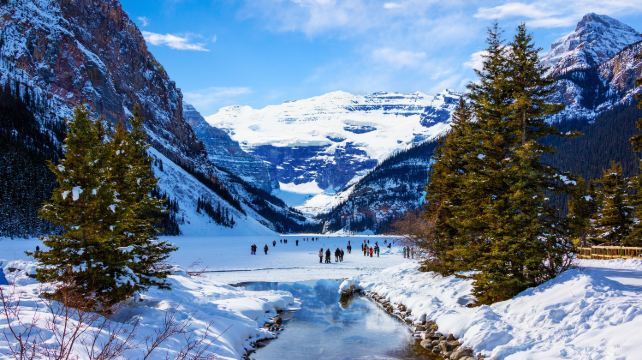
Lake Louise

Icefields Parkway


The Icefields Parkway links Lake Louise with Jasper through long stretches of mountain habitat. Bighorn sheep, bears, mountain goats, elk, deer, and birds of prey may be seen along the route. The scenery is exceptional, but wildlife jams, sudden weather, and limited services demand careful driving.

Use official viewpoints and wide pullouts. Do not stop in a travel lane, stand on the road, or crowd an animal against a barrier. Keep fuel, food, water, warm layers, and enough time to finish the drive in daylight when practical.

Icefields Parkway


Jasper and the Athabasca Valley


Jasper's broad valleys support elk, deer, bighorn sheep, bears, coyotes, wolves, and occasional moose. Elk may appear close to roads, accommodations, and picnic areas. They can become defensive during spring calving and the fall rut, so a familiar urban setting does not reduce the need for distance.

Access around Jasper can change because of weather, wildfire recovery, construction, and seasonal closures. Check official notices for roads, trails, campgrounds, and visitor services before driving north.

jasper


Maligne Lake Road


Maligne Lake Road passes through forest, wetlands, and mountain terrain. Travelers sometimes report bears, elk, moose, sheep, and eagles along the corridor. It is also a winding road with limited stopping space.

Drive slowly enough for conditions, remain alert for animals entering the road, and use established pullouts. If a roadside crowd creates congestion or unsafe behavior, continue rather than adding another vehicle.

maligne lake

Best Seasons for Wildlife in the Canadian Rockies

Spring: Spring brings animals toward lower elevations as snow recedes and new vegetation appears. Bears may be active near valley bottoms, while elk calving season requires extra caution. Trails at higher elevations can remain snowy or muddy long after town streets clear.

Summer: Long daylight supports early and late outings, but visitor traffic is highest. Animals may retreat from busy areas during the day. Start early, reserve required shuttles or entry times, and prepare for rapidly changing mountain weather.

Fall: Fall is associated with the elk rut, when bulls can become especially aggressive. Autumn colors and cooler temperatures make this a rewarding time to travel, but daylight shortens, and early snow may affect high roads and trails.

Winter: Elk, deer, sheep, coyotes, wolves, and eagles remain active in winter, while bears usually den. Snow can make tracks easier to notice, but road conditions, avalanche closures, and severe cold limit access. Wildlife needs to conserve energy, so never push an animal to move for a photograph.

Safety Guidelines for Wildlife Observation

How Far Should You Stay from Wildlife?


Parks Canada commonly advises staying at least 100 meters—about 10 bus lengths—from bears, cougars, and wolves, and at least 30 meters—about three bus lengths—from elk, deer, sheep, moose, and other large animals. Posted signs, closures, and staff instructions may require more distance and always take priority.

Distance is measured from the animal, not from the edge of the road or trail. If an animal approaches, back away without running and return to a vehicle or secure location when possible. If it changes its behavior, stops feeding, stares, lowers its head, pins its ears, or moves because of you, you are too close.

jasper


Bear Safety Between Banff and Jasper


Both black bears and grizzly bears live in the Canadian Rockies. Color is not a reliable way to identify them: black bears can be brown, and grizzlies vary from dark brown to pale blond. Identification matters less than safe behavior.

When hiking in bear country:
  • Carry bear spray where it is immediately accessible, not buried in a backpack.
  • Learn how to remove the safety clip and use the spray before entering the trail.
  • Hike in a close group and make regular human noise, especially near water, dense brush, and blind corners.
  • Keep food, scented items, and waste secured according to park rules.
  • Leave the area if you see a carcass, fresh bear sign, or a warning posted by park staff.
  • Keep dogs leashed where permitted; dogs can provoke defensive behavior.
  • Never run from a bear or use bear spray as a preventive coating on people or equipment.
Bear spray is regulated as a dangerous item for air travel. Buy or rent it locally and confirm current transport rules before moving it in any vehicle, bus, or train.
 

Elk Safety: Calm Appearance, Real Risk


Elk cause injuries when people underestimate them. Cows may defend calves in spring, and bulls can be unpredictable during the fall rut. An elk grazing beside a hotel, sidewalk, or parking lot still needs a wide buffer.

Never use a person, fence, or parked car as a reason to squeeze past. Cross the street, change the route, or wait. If an elk approaches, seek protection behind a solid barrier rather than trying to photograph it at close range.


Eagles and Other Birds of Prey


Bald eagles are often associated with lakes and rivers, while golden eagles use open valleys and mountain terrain. Hawks, falcons, owls, ravens, and waterbirds add variety even when large mammals remain hidden.

Bring binoculars and scan dead trees, cliff ledges, river bends, and rising air above ridgelines. Do not play bird calls, approach nests, or leave trails to force a closer view. A telephoto lens produces better photographs without disturbing the bird.


Responsible Roadside Wildlife Viewing


Roadside sightings can become dangerous within seconds. One stopped vehicle leads to several more, people step into traffic, and an animal loses its escape route.

Use this sequence:
  1. Slow down without braking suddenly.
  2. Stop only in a legal pullout with the vehicle completely outside the traffic lane.
  3. Stay inside when bears, wolves, cougars, moose, or agitated elk are present.
  4. Keep the engine ready to move if traffic or the animal's behavior changes.
  5. Take a brief look and leave space for others.
  6. Follow instructions from wardens, police, road crews, or wildlife staff immediately.
Feeding wildlife is prohibited and harmful. It can cause animals to lose their natural caution, approach roads, damage property, or be destroyed after becoming dangerous.

Wildlife Photography Tips

A safe wildlife photograph relies on reach, patience, and composition rather than physical closeness.
  • Use a telephoto lens or binoculars instead of approaching.
  • Photograph from the vehicle when it is safe and legally parked.
  • Avoid surrounding an animal with other photographers.
  • Keep flash off near wildlife, especially at night.
  • Do not reveal the precise location of sensitive nests, dens, or rare species.
  • Include habitat in the frame; a wider environmental image often tells a stronger story.
Phones can produce good landscape images, but digital zoom does not justify reducing the safety distance. If the animal looks small on screen, let it remain small.

Suggested Banff-to-Jasper Wildlife Itinerary

Day 1: Banff and Lake Minnewanka

Settle into Banff, review current wildlife warnings, and use established roads and viewpoints around the townsite and Lake Minnewanka. Join a guided wildlife outing if you want help interpreting habitat and animal signs.

Day 2: Bow Valley and Lake Louise

Travel through the Bow Valley toward Lake Louise, using only open roads and trails. Build the day around scenery and hiking rather than expecting a particular animal.

Day 3: Icefields Parkway

Allow a full day for the drive to Jasper. Stop at legal viewpoints, keep fuel and food plans conservative, and continue past any unsafe wildlife jam.

Day 4: Jasper and Maligne Valley

Check road conditions before using Maligne Lake Road. Scan wetlands and forest edges from designated areas, then return to Jasper before fatigue or darkness makes driving harder.

Day 5: Flexible Jasper Day

Use the final day for a guided hike, birding, a scenic lake, or an alternate route based on weather and closures. Flexibility improves both safety and wildlife opportunities.

Travelers who want transport and lodging arranged together can compare Canadian Rockies vacation packages.

What to Pack

Bring clothing for changing elevation and weather, even during summer. A practical kit includes:
 
  • Binoculars and a telephoto camera lens
  • Warm layers and a waterproof shell
  • Walking shoes with reliable grip
  • Bear spray purchased or rented locally, where appropriate
  • Water, food, and a secure waste bag
  • Offline maps and downloaded park notices
  • A charged phone and backup battery
  • Sunglasses, sunscreen, and insect protection
Keep food out of sight in unattended vehicles where required, and use wildlife-proof storage at campsites and picnic areas.

The best wildlife in the Canadian Rockies appears on its own schedule. Build the trip around safe roads, open trails, and mountain scenery, then watch patiently from a respectful distance. Elk, bears, eagles, and other animals are most memorable when their natural behavior remains undisturbed.

FAQ

What is the best time to see Canadian Rockies wildlife?

Spring and fall often provide strong opportunities because animals use lower elevations and display seasonal behavior. Summer offers long daylight but more visitors, while winter favors elk, sheep, coyotes, wolves, and birds. No season guarantees sightings.

Where can I see wildlife in the Canadian Rockies parks?

Banff's Bow Valley, the Icefields Parkway, Jasper's Athabasca Valley, and the Maligne Corridor contain varied habitats. Use legal pullouts and open trails, and treat sightings as unpredictable rather than driving repeatedly to a reported location.

How close can I get to elk and bears?

Stay at least 100 meters from bears, cougars, and wolves, and at least 30 meters from elk, deer, sheep, and moose. Give more space whenever an animal reacts, and follow stricter posted instructions.

Do I need bear spray in Banff and Jasper?

Bear spray is recommended for many hiking situations in bear country. Carry it accessibly and know how to use it. Local trail notices, guided-tour instructions, and Parks Canada advice should determine the plan for a specific route.

Are bears commonly seen from the Icefields Parkway?

Bears may appear along the parkway, particularly when food draws them toward lower slopes, but sightings are never assured. Stop only in a safe pullout, stay inside the vehicle, and leave if congestion develops.

Resumen

Canadian Rockies Wildlife

Where to See Wildlife from Banff to Jasper

Best Seasons for Wildlife in the Canadian Rockies

Safety Guidelines for Wildlife Observation

Wildlife Photography Tips

Suggested Banff-to-Jasper Wildlife Itinerary

What to Pack

FAQ

America's 250th Anniversary Mega Sale

image