ChicagoUnited StatesNorth AmericaBest TimePlaces to GoThings to DoTravel TipsVacations
Mostrar todo

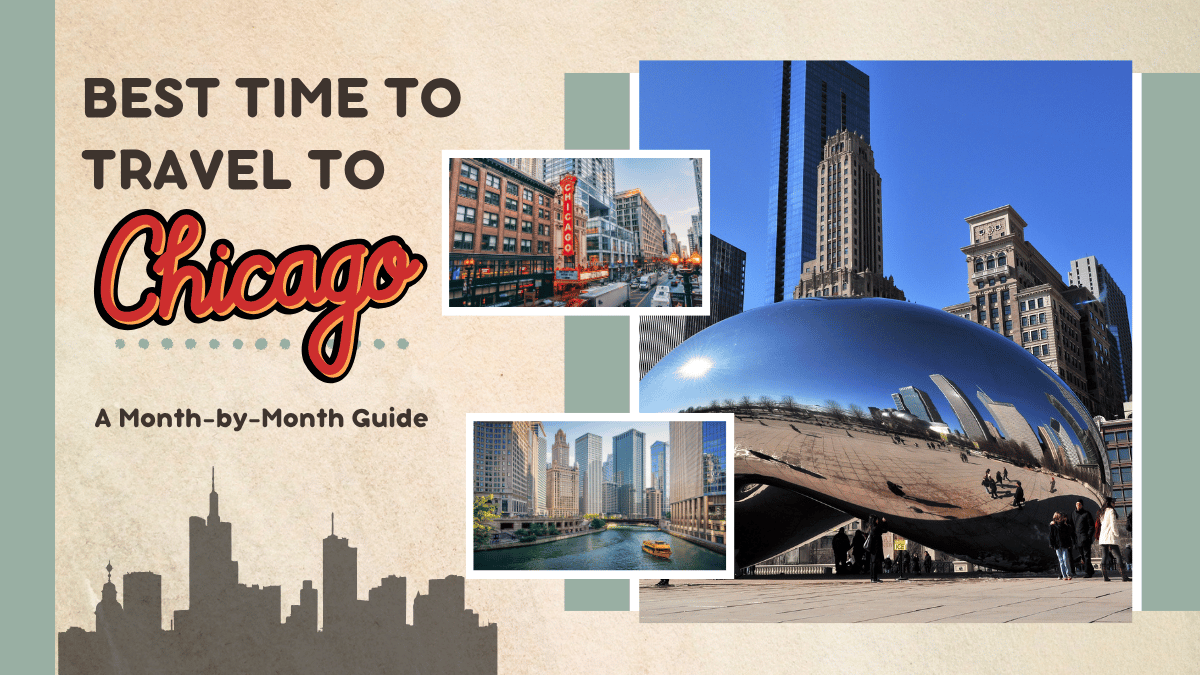
Best Time to Travel to Chicago: A Month-by-Month Guide

cover

The month you pick decides the trip in Chicago, and that is the whole difficulty with choosing a date. July hands you long daylight, warm evenings, and a waterfront full of people. January hands you a cold, quiet city where the museums, the skating rink in Millennium Park, and the hotel deals of the lower tourist season carry the day.


So when is the best time to travel to Chicago for your own trip? It comes down to whether you want boat cruises and warm evenings, maple leaves and short lines, or hotel deals and empty galleries. I've walked the Lakefront Trail in every season, and no single month wins everything. 


Chicago by the Seasons

Chicago sits along Lake Michigan in northeastern Illinois and is the third most populous city in the United States, so the lake moderates the air and the lakeshore often offers some relief on the hottest days. The city was incorporated in 1837 and picked up two nicknames along the way: the Windy City and the Second City.


Season Months Weather What that means for you
Winter December, January, February Around freezing, which is 0 C or 32 F, and lower at night, with frequent snow and lake-effect winds near the water. Museums, the skating rink, and long dinners, with layering essential and thinner crowds.
Spring March, April, May Highs from about 5 C or 41 F in March toward 15 C or 59 F by late April and May, with brisk nights and plenty of rain. Blooming paths, the Lakefront Trail, and fewer crowds than summer.
Summer June, July, August Average highs in the mid-20s C, which is 77 to 82 F, and some days in the upper 80s F, with rising humidity and thunderstorms. Beaches, river cruises and festival evenings, so reserve popular attractions well in advance.
Fall September, October, November Low 20s C, or the 70s F, in early September, dropping toward 10 to 13 C, which is 50 to 55 F, by October and November. Foliage, film festivals and a quieter boat cruise on the river.


Chicago

Winter: December, January and February


Winter is the season people warn you about, and it is also the season that rewards a little planning. Lake-effect winds make the shorefront brisk, snow is frequent, and nights sit at or below freezing. The city answers with indoor pleasures: the ice rink in Millennium Park, hot chocolate with a view of the lit-up skyline, and flagship museums such as the Art Institute of Chicago. The lakefront still beckons for bracing walks, and rooftops with fire-pits offer refuge from the cold.


Crowds thin out, and because this is the lower tourist season, hotel deals are often available. That suits anyone who would rather have the galleries and the theater to themselves than stand in a summer line. Pack accordingly: layering is essential, and some outdoor venues may close because of the weather.


Spring: March, April and May


Spring arrives slowly. Daytime highs climb from about 5 C or 41 F in March toward 15 C or 59 F or higher by late April and May, though nights stay chilly and the breeze coming off the lake makes it feel colder still. Rainfall and swings are common, and patches of snow can linger early in the season.


What you get in return is a city that feels unhurried. Grant Park's paths come into bloom, Cloud Gate gives you the mirror reflections, and the Lakefront Trail is pleasant again for a long walk. The St. Patrick's Day parade and early-season baseball at Wrigley Field land in this stretch, and locals get back on the 606 Trail and the outdoor tables of Wicker Park. Pick spring if you want the parks and the lake without the summer crowds, and keep a light rain jacket in your bag.


Summer: June, July and August


Summer is the city at full volume: long daylight hours, average highs in the mid-20s C, which is 77 to 82 F, and some days in the upper 80s F. Humidity rises, and thunderstorms can pop up, so an early start and a loose plan for the afternoon work better than a fixed schedule. The lakeshore is where you find relief on the hottest afternoons.


This is when the water matters. North Avenue Beach and the Lake Michigan shoreline fill up, boat cruises and architecture tours animate the Chicago River, and street food festivals, rooftop bars, music in Millennium Park, and neighborhood block parties give the evenings their energy. It is the busiest of the four seasons, and the destination page's own advice is to reserve popular attractions well in advance. It suits anyone who wants the water and the long light.


Fall: September, October and November


Fall is the season I would choose for a first visit to the city. Early September still delivers daytime highs in the low 20s C, which is the 70s F, and the outdoor scene stays comfortable. By October and November, highs fall toward 10 to 13 C, or 50 to 55 F, and you feel the breeze more when you walk near the lake.


What you get for that drop in temperature is space. The humidity subsides, the climate becomes more predictable, and an architecture boat cruise runs with far fewer people on board. Foliage shows up in Lincoln Park, and along the Lakefront paths, film festivals and Halloween celebrations fill the calendar, and neighborhoods such as Logan Square and Hyde Park find their seasonal charm. October is the month to aim for, with crisp air and evenings cool enough to justify a long dinner in a craft cocktail lounge.

Month by Month: The Best Time to Travel to Chicago

Here is the same year month by month, with the one thing each month is genuinely best for.


MonthBest for
JanuaryDeep winter, when temperatures hover around freezing. Best for museum days, skating at the ice rink in Millennium Park and the hotel deals that turn up in the lower tourist season.
FebruarySnow still on the ground and the same freezing numbers. Best for flagship museums, hot chocolate with a view of the lit-up skyline and the hotel deals of the lower tourist season.
MarchHighs near 41 F, with rain in the mix and patches of snow still possible. Best for the St. Patrick's Day parade and a downtown with fewer crowds than summer.
AprilHighs climbing from 41 F in March toward 59 F by late April. Best for the blooming paths of Grant Park, Cloud Gate reflections and a first long walk on the Lakefront Trail.
MayMild days, brisk nights and a breeze off the lake. Best for cycling the 606 Trail, baseball at Wrigley Field and coffee outdoors in Wicker Park.
JuneAverage highs in the mid 20s C, which is 77 to 82 F, and long daylight hours. Best for boat cruises and architecture tours on the Chicago River, plus music in Millennium Park.
JulyThe same warm range with rising humidity and afternoon thunderstorms. Best for North Avenue Beach, street food festivals and rooftop bars at sunset.
AugustStill in the mid 20s C, with the lakeshore offering the relief. Best for early-morning outings, outdoor dining with lake views and neighborhood block parties.
SeptemberDaytime highs in the low 20s C, which is the 70s F, and a comfortable outdoor scene. Best for an architecture boat cruise with fewer crowds, film festivals and the turn of the foliage.
OctoberHighs dropping toward 50 to 55 F, or 10 to 13 C, with predictable weather. Best for foliage in Lincoln Park and along the Lakefront paths, Halloween celebrations and long dinners.
NovemberBreezier near the lake as the highs keep falling. Best for split days: a brisk lakefront walk first, then a theater evening or a craft cocktail lounge.
DecemberBack to around freezing, with frequent snow. Best for the Millennium Park ice rink, flagship museums and the hotel deals of the lower tourist season, with layering essential.


October is the color month, and late April and May come closest to it for anyone who wants blooming parks and short lines at the same time.

Rainy Days, Cold Days and Indoor Plans

Chicago will hand you at least one day that pushes you indoors, and the city is well stocked for it. These are the plans that hold up when the forecast turns.


Museums on the lakefront


The Art Institute of Chicago, the Field Museum of Natural History, the Shedd Aquarium and the Adler Planetarium all sit in or near the Museum Campus on the lakefront, so a gray morning is a good reason to pick one and go deep. The Art Institute is the one the winter months lean on hardest, and the same pass of buildings covers an entire wet day.


Food and theater for a cold evening


On a cold evening, deep dish pizza, Chicago-style hot dogs and the theater scene give you a reason to stay downtown, and the city's outdoor art means a short walk between buildings still shows you something.


Two corners worth a detour


When the weather clears, the 13-block Magnificent Mile gives you a long stretch of shopping, and Navy Pier has a Ferris wheel about 15 stories high that looks back at the skyline. The same pier holds the Chicago Children's Museum and the Chicago Shakespeare Theater, and the John Hancock Center carries the 360 Chicago Observatory on top of it, which is the indoor version of that view.


One timing note for the cold months: some outdoor venues may close because of the weather, so check the day before rather than assuming.

Chicago

Your Month, Your Trip, Your Call

The best time to visit Chicago depends on the kind of trip you have in mind. July and August are ideal for warm evenings and architecture boat tours along the river, while October brings colorful fall foliage and a more relaxed pace. If you prefer indoor attractions, ice skating at Millennium Park, and potentially lower hotel rates, December through February can be a quieter alternative.
 

For most travelers, late April through May and September through early October offer the best balance of mild weather and manageable crowds. Early October is especially appealing if you want to enjoy Chicago's autumn scenery without the peak summer rush.
 

Check the forecast a week out before you book the pieces that move with your dates, layer your clothes, and keep one day loose for whatever the lake decides to do. If your dates are still open, the Chicago vacation packages page collects the trips that run from the city, each one naming the months it suits.

FAQ

When is the best time to travel to Chicago?

For mild weather and fewer crowds, aim for late April and May or September and early October. July and August are the warmest and the busiest, while December through February sit around freezing and bring the hotel deals of the lower tourist season.

How cold does Chicago get in winter?

Our destination page puts winter temperatures around freezing, which is 0 C or 32 F, and lower at night, with lake-effect winds near the water, frequent snow and the chance of a day that keeps you indoors.

What is there to do in Chicago in fall?

Foliage appears in Lincoln Park and along the Lakefront paths, an architecture boat cruise runs with smaller crowds, and film festivals and Halloween celebrations fill the calendar. The six-day Maple Foliage trip is built around that window.

Do the coach trips include meals and tickets?

Breakfasts are included, three on the four-day trip, four on the five-day trip and five on the six-day trip. Attraction tickets and gratuities of 15 dollars per person per day are outside the price, so plan for both.

How far ahead should I book a summer trip?

The destination page's advice is to reserve popular attractions well in advance, and June, July and August are the heaviest months on the waterfront, so book the river cruises and the observation decks first and keep the rest of your days flexible.