ViennaAustriaEuropeBest TimePlaces to GoThings to Do
Show All

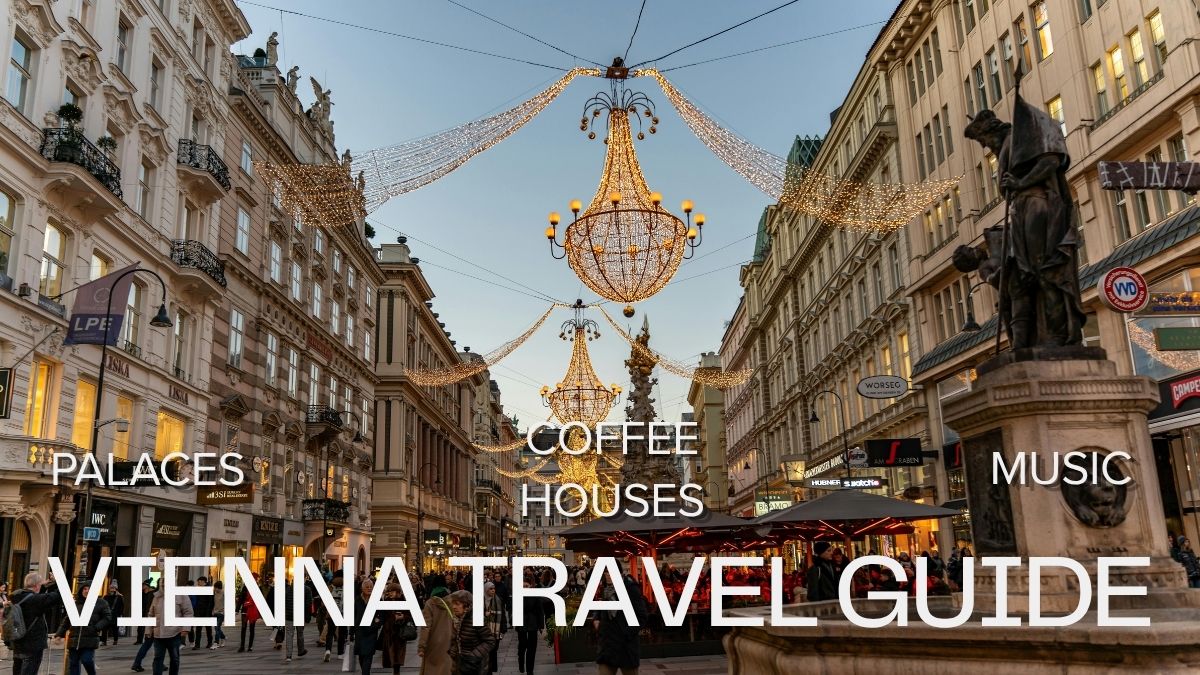
Vienna Travel Guide: Palaces, Coffee Houses & Music

cover

Vienna is a city you can enjoy slowly. In a single day, you can walk through a Habsburg palace, sit for two hours over one coffee, and stand at the back of an opera house for the price of a cinema ticket. Few European capitals pack this much imperial history, café culture and live music into a compact, easy-to-walk center.

This Vienna travel guide is for first-time visitors who want practical answers. It covers the best time to travel to Vienna, how to get from the airport and around the city, the palaces worth your time, how coffee houses work, how to hear music on a modest budget, and a three-day Vienna travel itinerary. 

Best Time to Travel to Vienna

Vienna works in every season, so the best time to travel to Vienna depends on what you want to do. Here is how the year breaks down.
 
Season What to expect
Winter (December to February) Days can drop below freezing. Christmas markets run from about mid-November to late December, with the largest at Rathausplatz and a more artisan-focused one at Spittelberg. January and February are quieter, and attractions such as Schönbrunn and the Upper Belvedere see fewer visitors
Spring (March to May) Fewer tourists and easier hotel bookings, though March can be gray. May brings the Vienna Festwochen arts festival
Summer (June to August) Outdoor cafés, Heurigen wine taverns and beach bars along the Donaukanal. Popular attractions get very busy, especially in August, though many locals leave the city
Autumn (September to November) Crowds thin out, and the weather often stays good. October brings the Long Night of the Museums, when museums stay open after dark

If I had to pick two months, I'd choose May or September. Both have good weather and the most festivals. For the Christmas atmosphere, go from mid-November to late December and book accommodation early, because December draws the most tourists.

Vienna

Getting to and Around Vienna

From the Airport to the City

A 2026 airport guide lists these options from Vienna International Airport:
 
Option Time Price
S7 S-Bahn to Wien Mitte About 20 minutes, roughly every 30 minutes €5.50 adult
ÖBB Railjet or InterCity to Wien Hauptbahnhof About 15 minutes, about twice an hour €5.50
City Airport Train (CAT) to Wien Mitte 16 minutes, every 30 minutes €14.90 single
Airport bus About 22 to 40 minutes, depending on the line €11 single
Taxi or private transfer 20 to 30 minutes Roughly €35 to €60

The S7 fare includes a Vienna zone ticket, so you can continue on the U-Bahn, tram or bus at no extra cost. Rail modernization works running into 2027 may change or shorten some services, so check the live timetable in the ÖBB or CAT app before you travel.
 

Public Transport Tickets

Vienna's U-Bahn, trams and buses make a car unnecessary. Wiener Linien changed its fares on January 1, 2026, and this is worth knowing because many older guides are now out of date.
 
Ticket Price
Single trip €3.20 (€3.00 if bought digitally)
24-hour ticket €10.20 (€9.70 digital)
7-day ticket €28.90 (€25.20 digital)

The 48-hour and 72-hour tickets were discontinued as of January 1, 2026. If you're staying three days, a 24-hour ticket on the days you need it, or a 7-day ticket if you'll ride a lot, is now the practical choice. The center is compact, and you can walk between many of the main sights.

The Palaces: Schönbrunn, the Hofburg and the Belvedere

Schönbrunn Palace

Schönbrunn is the Habsburgs' summer palace and one of the city's most popular imperial sites. The palace and the Children's Museum have fixed admission times, and the official ticket folder advises buying an online ticket with a time slot in advance. State Rooms admit visitors up to 45 minutes before closing. The garden attractions run from March 27 to November 2 in the 2026 season.

I haven't listed Schönbrunn ticket prices here because the official folder's price table was not readable in the copy I checked. Confirm the current prices on the palace's official website, and book your time slot before you go.

Schönbrunn Palace


The Hofburg and the Sisi Museum

The Hofburg was the Habsburgs' winter residence, and its Sisi Museum and Imperial Apartments are among visitors' most popular stops. According to the museum's official ticket page, a redesigned Sisi Museum is scheduled to reopen on November 19, 2026. The page lists a Sisi Museum day ticket at €15.00 and a Sisi Pass at €60.00, which covers Schönbrunn Palace, the Sisi Museum and Imperial Apartments, and the Vienna Furniture Museum, with a new Sisi Pass season starting on November 19, 2026. Tickets sell out online through the official ticketing site, so check the museum's status before you plan your day around it.

hofburg


The Belvedere

The Upper Belvedere is a Baroque palace that holds a major art collection, including Klimt's The Kiss, along with works by Schiele and van Gogh. Its Marble Hall is where the Austrian State Treaty was signed. The official site lists standard admission at €23.00 and opening hours of 9 a.m. to 6 p.m. daily, extended to 7 p.m. from July 15 to August 31, 2026. Children and youth under 19 enter for free, and buying online lets you go straight to the entrance.

Vienna's Coffee Houses

Coffee houses are as much a part of Vienna as its palaces. UNESCO recognized Viennese coffeehouse culture as intangible cultural heritage in 2011. The city's first coffeehouse opened in 1685, and around the 1910s Vienna had about 600 of them. Many became gathering places for writers, artists and intellectuals.
 

Famous Coffee Houses


Café Central, Café Sperl, Café Sacher, Café Prückel, Café Landtmann and Café Hawelka are among the best known. Café Frauenhuber is considered the oldest continuously operating coffeehouse. Café Sacher is linked with the Sachertorte, the city's signature chocolate cake.


What to Order

 
Drink What it is
Melange Half coffee, half milk. The Wiener Melange comes with frothed milk
Einspänner Espresso with hot water and a generous amount of whipped cream


How Coffee House Etiquette Works


Coffee arrives on a small silver tray with a glass of water. Nobody rushes you. Guests are expected to linger, and a café works like an extension of your living room. Many have marble tables, Thonet chairs, and a cozy atmosphere the Viennese call Gemütlichkeit. In summer, outdoor seating, called a Schanigarten, adds to the fun. I'd budget at least an hour for each visit and treat it as a destination in its own right, not a quick caffeine stop.

Music in Vienna

Vienna is famous for classical music, and you don't need an expensive ticket to hear it.

Vienna State Opera Standing Tickets

Standing-room tickets are the best-value way to see a performance at the Vienna State Opera. A 2026 guide says about 435 standing tickets are available per performance and that seats for 26/27 productions start under €20. There are a few ways to buy:
  • Same day online. Standing tickets go on general sale at 10 a.m. on the day of the performance. You need to register, and the guide says the limit is two per account.
  • Same day at the box office. The dedicated standing-room office on the Operngasse side opens 80 minutes before evening performances.
  • In advance. A BundestheaterCard with a one-time €28 StehplatzPLUS upgrade lets you book standing tickets from 10 a.m. the day before.
  • Returns. Even if a performance looks sold out, check the ticket offices on the day for returns.
Cheap seats sell out quickly, so arrive early. Wear comfortable shoes, and expect to check your coat and bags.

Vienna State Opera


Concerts and Other Venues

The Musikverein is a famous concert hall, and Vienna Philharmonic concerts often sell out, so book as early as you can. The Volksoper and Theater an der Wien offer other ways to see an opera or a musical. Shorter light classical concerts in historic venues are another low-cost choice, though quality varies, so read reviews first.

Vienna Travel Itinerary: 3 Days

This Vienna travel itinerary balances the big palaces with long coffee breaks and an evening of music.

Day 1: The Center and the Opera

Start in the historic center and spend the morning at the Hofburg. If the redesigned Sisi Museum has reopened, include it. Have a long lunch break at a coffee house such as Café Central or Café Landtmann, and order a Melange with something sweet. In the evening, join the standing-room queue at the State Opera.

Day 2: Schönbrunn

Book a morning time slot at Schönbrunn Palace and allow time for the gardens if you visit between late March and early November. Return to the center for the afternoon. Stop at a coffee house such as Café Sperl for an Einspänner and a slice of cake.

Day 3: The Belvedere and Music

Arrive at the Upper Belvedere when it opens at 9 a.m. to see Klimt's The Kiss before the crowds build. Spend the afternoon in the palace gardens or at a coffee house. If you've booked ahead, finish with a concert at the Musikverein or another venue.


Variations


Two-day version. Keep the Hofburg, Schönbrunn and one coffee house, and skip the Belvedere.
Four-day version. Add a second museum day, a visit to a Heuriger wine tavern in summer, or the Christmas markets in late autumn.

Vienna Travel Tips

  • Book Schönbrunn and the Belvedere online. Time slots are used for the palace, and online tickets save time at the entrance.
  • Skip the 72-hour pass. It no longer exists. Buy a 24-hour or 7-day ticket instead.
  • Take the S7 or Railjet from the airport. It costs €5.50 and is far cheaper than the express train or a taxi.
  • Arrive early for standing tickets. They sell out, and you can't hold a place for someone else.
  • Linger in the coffee houses. Nobody will ask you to leave, and it is central to the city's character.
  • Dress in layers. Winter days can fall below freezing, while August can be very warm.
Vienna rewards a slow pace. Go in May or September, book the palaces in advance, spend long afternoons in the coffee houses, and stand at the back of the opera for an evening. With a 24-hour transit ticket, a few bookings, and this Vienna travel guide as a checklist, three days will cover the essentials.
 

FAQ

How many days do you need in Vienna?

Three days cover the palaces, a coffee house or two, and an evening of music. Four days let you add a second museum day or a Heuriger visit.

How do I get from Vienna Airport to the city center?

The S7 and the Railjet cost €5.50, and the City Airport Train costs €14.90 and takes 16 minutes. Taxis and private transfers are also available.

Is the Vienna public transport 72-hour ticket still available?

No. The 48-hour and 72-hour tickets were discontinued on January 1, 2026. Buy a 24-hour or 7-day ticket.

How much is a single ticket on Vienna public transport?

A single trip costs €3.20, or €3.00 if you buy it digitally.

Can I see the Vienna State Opera cheaply?

Yes. Standing-room tickets are the cheapest option, with around 435 available for each performance. Buy them on the day or in advance with the StehplatzPLUS option.

Summary

Best Time to Travel to Vienna

Getting to and Around Vienna

The Palaces: Schönbrunn, the Hofburg and the Belvedere

Vienna's Coffee Houses

Music in Vienna

Vienna Travel Itinerary: 3 Days

Vienna Travel Tips

FAQ

America's 250th Anniversary Mega Sale

image