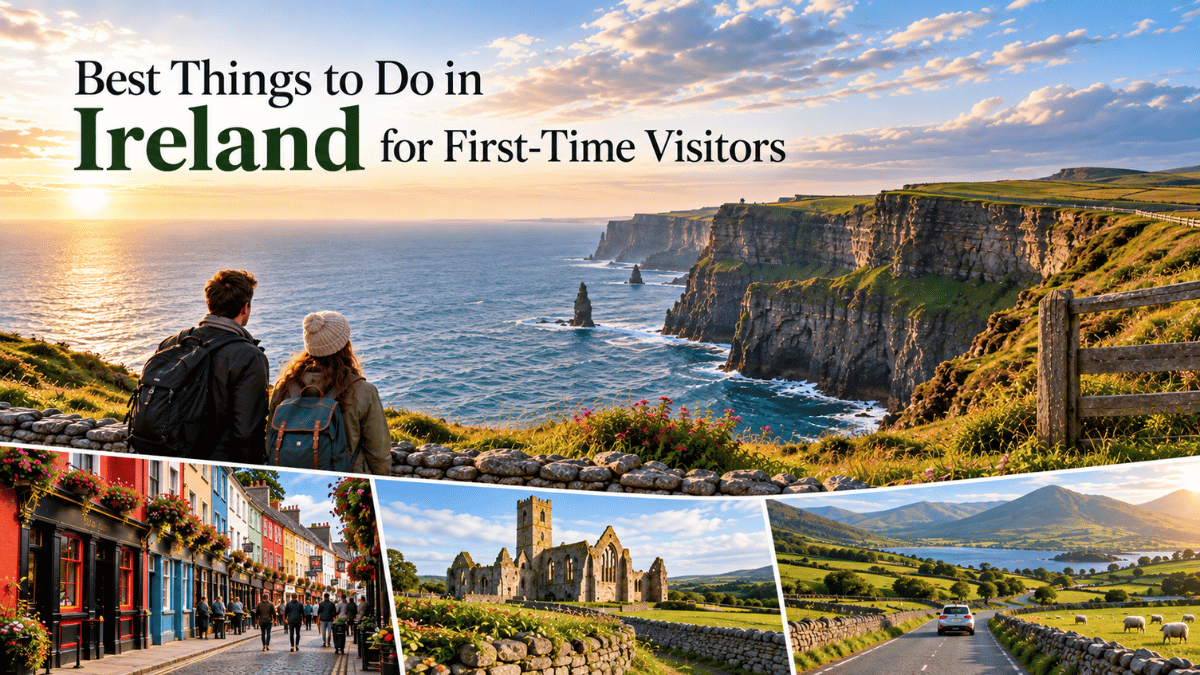
Experience the Wild Atlantic Way
The Wild Atlantic Way stretches along a vast portion of the western coast, so it is better approached in sections. From Galway, the Burren’s limestone landscape and the Cliffs of Moher form a natural pairing. From Killarney, travelers can focus on the Ring of Kerry, national-park scenery, or the Dingle Peninsula. Donegal, Mayo, and Connemara offer equally strong landscapes for visitors willing to build a different route. The goal is not to complete the coast but to experience one area well.
Road distances can be misleading. Narrow roads, viewpoints, village stops, and sudden weather changes make a scenic day slower than an ordinary drive. Stay at least two nights in an important base when possible. That creates time for a walk, a café or pub, and an alternate activity if clouds hide a major view. It also reduces the fatigue of packing every morning and arriving after dark. The 5-day Western Ireland tour from Dublin fits travelers who want Galway, the Burren, the Cliffs of Moher, Killarney, Dingle, and the Ring of Kerry without self-driving. Its benefit is coordinated transport, four nights, a driver-guide, and wide western coverage. Its limitation is a fast sequence of weather-exposed stops; meals and many admissions are outside the core inclusions, and frequent movement leaves less time for independent exploration.
Recommend Tour
City & Attractions
Dublin, Galway, County Clare+14 more
Group Size
Max. 16 travelers
Tour Audience
Primarily English-Speaking Travelers
Pair Scenery With Local Culture
A viewpoint is more memorable when it belongs to a broader day. Follow a coastal walk with seafood in a harbor town, learn why a stone fort or monastic site occupies its landscape, or spend an evening listening to traditional music. Galway and Dingle work well because scenery and town life can share the same itinerary. Leave the evening unscripted enough to follow local recommendations, but treat a music session as a cultural setting rather than a staged checklist item.
FAQ
What should you not miss on a first trip to Ireland?
Combine Dublin, one meaningful heritage site, and one western region such as Galway and County Clare or Killarney and Dingle. Add traditional music, local food, and a short outdoor activity rather than spending the entire trip moving between landmarks.How many days do you need to see Ireland?
Seven to ten days is practical for Dublin and one or two regions. Two weeks allows a slower circuit with fewer compromises. Ireland cannot be completely “seen” in one visit, so prioritize depth and full sightseeing days over the number of counties crossed.What are the best free things to do in Ireland?
Good free options include city walks, many beaches, public parks, selected museums, village exploration, and sections of coastal or greenway routes. Access policies can change, so confirm details for any specific museum, garden, or heritage property before visiting.Can you explore Ireland without renting a car?
Yes. Rail and bus services connect major cities, and guided day trips or multi-day routes can reach western attractions. Car-free travel works best with fewer bases and careful scheduling; remote rural areas offer less flexibility than Dublin, Galway, Cork, or Killarney.