Half the best things to do in Seoul fit inside one walkable district, and the other half need a departure time and a reserved seat. The order runs from the palace outward, which is how the days tend to fall once you are on the ground.
Gyeongbokgung Palace
Gyeongbokgung Palace is the anchor of the old center, and the reason to give Seoul your first morning rather than your second afternoon. The grounds are big enough that walking them properly eats a morning, and the side courtyards are where the crowds thin out.
Go early. A palace seen from the gate is a photo; the same palace walked before the courtyards fill is the reason people come back. A morning covers the main halls; the gardens add to it if you are willing to drop something later.

Bukchon Hanok Village
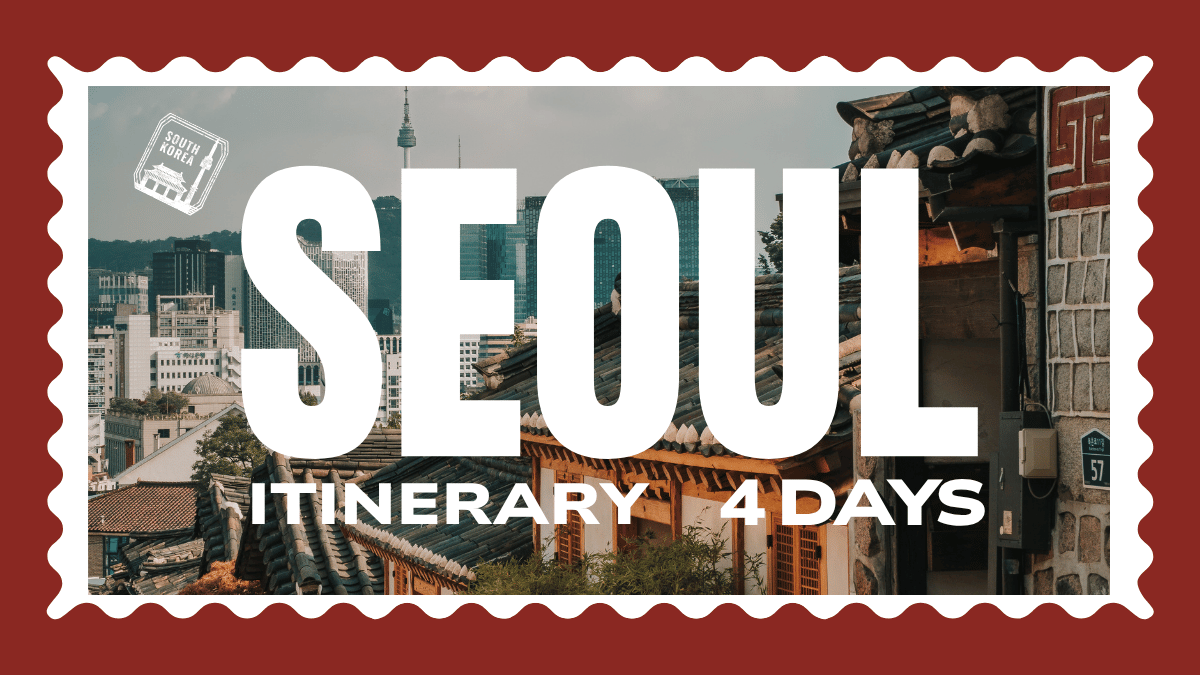
Bukchon Hanok Village sits within walking distance of the palace, and it is the stop that gives the old city its texture: narrow lanes, tiled roofs, walls that step along with the street. It is a lived-in neighborhood rather than a set, which changes how you should move through it.
Walk the main lanes, keep your voice down, and do not treat doorways as viewpoints. Go early if you want photographs without a line of people in them, and accept that a short walk is enough once you have seen the street twice.

A K-Pop Afternoon
K-pop is why a good share of first-timers pick Seoul at all, and it is the item that wrecks an itinerary when you treat it as one stop among twelve. Give that side of the trip its own afternoon or evening instead of wedging it between two palaces.
Fix the part you cannot move first, then build the rest of the day around it. If the two do not fit, move the palace morning rather than the ticket, because a palace opens again tomorrow and a show does not.
The DMZ
The DMZ is the stop that makes a Seoul trip feel like a Korea trip, and it runs as a guided day rather than something you assemble yourself. Departures leave daily on the short versions, which is what makes it easy to slot in around the city days.
Decide one thing first: whether the DMZ stands alone or pairs with city sightseeing in a single two-day block, since both versions exist and the second saves you a travel morning. Put it early. A late return and an early flight do not mix.

Korean Folk Village
The Korean Folk Village answers the question the palace raises and never settles, which is how everyone outside the court lived. It takes a full day rather than an afternoon, and it pairs with the DMZ on a three-day route for exactly that reason.
Both stops want a day, and neither rewards a rushed visit. On a four- or five-day trip it is a swap for a palace morning rather than an addition to one.
Mt. Seoraksan
Mt. Seoraksan is the mountain day, and the scenic valleys are the reason to go rather than any summit. One day up and back leaves no time to walk them, which is why a two-day version of the hike exists at all.
Take the two days or leave it out. Squeezing a mountain into a morning is how people end up remembering a bus, and it works better halfway through a longer trip.
Suwon
Suwon works as a stop on the way south rather than a day of its own. On the seven-day version of this trip, it is folded into the same run as the DMZ, Jeonju and Busan, and that is the pattern worth copying: see it while you are already moving instead of spending a return trip on it.
It costs you a stop rather than a day, which is why a tight calendar can leave it out entirely and a longer one should not.
Incheon
Incheon earns its place as a bookend. Several routes start and finish there rather than in Seoul, so the sensible use of it is the first evening after you land or the last afternoon before you fly out.
If your dates are tight, treat it as optional. A spare afternoon at either end is enough.
Gyeongju
Gyeongju is the heritage stop, and the sites there sit at a different scale from anything inside Seoul. This is where the trip stops feeling like a capital and starts feeling like a country.
It usually travels with Busan, since both sit on the same southern run, and a South Korea tour that includes the pair is the natural next step once Seoul feels finished. Give it a full day. Half a day there is a coach window with a photo stop attached.
Jeonju
Jeonju is the hands-on stop. It is where you wear hanbok and make Korean sweets, which is the sort of afternoon that keeps a mixed group happy once palace fatigue sets in.
It pairs with Gyeongju and Busan on the longer routes, so it rarely works as a standalone day out of Seoul. Give it an overnight if you can, because the pace is the point rather than the checklist.
Busan
Busan gives you the coast, the seaside cable car, and the change of pace a week of palaces needs. It is also where several routes end, so decide early whether you want to finish there or loop back to Seoul.
Give it a full day rather than an afternoon. The cable car and the waterfront want separate halves of it.

Jeju Island
Jeju Island is the add-on, and it sits at the end of the longest routes rather than inside a short Seoul stay. It is an island, so it needs travel days at each end rather than a morning's detour.
That is the real trade. Jeju plus three days in Seoul is a different trip from five days in Seoul, and one of them leaves you tired.