SeoulSouth KoreaAsiaPlaces to GoThings to DoFood & DrinkPop CultureTravel Tips
Show All

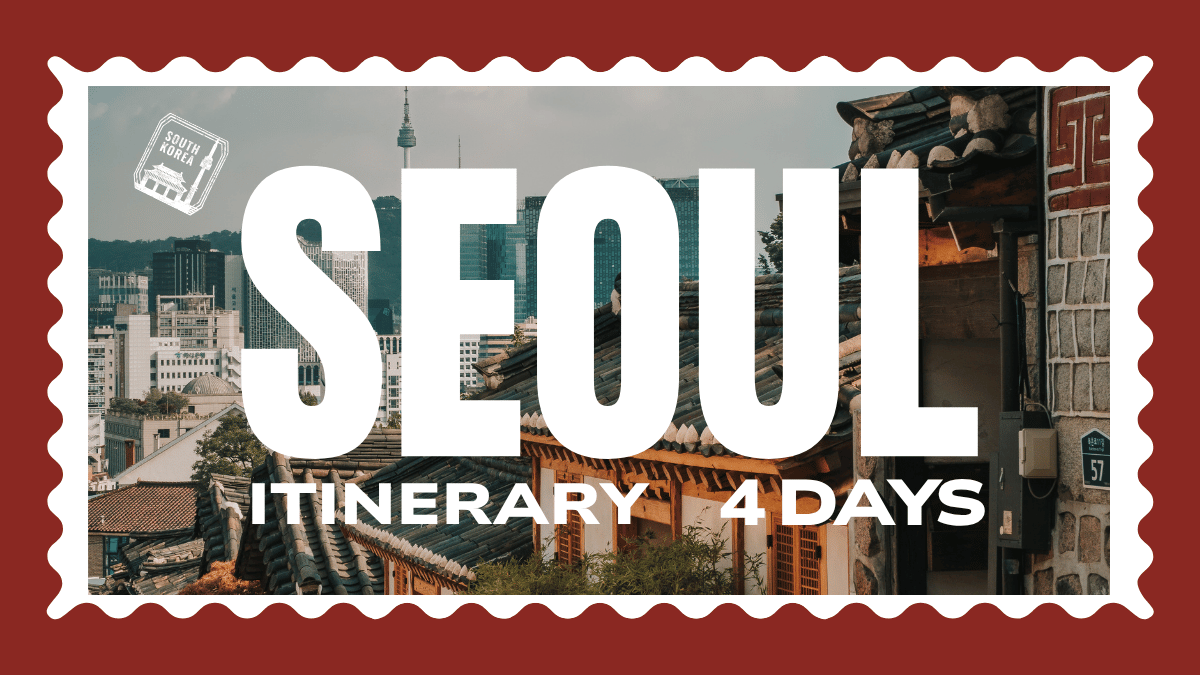
Seoul Itinerary 4 Days: Culture, Shopping & Street Food

cover

Is a Seoul itinerary 4 days long enough for the palaces, the shopping, and the street food? It is, and geography is the reason. The old core, the retail streets, and the market kitchens sit close enough that two of them fit into one afternoon without a long transfer. What four days does not fix is order: run the days in the wrong sequence, and you spend the best outdoor hours indoors, standing in line.


The plan below assumes one hotel in the city, no car, and a preference for eating well over covering ground. Culture comes first because Gyeongbokgung Palace and Bukchon Hanok Village teach you the city's shape in a morning, and the shopping and food days land better once you know which way the city runs.


Already seen the palaces? Move the shopping and food days forward and give the fourth day to a trip out. That version books more easily at short notice and suits a second visit.

4-Day Itinerary in Seoul Korea

4 days is a short window for a city this size, so each day below has one job. The order matters more than the stops: culture when you are fresh, shopping when your feet are tired, and food when the city is out eating.


Day 1: Palaces, Hanok Lanes and the Old Core


Gyeongbokgung Palace takes the morning. Arrive for opening, because the courtyards fill as the morning goes on and the light is better before the tour coaches reach the gate. Walk the palace at a steady pace rather than trying to see every hall, then leave through the side that points uphill toward Bukchon Hanok Village.


The village is a residential neighborhood of narrow lanes, not a museum, so keep your voice down, stay out of open doorways, and treat the people carrying groceries as neighbors rather than scenery. The slope is real, the paving is uneven, and flat shoes decide whether the hour is pleasant. Rent a hanbok before the palace gate if you want the photographs; carrying one around after lunch stops being fun.


Sit down for a real lunch after the village, then spend the afternoon on one smaller site rather than three. The old core rewards a slow walk, and your legs need the reserve for day three.

Gyeongbokgung Palace


Day 2: Shopping, and How Seoul Prices Things


Seoul retail runs on two systems, and knowing which one you are standing in saves both money and argument. Big-street shops price in fixed amounts and often have English-speaking staff, and their demo counters for skincare and cosmetics are where most visitors end up buying in volume. Stalls and small vendors expect a bundle conversation, especially on several of the same item.


Ask for the tax refund paperwork at the counter when you pay, not at the airport, and keep the receipts together in one envelope. The other limit nobody plans for is luggage weight: buy tea, ceramics, stationery and fabric on day two, and leave anything heavy for the last afternoon so you are not carrying it around for two days.


Shop in the late afternoon and eat dinner where you shopped. Mornings are better spent outdoors, and the retail streets are at their liveliest when the offices empty.


Day 3: Street Food, Market by Market


Market food is the day that gets squeezed, usually by treating it as a snack stop between sights. Give it a full day and go at meal times, when the stalls are turning over stock, and the seating is in use. Walk the length of the aisle first, see what the next table ordered, then commit to one stall and sit down.


Portions are built for grazing, so three or four small orders across a morning beat one large plate, and cash still settles faster than a card at the busiest counters. Seafood counters are best early, before the trays thin out. If you want something sweet to take home, the traditional sweet called gangjeong keeps well and travels better than anything wet.


Book the food day for a weekday if you can. Weekend markets are busier, the lines are longer, and the stallholders have less time to explain what you are looking at.

Seoul food


Day 4: The Day Out, or the Slow Day


The fourth day is where a four-day plan either breathes or breaks. Three options are worth the hours: the border, a folk village, or a mountain. The border suits travelers who came to Korea for the DMZ and want a guided, fixed-order day. A folk village day is gentler, with more walking and fewer checkpoints. Mt. Seoraksan is a two-hour walk from the Sogongwon park gate, so it fits a long day out; the ridge routes above it are a two-day private trip of their own.


If none of those appeal, keep day four in the city and use it as a buffer. A slow morning, a last shopping run, and an early dinner near the hotel is a legitimate way to end a trip, and it protects you if a flight or a booking moves.

4-Day Seoul Group Tours

4-Day Group Tours: Discover Eastern Korea, All-Inclusive Experience
Most Meals Included
Daily breakfast
4.8( 38 reviews )
Tour Code: 760593
Start / End City
Seoul
Duration
4 Days
City & Attractions
Gyeongju, Busan, Daegu+9 more
Languages
English Live
Save 10%
From$1,471.88
$1,324.69


Different Types of 4-Day Seoul Itineraries

The usual mistake is adding a day trip without removing a city day. A Seoul 4-day itinerary that ignores that rule turns into four half-days. Here are the three splits that work when you build a 4-day Seoul itinerary from scratch.


Three City Days and One Trip Out


This is the default for a first visit, and it is the split most people should book. Culture, shopping, and food each get a day, and the fourth goes outside the city. The cost of that choice is depth: you see the main streets and none of the quieter ones.


It suits travelers who will not be back soon. One structured day out also solves the transport problem, since the border and the folk village are both awkward to reach on public transport.

Seoul


Four City Days, No Coach


Keep all four days inside the city, and the trip slows down in a good way. Shopping gets two afternoons instead of one, the food day can spread across two markets, and the buffer morning survives. The city options on Seoul vacation packages run from a single day to sixteen, so length is not the constraint; your appetite for repetition is.


Pick this if you have been to Korea before, or if the DMZ and the mountains are not why you are flying.


Two City Days and the East


The third split trades two city days for the eastern half of the country: Busan, Gyeongju, Andong and Pyeongchang, with the palaces and the markets compressed into what is left. You lose the unhurried shopping afternoon and the second market morning, and you gain two UNESCO World Heritage sites, a cable car over the coast and a mountain walk.


A South Korea tour that circles the country is the right frame for that trade. Take it if the itinerary matters more than the city, and skip it if your four days are really about food.

Culture, Shopping and Food: Which One Gets the Best Hours

Each of the three themes behaves differently against a clock. One is fixed, one bends, and one is set by your stomach, so plan them in that order rather than in the order you care about them.


The Palace Morning Is the Fixed Point


Palace hours are what they are, and a morning there cannot be moved to the afternoon without paying for it in heat, light and company. Build the rest of the day around that block: the village follows on foot, lunch comes after the village, and nothing time-sensitive goes ahead of it.


This is also the day to check the palace's weekly closing day before you lock the date. A closure you discover at the gate costs you the whole morning, since the alternative sights are a walk away rather than a transfer away.

Seoul


Shopping Is the Flexible Block


Shopping is the one theme that stretches or shrinks on demand, which makes it the right filler for bad weather, tired legs or a late start. Moving it costs you nothing except the walk between shops, so put it where the plan has slack.


The exception is a specific purchase with a specific size or a repair job. Those need a return visit, so buy early in the trip and pick up on the last afternoon.


Food Follows the Clock, Not the Map


Meals are the hardest part of a day to move, and the market day works best when you let lunch and dinner anchor it. A market breakfast, a sit-down lunch, and a light dinner is a shape that holds, because it puts the heaviest eating in the middle of the day when the stalls are busiest.


Two market meals in one day are too much for most people. Pick one market for eating and use the other for buying.

What Four Days Cost and What to Book Early

Four days in Seoul can be cheap or not, and the difference is almost entirely about how many of those days run on a coach. A two-day city-and-border departure starts at $109 per person, and the private three-day options run into four figures.


Guided Days or Self-Booked


Self-booking is the cheaper route for the city itself. The palaces, the village and the markets are connected by public transport, and the piece that needs a decision is the day out. A guided Seoul tour earns its fee on that day, because one booking replaces the transfer, the entry, and the timetable.


Mix the two: guided for the day out, self-booked for the three city days. That combination usually costs less than a full guided week and still removes the one day you cannot arrange yourself.

Seoul


Group Size Changes the Price


Departures are sold as mini groups of one to nine, small groups of ten to sixteen, large groups of seventeen and up, or private. The pattern in the fares is consistent: the three-day western course from Seoul to Busan is $817 in a group, and the three-day private version with the border and the folk village is $1398.


Private is worth it when your group already fills the vehicle, or when one traveler cannot keep a coach pace. Below four people, the group departure is the better buy.


Cancellation Windows and Meeting Points


The refund ladder is short and worth reading before you pay. Canceling six full days or more before departure returns everything, two to six days returns half, and inside two days returns nothing. Book the day out early in the trip, and you keep that window open.


You will get a group notification or a call at least one day before departure, and the meeting time in that notice is final. Hotel pickup on the first day and drop-off on the last are not included on the eastern route, so plan the first morning as a transfer.

What to Give Up, and What It Buys

This plan stays unhurried because it leaves things out on purpose, and the leaving out is easier to accept once you know the price. The second palace is the first thing to go: one compound teaches you how a royal courtyard is arranged, and a second one spends a morning on the same grammar in different paint.


A second full market day is the other temptation, and it usually costs more than it gives. The stalls do not change between visits, the aisles are the same width, and the second morning gets spent walking past food you have already decided against.


What those cuts buy is time in the city with nothing in front of it: the residential lanes that climb behind the palace, a tea room with empty chairs, the walk back along the old wall at dusk. Four days stretches to hold that as long as you stop adding destinations to it.


If a fifth day appears, spend it on the mountain rather than on another city day. If a day disappears and you are down to three, cut the shopping block rather than the food day, because the markets are the part of the trip hardest to replicate elsewhere.

FAQ

Is four days enough for a first visit to Seoul?

For the city and a single excursion, yes. Add a second excursion and the palaces and the markets end up fighting over the same hours.

What should day four of a 4 days in Seoul itinerary include?

One of three things: the DMZ, a folk village, or nothing at all. Leaving it empty is the sensible call when your flight home is tight.

Does the order of the days matter?

More than the choice of stops does. Morning is the palace's best window and mealtimes belong to the market, which leaves shopping as the movable block.

How much walking does a 4 days itinerary in Seoul Korea involve?

Plan on a lot of it. The lane slope at Bukchon and the length of a market aisle are where most people feel it first.

Do you need a guide for the city days?

Not for Seoul itself, since the subway and a pair of shoes cover the three themes. A guide earns the money on the excursion, where transfers and group entry are the friction.

Summary

4-Day Itinerary in Seoul Korea

Different Types of 4-Day Seoul Itineraries

Culture, Shopping and Food: Which One Gets the Best Hours

What Four Days Cost and What to Book Early

What to Give Up, and What It Buys

FAQ

America's 250th Anniversary Mega Sale

image