Auckland New Zealand Oceania Places to Go Things to Do Travel Tips

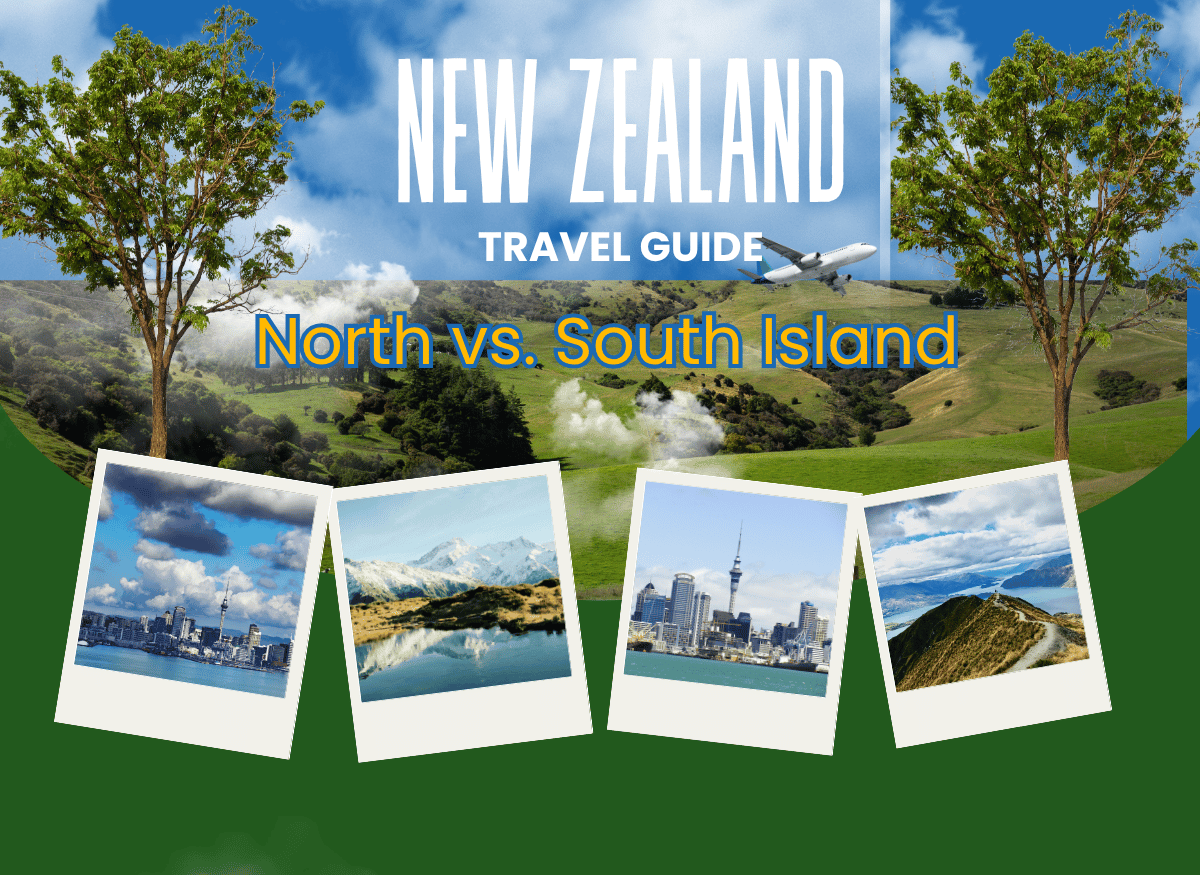
New Zealand North Island vs. South Island: Travel Guide

cover

New Zealand is divided into two main landmasses: the North Island and the South Island. Each offers completely different landscapes, activities, and experiences. The North Island is known for its volcanic geothermal areas, Māori culture, and subtropical beaches, while the South Island features dramatic alpine scenery, glaciers, fjords, and adventure sports. If you are planning a trip to New Zealand, understanding the differences between New Zealand's North Island and South Island will help you decide where to spend your time.

This guide compares the most beautiful places in New Zealand's North Island with the top attractions on the South Island, helping you understand the key differences in New Zealand vacation packages and plan your perfect itinerary.

New Zealand North Island vs. South Island

The North Island and South Island each have their own character and appeal. The North Island is more populated, with cities like Auckland and Wellington, and offers cultural experiences, geothermal wonders, and warmer beaches. The South Island is more rugged and less populated, featuring the Southern Alps, glaciers, fjords, and adventure capital Queenstown. Both islands offer excellent hiking, wildlife spotting, and outdoor activities, but the scenery and vibe are quite different.
 
Feature North Island South Island
Landscape Volcanic plateaus, beaches, rolling hills Alpine mountains, glaciers, fjords, lakes
Climate Warmer, subtropical in the north Cooler, alpine in the south
Population More populated, major cities Less populated, smaller towns
Culture Strong Māori cultural experiences European heritage, gold rush history
Best For Culture, geothermal, beaches Adventure, scenery, hiking
Top Cities Auckland, Rotorua, Wellington Queenstown, Christchurch, Dunedin

New Zealand North Island

The New Zealand North Island is home to about 77% of the country’s population and offers a mix of urban experiences, Māori culture, and natural wonders. The island features active volcanic zones, geothermal parks, subtropical forests, and beautiful beaches. If you are interested in culture, history, and warmer weather, the North Island has plenty to offer.

Auckland

Best Time to Visit New Zealand North Island


The best time to visit New Zealand's North Island is during summer (December to February) for warm weather and beach activities, or shoulder seasons (March to May, September to November) for fewer crowds and pleasant temperatures. Winter (June to August) is mild compared to the South Island and good for exploring cities and cultural sites without the summer crowds. The North Island can be visited year-round, but summer offers the best conditions for outdoor activities and beach visits.

Most Beautiful Places in New Zealand North Island

 
  • Auckland: The largest city in New Zealand, Auckland is built around two harbors and offers a mix of urban sophistication and natural beauty. Climb the Sky Tower, explore the Auckland Museum, or take a ferry to Waiheke Island for wine tasting.
  • Rotorua: Famous for geothermal activity with bubbling mud pools, geysers, and hot springs. Rotorua is also a center of Māori culture, offering authentic cultural experiences including traditional hangi feasts and performances.
  • Tongariro National Park: A UNESCO World Heritage site featuring three active volcanoes and the famous Tongariro Alpine Crossing, one of the best day hikes in the world. The park was used as filming locations for The Lord of the Rings.
  • Wellington: The capital city and cultural hub with excellent museums, galleries, and cafes. Visit Te Papa Tongarewa, the national museum, and explore the vibrant coffee culture.
  • Bay of Islands: A subtropical region with 144 islands, pristine beaches, and excellent sailing and fishing. Visit the Waitangi Treaty Grounds and swim with dolphins.

Things to Do in New Zealand North Island

 
  • Explore geothermal parks in Rotorua, such as Wai-O-Tapu’s bubbling mud pools and colorful silica terraces or Te Puia’s erupting Pohutu Geyser
  • Hike the Tongariro Alpine Crossing, a full-day trek across volcanic craters and emerald lakes rated among the best day hikes in the world
  • Learn about Maori culture at cultural centers and villages, where you can watch a traditional performance and sample food cooked in an underground hangi oven
  • Visit Hobbiton Movie Set near Matamata to walk through the rolling hills and hobbit holes built for the Lord of the Rings and Hobbit films
  • Sail in the Bay of Islands and visit Waitangi Treaty Grounds, the site where New Zealand’s founding document was signed in 1840
  • Climb Auckland Sky Tower for panoramic harbor views, then take the ferry to Waiheke Island for an afternoon of vineyard tastings
  • Surf at Raglan, a laid-back surf town on the west coast, or swim at Piha Beach’s black volcanic sand
  • Explore Wellington’s museums and coffee shops, starting at Te Papa Tongarewa before wandering the city’s compact, walkable downtown

New Zealand South Island

The New Zealand South Island is known for its dramatic landscapes, including the Southern Alps, glaciers, fjords, and crystal-clear lakes. The island is less populated and offers more wilderness experiences. If you are looking for adventure sports, stunning scenery, and outdoor activities, the South Island is the place to be.

Best Time to Visit New Zealand South Island


The best time to visit New Zealand's South Island is during summer (December to February) for hiking, outdoor activities, and long daylight hours. Autumn (March to May) offers fewer crowds and beautiful fall colors, especially in Arrowtown. Winter (June to August) is ski season in Queenstown and other alpine areas. Spring (September to November) brings blooming gardens and wildlife activity. The South Island is more affected by seasonal changes than the North Island, with colder winters and more snow in alpine areas.

Queenstown

New Zealand South Island Attractions

 
  • Queenstown: The adventure capital of the world, offering bungee jumping, skydiving, jet boating, and skiing. The town sits on Lake Wakatipu with the Remarkables mountain range as a backdrop.
  • Milford Sound: One of New Zealand’s most iconic natural attractions, featuring towering cliffs, cascading waterfalls, and dark waters. Take a cruise to see Mitre Peak and spot dolphins and seals.
  • Franz Josef and Fox Glaciers: Two of the most accessible glaciers in the world, descending from the Southern Alps into temperate rainforest. Take guided hikes or helicopter flights over the ice.
  • Abel Tasman National Park: Offers the best coastal walking in New Zealand, with golden sand beaches, clear turquoise waters, and native bush. Perfect for kayaking and swimming.
  • Christchurch: The largest city in the South Island, known as the Garden City with beautiful parks and gardens. The city has rebuilt itself after earthquakes and offers innovative architecture.
  • Mount Cook National Park: Home to New Zealand’s highest peak and excellent hiking trails. The area offers stunning alpine scenery and stargazing opportunities.

Things to Do in New Zealand South Island

 
  • Experience adventure activities in Queenstown, the adventure capital of New Zealand, where you can try bungee jumping from the Kawarau Bridge, skydiving over alpine landscapes, jet boating on the Shotover River, or ziplining through mountain valleys
  • Cruise Milford Sound in Fiordland National Park, one of New Zealand’s most iconic natural wonders, to see towering fjords, dramatic cliffs, cascading waterfalls like Stirling Falls, and wildlife including seals, dolphins, and penguins
  • Hike around Aoraki/Mount Cook National Park, home to New Zealand’s highest peak, where trails such as the Hooker Valley Track offer breathtaking views of glaciers, turquoise lakes, and snow-capped mountains
  • Explore the glaciers of the West Coast, including Franz Josef Glacier and Fox Glacier, where you can take guided glacier walks, scenic helicopter flights, or enjoy views of these rapidly changing ice formations
  • Walk the Abel Tasman Coast Track, one of New Zealand’s Great Walks, to discover golden beaches, turquoise waters, coastal forests, and hidden coves along the northern coast of the South Island
  • Enjoy winter sports in Queenstown and Wānaka, where ski resorts such as Coronet Peak, The Remarkables, and Cardrona offer world-class skiing and snowboarding with spectacular mountain scenery
  • Take a scenic road trip through the Southern Alps, driving routes such as the Crown Range Road, Arthur’s Pass, and the Lindis Pass to experience dramatic mountains, alpine lakes, and some of New Zealand’s most beautiful landscapes
  • Visit the wine regions of Marlborough and Central Otago, where you can taste world-famous Sauvignon Blanc in Marlborough or explore boutique vineyards surrounded by mountains and historic gold-mining towns near Queenstown
  • Stargaze at the Aoraki Mackenzie International Dark Sky Reserve, one of the largest dark sky reserves in the world, where you can see the Milky Way, Southern Cross, and stunning views of the night sky near Lake Tekapo
  • Explore the caves and underground landscapes of Te Anau, including the Te Anau Glowworm Caves, where boat tours lead visitors through limestone passages illuminated by thousands of tiny glowworms
  • Visit the Otago Peninsula near Dunedin, known for its dramatic coastal scenery and unique wildlife, including royal albatross colonies, yellow-eyed penguins, and fur seals
  • Discover Christchurch’s gardens, museums, and heritage sites, then use the city as a gateway for exploring nearby destinations such as Akaroa, Arthur’s Pass, and the Canterbury Plains
  • Explore Stewart Island and Rakiura National Park, a remote island destination where travelers can experience untouched wilderness, coastal hiking trails, and opportunities to spot New Zealand’s native kiwi birds in the wild

New Zealand North Island vs. South Island: Which Should You Visit?

Choosing between New Zealand's North Island vs South Island depends on your interests, travel style, and available time. Here is a breakdown to help you decide:

Choose the North Island If You Want:

  • Cultural experiences and Māori heritage
  • Geothermal wonders and volcanic landscapes
  • Warmer weather and beach activities
  • City experiences in Auckland and Wellington
  • Subtropical scenery and island hopping
  • A more relaxed, culturally rich experience

Choose the South Island If You Want:

  • Dramatic alpine scenery and mountains
  • Adventure sports and adrenaline activities
  • Glaciers, fjords, and wilderness experiences
  • World-class hiking and outdoor activities
  • Skiing and winter sports
  • A more rugged, nature-focused experience
New Zealand

Can You Visit Both Islands?

Yes, you can definitely visit both islands if you have enough time. A minimum of 14-21 days allows you to experience highlights from both the North and South Islands. You can fly between Auckland/Wellington and Christchurch/Queenstown (1.5 hours) or take the scenic ferry from Wellington to Picton (3.5 hours). Many travelers spend 7-10 days on each island to get a good overview without rushing.

Practical Tips for Visiting New Zealand

Getting Around

Both islands are best explored by car, as public transport is limited outside major cities. Renting a car or campervan gives you the flexibility to explore at your own pace. The roads are well-maintained, but driving times can be longer than expected due to winding roads and scenic stops. Domestic flights connect major cities and can save time if you are short on days.

Budget Considerations

New Zealand is not a budget destination, but you can manage costs by camping, cooking your own meals, and taking advantage of free activities like hiking and beach visits. Accommodation ranges from budget hostels to luxury lodges. Activities like bungee jumping, glacier hikes, and cruises can be expensive, so book in advance for better rates.

Weather and Packing

New Zealand’s weather can change quickly, so pack layers even in summer. The South Island is generally colder than the North Island, especially in alpine areas. Bring rain gear, comfortable hiking shoes, and sun protection. The best time to visit both islands for general travel is during summer (December to February) or shoulder seasons (March to May, September to November).

Conclusion

New Zealand’s North Island and South Island each offer unique experiences, from the cultural and geothermal wonders of the North to the dramatic alpine scenery and adventure activities of the South. Whether you choose one island or both, you will find stunning landscapes, friendly locals, and unforgettable adventures. The North Island is perfect for culture, warmer weather, and beaches, while the South Island delivers world-class scenery and outdoor activities. Get ready to embark on your New Zealand tours!
 

FAQ

What is the difference between the North Island and the South Island?

The North Island is known for volcanic geothermal areas, Māori culture, and warmer beaches, while the South Island features dramatic alpine scenery, glaciers, fjords, and adventure sports. The North Island is more populated, with major cities like Auckland and Wellington, while the South Island is more rugged and wilderness-focused.

What are the most captivating places on this northern island?

The most captivating places in the North Island include Auckland for city and harbor views, Rotorua for geothermal wonders and Maori culture, Tongariro National Park for volcanic landscapes and hiking, Wellington for culture and cafes, and Bay of Islands for subtropical beaches and sailing.

What are the top South Island attractions?

Top southern island attractions include Queenstown for adventure activities, Milford Sound for dramatic fjords, Franz Josef and Fox Glaciers for ice hiking, Abel Tasman National Park for coastal walks, Christchurch for gardens and culture, and Mount Cook National Park for alpine scenery.

How many days do you need for this northern island vs. the South Island?

For a comprehensive experience, you need at least 7-10 days for the North Island and 10-14 days for the South Island. If you only have 14-21 days total, you can cover highlights from both islands. A minimum of 3-4 days per island gives you a taste, but 7-10 days per island allows for a more relaxed exploration.