HakoneJapanAsiaPlaces to GoThings to DoFood & DrinkTravel TipsVacations
Show All

Mount Fuji Tour from Tokyo: Your 2027 Options Compared

cover

The Mount Fuji tour from Tokyo you end up booking is decided by format, not by which company runs the bus. Four shapes cover almost every trip on the market: a one-day coach run, a two-day loop that sleeps in an onsen town, a do-it-yourself train and bus route, and a private car. Each one solves a different problem, and each one costs you something the others do not.


The formats differ in three ways that matter before you read a single itinerary. How much of the day goes to driving. Whether the mountain is the whole point or one stop on a wider route. And whether you sleep near Fuji or back in your Tokyo hotel. Get those three straight and the choice gets short.


So ask yourself one thing: do you want to be back in Tokyo for dinner, or do you want to wake up in a hot spring town with the mountain still outside? Everything below works from that answer.

What the Options Actually Are

Each format below is a way of spending the same road, not a quality tier. What changes is where the hours go, who shares the coach, and what you hand back in exchange.


Format Time needed Who it suits What you give up
One-day coach tour One long day, back in Tokyo the same night Short trips, solo travelers, anyone unwilling to change hotels No onsen night, no Hakone coast, no Kamakura, fixed pace
Two-day onsen loop Two days and one night in Izu Travelers with a spare day who want the mountain plus the coast Higher total cost, one hotel change, less free time on day two
DIY train and bus One or two days, on your own schedule Repeat visitors, photographers, tighter budgets You plan every transfer and check seasonal access yourself
Private car One day, routed around your group Families, older parents, groups with luggage Highest cost per vehicle; the driver sets the order of stops


Time needed is the column people misread. A one-day coach is not a short day: it starts before most hotel breakfasts and ends after dark, because the driving sits at both ends and the stops in the middle. The two-day format spreads that same driving across two mornings and buys you an evening in a hot spring town instead of a window seat on the way home.


Who it suits follows from the hours. If your Tokyo days are already counted and none can be spared, the one-day coach is the format that fits. If you have a free day and no strong attachment to your Tokyo bed, the two-day loop adds Hakone and the Kamakura coast for the cost of one hotel night.

mount fuji


Group type is a separate axis from format. Small group tours run 10 to 16 travelers, large group tours 17 and up, and private tours are priced per vehicle rather than per seat, so the same geography can feel like two different trips.


What you give up is the part brochures skip. The one-day run trades depth for a same-night return. The two-day trip trades free time for two included meals and a ryokan. The DIY route trades convenience for control. The private car trades money for a door-to-door day.

The Options, One at a Time

All four formats drive the same two roads out of Tokyo and break the day in different places. What follows is how each one spends its hours, and where the seams show.


One-Day Coach Tour


You buy a seat, a guide, and a fixed list of stops. Day tours in this category leave Tokyo in the morning, run a loop through Yamanashi, and put you back the same evening. The stop lists differ. Some build the day around the Lake Kawaguchi cable car. Some build it around Arakurayama Sengen Park and Oshino Hakkai. Others add the Hikawa Timepiece Store and the Lawson at Kawaguchiko Station Square, which has become a photo stop in its own right. Many of these runs depart daily, carry a guaranteed departure label, and allow free cancellation several days before travel, and live guides usually cover English, Japanese, Korean and Chinese.


The trade-off is pace. A coach day might give you 40 minutes at one stop and 90 at the next, and the weather does not follow the schedule. If cloud sits on the summit at mid-morning, there is no later chance that day. Most one-day runs also skip the Hakone coast, and you eat dinner back in Tokyo.

mount fuji


Two-Day Onsen Trip


This format is built for travelers with one spare day who would rather not see the mountain from a car park. Departure is JR Tokyo Station's Marunouchi North Exit at 08:00 or Shinjuku MODE Gakuen at 08:30, and hotel pickup runs from 07:00 to 08:30 across seven central wards: Shinjuku, Chiyoda, Chuo, Taito, Minato, Shibuya and Bunkyo. Addresses in Toshima, Nakano, Sumida, Koto and Edogawa fall outside that zone, so you would reach a meeting point on your own.


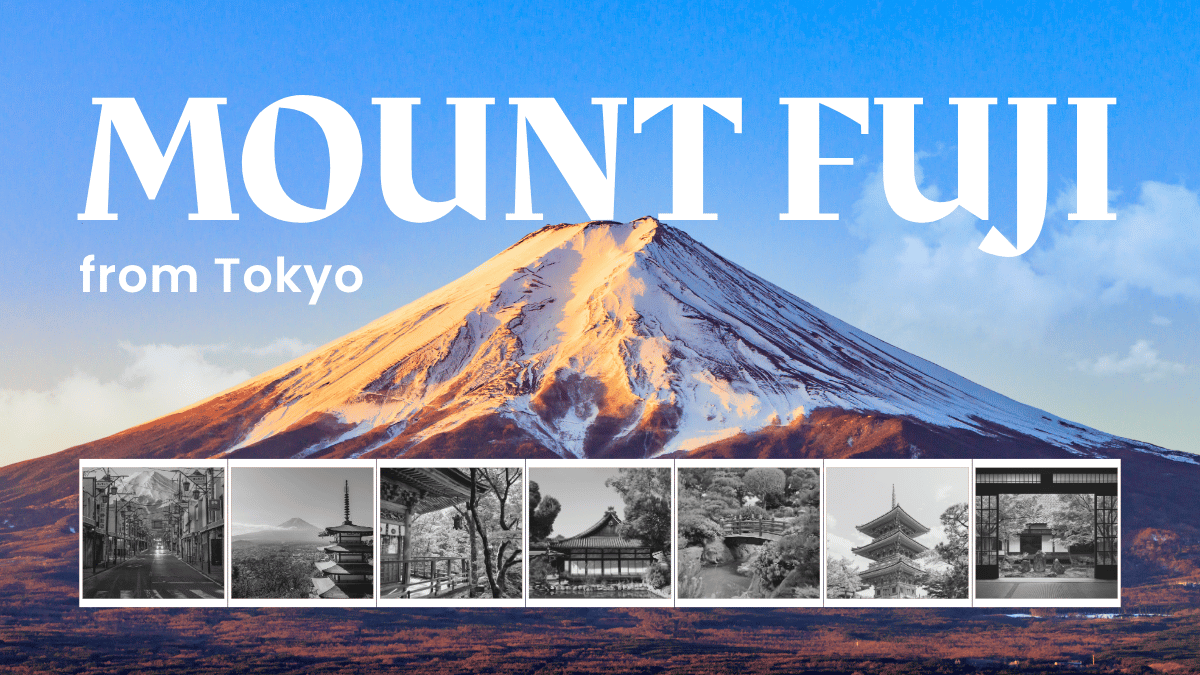
The Fuji stop changes with the calendar, and that detail decides your date. From 26 April to 30 November, the coach climbs to the 5th Station at 2,305 m for about 40 minutes and skips Arakurayama Sengen Park. From 1 December to 25 April it does the opposite: about 60 minutes at Arakurayama Sengen Park, 397 steps up to the five-story Churei Pagoda, with Fujiyoshida laid out below, and no 5th Station. Those two views are not interchangeable, and no booking gets you both on a single departure.


Midday is the lake. The coach stops at the Kawaguchiko Ropeway for about 90 minutes of free time that includes lunch at your own cost, and the cable car up to the 1,075 m deck is a separate JPY 1,200 round trip for reference, paid on the spot. If the cable car is down for weather or the queue is too long, the stop becomes time at the lake shore instead. The afternoon moves to Hakone: about 40 minutes at Owakudani, the volcanic valley where the black hot spring eggs are sold, then Lake Ashi and the Floating Torii Gate of Hakone Shrine. The night is at a hot spring hotel in Izu, with dinner and breakfast included. Day two runs along the coast to Kamakura and Enoshima on the Enoden train.


Group size is capped at 50 travelers, guides speak English, Japanese and Chinese, and the two-day trip is priced at $574.70 per person. What that buys beyond transport is a bed near the mountain and a morning that a day tour cannot offer.


DIY Train and Bus


The independent version of the same road is a highway bus or a train to Kawaguchiko, then a local bus for the final stretch, with your own calls on where to stand when the mountain appears. None of it is difficult. It simply carries no slack: a missed connection costs you the stop, and the seasonal switch between the 5th Station and Arakurayama Sengen Park is yours to track, along with the cable car ticket and the weather call.


What you gain is time where you want it. Two hours at one lake instead of 40 minutes at a station. The chance to wait out a cloud bank that a coach cannot wait out. A trip built around light rather than a timetable. Travelers fitting the mountain into a longer Japan tour, or shooting photographs for a living, tend to accept the planning in exchange for that freedom.


Private Car


A private car is the same geography with the logistics removed. The driver collects you at the hotel, holds the luggage, and works the stops in an order that suits your group rather than a coach manifest. For four to six people with bags, or for parents who cannot manage 397 steps at a fast pace, that is the difference between a comfortable day and a long one.


The bill is per vehicle, so the per-person figure drops as the group grows and looks very different for a couple traveling alone. You also hand route decisions to the driver, which means the calendar still wins: a private car in July still goes to the 5th Station, not to the pagoda.

2-Day Mt. Fuji, Hakone & Kamakura Tour from Tokyo

2-Day Mt. Fuji, Hakone & Kamakura Tour from Tokyo: Onsen Ryokan, Lake Kawaguchi & Enoshimavideo icon
Daily breakfast
Select Meals Included
Free eSIM
4.7( 109 reviews )
Tour Code: 672627
Start / End City
Tokyo
Duration
2 Days
City & Attractions
Tokyo, Yamanashi ken, Hakone+9 more
Languages
English Live, Japanese Live, Chinese Live
Group Size
Max. 50 travelers
Tour Audience
Mixed International Travelers
From
$574.70
Buy 2 Get 1 or 2 Free


How to Choose for Your Dates

There is no single best Mount Fuji tour from Tokyo, because the answer depends on your dates and your group. Four checks settle most of it, and none of them needs a spreadsheet.


Set the Date by the View


The mountain has two viewing addresses, and the date decides which one you get. Between 26 April and 30 November, the 5th Station road is the one in use, at 2,305 m and about 40 minutes on the ground. Between 1 December and 25 April, the stop moves to Arakurayama Sengen Park, where the pagoda, the town and the mountain line up in one frame. Book the date by which of those two pictures you actually want, then accept the rest of the itinerary as it comes.

mount fuji


Weigh Who Is Walking


The pagoda view costs 397 steps. The 5th Station costs a short walk at altitude, where the air is thinner than it is in Tokyo and the temperature is lower. Travelers with young children, knee trouble, or parents in their seventies should look at the private car or the two-day trip, where the pace is slower and the walking can be cut short without stranding anyone.


Count the Hotel Changes


A one-day trip keeps your Tokyo room and your luggage in it. A two-day trip means packing a small bag for one night and leaving the rest behind, because the coach does not return to your hotel in between. If a single overnight bag is more hassle than it is worth, that answers the question without any further comparison.


Decide How Early You Want to Be There


A one-day coach leaves Tokyo in the morning and returns after dark, so dawn on the mountain is not part of the day. If dawn matters, you have to sleep within reach of the lake, which means the two-day loop or a night you book yourself near Kawaguchiko. The same logic covers the drive home: a coach that must return to Tokyo sets a hard leaving time, while a car or your own booking lets you stay until the light goes.


Sleeping near the water is the trade for that light, and Mount Fuji vacation packages are built around that exchange rather than a same-night return.

What to Keep and What to Drop

With one day, take the coach and keep the expectations honest: two or three stops, one shot at clear weather, dinner back in Tokyo. Drop Hakone from that day. The coast needs its own hours, and bolting it onto a Fuji run turns a long day into a punishing one. If you are still weighing the best Mount Fuji tour from Tokyo, the answer usually follows from how many hotel nights you are willing to move.


With two days, keep the hot spring night and drop the separate Kamakura day you were planning. The coast is already in the next morning, and repeating it costs a day you could spend in the city.


If the pagoda frame is the reason for the trip, the date does the work: book inside the winter window and stop expecting the 5th Station on the same departure. If altitude is the point, travel in the other one.


What is left is a choice between control and company. A coach sets the order of stops and hands you a guide and a bus full of other travelers. A car or a train ticket hands you the order and takes the company away. Neither is the better trip on paper. The better trip is the one whose trade-offs you can live with for a day or two.

FAQ

Is one day enough for a Mount Fuji tour from Tokyo?

For the mountain itself, yes. A one-day coach covers two or three stops and returns the same night. It does not reach the Hakone lakes or the Kamakura coast, and that is what the extra day buys you.

Can you get to the 5th Station in winter?

Not on the routing described here. From 26 April to 30 November the coach goes to the 5th Station at 2,305 m. From 1 December to 25 April the same slot goes to Arakurayama Sengen Park instead. Independent travelers face the same seasonal switch and should confirm access before setting out.

What does the two-day trip include?

Dinner on day one, breakfast on day two, the ryokan night in Izu, coach transport, and a live guide in English, Japanese or Chinese. Lunch on day one and the Kawaguchiko cable car ticket, JPY 1,200 round trip, are paid separately.

Is the DIY version cheaper than a coach?

It removes the guide and the hotel night, so the money side usually favors it. What it does not remove is the planning: you book each leg, track the seasonal switch, and absorb a delayed bus or a closed cable car without anyone to rearrange the day for you.

Can one trip cover both the 5th Station and the pagoda view?

Not on a single coach departure. The routing changes at the end of November and again in late April, so the pagoda and the high station sit in different halves of the year. Pick the date by the view you want.