LuxembourgLuxembourgEuropePlaces to GoThings to DoTravel TipsExcursionsVacations
Show All

Luxembourg Day Trip: Old Town, Casemates & Moselle Valley

cover

Is One Day in Luxembourg Enough?

Luxembourg has 696,268 people at a density of 268 per square kilometer, and that population thins out quickly once you leave the capital. Wikivoyage's country guide files the whole country under one day's reach, and the arithmetic backs it up: 2,586 square kilometers, with trains, trams and buses free to ride, a day here is a question of choice rather than budget.


The old town is compact enough to cross on foot, and the fortifications under and around it are UNESCO-listed. What cannot fold into the same day is Vianden's château in the Ardennes, the Mullerthal trails with their mossy rock and waterfalls, and Echternach's basilica with the crypt of Saint Willibrord. Each sits in a different corner of the country, and each earns its own morning.


One day covers the capital properly, or the capital plus the Moselle at a faster clip. That fork is worth taking seriously, because the two halves reward different weather and different appetites, and the rest of this guide works out which one your own trip can carry.


One physical note shapes every plan: the city is built across two deep valleys, and lifts connect the Grund and Pfaffenthal with the plateau above, which saves the cobbled climb back up at the end of the day.

Old Town and Casemates: What the Walk Involves

The upper town is pedestrianized and dense with detail, and the tunnels reward unhurried walking rather than a photo stop. The morning splits into three pieces, and they run downhill in a straight line.


Ville Haute: the palace, the cathedral, and the squares


The Grand-Ducal Palace sits at the top of the old town and is the first stop named in the city quest, ahead of Notre-Dame and the Abbaye de Neumünster. On a day trip, it works as a facade-and-square stop rather than an interior visit, and the streets around it are where the upper town's cafés and shopfronts collect.


Notre-Dame Cathedral comes next on the same walk, and the two sights sit close enough together to treat as one stop instead of two. Step inside rather than photographing the doors from the square: the interior is the reason the building is on every walking route in the city.


Bock Casemates: the tunnels under a city founded in 963


Luxembourg City was founded in 963, and its position at a European crossroads made it worth fortifying for centuries. The visible half of that story is the walls and towers still standing above the valleys, which form the cityscape you see from the Corniche. The other half is underground: the Bock Casemates, a UNESCO-listed labyrinth of defense tunnels that gave the place its nickname, the Gibraltar of the North.


Give this the longest block of your morning. The walking is slow, the tunnels do not care what the sky is doing, and a rushed pass through them turns a fortress into a corridor. If the entrance is shut or the line is long, the walls and towers above ground still carry the same story at no cost.


Chemin de la Corniche and the drop into the Grund


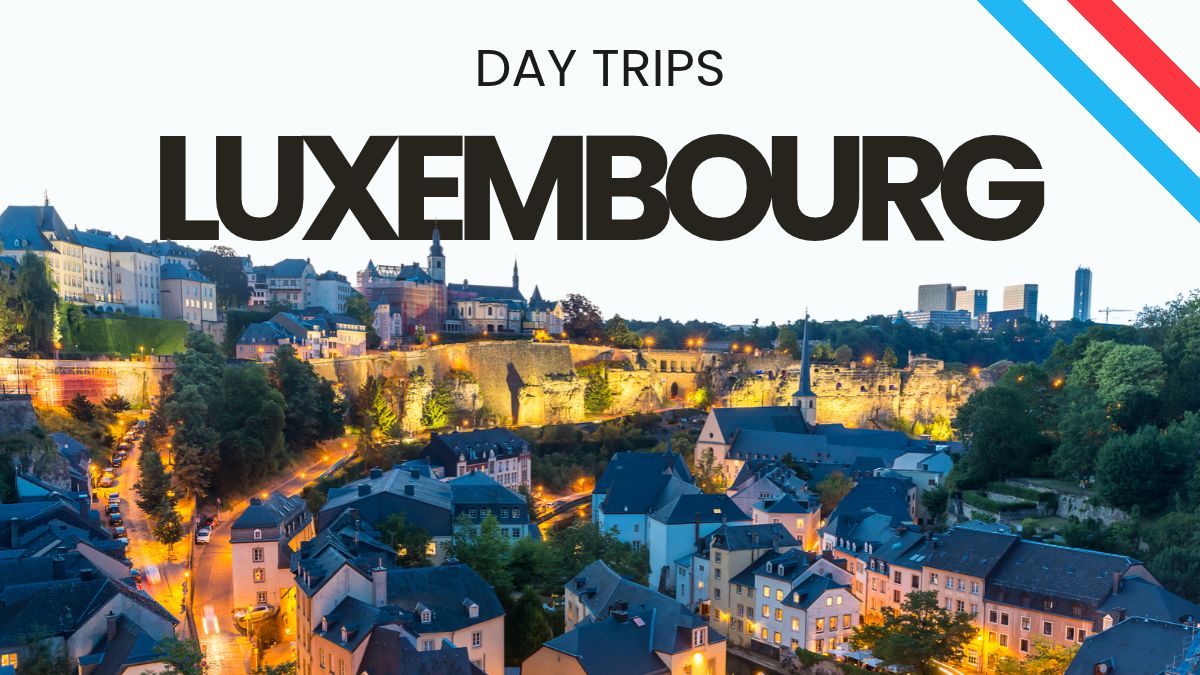
The Chemin de la Corniche runs along the rim of the Alzette gorge, with the Grund directly below and the valley wall on the far side. It is the walk that explains the city's geography in a single look, and it costs nothing but the time you spend standing at the rail.


Follow it to the lift and ride down rather than taking the cobbled switchbacks. The lower town holds the Abbaye de Neumünster, which the city quest lists among its stops, and the Alzette valley floor where the river bends under the old walls. A short valley train and a funicular link Pfaffenthal and Kirchberg with the plateau, so the climb back up can be a ride instead of a punishment.

The Moselle Valley as a Half Day

The Moselle Valley is the country's wine region, and most of its towns sit along the river, close enough to the German bank that the two sides rub shoulders. Grevenmacher, Mondorf-les-Bains, and Schengen are the three names worth knowing before you go, and the hills behind them are vineyards.


Access decides the schedule. The valley sits inside that same hour from the capital, and the buses that get you there cost nothing, but an hour out, an afternoon along a river, and an hour back is a half day rather than a two-hour add-on.


Getting to the wine villages without a car


Buses run east from the capital to the river, and from the landing village the wine road continues along one bank, so the practical pattern is to ride out to the far end and work back toward the city. Changing at Grevenmacher puts you in the middle of the wine road rather than at one end of it. Mondorf-les-Bains sits inland on the French border, which makes it a separate stop rather than a river village on the same loop.


By car the valley is quicker, and this is one of the few corners of the country where a car earns its keep, because the villages are strung along the water rather than connected by rail. Cyclists get the better version of the same route, because the river plain is flat and the villages sit close together.


What a wine-country afternoon actually looks like


The valley's reputation rests on Riesling and sparkling wines, and several cellars open for tastings, sometimes attached to a walk through the vines. Autumn is when wine-making starts along the Moselle, and that is the strongest reason to give the valley its own afternoon instead of a hurried hour between buses.


Schengen is a different kind of stop. It is the village the treaty is named after, and it sits where the French and German borders meet, which is why a place this small carries a name most travelers already know. Mondorf-les-Bains pairs a spa with a casino and keeps its distance from the river, so it fits a slower afternoon than the wine road does.


Which half wins comes down to the calendar. Between the harvest and the first cold rain, the valley is the better use of an afternoon; in January, or on a wet Tuesday, the capital's tunnels and museums win without much argument.

Getting Around Luxembourg

Findel Airport sits 6 kilometers outside the city and the tram connects it directly, with services every 8 minutes. Like the rest of the country's public transport, the ride costs nothing. Some arrivals land elsewhere: Brussels-South Charleroi is about three hours away by direct Flibco bus, and the direct buses from Frankfurt-Hahn were cancelled in June 2024, so that airport no longer works as a cheap back door.


The Gare is the country's main railway station, and it sits below the old town, so the climb into the center is the first thing the day asks of you. CFL also runs a minibus shuttle from the station to TGV Lorraine, which is how the high-speed line reaches the city rather than stopping in the suburbs.


City buses run frequently on weekdays and thin out at the weekend, with Sunday the day to check before you commit to a late museum. If your train leaves in the evening, work backward from it rather than from the last sight you want to see.


Travelers who would rather not assemble the pieces themselves can compare Luxembourg vacation packages that include hotels and transport, which matters most when Luxembourg is one stop on a longer route rather than the destination.

Weather in Luxembourg

Luxembourg has a temperate oceanic climate, with the Ardennes taking some of the edge off the Atlantic. The sunniest stretch runs from May to August, and April and September can be mild if you get lucky. July and August average between 15 °C and 25 °C with a few days above 30 °C, while January averages around +2 °C and can drop to -15 °C at night. The north runs a few degrees colder and takes the snow seriously.


Rain spreads through the year at roughly 780 mm, peaking in August and December. That pattern matters because half of this itinerary is outdoors. A wet morning is the moment to reverse the order: take the Casemates and a museum while the sky empties, then walk the Corniche in the afternoon if it clears.


Clear, cold days favor the upper town and the Corniche, when the low sun reaches into the Alzette gorge. Warm days favor the Grund, the shaded valley floor, and the Moselle, where the vineyards are the whole attraction. Autumn brings the wine-making that the valley is built around, and National Day on 23 June fills the capital with the kind of crowd that turns a quiet morning into a queue.

Two Plans That Fit Inside One Day

Both plans start at the Gare or on the tram from Findel, need no car and no ticket, and end before dark.


Plan A: the capital on foot


Walk up from the station to the palace square and look at the Grand-Ducal Palace, then cut through to Notre-Dame. Give the Bock Casemates the middle of the morning, follow with the Chemin de la Corniche, and take the lift down to the Grund for lunch beside the Alzette. Add the Abbaye de Neumünster if you have the energy, then ride the funicular or the valley train back up. This suits a wet forecast, a short winter day, or a companion who hates timetables.


Plan B: capital morning, wine road afternoon


Compress the city into the morning: palace square, cathedral, Casemates, Corniche, and a look down into the Grund. Then take a bus east, ride out to the far end of the wine road, and work back through one or two villages instead of trying to see all of them. It holds together because the buses are frequent and the river road runs in a line. It falls apart when someone insists on a museum and two tastings in the same three hours.


If you want the route assembled for you, Luxembourg tours range from a two-hour city activity to multi-day loops that treat the Grand Duchy as one stop among several.

What One Day in Luxembourg Leaves You With

A day here buys one deep look rather than a survey, and the shape of that look is decided by two things you cannot book: the season and the sky. The plateau and its tunnels are a winter answer; the river and its vineyards are an autumn one.


What the capital gives you in exchange for a full morning is a lesson in how a small state defended itself. The walls above the valleys, the tunnels cut beneath them, and the lift shafts that now do the climbing are three versions of the same engineering problem, and walking between them is more instructive than any single viewpoint.


If you leave with one image, make it the Corniche, where the old walls drop into the Alzette and the lower town sits in green shadow. It explains why this plateau was fortified for centuries, and why a country this size kept its own language and its own sense of distance from its neighbors.

FAQ

Can Luxembourg be visited as a day trip from Paris or Brussels?

Yes, with a caveat: the return leg eats the afternoon, so the capital is what you get and the Moselle has to wait for another trip. Paris reaches the city through a CFL minibus link to TGV Lorraine.

How much time should the Bock Casemates get?

They should be the anchor of your morning rather than a quick stop before lunch. They are a UNESCO-listed network of defense tunnels, and they sit within walking distance of the Corniche and the lift down to the Grund.

Are the Casemates a good choice on a rainy day?

They are the sensible pick when it rains, since the visit happens underground. Do the tunnels while it pours, then save the Corniche for a break in the weather.

Do you need a car for the Moselle Valley?

No. Free buses link the city with the riverside villages. A car is quicker along the water, but nothing in the valley requires one.

Is English enough in Luxembourg?

Yes. Luxembourgish, French, and German are the official languages, and English is almost universally understood.

Summary

Is One Day in Luxembourg Enough?

Old Town and Casemates: What the Walk Involves

The Moselle Valley as a Half Day

Getting Around Luxembourg

Weather in Luxembourg

Two Plans That Fit Inside One Day

What One Day in Luxembourg Leaves You With

FAQ

America's 250th Anniversary Mega Sale

image